Building defects in NSW can cost you thousands in repairs and create serious safety risks. We at Jameson Law know that homeowners often feel lost when facing structural problems, water damage, or poor workmanship.
This guide walks you through your legal rights, how to document defects properly, and the exact steps to claim compensation through Fair Trading NSW or NCAT.
What Defects Does NSW Law Actually Cover
Statutory Warranties Under the Home Building Act 1989
NSW statutory warranties under the Home Building Act 1989 apply to residential building work valued over $5,000. The law guarantees that materials will be suitable for their purpose and that work must be performed with due care and skill, complying with contract plans and all applicable Australian standards.
These warranties apply to both you as the original owner and any subsequent owner of the property. The statutory framework covers three broad categories of defects that homeowners commonly encounter.
Three Main Categories of Building Defects
- Structural defects and safety issues: Problems with foundations, load-bearing walls, and roof framing that compromise building integrity.
- Water ingress and moisture damage: Failed waterproofing in wet areas, leaking roofs, and rising damp.
- Defective materials and workmanship: Poor quality finishes, failed grout joints, and use of substandard materials.
Your Timeframe for Making Claims
Under NSW law, you have six years from the date of completion to claim compensation for major defects and two years for other defects. If a defect becomes apparent in the last six months of the six-year period, the claim period may extend a further six months.

Spotting Building Defects and Building Your Evidence
Warning Signs You Should Never Ignore
Identifying building defects early saves you thousands. Water stains on ceilings indicate roof leaks, while cracks in walls wider than 3mm signal structural movement. Sticking doors often suggest frame movement or poor installation, and musty odours usually point to moisture problems hidden behind walls.
Documenting Defects with Photos and Written Records
Photography and written reports form the foundation of your claim. Take clear photos from multiple angles in natural daylight. For structural issues, we highly recommend engaging a highly experienced building inspector to produce a formal defect report, as NCAT values expert assessment over personal observations.
Notifying the Builder in Writing
NSW law requires you to notify the builder in writing within six months of discovering a defect to preserve your rights. Send your notification via registered mail or email with read receipt, clearly describing each defect and requesting a response within 14 days.
How to Get Your Defects Fixed or Claim Compensation
When Fair Trading NSW Gets Involved
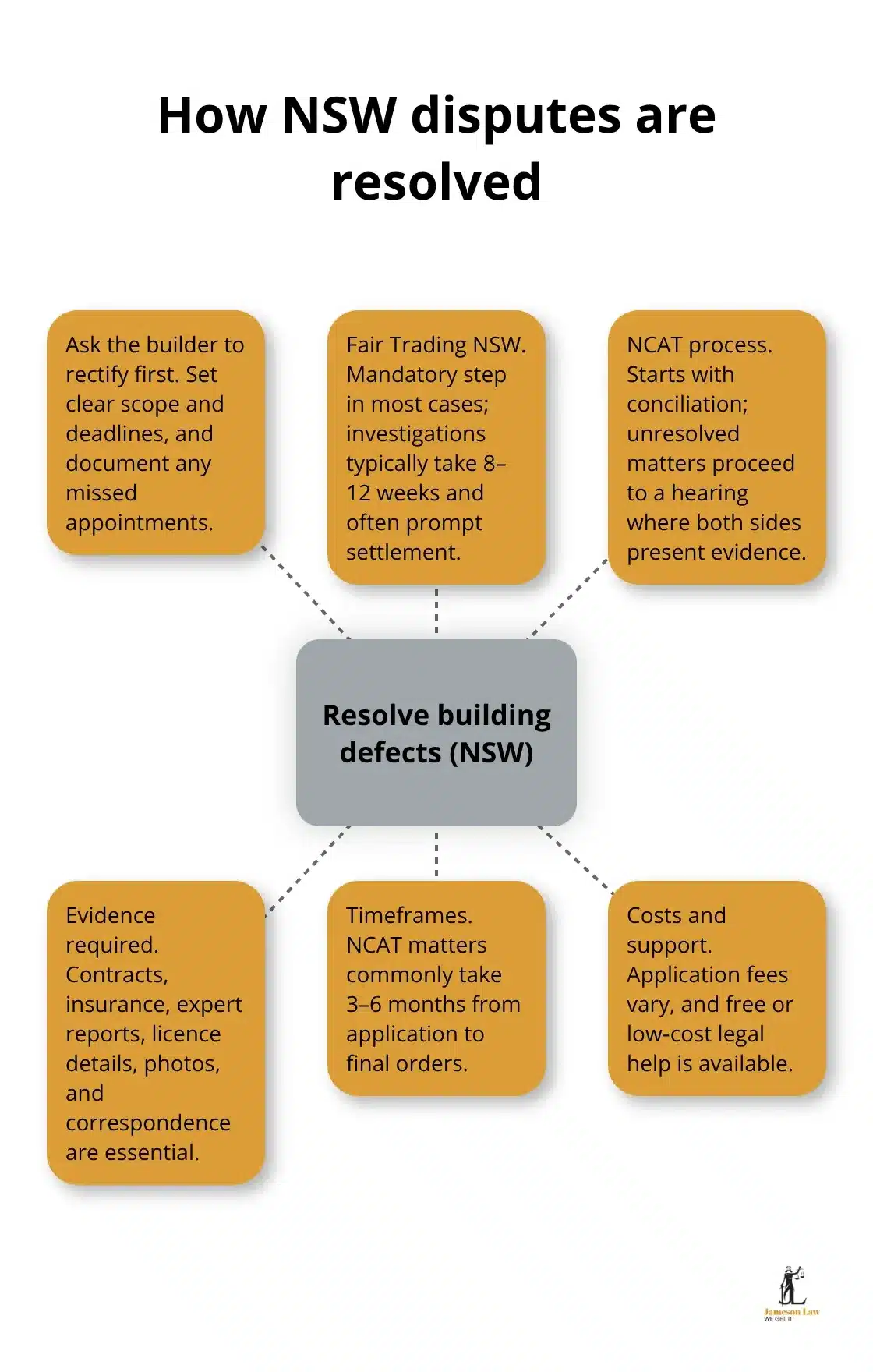
If the builder refuses to respond, lodge a complaint with Fair Trading NSW. This step is mandatory before NCAT will hear your case in most circumstances. Fair Trading investigations often prompt builders to settle to avoid formal enforcement action by the Building Commission.
Taking Your Claim to NCAT
The NCAT Home Building division handles disputes and can order payment or rectification. NCAT requires strong evidence, including your contract, building reports, and all written correspondence with the builder.
Final Thoughts
Building defects in NSW carry real financial consequences, but the law provides concrete pathways to force rectification. Your statutory warranties are mandatory and protect you regardless of whether you are the first or subsequent owner.
If you’re facing building disputes or need guidance on your legal options, Contact Jameson Law today. Our highly experienced legal team ensures you don’t miss critical deadlines and helps you build the strongest possible claim.