Family law cases involve complex terminology that can confuse anyone facing separation, divorce, or custody disputes. Understanding these legal terms helps you make informed decisions about your future, especially following the significant changes introduced in May 2024.
We at Jameson Law have compiled essential family law definitions to guide you through this challenging time. This comprehensive overview covers custody arrangements, financial settlements, and the updated legal procedures you’ll encounter.
What Are the Key Family Law Terms You Need to Know?
Parenting Arrangements and Decision Making
Australian family law uses specific terminology that directly impacts your rights. The term “lives with” replaces traditional custody language, while “spends time with” refers to visitation. Notably, the Family Law Amendment Act 2023 (effective May 2024) removed the presumption of equal shared parental responsibility. This means courts no longer automatically assume parents should share major decision-making; instead, all decisions are based purely on the child’s best interests and safety.
Parental Responsibility covers major long-term decisions like education, healthcare, and religion. While many parents still consult on these issues, the law now focuses on safe and practical arrangements rather than a rigid expectation of shared authority, particularly where family violence is a concern.
Legal Requirements Before Court Action
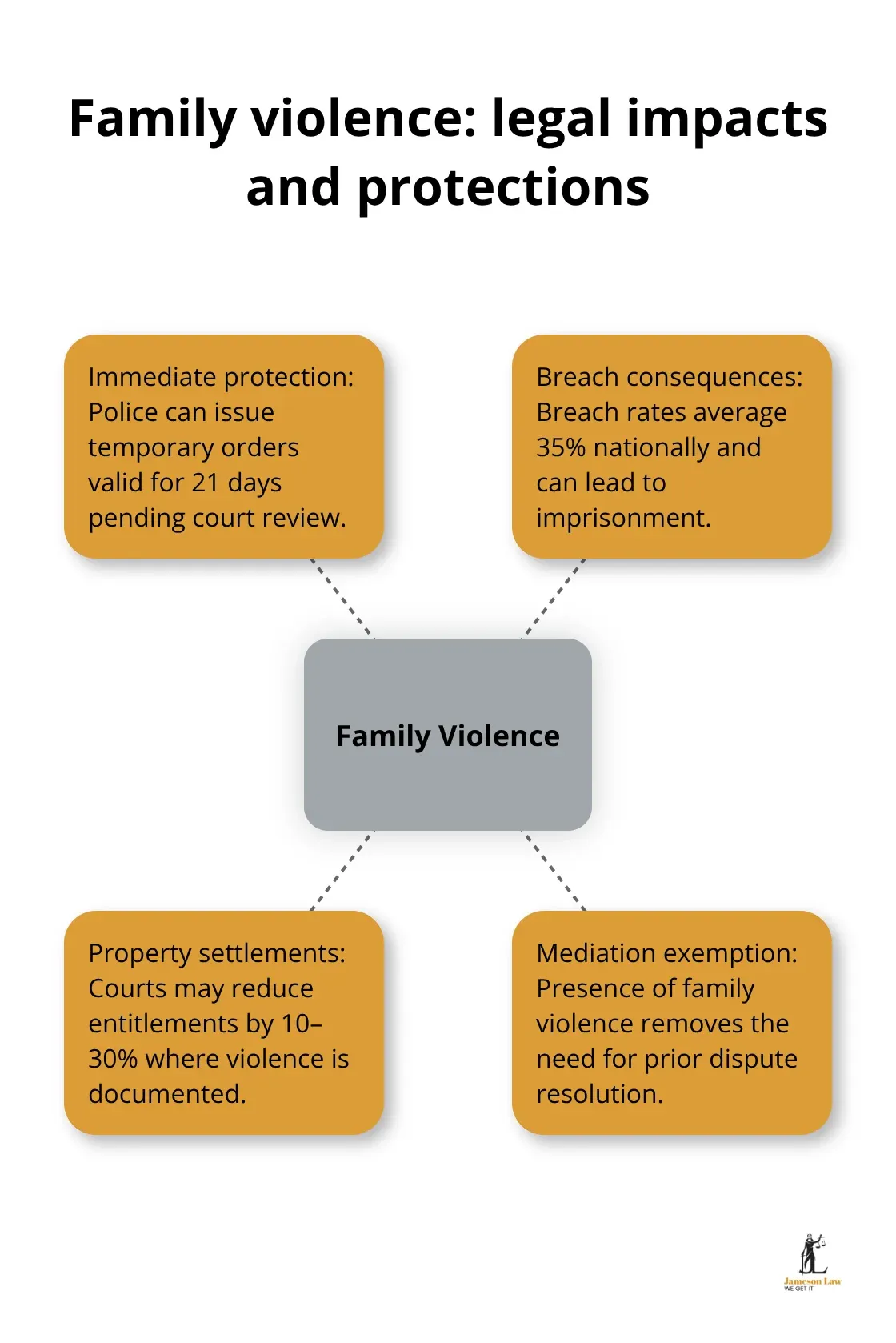
The Family Law Act 1975 generally requires parents to attempt Family Dispute Resolution (FDR) before filing court applications. This mediation process helps families reach agreements without costly litigation. You typically need a Section 60I Certificate from a registered practitioner to prove you attempted mediation, unless an exemption (like urgency or violence) applies.
Financial Settlements and Support Obligations
Property Settlement divides assets, debts, and superannuation. Applications must be filed within 12 months of divorce for married couples, or two years from separation for de facto partners. Courts consider financial contributions, non-financial contributions (like homemaking), and “future needs” factors such as age, health, and earning capacity.

Child Support and Spousal Maintenance
Child Support follows a formula administered by Services Australia based on incomes and care levels. Spousal Maintenance is separate financial support for a former partner unable to support themselves. Unlike child support, spousal maintenance is not automatic; it depends on one party’s genuine need and the other’s capacity to pay.
How Do Family Law Processes Actually Work?
Mediation Requirements and Realistic Outcomes
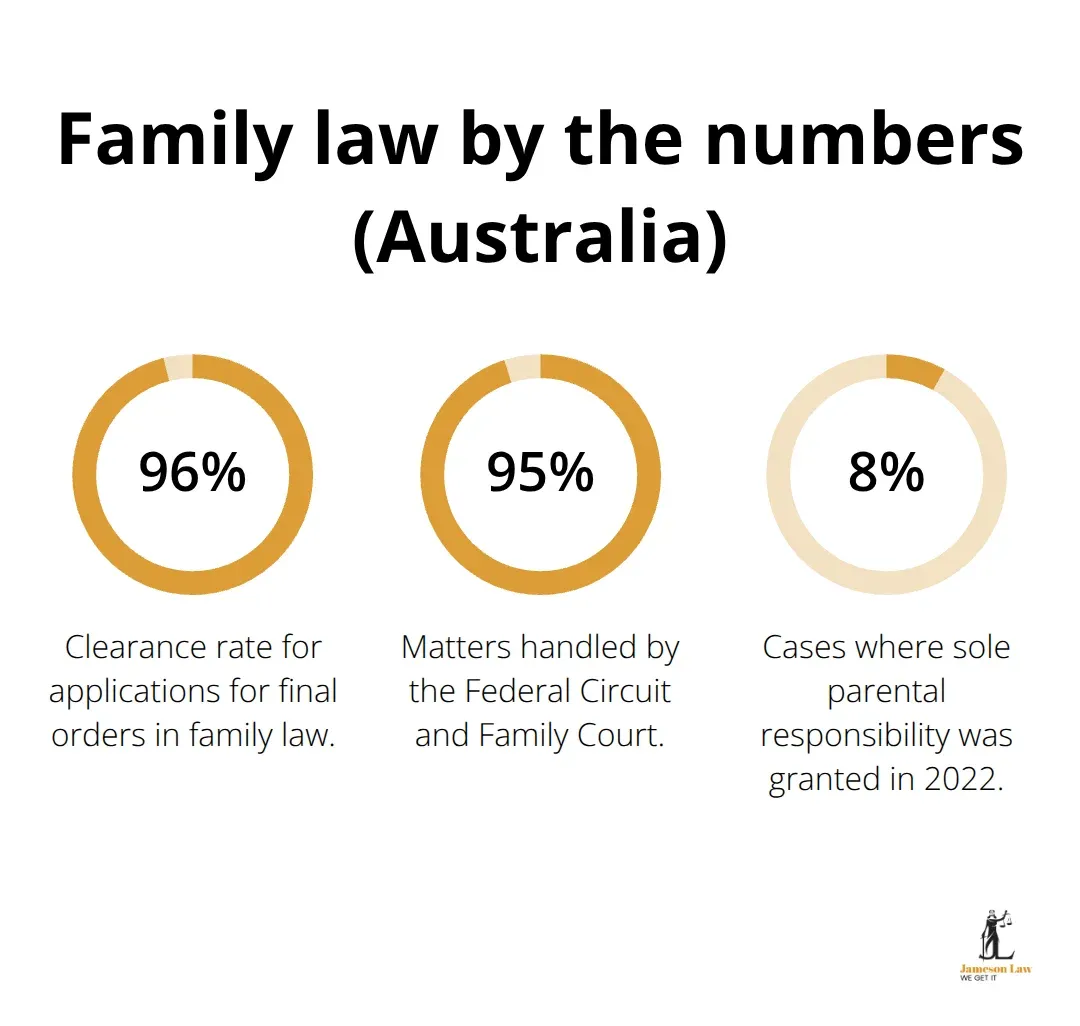
FDR is mandatory for most parenting matters. The Federal Circuit and Family Court of Australia (FCFCOA) encourages early resolution. Private mediation costs can range from $150 to $500 per hour, while community services like Relationships Australia offer subsidised rates. Mediation fails when power imbalances or violence exist, in which case a certificate is issued allowing you to proceed to court.
Court Applications and Strategic Considerations
Court applications trigger strict procedural requirements. Current filing fees (as of July 2024/25) for a standard Application for Consent Orders are approximately $205, while initiating applications for parenting and financial orders can cost over $700. The FCFCOA aims to resolve cases efficiently, but contested matters can still take 12-18 months. Final hearings require comprehensive disclosure, including three years of tax returns and bank statements.
Court-Ordered Assessments and Expert Reports
Courts often order a Family Report prepared by a Family Consultant. These experts interview parents and children to recommend arrangements that serve the child’s best interests. Private reports can cost between $5,000 and $15,000, while Court Child Expert reports are funded by the court but have longer wait times.
Consent Orders Versus Financial Agreements
Consent Orders are agreements approved by the court, becoming legally binding immediately. Binding Financial Agreements (BFAs), often called “prenups,” stay out of court but require independent legal advice for both parties to be valid. Consent Orders are often preferred for their enforceability and lower cost compared to the strict technical requirements of BFAs.
What Rights Do You Actually Have in Family Matters?
Children’s Best Interests Override Parental Preferences
The Family Law Act establishes the child’s safety as the paramount consideration. Recent reforms have simplified the “best interests” factors to focus heavily on safety and the child’s developmental needs. The Australian Institute of Family Studies confirms that arrangements prioritising the child’s wellbeing over “equal time” result in better long-term outcomes.
Financial Duties Extend Beyond Child Support
Full and Frank Disclosure is a mandatory duty. You must reveal all assets, liabilities, and income sources. Failure to disclose can lead to penalties or having a settlement overturned. This includes disclosing business interests, trusts, and disposals of assets prior to separation.
Violence Orders Provide Immediate Legal Protection
Apprehended Domestic Violence Orders (ADVOs) in NSW protect victims from future violence. These are civil orders, but breaching them is a criminal offence. The presence of family violence significantly impacts property settlements and parenting arrangements, often eliminating the requirement for mediation.
Final Thoughts
Family law definitions form the foundation of successful outcomes. The distinction between “lives with” and “spends time with” affects your daily life, while the removal of “equal shared parental responsibility” changes how decisions are made. Understanding these terms prevents costly mistakes.
Your rights extend beyond basic custody. Full financial disclosure is non-negotiable, and safety is the court’s top priority. We at Jameson Law provide expert family law services to help families navigate these complex legal processes and protect their rights in Sydney and Parramatta.
Contact Jameson Law today for clarity on your family law matter.