Family law orders aren’t set in stone. Life changes, and sometimes those changes require legal adjustments to existing arrangements. Whether due to relocation, job loss, or safety concerns, seeking a family law review is often necessary.
We at Jameson Law see families facing this challenge regularly. A formal review can modify custody, support, or property arrangements when circumstances shift significantly. The process involves specific legal steps and deadlines that many people find overwhelming without proper guidance.
What Triggers a Family Law Review?
A family law review becomes necessary when significant changes affect your original court orders. The Federal Circuit and Family Court of Australia (FCFCOA) recognises that life circumstances shift, making previous arrangements unsuitable or unworkable.
Major Life Changes That Warrant Review
Income changes often trigger property settlement reviews, particularly when spousal maintenance is involved. Job loss, promotion, or career changes can substantially alter your financial capacity. Relocation for work or family reasons frequently necessitates custody arrangement modifications.
Health issues that affect either parent or children create compelling grounds for review. New relationships or re-marriage can impact both financial obligations and parenting arrangements.
Court Orders Subject to Review
Parenting orders that cover custody, visitation, and decision-making authority can be reviewed when children’s needs change or safety concerns arise. Property settlement orders may require modification if hidden assets surface or valuations were incorrect.
Child support arrangements, while typically handled through Services Australia, may require court intervention for complex cases involving high incomes.
Filing Requirements and Deadlines
Applications for review (appeals) must generally be filed within 28 days of the original order. Service on all parties must occur promptly. The application doesn’t automatically suspend existing orders; you need a separate stay application for that purpose.
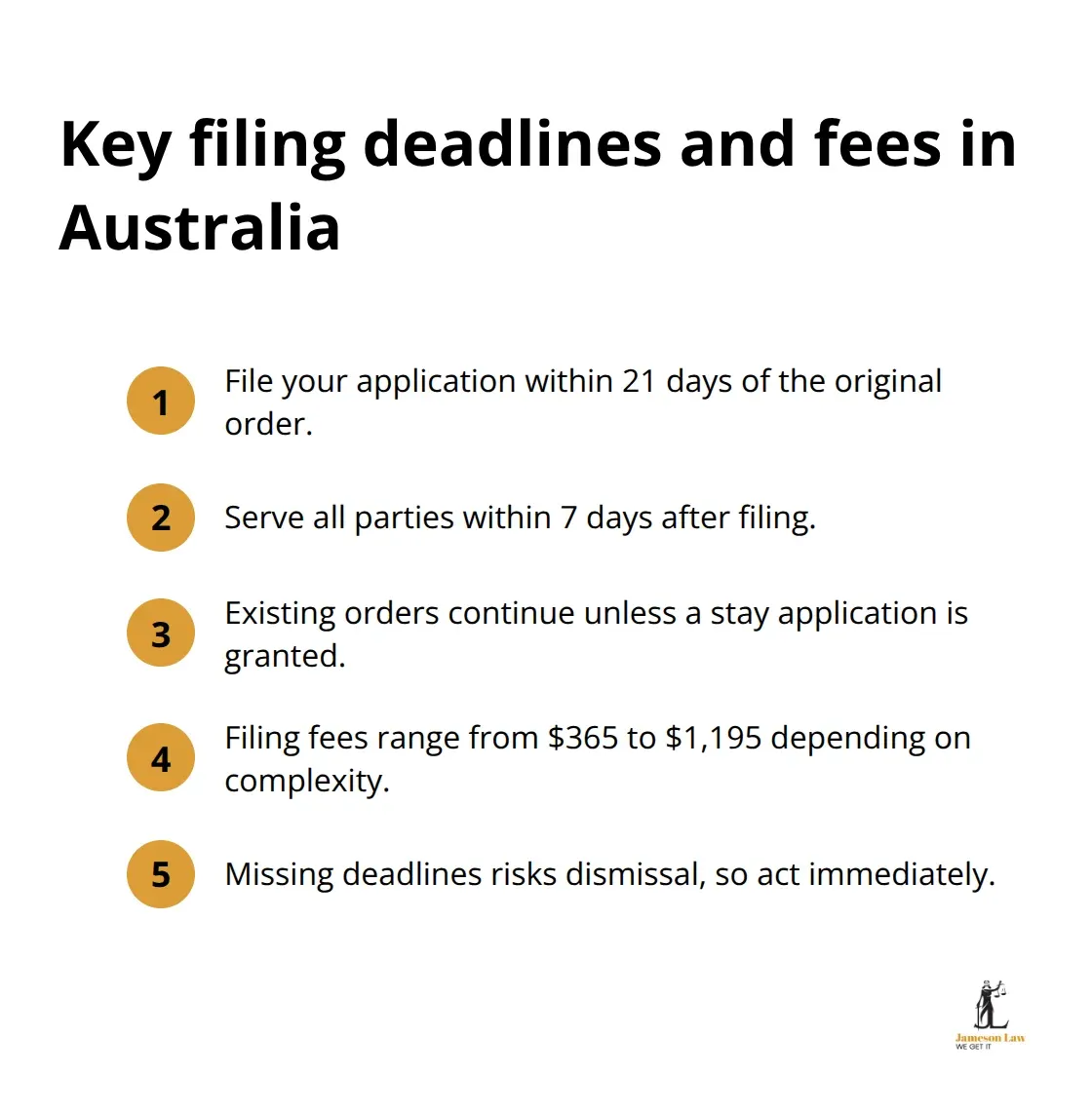
Filing fees vary by case complexity. Missing these deadlines can result in your application being dismissed, so immediate legal action is necessary when circumstances change.
How Do You Build a Strong Case for Review?
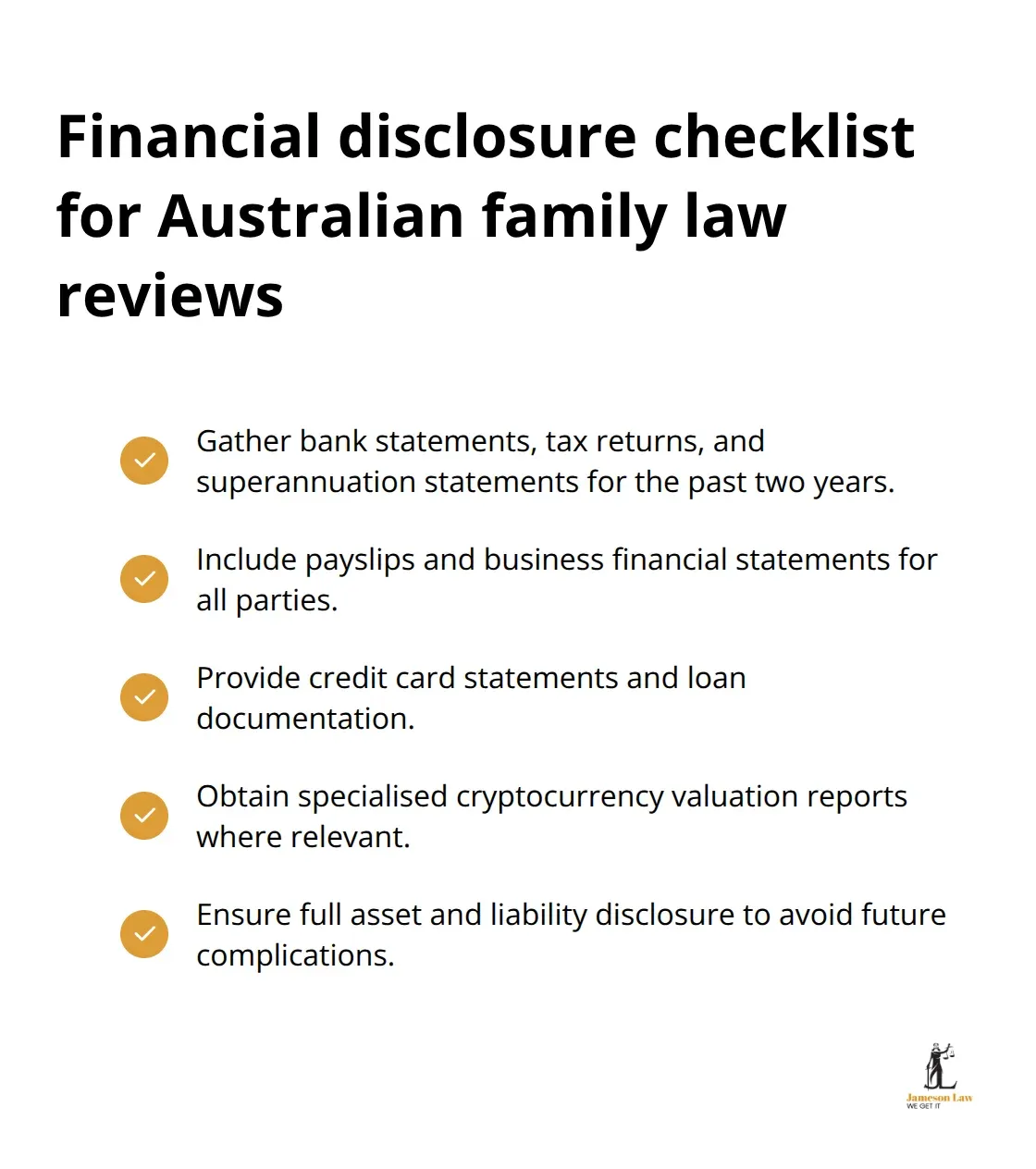
Success in your family law review depends entirely on the quality of your documentation. The court requires comprehensive financial disclosure. Incomplete submissions routinely result in delayed proceedings.
Financial Records That Courts Demand
Your financial disclosure must include every asset, liability, and income source. Collect payslips, business financial statements, and superannuation records. Hidden assets discovered after settlement can trigger fresh proceedings under Section 79A of the Family Law Act.
Documentation Strategy for Complex Cases
High-net-worth separations demand forensic accounting reports to trace asset movements. Engage qualified family lawyers in Sydney early in complex property matters. Document all communication with your former partner about children or finances through written channels only.
Legal Representation Requirements
Self-representation in family law reviews typically results in poor outcomes due to complex procedural requirements. Experienced family lawyers understand judicial preferences. Proper legal representation often recovers costs through improved settlement outcomes.
What Obstacles Will Derail Your Review?
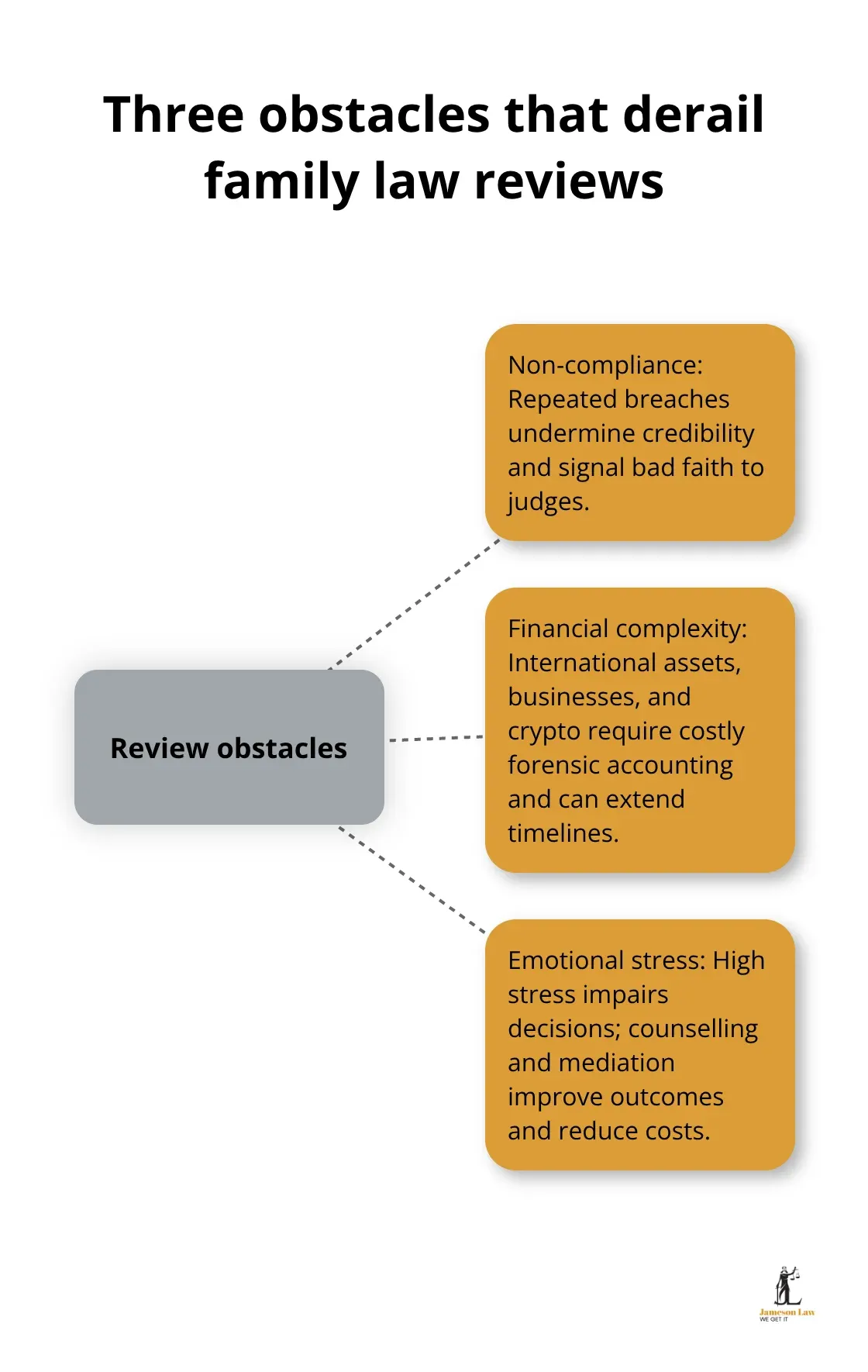
Family law reviews face obstacles that can destroy applications before they reach court. Non-compliance with court orders creates immediate credibility problems with judges.
Non-Compliance Documentation Strategy
Document every instance of non-compliance. Courts impose penalties for serious breaches of orders. Your compliance documentation becomes your strongest weapon in review proceedings.
Financial Complexity Demands Expert Analysis
Complex financial arrangements demand expertise. Cryptocurrency divisions and international assets require specialised knowledge. The Australian Securities and Investments Commission (ASIC) requires specific disclosure procedures for corporate assets.
Final Thoughts
Your family law review success depends on thorough preparation and professional guidance. The court imposes strict deadlines, often requiring action within 28 days.
We at Jameson Law help clients navigate family law review procedures. Self-representation frequently results in unfavourable outcomes. Courts impose strict procedural requirements that experienced lawyers understand.
You must accept the court’s decision and implement new arrangements immediately. Contact Jameson Law today to discuss modifying your court orders.