Separation is one of life’s most difficult decisions, and choosing the right family lawyer can make a significant difference in how smoothly the process unfolds.
At Jameson Law, we’ve seen firsthand how the right legal guidance helps families navigate this challenging time with clarity and confidence. The lawyer you select will shape everything from your settlement terms to your overall experience during this transition.
What Makes a Family Lawyer Right for Your Separation
Experience That Matches Your Situation
A family lawyer with genuine separation experience knows the real costs, timelines, and emotional weight of your decision. Look for someone who has handled cases similar to yours, whether that involves straightforward parenting arrangements or complex asset division. A lawyer who has managed cases at that scale understands what to prioritise and where to push back.
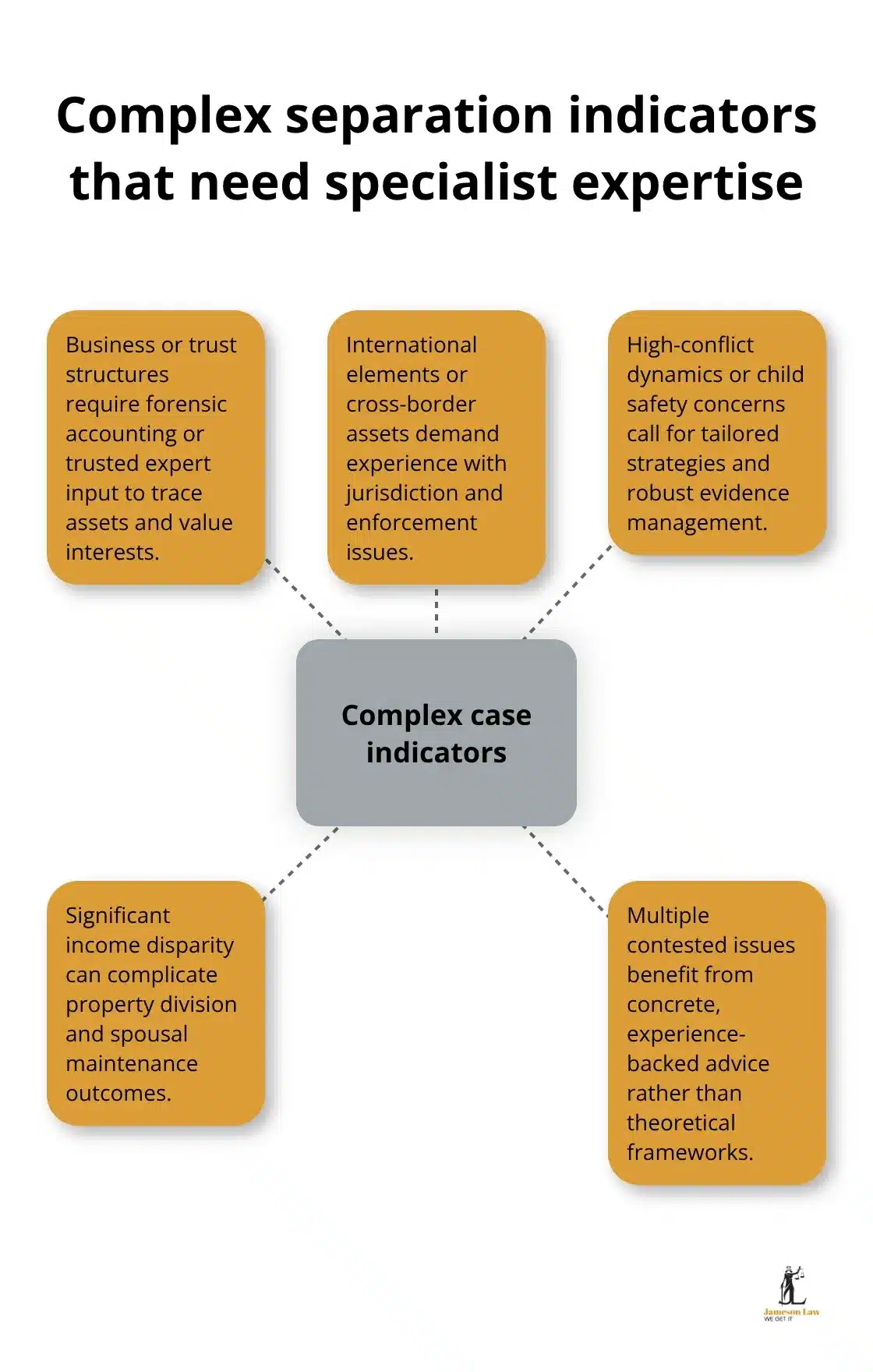
Ask directly about their track record with cases matching your situation, not just their years in practice. Accredited Family Law Specialists signal advanced qualifications, but accreditation alone doesn’t guarantee they’ll handle your specific circumstances well. What matters more is whether they’ve resolved matters involving your particular challenges-whether that’s child safety concerns, business assets, international elements, or high-conflict dynamics.
Specialist Knowledge for Complex Cases
If your case involves a business or trust, confirm they have forensic accounting experience or reliable expert connections. During your initial consultation, ask how they’d approach your circumstances and listen for concrete answers backed by experience, not theoretical frameworks. The lawyer should explain potential outcomes based on similar cases they’ve handled, not just what you hope to hear.
Cost Transparency From the Start
Transparency about costs separates competent lawyers from those who’ll surprise you later. Ask upfront about hourly rates (typically $200–$500 per hour in Australia), retainer structures ($5,000–$20,000 is common), and whether fixed fees apply to specific tasks. Senior associates in court cost $3,000–$6,000 per day, so knowing who will actually work on your matter matters significantly.
Request a realistic cost forecast covering best-case and worst-case scenarios, and ask which expenses fall outside the retainer-barrister fees, expert witnesses, and travel time add up quickly. A lawyer who avoids these questions or promises a fixed total cost for an unpredictable process signals poor practice. Discuss how to control costs: staying organised with documents, providing information promptly, and pursuing mediation or negotiation rather than court when possible. Some lawyers offer payment plans or can advise on Legal Aid eligibility if finances are tight.
Communication That Keeps You Informed
The conversation about costs reveals whether a lawyer respects your financial reality or simply wants a retainer regardless of your situation. Clear communication extends beyond fees to how they’ll keep you updated. Demand regular progress reports, clarity on what actions they’ve taken, and what responses came from the other side. A lawyer who goes silent between appointments or uses jargon without explanation creates stress you don’t need during an already difficult process.
The right lawyer explains complex legal concepts in language you actually understand and confirms you grasp each step before moving forward. This foundation of clear communication becomes essential when you need to evaluate whether settlement offers make sense or when court becomes necessary.
Finding the Right Family Lawyer
Start With Your Personal Network
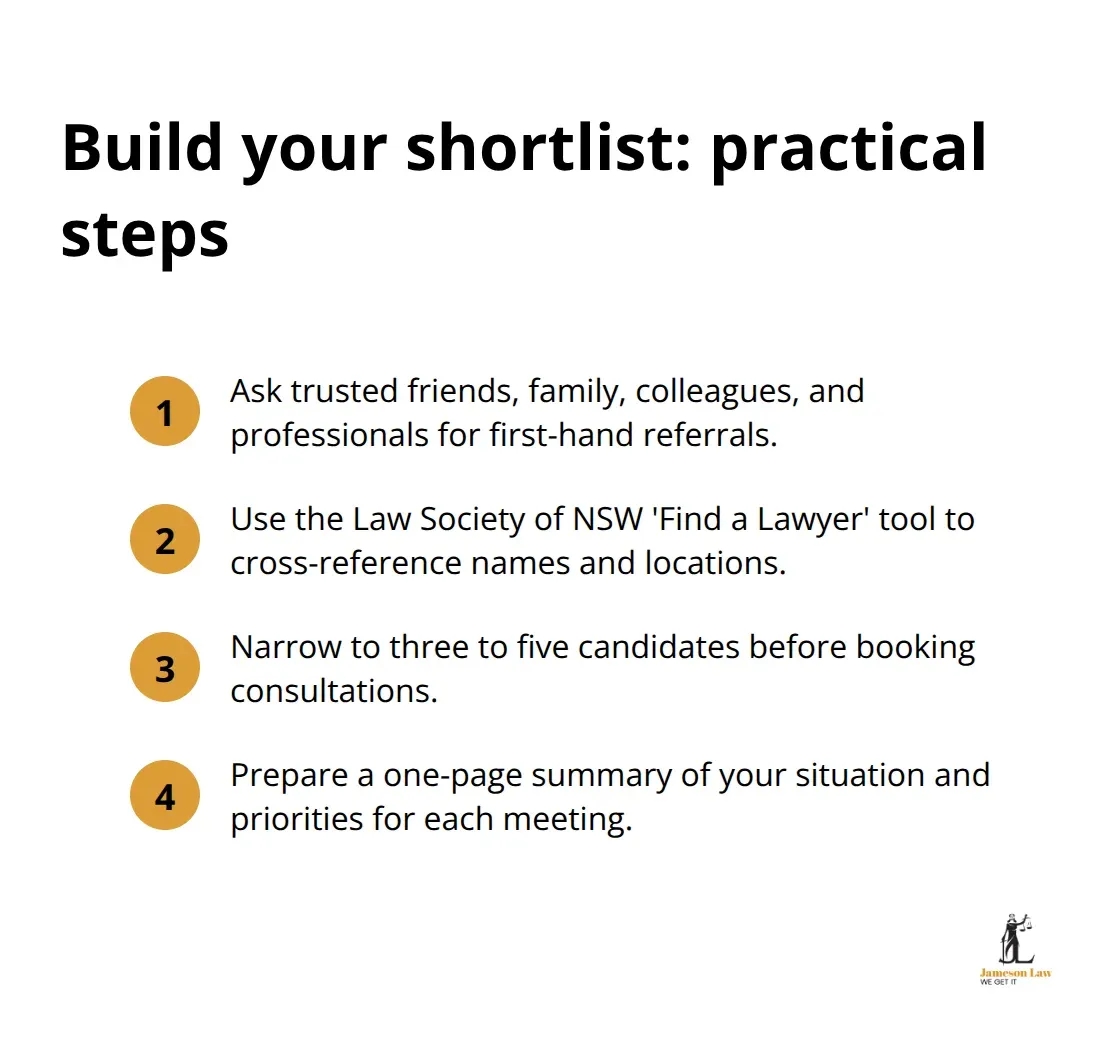
Your personal network provides the most honest referrals before you search online. Ask friends, family members, or colleagues who experienced separation which lawyers they actually worked with and whether they’d hire them again. This approach matters more than online reviews because you hear about real experience-not just the polished version on a firm’s website. If someone you trust spent $50,000 on a lawyer who dragged their case out unnecessarily, that’s worth knowing. Your accountant, GP, or financial adviser often hold solid referrals too, since they work with separated people regularly. The Law Society of NSW maintains a Find a Lawyer tool that lets you search by practice area and location, giving you a starting point to cross-reference against personal recommendations. Once you have three to five genuine candidates, you’re ready to check their actual qualifications and experience before booking consultations.
Verify Qualifications and Real Experience
Accreditation signals competence but doesn’t tell the whole story. An Accredited Family Law Specialist has completed additional training and demonstrated expertise, yet some excellent lawyers without accreditation handle separations skilfully because they’ve spent decades in the field. What you really need is proof they’ve handled cases matching yours. If you’re dividing a business, ask how many business valuations they’ve dealt with. If parenting is contested, ask about their experience with high-conflict custody disputes. If international assets are involved, confirm they’ve managed cross-border matters before. Request specific examples-not hypothetical answers about how they’d approach your situation, but actual cases they’ve resolved. A lawyer who hesitates or gives vague responses signals they lack real depth in that area. Check whether they’re listed as a specialist on professional directories and whether their firm has won relevant awards in family law. The Federal Circuit and Family Court of Australia publishes data showing average costs for different case types, so if a lawyer’s estimate falls wildly outside the typical range for your circumstances, question why.
Assess Compatibility Through Consultations
Schedule consultations with at least two lawyers before deciding. A free or low-cost initial consultation-typically 30 to 45 minutes-lets you assess whether their approach fits your needs without committing money. Arrive with a one-page summary of your situation, your priorities, and your main concerns. Listen to how they respond. Do they ask probing questions about your circumstances, or do they launch into a generic explanation of how separation works? A good lawyer customises their advice to your specific facts. Ask directly whether they’d recommend settlement, mediation, or court for your situation, and listen for honesty about trade-offs rather than certainty about outcomes.
Pay attention to whether you feel heard and whether they explain things clearly. If a lawyer speaks in jargon without checking whether you understand, or if they rush through the consultation, that’s a red flag about how they’ll communicate during the actual matter. Trust your instinct about compatibility-you’ll be sharing sensitive information and making major decisions with this person, so genuine rapport matters. After consultations, compare which lawyer aligned best with your personal style, answered your questions thoroughly, and gave you confidence they could handle your specific challenges.
Move Forward With Your Top Choice
The lawyer you select will shape how your separation unfolds, from settlement terms to your overall experience during this transition. Once you’ve identified your preferred candidate, the next step involves understanding what actually happens during the family law process itself-from initial assessment through to negotiation, mediation, or court proceedings if settlement cannot be reached.
What Happens During Your Family Law Matter
Your Initial Assessment and Strategy
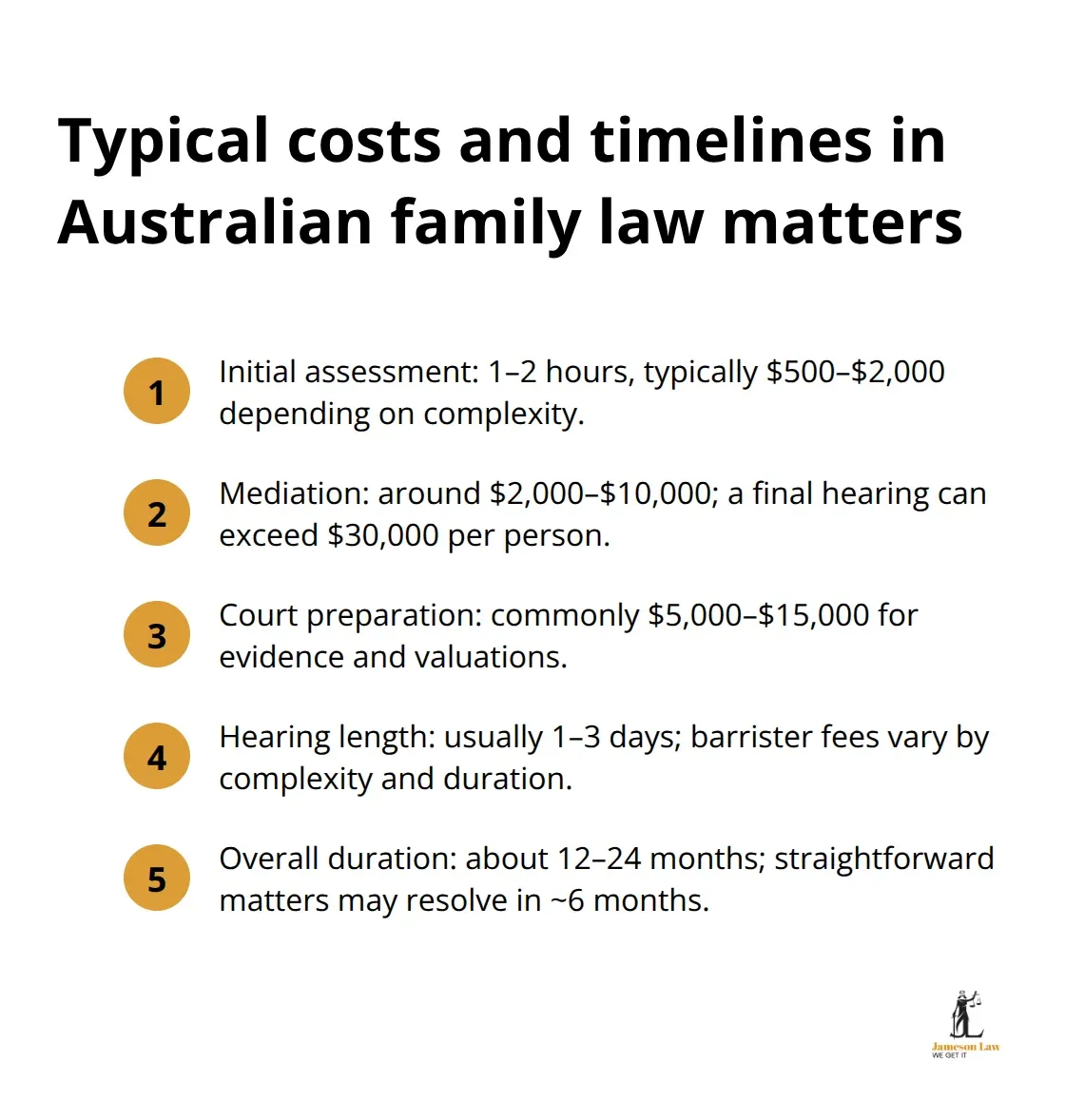
Once you hire a family lawyer, the process unfolds in stages that rarely follow a straight line. Your lawyer sits down with you to understand the full picture: your assets, liabilities, parenting arrangements, and what outcome matters most to you. This initial assessment typically takes one to two hours and costs between $500 and $2,000 depending on your case’s complexity. During this meeting, your lawyer identifies which issues are contested and which you and your former partner might resolve without court involvement. They explain realistic outcomes based on similar cases, not the best-case scenario you hope for. This conversation includes a candid discussion about whether your case fits the straightforward category-where mediation or negotiation often resolves matters-or whether it involves complexity like business assets, child safety concerns, or significant income disparity that may require more intensive legal work.
Mediation and Negotiation as Your First Path Forward
Most separations never reach court because mediation and negotiation resolve the major issues first. Mediation involves a neutral third party helping you and your former partner reach agreement on parenting, property, or both. The Federal Circuit and Family Court of Australia encourages this approach before court proceedings begin, and for good reason: mediation typically costs $2,000 to $10,000 compared to $30,000 or more per person for a final hearing. Your lawyer prepares you for mediation by identifying your priorities, explaining what’s negotiable and what isn’t, and coaching you on how to respond to settlement proposals. Many separations resolve at this stage because both parties avoid the expense and emotional toll of court. If mediation stalls, your lawyer moves to direct negotiation with the other party’s legal representative, exchanging written proposals and gradually narrowing the gap between positions. This phase can take weeks or months, but it keeps control in your hands rather than handing it to a judge. Your lawyer updates you regularly on each response and explains what each proposal means for your actual situation-how a particular parenting arrangement affects your work schedule, or what a property settlement leaves you to live on.
Preparing Your Case for Court
If negotiation fails and mediation produces no agreement, court becomes necessary. Before that happens, your lawyer prepares evidence: gathering financial documents, obtaining valuations for property or business assets, and collecting any communications relevant to parenting or safety concerns. This preparation phase costs $5,000 to $15,000 and determines whether your case succeeds or fails.
A poorly prepared case wastes money at trial, so your lawyer asks you to provide documents promptly and answer detailed questions about your circumstances. As your court date approaches, you review witness statements, understand what the judge will likely decide based on Family Law Act principles, and prepare emotionally for cross-examination if you will give evidence.
What Happens at Your Court Hearing
Court hearings for final orders typically run one to three days, and your lawyer or a barrister will represent you in front of the judge. Court hearing preparation and barrister fees vary depending on the complexity and length of your matter. After judgement, either party can appeal within strict timeframes, though appeals succeed only when the judge made a legal error-not simply because you disagree with the outcome. The entire process from hiring a lawyer to final judgement typically takes twelve to twenty-four months, though straightforward cases with willing cooperation resolve in six months.
Final Thoughts
Finding the right family lawyer for separation requires matching experience with your specific circumstances, demanding transparency about costs, and assessing genuine compatibility before committing. The lawyer you choose will influence everything from settlement terms to how efficiently your matter resolves. Experience handling cases similar to yours matters far more than years in practice alone, and cost transparency from the start prevents surprises later.
Your next step is straightforward: gather three to five genuine candidates through personal referrals, verify their qualifications and track record, then schedule consultations with at least two lawyers. Arrive prepared with a summary of your situation and priorities, and listen for customised advice rather than generic explanations. The right family lawyer for separation explains complex concepts clearly, answers your questions thoroughly, and gives you confidence they can handle your specific challenges.
At Jameson Law, we understand that separation demands both legal expertise and genuine support during a difficult transition. Contact us today to discuss your family law matter and take the first step toward resolution.