Postgraduate visa requirements can feel overwhelming, but they’re manageable when you know what to expect. At Jameson Law, we’ve helped countless graduates navigate this process successfully.
This guide breaks down everything you need to know, from eligibility criteria to work experience requirements and application preparation. You’ll find practical steps to strengthen your application and avoid costly mistakes.
What Qualifies You for a Postgraduate Visa
The Australian Department of Home Affairs sets clear eligibility thresholds for the Temporary Graduate visa, subclass 485, and meeting them requires precision rather than luck. You must be 35 years old or under when you apply, hold or have held a Student visa within the last six months, and have completed a CRICOS-registered qualification from an Australian institution. Your qualification must align closely with a nominated occupation on the Medium and Long-term Strategic Skills List-a hospitality degree won’t help you apply as an engineer. The Department updated eligibility rules on 14 December 2024, so you should verify the current requirements on the Home Affairs website because outdated information could derail your application.
Understanding the Three Visa Streams
Three streams exist under subclass 485, and you must select the correct one before you lodge your application. Post-Vocational Education Work applies to diploma and trade qualification holders and lasts up to 18 months. Post-Higher Education Work applies to degree holders and typically lasts two to three years. Second Post-Higher Education Work applies to regional graduates and lasts one to two years.
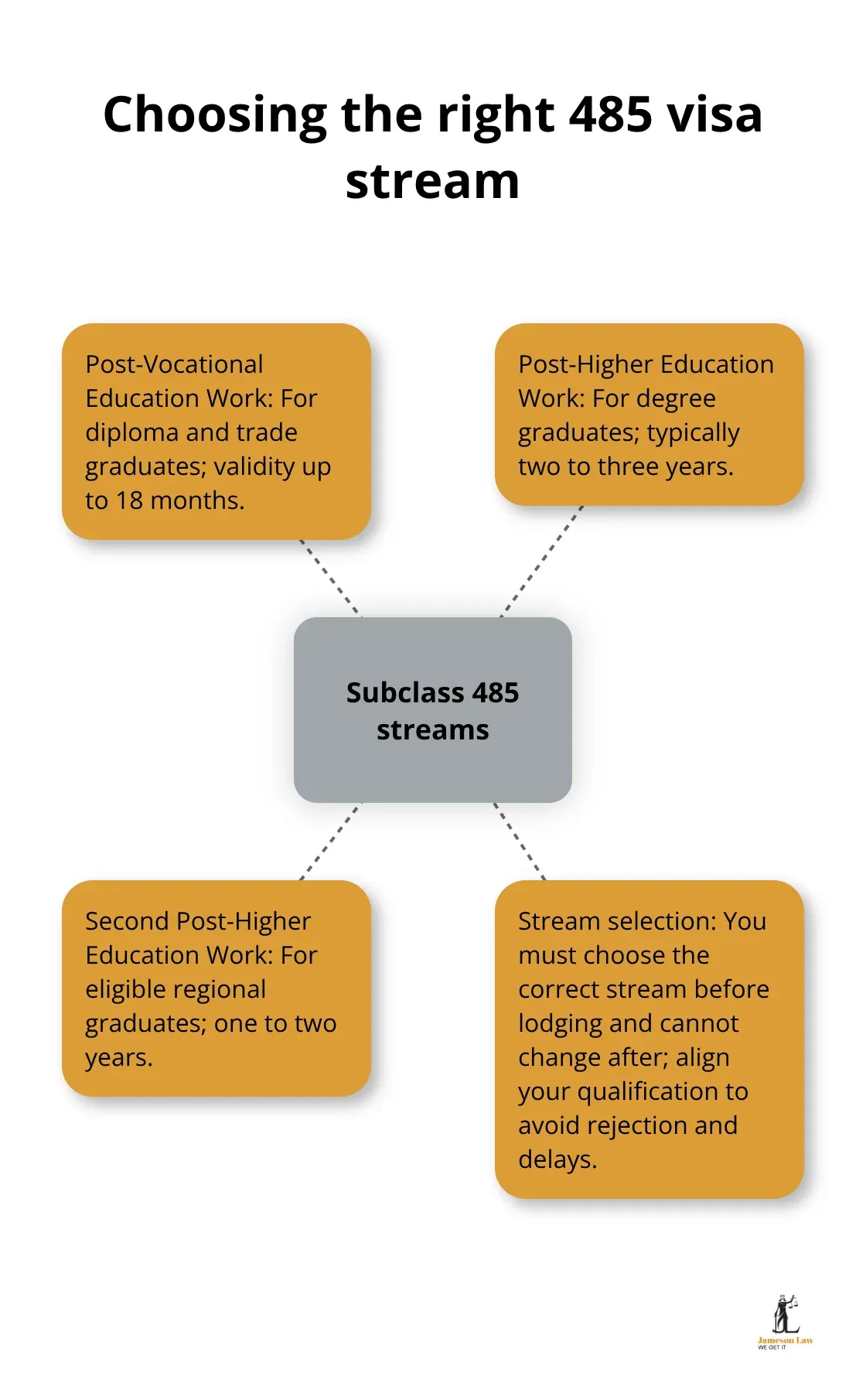
Your qualification level determines which stream suits you, and you cannot change streams after lodging your application, so matching your qualification to the right stream from the start prevents rejection and reapplication delays.
Gathering the Right Documentation
The Department requires specific evidence to prove you meet the study requirement, and vague or incomplete documentation triggers requests for further information that delay processing. You must provide official transcripts from your Australian institution confirming you completed your CRICOS-registered course, proof of your Student visa status or evidence you held one in the last six months, English language proficiency test results from accepted tests such as IELTS or TOEFL, and character and health assessments. Overseas Student Health Cover documentation is mandatory for you and any dependants you include in your application. Upload clear, legible scans of all documents to reduce requests for clarification and keep your application moving forward.
Submitting Your Application Online
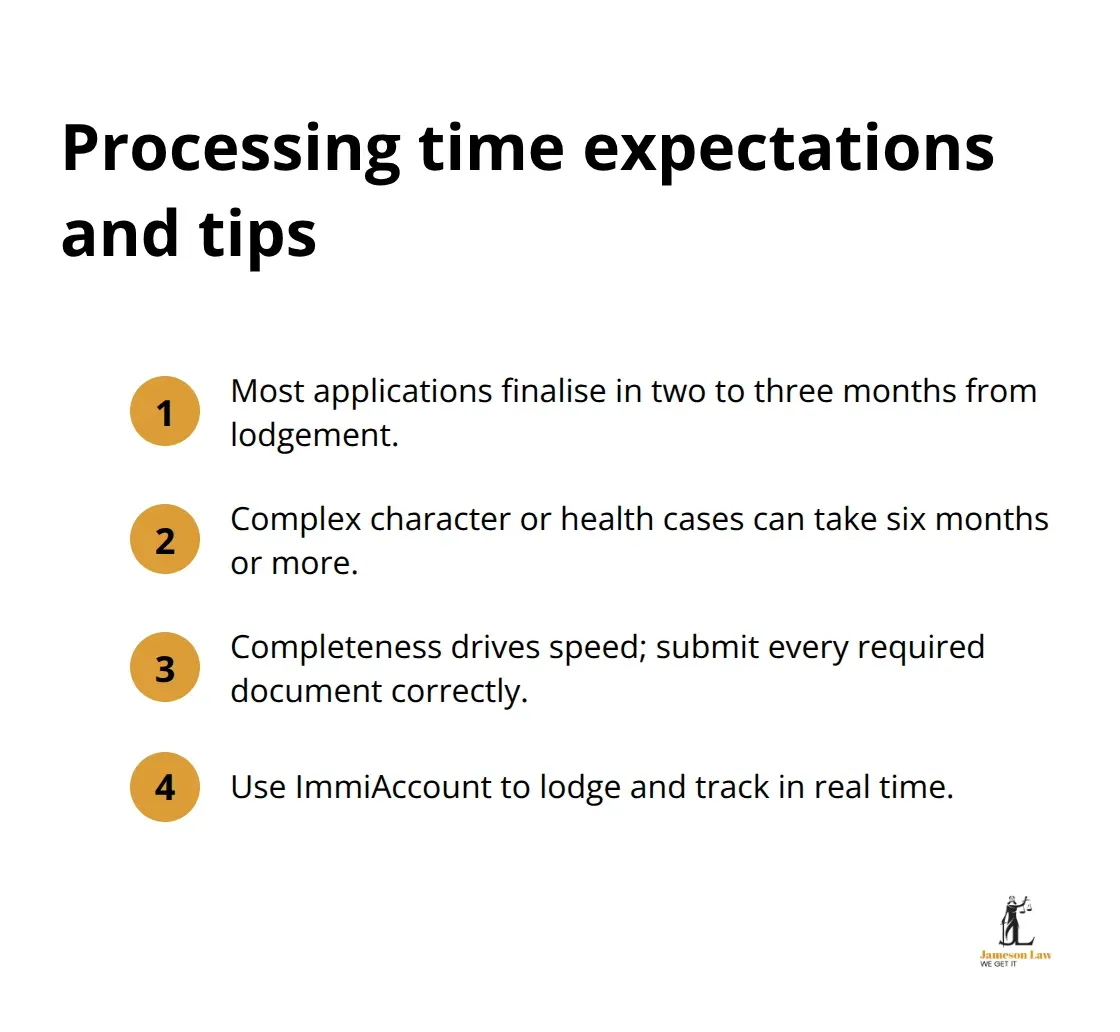
The Home Affairs ImmiAccount system allows you to lodge your application online and track your application status in real time, which beats waiting for postal updates. Most postgraduate visa applications process within two to three months from lodgement, though complex cases involving character or health concerns can extend to six months or longer. The Department’s processing times vary based on application completeness, so you should submit everything correctly the first time to cut weeks off your timeline.
When to Seek Professional Assistance
A migration agent can handle document preparation and submission, which reduces errors but adds their fees to your costs. A registered migration agent who holds current accreditation ensures you receive expert guidance on the 485 visa pathway and any complications unique to your application. Once you understand your eligibility and gather your documentation, the next critical step involves meeting the work experience requirements that strengthen your application and position you for success in the Australian job market.
Building Your Work Experience Case
How the Department Evaluates Your Employment History
Work experience transforms your postgraduate visa application from adequate to competitive, yet most applicants underestimate how the Department of Home Affairs evaluates employment history. The Australian Department of Home Affairs requires that your work experience directly relates to your nominated occupation on the Medium and Long-term Strategic Skills List, and generic roles or unrelated employment will not strengthen your case. You need documented evidence of employment including payslips, employment contracts, references from supervisors, and tax records that prove you worked in a role aligned with your qualification and occupation nomination. The Department scrutinises employment dates carefully, so gaps between your work periods and application date matter-recent work experience carries more weight than employment from three years ago.
What Types of Work Experience Count
Internships, postgraduate programs, and part-time roles during your studies all count if they relate to your field, and you should include these even if they were not full-time positions. Overseas work experience counts toward your application if it relates to your nominated occupation, though Australian work experience holds greater value because it demonstrates your ability to work within the Australian labour market and understand local workplace standards. For self-employment or freelance work, you should provide invoices, contracts with clients, and bank statements showing income deposits that corroborate your claimed work period. If you worked for a company that no longer operates, you must obtain written confirmation from your previous manager or HR representative on their personal letterhead stating your employment dates, role title, and duties.
Documentation Standards That Pass Department Scrutiny
Your employment records must demonstrate genuine work, not fabricated positions or inflated responsibilities. The Department cross-references your claims against employer verification, so inconsistencies between your application and what your employer confirms will trigger rejection and potential character concerns that affect future visa applications. You should maintain detailed employment records from day one of your Australian work experience because retroactively gathering this documentation months later becomes difficult and error-prone. Upload clear, legible scans of all employment documents to reduce requests for clarification and keep your application moving forward.
Strengthening Your Application With Substantial Work History
You should try to include at least six to twelve months of relevant employment history in your application, though more strengthens your case considerably. Graduates with two or more years of related work experience have substantially better approval outcomes than those with minimal employment records. The strength of your work experience case directly influences how the Department assesses your skills alignment and readiness to contribute to the Australian workforce. Once you have documented your employment history thoroughly, the next step involves preparing your complete application package to ensure every element meets Department standards and maximises your chances of approval.
Assembling Your Application Without Delays
Preparing a postgraduate visa application demands precision because the Department of Home Affairs processes thousands of applications monthly and incomplete submissions move to the back of the queue. You should create a master checklist of every document the Department requires before you start gathering anything, then cross-reference each item against the official Home Affairs website to confirm nothing has changed since you last checked. Most applicants waste weeks hunting for missing documents after lodging, which triggers requests for further information that extend processing times from two to three months to five or six months.
Collecting Your Core Documents
Start by downloading your official university transcripts directly from your institution’s student portal because printed versions sometimes lack security features the Department expects. Obtain your English language test results from your testing provider’s online account rather than relying on old emails, as the Department cross-references scores against official records. For your character and health assessments, book your medical examination with a panel doctor approved by the Department of Home Affairs, not your local GP, because unapproved medical reports face rejection outright.
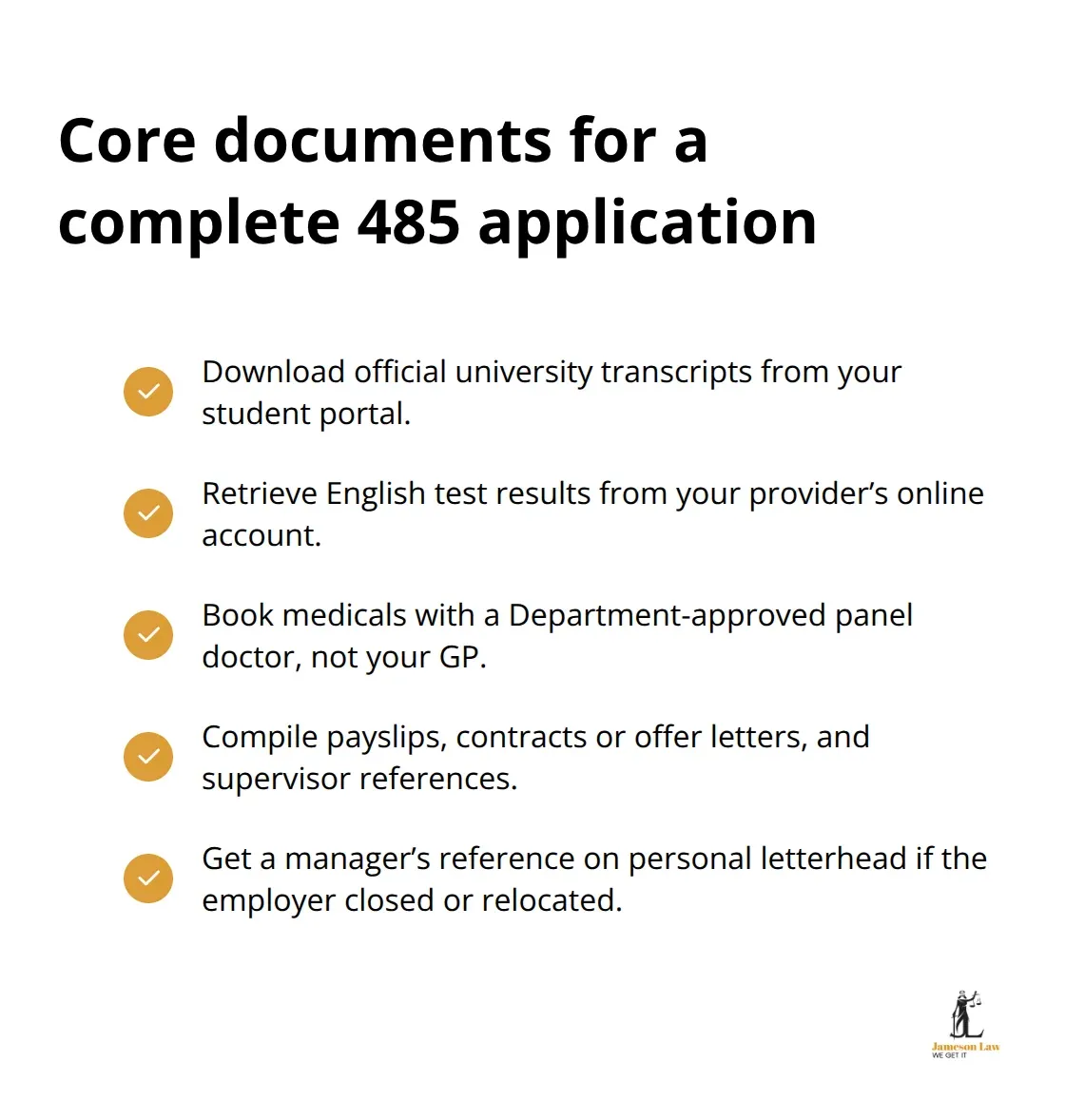
Collect employment documentation systematically: payslips from every employer covering your entire work period, employment contracts or offer letters, and written references from at least two supervisors confirming your role, dates, and responsibilities. If your employer has closed or relocated, contact your former manager directly for a reference on their personal letterhead rather than attempting to contact HR departments that may no longer exist.
Presenting Documents Effectively
Photograph or scan every document in colour at high resolution, then upload files individually to ImmiAccount rather than bundling multiple documents into single PDFs, which reduces the risk of pages being missed during Department review. Most rejections stem not from ineligibility but from poor document presentation, so invest time in clarity and organisation rather than rushing submission. Clear, legible scans of all employment documents reduce requests for clarification and keep your application moving forward.
Avoiding Critical Mistakes
Many graduates submit employment references written by colleagues or friends rather than supervisors, which the Department treats as unverifiable and potentially fabricated. Do not attempt to include overseas work experience without clear documentation showing the work relates directly to your nominated occupation, as the Department scrutinises international employment more critically than Australian work. Some applicants misalign their qualification with their nominated occupation on the skilled occupation list, then discover mid-application that their degree does not qualify for their chosen stream, forcing them to abandon and restart. Do not lodge your application without verifying that your qualification meets the updated eligibility rules effective from 14 December 2024, as several qualifications lost eligibility under the new criteria.
Addressing Character and Disclosure Issues
Avoid submitting character declarations without addressing any criminal history, traffic offences, or visa breaches, because silence triggers suspicion and deeper investigation. If you have ever worked illegally or overstayed a visa, disclose this to a migration agent before lodging because the Department cross-references visa records and employment history, and discovered discrepancies lead to refusal and character concerns affecting future applications. Do not assume your English language test score automatically meets Department requirements, as score thresholds vary between visa streams and change periodically.
Seeking Expert Guidance
If you are uncertain about any requirement, contact the Department through the Home Affairs website or consult a registered migration agent rather than guessing and submitting incomplete information. A registered migration agent handles document preparation and submission, which reduces errors and prevents costly rejections that damage your timeline and confidence.
Final Thoughts
Meeting postgraduate visa requirements demands attention to detail and strategic planning, but the process becomes straightforward once you understand what the Department of Home Affairs expects. You now know that eligibility hinges on your age, Student visa status, and CRICOS-registered qualification aligned to the skilled occupation list, and that selecting the correct stream before lodging prevents costly rejections. You have learned that employment documentation must be genuine, recent, and directly related to your nominated occupation, and that character and health assessments require approved providers rather than shortcuts.
Create a master checklist of every document the Department requires, then verify each item against the official Home Affairs website to confirm nothing has changed. Download your transcripts, book your medical examination with a Department-approved panel doctor, and collect employment records systematically from every employer. Photograph or scan documents in colour at high resolution, then upload them individually to ImmiAccount rather than bundling them into single PDFs, and verify that your qualification meets the updated eligibility rules effective from 14 December 2024 before you lodge.
If you face uncertainty about any requirement or have character or visa history concerns, consult a registered migration agent rather than submitting incomplete information. At Jameson Law, we offer expert immigration law services to help you navigate complex postgraduate visa requirements and avoid costly mistakes that damage your timeline and future prospects.