Getting an Australian business visa requires careful planning and attention to detail. The requirements for Australian business visa applications are strict, and missing even one element can delay your approval significantly.
At Jameson Law, we’ve helped countless entrepreneurs navigate this process successfully. This guide walks you through exactly what you need to know to submit a strong application.
What You Need to Know Before Applying
Understanding the Four Main Visa Streams
Australia’s business visa streams target different types of entrepreneurs, and you must identify which one matches your situation before you submit anything. The Department of Home Affairs recognises four main temporary visa streams under Subclass 188: Business Innovation, Investor, Significant Investor, and Entrepreneur. Each stream has distinct asset and investment thresholds that directly determine whether your application will succeed or fail.
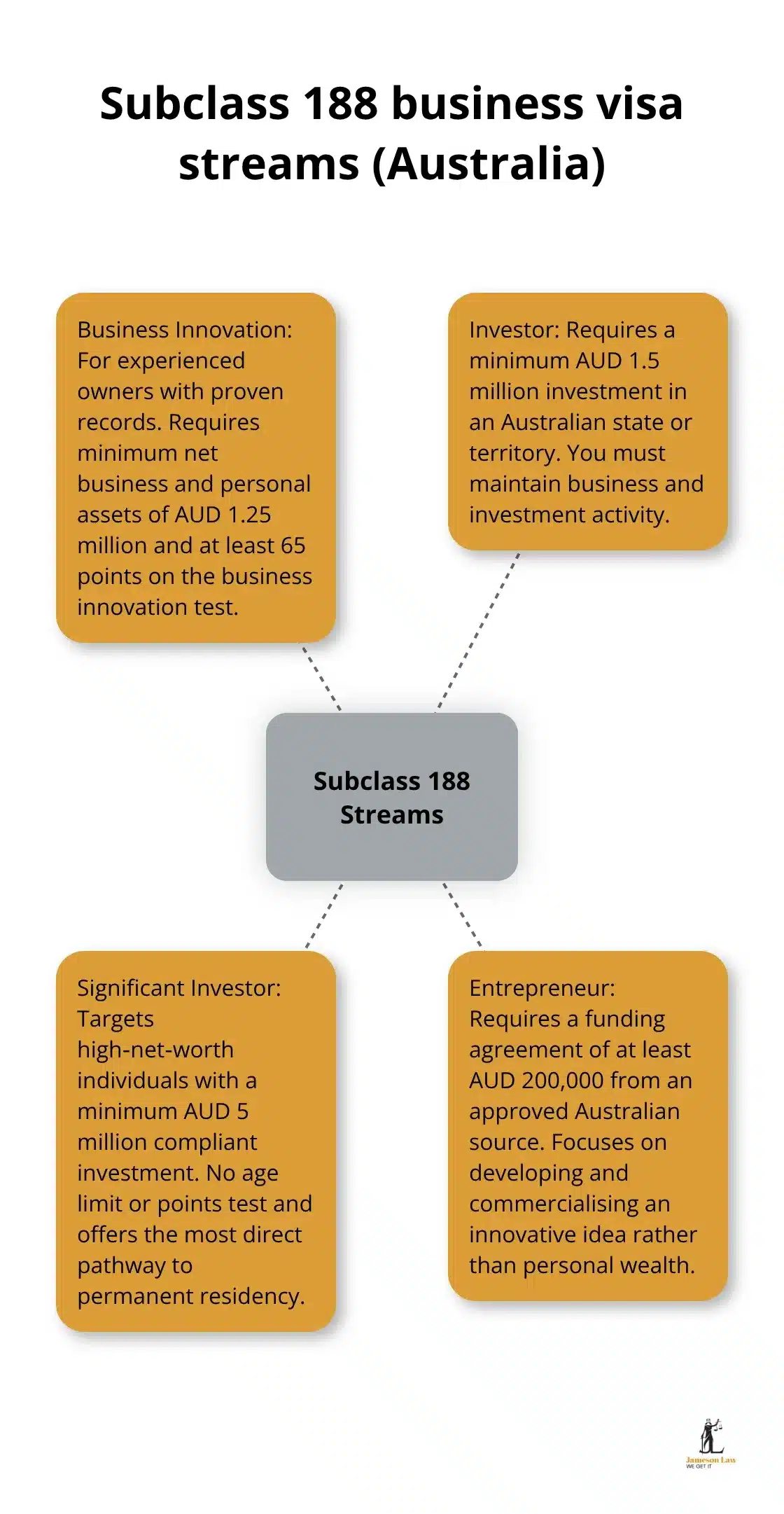
The Business Innovation Stream suits experienced business owners with proven track records. You need minimum net business and personal assets of AUD 1.25 million and must score 65 points on the business innovation test. The Investor Stream requires a minimum AUD 1.5 million investment in an Australian state or territory and you must maintain business and investment activity. The Significant Investor Stream targets high-net-worth individuals and requires a minimum AUD 5 million investment with no age limit or points test, offering the most direct pathway to permanent residency. The Entrepreneur Stream differs fundamentally; you need a funding agreement of at least AUD 200,000 from an approved Australian source to develop and commercialise an innovative idea, making it the only stream that doesn’t rely primarily on your personal wealth.
Financial Documentation Must Be Precise
Financial documentation forms the backbone of your application, and the Department of Home Affairs expects absolute precision. You must provide certified copies of financial statements covering at least two years, bank statements showing your declared assets, tax returns, and proof of asset ownership or investment placement. Underestimating these thresholds ranks among the most common reasons applications fail-you cannot round down your assets or claim investments that don’t meet the compliance criteria.
Many applicants overlook the compliance requirements for investments. If you declare AUD 2.5 million for the Investor Stream, every dollar must sit in approved bonds or investments. The Department verifies these holdings independently, so any discrepancy between your declaration and actual placement will trigger a rejection.
Health and Character Assessments Run in Parallel
Health and character assessments run concurrently with your application, and you must obtain a police clearance certificate from every country where you’ve lived for more than 12 months in the past ten years. You also need a comprehensive medical examination from an approved panel doctor. Character issues, even minor ones from decades ago, can derail your application if you don’t disclose them upfront.
The entire assessment process typically takes six to twelve months for the 188 visa (though some applications resolve faster). Timing your application around your business plans matters significantly, as delays in health or character checks can push back your visa grant date substantially.
State Nomination Adds Another Layer
Each state and territory operates its own nomination criteria for the 188 streams, and you must secure state sponsorship before the Department can finalise your visa. Some states prioritise certain industries or business types, while others focus on regional development. Research your target state’s specific requirements early-this step often determines whether you’ll succeed or face rejection before the Department even reviews your full application.
The nomination process typically takes four to eight weeks, but this varies by state. Starting your state nomination research now positions you to move quickly once you’ve confirmed which stream fits your profile.
Turning Your Application Into Reality
Build a Business Plan That Demonstrates Genuine Intent
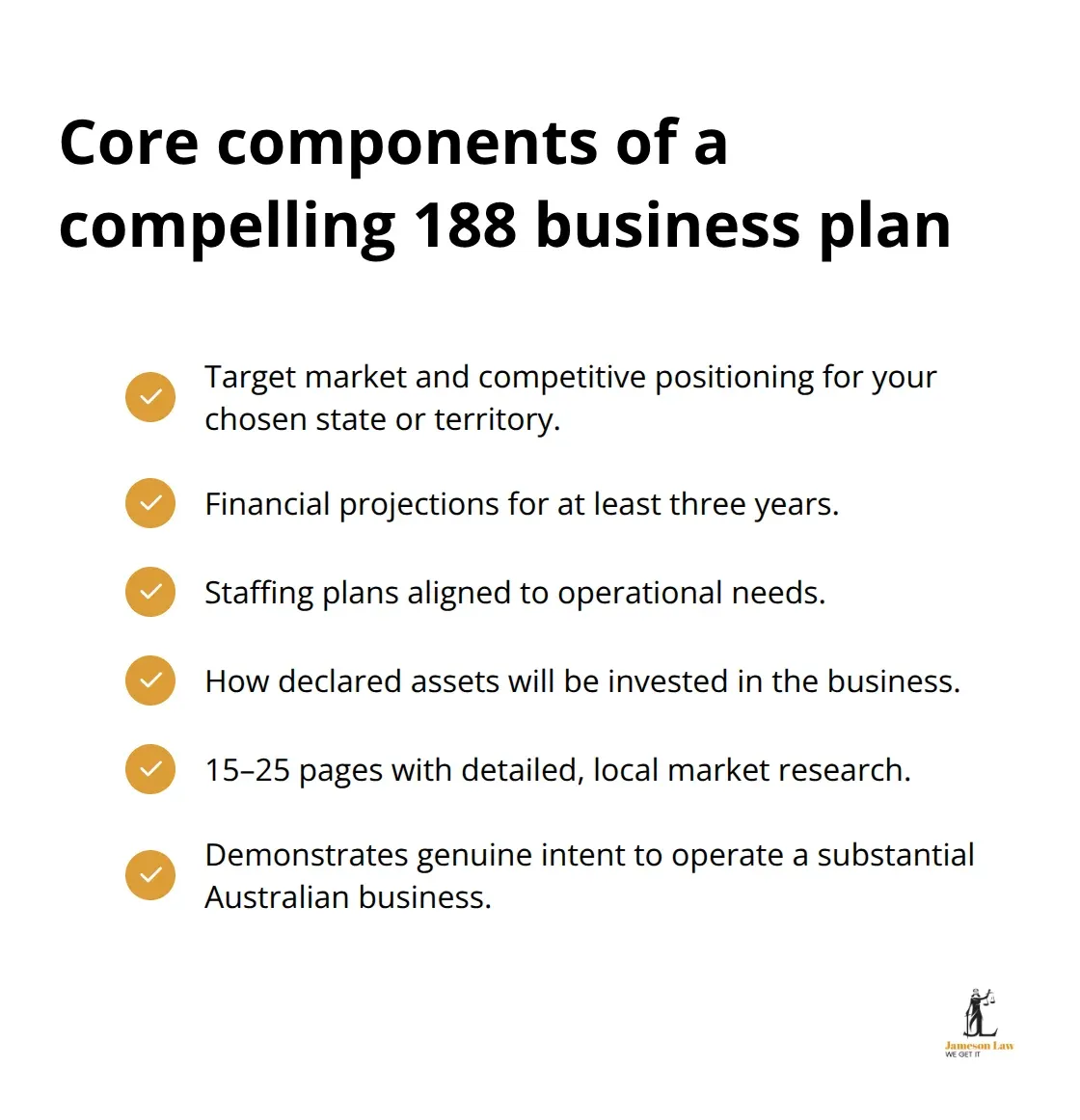
Your business plan forms the foundation that immigration officers will scrutinise most carefully, and it must demonstrate genuine intent to operate a substantial business in Australia rather than a passive investment vehicle. The Department of Home Affairs expects a comprehensive document covering your target market, competitive positioning, financial projections for at least three years, staffing plans, and how you will invest your declared assets. This is not a brief summary-prepare 15 to 25 pages that show detailed market research specific to your Australian state or territory, not generic industry analysis.
Include evidence of your existing business experience through company registration documents, profit and loss statements, tax assessments, and references from business associates who can verify your track record. Officers reviewing thousands of applications annually identify thin business plans within minutes, so invest time in making yours substantive and defensible.
Submit Your Application With Meticulous Attention to Technical Requirements
The submission itself demands meticulous attention to the Department’s technical requirements because even formatting errors trigger requests for information that delay your timeline by weeks. Lodge your Expression of Interest through SkillSelect first, then once invited to apply, use ImmiAccount to submit your complete application online. Attach every single document the Department requests in the exact format specified-certified copies for financial records, original police certificates, and medical results from approved panel doctors only.
Processing times for the 188 visa typically run 26 to 31 months, though some applications resolve faster and others extend beyond this window depending on character or health complexities. Understanding latest changes in Australian immigration can help you anticipate shifts in processing priorities and documentation expectations.
Coordinate State Nomination Before Federal Approval
Your state nomination must be secured before final Department approval, so coordinate closely with your state’s business migration office from the start rather than waiting until after you submit federally. This sequencing prevents costly delays and ensures your application moves through both state and federal stages without bottlenecks.
Maintain Active Communication Throughout Processing
Maintain direct communication with the Department through ImmiAccount, respond to any requests for additional information within the specified timeframe without delay, and track your application status regularly rather than assuming silence means progress. The Department may request clarification on your business plan, financial documentation, or character assessments at any point during processing, and your prompt response determines whether your application advances or stalls.
Once your visa grant arrives, the real work of establishing your Australian business begins-and understanding what happens next will shape your success far more than the application itself.
Mistakes That Derail Applications
Documentation Errors Trigger Rejections
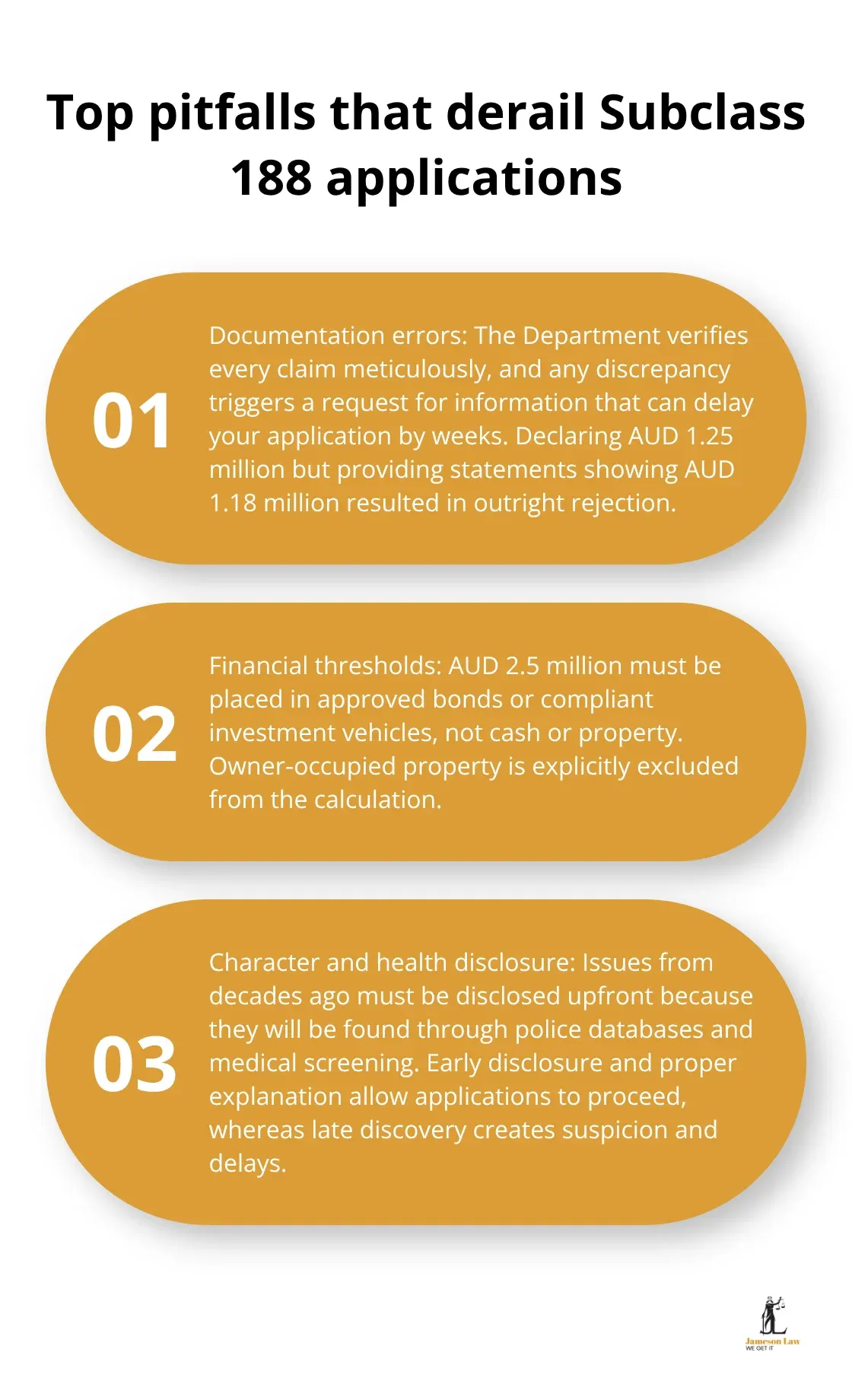
Documentation errors represent the single largest reason applications fail at the Department of Home Affairs, and most applicants underestimate how meticulously officers verify every claim. You submit certified copies of financial statements, but the Department cross-references these against tax returns and bank records independently-any discrepancy, no matter how minor, triggers a request for information that delays your application by weeks. One applicant declared AUD 1.25 million in assets for the Business Innovation Stream but submitted bank statements showing only AUD 1.18 million; the Department rejected the application outright because the declared amount fell below the threshold. Another applicant attached a business plan referencing outdated company registration documents, and immigration officers identified the inconsistency during their review, requiring a complete resubmission.
Certified copies must match exactly what you claim-if your financial statements show a business asset worth AUD 500,000, your supporting bank statements and ownership documentation must confirm that precise figure. Police clearance certificates must cover every country where you’ve lived for more than 12 months in the past decade, and missing even one jurisdiction triggers a rejection until you provide the missing certificate. Medical examinations must come from Department-approved panel doctors only; private doctors’ reports carry no weight. Applicants must track expiry dates carefully to avoid application delays or rejections, as the Department of Home Affairs does not accept expired documents under any circumstances.
Financial Thresholds Require Precise Understanding
Financial threshold miscalculations destroy applications that otherwise would have succeeded, and applicants frequently misunderstand which assets count toward their declaration. The Investor Stream requires AUD 2.5 million in approved investments-not cash in a bank account, not property you own, but money placed in compliant state or territory bonds or approved investment vehicles. Many applicants treat their personal residence or business premises as part of their asset calculation when the Department explicitly excludes owner-occupied property from this threshold.
Character and Health Issues Demand Upfront Disclosure
Character and health issues must be disclosed upfront, even matters from decades past, because the Department will discover them through international police databases and medical screening processes anyway. Failing to disclose a minor criminal conviction from 15 years ago seems harmless until the Department’s character assessment uncovers it, triggering an automatic investigation that extends processing by six months or longer. Medical conditions similarly require transparency through your approved panel doctor-attempting to conceal health issues wastes time because the Department’s medical screening is thorough. A migration agent can help you address potential issues before submission, as early disclosure and proper explanation often allows your application to proceed whereas late discovery creates suspicion and delays.
Final Thoughts
Meeting the requirements for Australian business visa applications demands precision, preparation, and professional support. You must identify your visa stream, verify financial thresholds match your assets exactly, secure state nomination, and submit flawless documentation through ImmiAccount. Health and character assessments run concurrently, so you should disclose any potential issues upfront rather than hoping they remain hidden.
The most successful applicants treat their business plan as a substantive document that demonstrates genuine intent to operate in Australia, not a brief summary. They verify every financial figure against supporting bank statements and tax returns before submission, and they research their target state’s specific nomination criteria early to coordinate state sponsorship before federal approval. They use certified copies, approved panel doctors, and complete police clearance certificates covering every country where they’ve lived for more than 12 months in the past decade.
We at Jameson Law specialise in immigration law and can guide you through this complex process, helping you avoid the documentation errors, financial miscalculations, and disclosure failures that derail applications. Our team understands how the Department of Home Affairs reviews applications and what immigration officers scrutinise most carefully. Contact Jameson Law to discuss your visa application and ensure your path to Australian business ownership succeeds from the start.