Family law matters affect some of the most important decisions in your life. Whether you’re navigating separation, property division, or parenting arrangements, understanding the NSW Family Law Act is essential.
At Jameson Law, we’ve helped countless families work through these complex issues. This guide breaks down the Act’s key provisions so you can make informed decisions about your situation.
What the Family Law Act Actually Covers
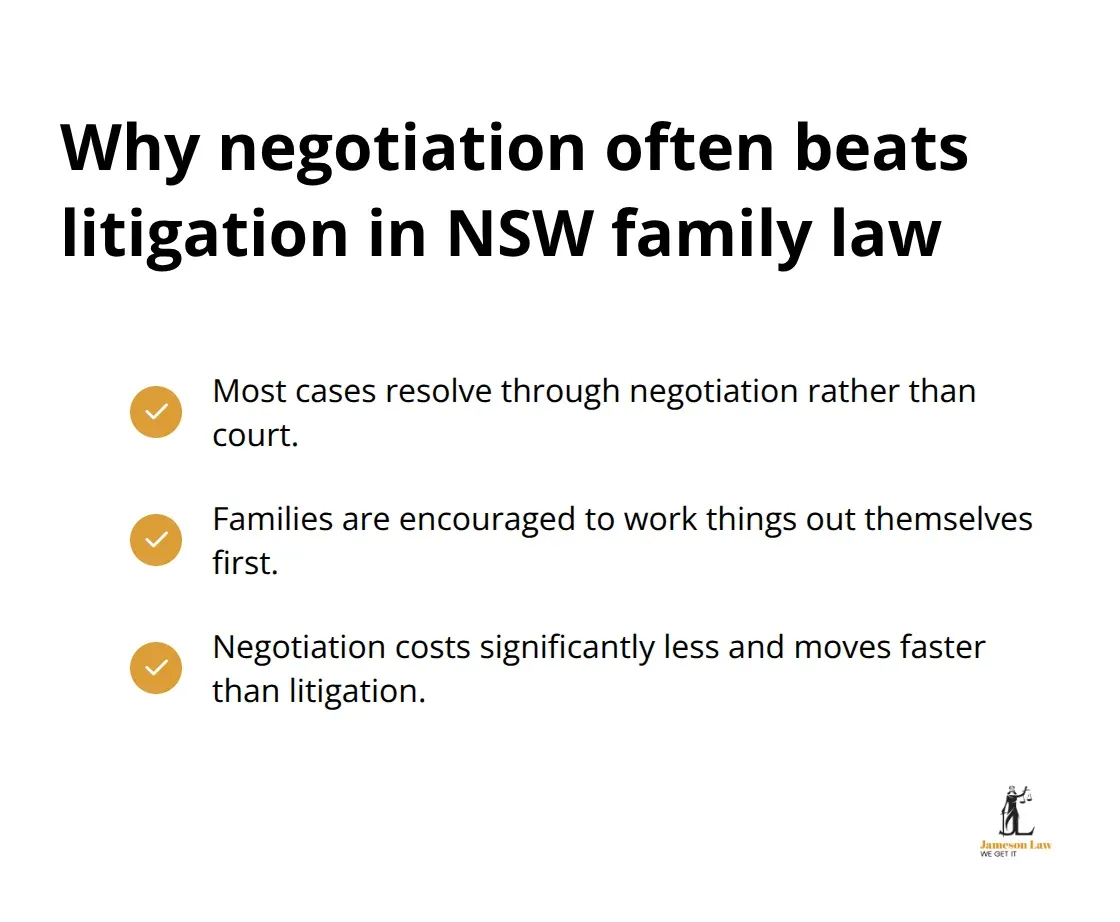
The Family Law Act 1975 is federal legislation that governs how family law operates across all of Australia, including NSW. This Act covers three major areas: divorce and dissolution of de facto relationships, property division and financial matters, and parenting arrangements for children. When you separate, the Act determines how your assets get divided, what financial support you owe, and where your children live. NSW residents access the federal system through the Federal Circuit and Family Court of Australia rather than separate state family law. Most of these cases resolve through negotiation rather than court battles. This matters because the system encourages families to work things out themselves first, which costs significantly less and moves faster than litigation.
The Shift Away from Equal Parenting Presumptions
The Family Law Amendment Act 2023, which came into effect in May 2024, fundamentally changed how courts approach parenting decisions. The old presumption of equal shared parental responsibility no longer applies. Courts now make decisions purely based on what serves the child’s best interests, with safety as the priority consideration. If one parent has a history of family violence, substance abuse, or neglect, the court will not automatically award them 50% of the child’s time just because that was the old default. The amendments also introduced economic abuse as a form of family violence, which changes how courts view property settlements when one partner has controlled finances or run up debts in the other’s name. For NSW families, this means the court process has become more flexible but also requires you to demonstrate why your proposed arrangement genuinely benefits your child, not just that you want equal time.
How Financial Disclosure Works From Day One
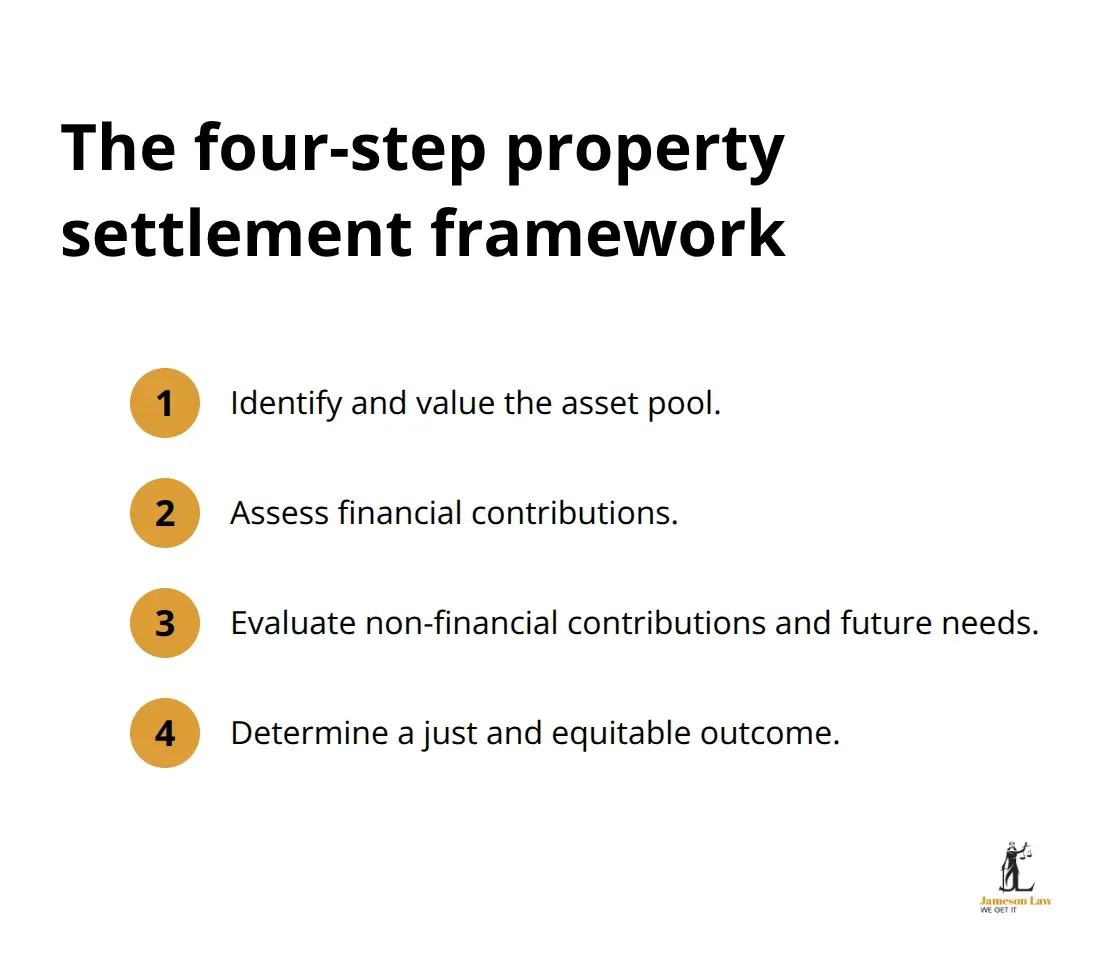
One significant change from the 2023 amendments is that financial disclosure now happens immediately when you start the process. You must disclose your income, assets, debts, and financial resources upfront, covering everything held by corporations, trusts, or disposed of before or after separation. This transparency requirement applies whether you negotiate informally or head to court. Non-compliance with disclosure obligations can result in fines or cost orders against you, so taking this seriously from the start protects your position. The four-step framework property division courts use considers your financial contributions, non-financial contributions (like raising children or supporting a business), your future needs, and what produces a just and equitable result. Superannuation gets treated as property and can be divided between you and your ex-partner, which many people don’t realise until separation forces the conversation.
What Happens Next With Your Property and Finances
Understanding these foundational rules about disclosure and parenting principles sets the stage for how courts actually divide your assets and determine financial obligations. The specific mechanisms for property settlement and spousal maintenance follow directly from these principles, and knowing how courts apply the framework to your situation makes a real difference in negotiating a fair outcome.
How Your Assets Get Split When You Separate
The four-step framework courts use to divide property is straightforward once you understand what judges actually examine. First, they assess your financial contributions-the money and assets you brought into the relationship or earned during it. Second, they evaluate non-financial contributions like raising children, managing the household, or supporting your partner’s career. Third, they consider your future needs, which includes your age, health, earning capacity, and whether you are the primary carer for children. Fourth, they determine what produces a just and equitable result overall. This is not about splitting everything 50-50. If you earned significantly more but your partner sacrificed career opportunities to raise your children, the court will likely award them a larger share to account for that non-financial contribution.
Superannuation Counts as Property You Can Divide
Superannuation gets treated as property under the Family Law Act and courts regularly split it between you and your ex-partner. Most people do not realise this until separation forces the conversation, but it represents a substantial asset that affects your retirement savings. You can establish your own superannuation account to receive your share, which means your retirement savings get divided at separation rather than waiting until you both retire. This division happens through a superannuation splitting order, and the process requires careful attention to ensure the transfer occurs correctly.
Financial Disclosure Happens From Day One
Financial disclosure now occurs from the start, whether you negotiate informally or head to court. You must reveal your income, assets, debts, and financial resources, including anything held through corporations, trusts, or disposed of before or after separation. The Federal Circuit and Family Court of Australia expects complete transparency, and non-compliance results in fines or cost orders against you. This upfront disclosure actually works in your favour if you negotiate a settlement because both parties know exactly what they work with. If your ex-partner attempts to hide assets later, you have documented proof they failed to disclose. Many people attempt to move money into family members’ names or create false debts before separation, but courts see through these tactics regularly and penalise parties who do it. Starting with honest disclosure protects your credibility and strengthens your negotiating position.
Spousal Maintenance Applies When One Partner Cannot Support Themselves
Spousal maintenance differs from child support-it addresses whether one partner can adequately support themselves after separation. Courts consider your age and health, your income and resources, your earning capacity, the standard of living during the relationship, and whether you have been out of the workforce caring for children. If you were the primary carer and your earning capacity suffered because of that role, you might receive maintenance payments from your ex-partner. These payments can be time-limited or indefinite depending on your circumstances, and they end automatically if you remarry or if your ex-partner dies. The amount is not fixed by formula like child support is-it depends entirely on your specific situation. If you have been out of the workforce for years raising children, courts recognise you may need time to rebuild your career and earning capacity, and maintenance bridges that gap.
Binding Financial Agreements Offer Control Over Your Settlement
A Binding Financial Agreement (BFA) allows you and your partner to determine asset division without court involvement, giving you control over the outcome. Both parties must obtain independent legal advice before signing, which makes the agreement enforceable and protects both of you. BFAs can address superannuation splitting, property division, and spousal maintenance all in one document. This approach costs significantly less than court proceedings and moves faster because you control the timeline rather than waiting for court dates. If circumstances change substantially after you sign a BFA, you may apply to court to set it aside, but courts only do this in limited circumstances where the agreement is genuinely unjust.
Understanding how courts divide your assets and what financial obligations you face sets the stage for negotiating a settlement that reflects your actual contributions and future needs. The next section examines how child support obligations work alongside property division and what factors courts consider when determining maintenance payments.
How Courts Determine Where Your Child Lives
The Family Law Act does not assume equal time with each parent is automatically in your child’s best interests, despite what many separating parents expect. Courts now assess parenting arrangements purely on what serves your child’s safety and wellbeing, with no default position favouring either parent. The 2023 amendments removed the presumption of equal shared parental responsibility, meaning you cannot walk into court expecting 50-50 custody simply because you are the child’s mother or father. Instead, courts examine whether your proposed arrangement genuinely meets your child’s needs across safety, meaningful relationships with both parents, cultural connections, and your child’s own views about where they want to live. If one parent has a history of family violence, substance abuse, or neglect, the court will reject equal time arrangements regardless of what either parent wants. This shift matters because it forces separating parents to focus on what actually works for their child rather than fighting over abstract notions of fairness between adults. The Family Court expects you to attempt Family Dispute Resolution before applying for parenting orders unless safety concerns exist, which means you spend time negotiating arrangements with a mediator before judges become involved. Most separated families in Australia resolve parenting arrangements without court involvement entirely, with the majority settling through negotiation or mediation instead of litigation.
What Safety and Best Interests Actually Mean in Court Decisions
When courts assess best interests of the child, they examine specific factors including your child’s safety with each parent, the child’s own expressed views and preferences, your child’s developmental and emotional needs, each parent’s capacity to meet those needs, and the benefit of your child maintaining meaningful relationships with both parents and other significant people. For Aboriginal and Torres Strait Islander children, cultural connection becomes a key consideration that courts weigh heavily in their decisions. If your ex-partner has a criminal history involving violence, substance abuse convictions, or child protection involvement, the court will scrutinise their parenting capacity carefully and may limit their time with your child substantially. Your child’s views matter increasingly as they grow older, and the court now expects Independent Children’s Lawyers to meet directly with children to understand what the child actually wants rather than relying on secondhand reports.
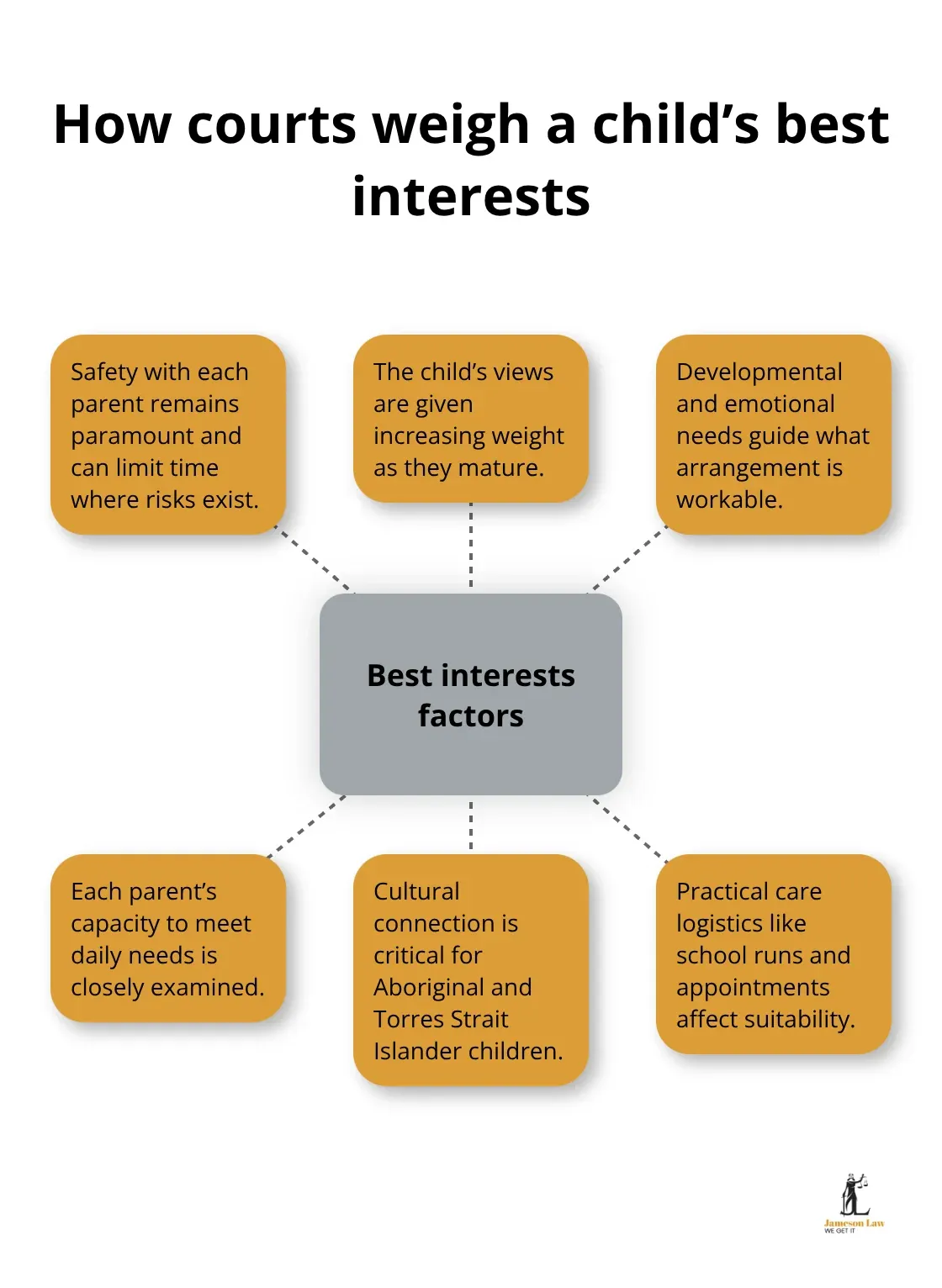
If your 14-year-old daughter tells the court she does not feel safe around her father due to his anger issues, that carries significant weight in the court’s decision-making. Courts also consider practical factors like whether each parent can manage school drop-offs and pickups, attend medical appointments, and support your child’s extracurricular activities. A parent who works irregular shift work may struggle to provide stable daily routines, which affects the court’s view of their suitability for primary care. You need to demonstrate not just that you want custody but that your specific circumstances allow you to actually provide what your child needs day to day.
Changing Parenting Orders When Your Situation Shifts
Parenting arrangements do not remain fixed forever if circumstances change substantially. If your ex-partner loses their job and can no longer afford to pay for your child’s school fees as agreed, or if you secure employment requiring relocation, you can apply to modify existing parenting orders. The process starts with attempting to negotiate new arrangements with your ex-partner, which costs nothing and moves faster than court applications. If you cannot agree, you must attempt Family Dispute Resolution mediation before applying to court for modified orders, unless safety concerns exist. Courts will only change existing parenting orders if the change genuinely serves your child’s best interests and circumstances have shifted materially since the original order was made. A minor change like your ex-partner adjusting their work schedule does not justify modification, but major changes like you securing a job interstate or your ex-partner’s new partner moving in with a history of violence absolutely do. Many families make informal adjustments to parenting arrangements without court involvement, which works well if both parents cooperate, but if disputes arise about whether the modifications are actually happening, you need written documentation of the new arrangement. A parenting plan serves as a signed, dated written record of what you and your ex-partner have agreed to regarding your child’s care, scheduling, and major decision-making, though parenting plans are not legally enforceable like court orders are. If your ex-partner stops following the agreed arrangement, you can apply to the court for enforcement action, which may include orders for payment of costs or even contempt of court findings if the breaches are serious and without reasonable excuse.
Final Thoughts
The NSW Family Law Act governs some of the most significant decisions you face during separation. Understanding how courts assess parenting arrangements, divide property, and determine financial obligations gives you the foundation to negotiate outcomes that actually serve your family’s needs. The 2023 amendments shifted the system away from presumptions of equal parenting and introduced economic abuse as family violence, meaning courts now focus entirely on what protects your child and produces genuinely fair property settlements.
Most families resolve their disputes without court involvement by negotiating directly or using Family Dispute Resolution mediation. This approach costs substantially less, moves faster, and gives you control over the outcome rather than waiting for judges to decide. Starting with complete financial disclosure, attempting good-faith negotiation, and considering binding financial agreements or parenting plans keeps you out of expensive litigation.
The complexity of family law means that professional guidance makes a real difference, particularly when substantial assets are involved or family violence concerns exist. We at Jameson Law can provide the tailored support you need to navigate property division, parenting arrangements, or any questions about your obligations under the NSW Family Law Act. Contact our family law team to discuss your situation with experienced lawyers who understand your circumstances.