Will disputes can tear families apart and drain estate resources quickly. At Jameson Law, we’ve seen how disagreements over wills create lasting conflict and financial strain.
This guide walks you through will disputes resolution in NSW, from understanding your options to taking action. You’ll learn what claims are valid, how much disputes cost, and which path forward makes sense for your situation.
What Makes Wills Disputed in NSW
Undue Influence and Lack of Capacity
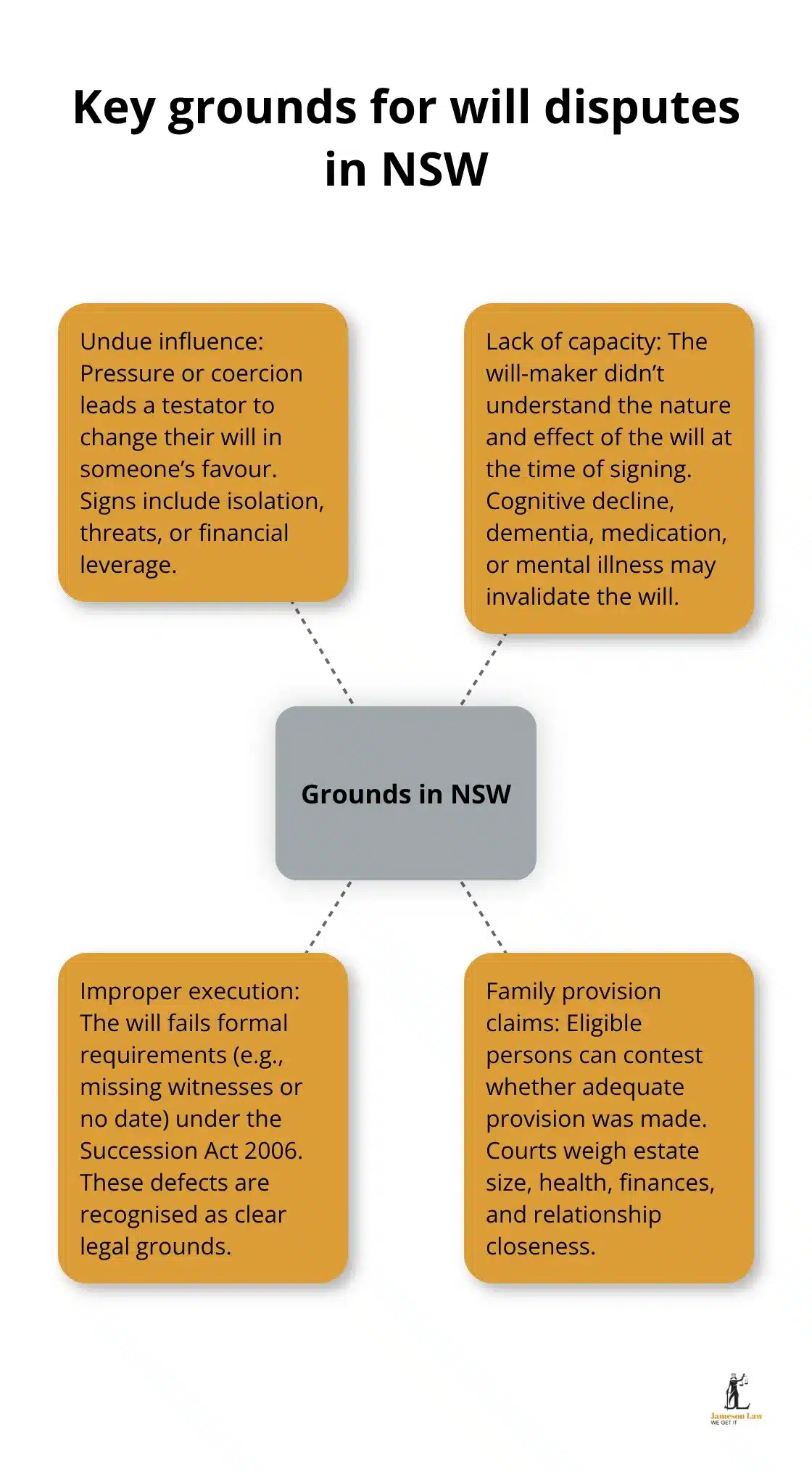
Will disputes in NSW stem from specific, identifiable grievances rather than vague dissatisfaction. Undue influence tops the list of contested claims, occurring when someone exerts pressure on the deceased to alter their will in that person’s favour. A carer might isolate an elderly testator, a family member might make threats, or creditors might apply financial pressure. Lack of testamentary capacity ranks second-the deceased simply wasn’t mentally fit to understand what they were signing when they made the will. Cognitive decline, dementia, medication effects, or mental illness at the time of execution can all undermine a will’s validity.
Improper Execution and Formal Requirements
Improper execution follows closely, where the will breaches the formal requirements under Part 2.1 of the Succession Act 2006, such as missing witness signatures or undated documents. These aren’t grey areas; courts recognise them as concrete legal grounds.

The Succession Act 2006 also permits family provision claims, which allow eligible persons-including spouses, de facto partners, children, dependents, and grandchildren-to challenge whether the will made adequate provision for them. The court weighs factors like the size of the estate, the applicant’s age and health, their financial position, and the closeness of their relationship with the deceased when deciding these claims.
Settlement Rates and Early Resolution
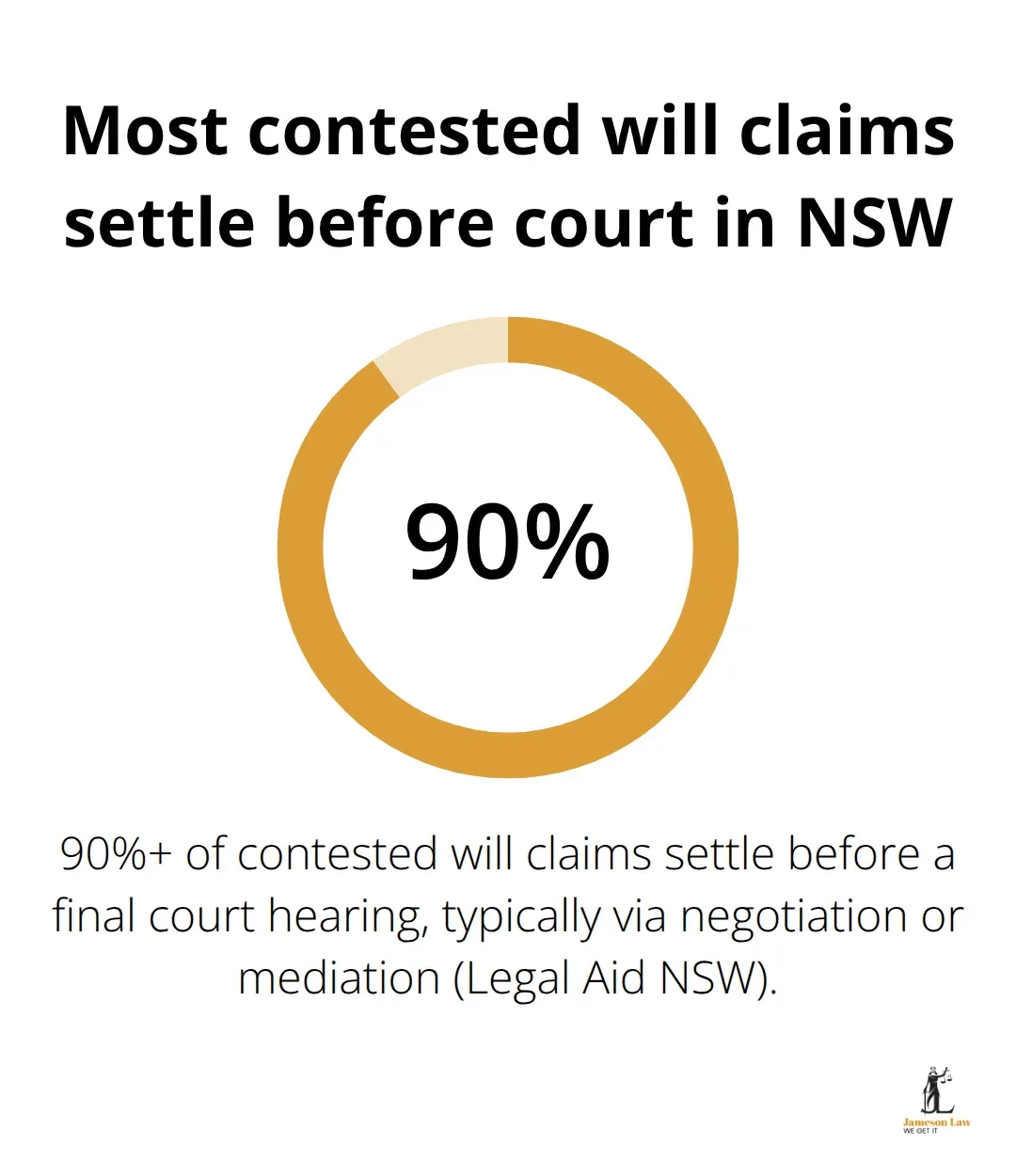
Legal Aid NSW data shows that over 90% of contested will claims settle before reaching a final court hearing, typically through negotiation or mediation. This means most disputes don’t escalate to expensive litigation; they resolve when both sides understand the strength of their position and explore compromise.

The 12-Month Deadline and Caveat Protection
The 12-month deadline from the date of death is non-negotiable in NSW. Family provision claims must be filed within this window, though extensions are available in certain circumstances. This tight timeframe exists because courts want disputes resolved before estate assets are distributed, which prevents the messy process of clawing money back from beneficiaries. Challenging the will itself-on grounds of undue influence, lack of capacity, or improper execution-ideally happens before probate is granted, stopping assets from leaving the estate entirely. Once probate is granted and distributions begin, the legal process becomes significantly more complicated and expensive.
If you suspect a grant is imminent, filing a caveat immediately prevents it for 6 months, giving you time to gather evidence and seek legal advice. The caveat must be served on known applicants or potential applicants and can be challenged by them through a notice of motion if they argue you lack legitimate interest. The Succession Act 2006 defines a six-year window for major defects in a will and two years for other defects (with a six-month extension if a defect is discovered in the last six months of the warranty period). These timeframes create urgency; delays weaken your position and reduce the likelihood of success. Acting quickly means you control the timeline, gather fresh evidence while memories are clear, and put pressure on other parties to respond rather than allowing them to consolidate their position.
Understanding these grounds and deadlines shapes your next move. The resolution path you choose-negotiation, mediation, or litigation-depends on the strength of your claim and your willingness to invest time and money in the process.
How to Resolve Will Disputes
Start with Negotiation
Start with Negotiation. The first step is to think about how you would like to settle the dispute and what the other party might accept. Then, suggest a settlement to the other party. This directness forces the other side to assess their own risk. If they have weak evidence of testamentary capacity but you’ve gathered medical records showing cognitive decline, they’ll feel pressure to negotiate rather than gamble in court.
Use Mediation to Bridge the Gap
Mediation follows naturally if negotiation stalls. A trained mediator doesn’t decide the case; they help both sides communicate, identify shared interests, and explore settlement options neither party considered alone. Legal Aid NSW supports mediation for will disputes, and many mediators charge between $500 and $1,500 per session depending on complexity. The statistics speak clearly: over 90% of contested will claims settle at or before mediation, meaning you have a strong chance of avoiding court entirely. This matters because court cases stretch 6 to 24 months, cost thousands in legal fees and court expenses, and leave you emotionally exhausted. Mediation typically resolves disputes within weeks.
Consider Arbitration as a Middle Path
Arbitration offers a formal alternative that sits between mediation and court. An arbitrator reviews evidence and issues a binding decision without the court’s expense and delay (typically within 2 to 3 months). This approach suits disputes where both parties want finality without the public scrutiny of court proceedings. You avoid the extended timeframes and daily hearing fees that court litigation brings, yet you still obtain a legally binding outcome that settles the matter conclusively.
Pursue Court Proceedings Only as a Last Resort
Court proceedings should be your last resort, not your first instinct. When litigation becomes necessary, the Supreme Court of NSW manages contested probate matters through the Probate List, with directions hearings typically held on Tuesdays. You’ll face pleadings, evidence disclosure under Practice Note SC EQ 07 (mandatory since July 2024), and potentially daily hearing fees if the case runs long. If you lose, you’ll likely pay the other party’s legal costs, which compounds your losses significantly.
Match Your Resolution Method to Your Dispute
Match Your Resolution Method to Your Dispute. There are many different kinds of ADR to choose from, including: Arbitration, Conciliation, and Mediation. Only disputes requiring formal legal determination and court authority warrant litigation. Your choice of path determines not only the financial outcome but also how quickly you move forward and whether your family relationships survive the process intact. Understanding which resolution method fits your situation positions you to make informed decisions about your next steps.
What Will Disputes Cost You
Legal Fees Form Your Largest Expense
Will dispute resolution drains money fast, and most people underestimate the financial hit. Legal fees form the largest expense.

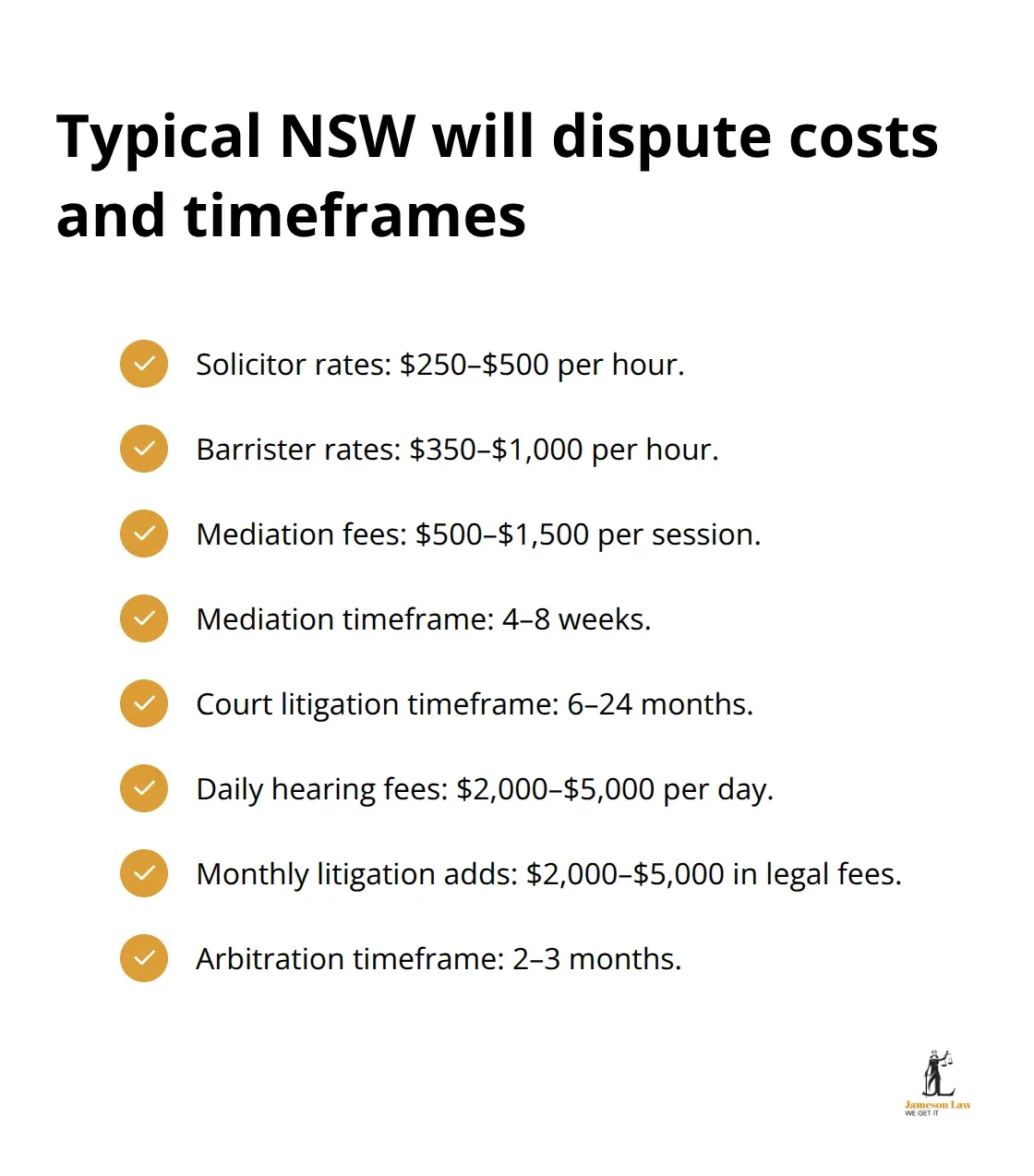
Solicitor rates in NSW range from $250 to $500 per hour depending on experience and complexity, with barristers commanding $350 to $1,000 per hour for court appearances. A straightforward family provision claim through negotiation and mediation typically costs $5,000 to $15,000 in total legal fees. Mediation sessions themselves run $500 to $1,500 per session, but they compress timelines dramatically.
Court litigation pushes costs into six figures fast. Daily hearing fees start at $2,000 to $5,000 per day once your matter reaches the Supreme Court, and contested will cases routinely run 5 to 20 hearing days. If you lose at trial, you pay the other party’s legal costs on top of your own, which can add another $20,000 to $50,000 to your total exposure.
Early Filing Protects Your Financial Position
A family provision claim must be filed with the court within 12 months of the date of death. Filing early lets you gather evidence while witnesses have fresh memories, negotiate from strength, and avoid the compounding expense of rushed preparation. Delays force you into expensive catch-up mode, and the court views late filers with suspicion, which weakens settlement leverage.
Estate size directly affects your calculation. If the estate is worth $200,000 and you’re fighting over $50,000, spending $30,000 in legal fees makes no financial sense. Smaller estates often settle through negotiation alone, costing under $5,000. Larger estates worth $1 million or more can justify investment in litigation because the potential recovery justifies the expense.
Timeframes Determine Your Cumulative Costs
Mediation resolves disputes within 4 to 8 weeks on average, keeping your legal team’s involvement tight and focussed. Court litigation stretches 6 to 24 months from filing to final judgment, with extended preparation periods, multiple directions hearings, and disclosure obligations under Practice Note SC EQ 07. Each month of litigation adds $2,000 to $5,000 in accumulated legal fees.
The estate itself suffers during dispute resolution. Assets sit frozen or tied up in legal disputes instead of generating returns or being distributed to beneficiaries. If the estate holds shares or investment properties, lost rental income or market gains compound the dispute’s true cost. Executors also face personal liability exposure; if they distribute assets before resolving a will challenge, beneficiaries can pursue them personally for recovery.
Estate Depletion Accelerates Over Time
The longer disputes drag on, the more estate assets deplete through legal fees, accounting costs, and executor fees. Some estates lose 20% to 30% of their value to dispute resolution costs alone. Early settlement through negotiation or mediation preserves estate value and ensures beneficiaries receive meaningful distributions.
Calculate your realistic recovery against total legal costs before committing to litigation. A claim with 60% chance of success but requiring $40,000 in legal fees to pursue is financially reckless if the likely recovery is only $50,000. Stronger claims with higher success probability and lower expense-to-recovery ratios warrant aggressive pursuit.
Final Thoughts
Will disputes resolution in NSW hinges on three realities: most disputes settle before court, early action strengthens your position, and costs escalate dramatically with litigation. The 12-month deadline from death is absolute, and filing a caveat buys you time if probate is imminent. Over 90% of contested will claims resolve through negotiation or mediation, which means your dispute likely won’t reach trial if you act decisively.
Your choice of resolution path determines both your financial outcome and timeline. Negotiation costs under $5,000 and takes weeks, while mediation adds $500 to $1,500 per session but compresses resolution into 4 to 8 weeks. Arbitration provides binding finality within 2 to 3 months without court’s expense, yet litigation stretches 6 to 24 months and routinely costs $40,000 to $100,000 or more, especially if you lose and pay the other party’s legal costs. Estate size matters-small estates under $300,000 rarely justify litigation expense, while larger estates can support aggressive pursuit if your claim is strong.
Contact Jameson Law immediately if you suspect a will is invalid, if you’re an eligible person who received inadequate provision, or if probate is about to be granted. We guide clients through will disputes resolution NSW with clarity about costs, timelines, and realistic outcomes. Early advice costs far less than emergency action later, and we help you understand which resolution path makes sense for your circumstances.