Being named as an executor is a significant responsibility. You’ll need to manage assets, settle debts, and distribute the estate according to the will—all while navigating complex legal requirements in 2026.
Executor duties in Australia come with strict obligations set by state law. At Jameson Law, we have helped countless executors understand their responsibilities and avoid costly mistakes that could lead to personal liability.
What an Executor Actually Does
An executor’s job breaks down into three core legal responsibilities under Australian law. You must locate and secure all assets, pay all debts and taxes, and distribute what remains to the beneficiaries. The NSW Supreme Court enforces these duties strictly.
Executor vs. Administrator
If the deceased left a valid will, you are the executor. If there is no will, the court appoints an administrator via Letters of Administration. Both roles carry identical fiduciary duties, meaning you must prioritize the interests of the estate and beneficiaries above your own.
The Timeline: The Executor’s Year
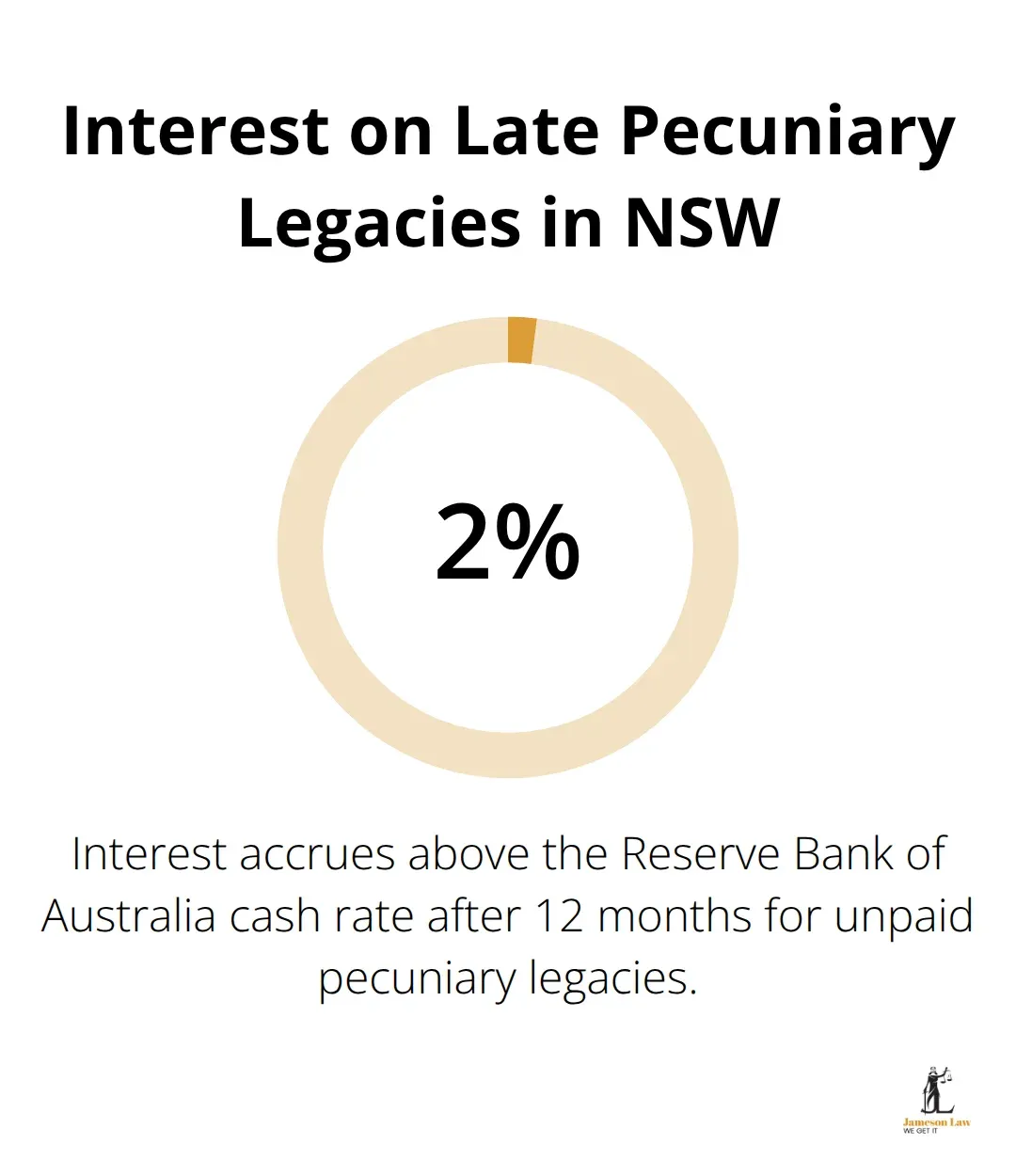
NSW law typically allows 12 months from the date of death (the “executor’s year”) before distributions must begin. Acting promptly is vital; for pecuniary legacies, interest accrues at 2% above the RBA cash rate if unpaid after 12 months, which can deplete the estate’s value.
What Executors Need to Do First
Your first action is to locate the original will. Once secured, you must obtain certified copies of the death certificate from the Registry of Births, Deaths and Marriages. You should then notify institutions using the Australian Death Notification Service to streamline the process.
Paying Debts in the Correct Order
Australian law enforces a strict priority for debts. Administration costs and funeral expenses come first, followed by ATO tax debts, and finally general creditors. Distributing funds to beneficiaries before settling all debts can make you personally liable for any shortfall.
Common Challenges: Family Disputes and Tax
Family disputes emerge in roughly 1 in 5 estates. In NSW, eligible persons can lodge Family Provision Claims if they feel they were not adequately provided for. As executor, you must defend the estate’s interests, which often means pausing distributions until the 12-month challenge period closes.
Managing Complex Assets and the ATO
Complex estates involving businesses or international property require expert valuations. Furthermore, the Australian Taxation Office requires a final income tax return for the deceased and potentially a trust tax return for the estate if it earns income during administration.
Final Thoughts
Executor duties in Australia demand meticulous record-keeping and a clear understanding of the law. From securing real estate to managing contested wills, every step must be handled with transparency to avoid litigation.
If you are unsure about your obligations, seeking advice from a highly experienced estate lawyer is the best way to protect yourself. Contact Jameson Law today for tailored guidance on managing your role as executor with confidence.