A poorly executed will can unravel years of planning. In NSW, thousands of wills face legal challenges each year because they fail to meet strict legal requirements.
At Jameson Law, we have seen firsthand how small mistakes during will creation lead to expensive court battles and family disputes. This guide walks you through what makes a will valid in NSW and how to protect your wishes from being challenged.
What Makes a Will Valid in NSW
The Legal Framework for Will Validity
In NSW, a valid will must meet strict legal standards set out in the Succession Act 2006 (NSW). Section 6 requires the will to be in writing and signed by the testator, with at least two witnesses present at the same time who also sign the document. The signature does not need to appear at the bottom of the page, and the testator can direct someone else to sign on their behalf if they cannot physically sign themselves. What matters most is that the testator intends the document to be their final will.
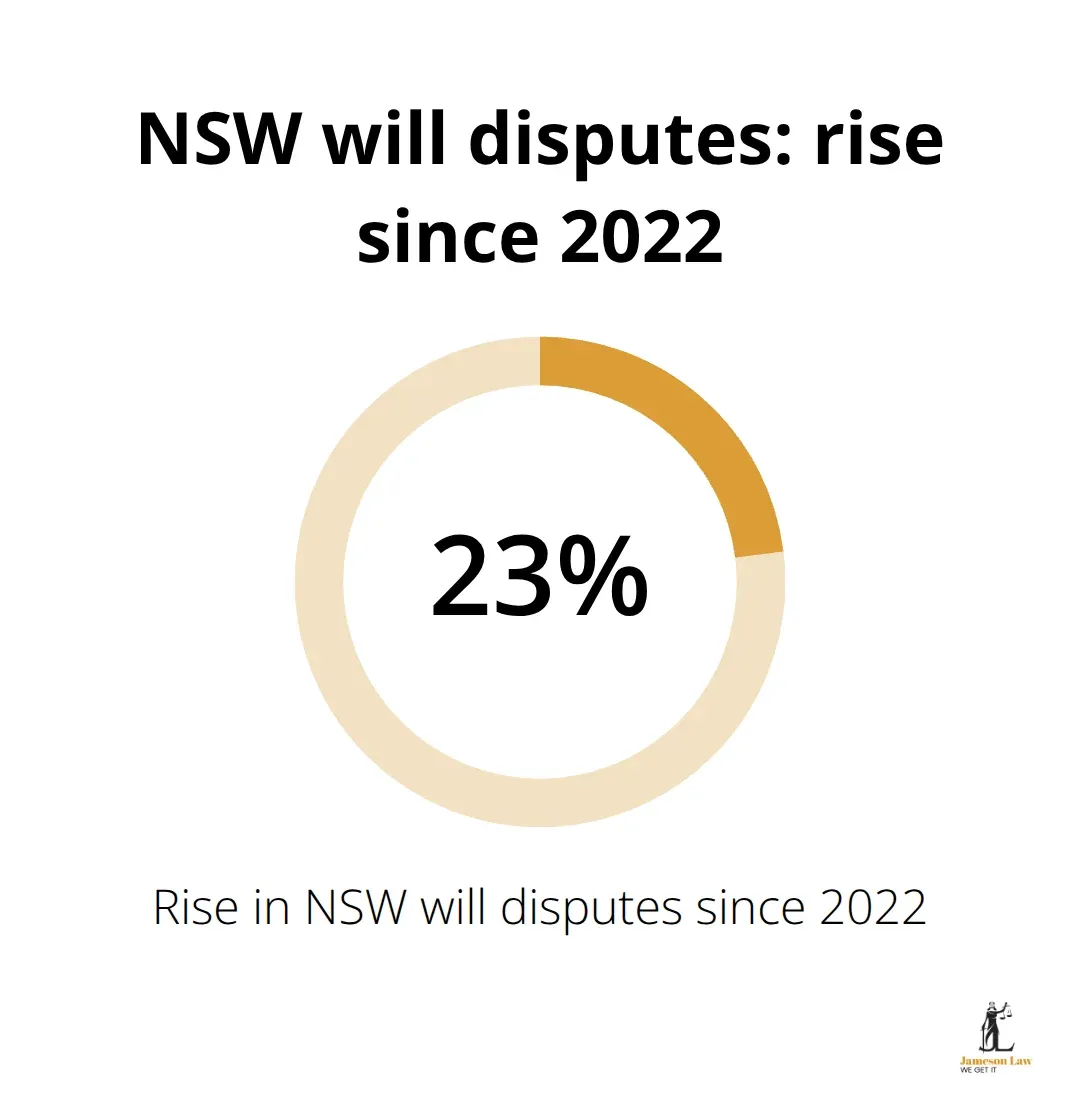
Courts have occasionally accepted unconventional materials as valid informal wills (under Section 8 dispensing powers)—including unsent text messages or digital notes—provided the evidence clearly shows testamentary intention. However, this flexibility comes with immense financial risk. Will disputes in NSW have risen significantly, indicating that the Supreme Court is scrutinising validity more closely than ever. The safest approach is to follow formal execution procedures precisely.
Testamentary Capacity and Mental Competence
Testamentary capacity sits at the heart of will validity NSW. Anyone over the age of 18 can make a will, provided they possess the required mental capacity. Courts assess this capacity at the exact time of signing, not before or after. This distinction matters because a testator’s mental state can fluctuate (such as with early-stage dementia), and only their lucid condition on the day they sign counts.
Witnesses and Conflicts of Interest
Beneficiaries must not act as witnesses. Doing so creates a conflict of interest and can invalidate their specific gift under the will. Two independent adult witnesses must be present simultaneously when the testator signs. If witnessing procedures fall short, families face the agonizing and expensive process of trying to validate the document through the courts.
Why Wills Get Challenged in NSW
Capacity Disputes Dominate Will Challenges
Capacity disputes represent the largest category of will challenges in NSW. Courts receive hundreds of applications each year from families questioning whether the testator possessed a “sound mind” at the time of signing. The problem intensifies when the testator was elderly, unwell, or taking heavy medication.
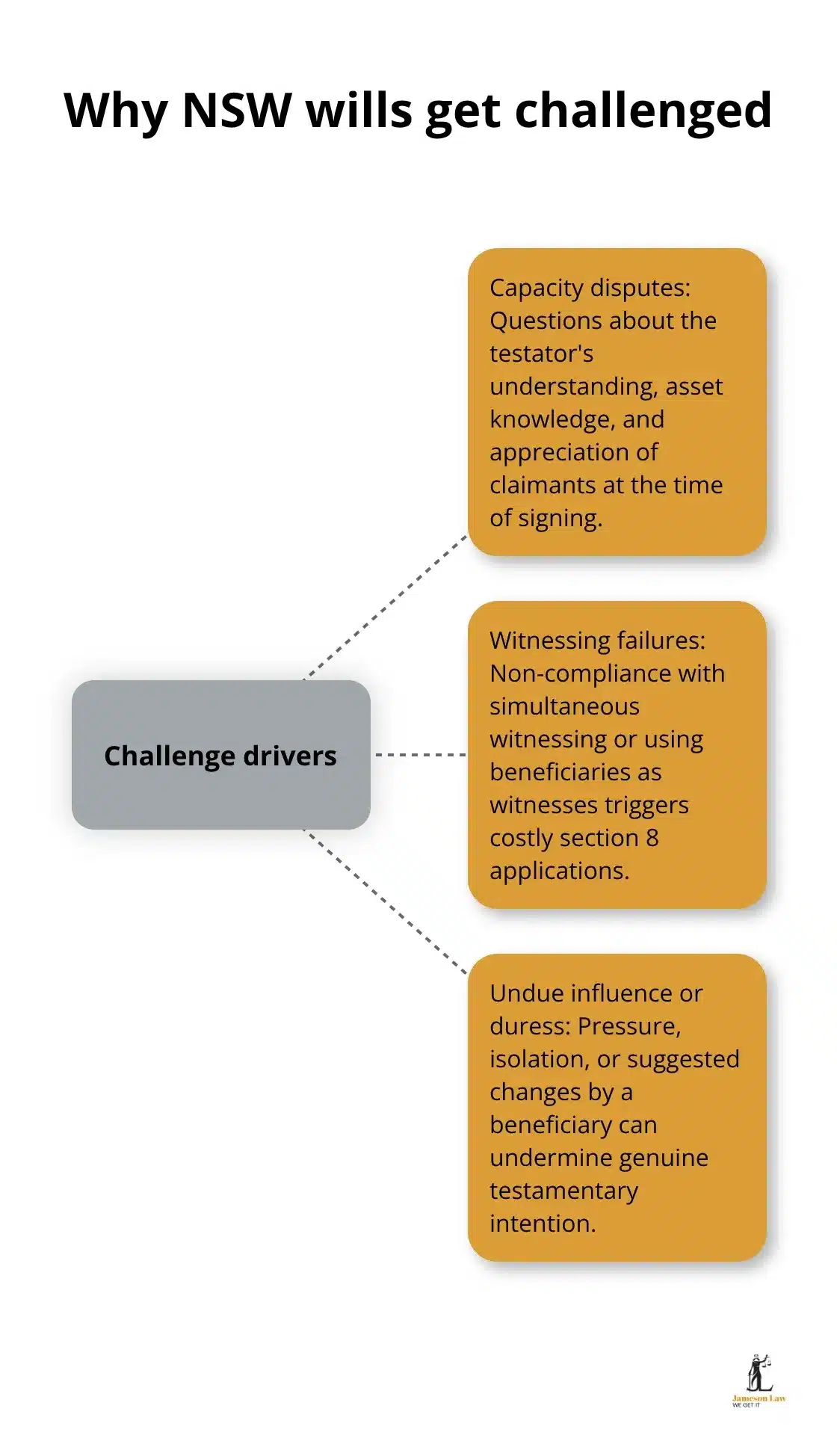
Capacity exists on a spectrum. A testator might manage daily tasks perfectly fine but lack the clarity to understand complex legal distributions. The Supreme Court of NSW applies a strict historical test (based on Banks v Goodfellow). To be valid, the testator must:
- Understand the nature and effect of making a will.
- Comprehend the extent of the property and assets they are disposing of.
- Understand the natural claims of individuals (family members) they ought to provide for.
- Ensure no “disorder of the mind” has poisoned their affections or decision-making.
The Power of Witness Testimony
Witness testimony becomes critical when capacity comes under question. If witnesses can describe the testator’s lucid conversation and clear articulation of wishes on the day of signing, capacity challenges usually collapse. We highly recommend witnesses take brief notes about the testator’s mental clarity immediately after signing.
Undue Influence and Duress Claims
Undue influence claims arise when a beneficiary appears to have pressured the testator into unfair distributions. A beneficiary who was present during the will’s preparation, suggested changes, or isolated the testator from other family members creates obvious legal suspicion. Without clear evidence of independent decision-making, the will’s validity is severely weakened.
How to Protect Your Will from Challenge
Document Your Intentions and Mental State
The gap between a basic will and a defensible will lies in deliberate documentation. Start by creating a written record of the testator’s mental state and intentions. A simple letter or legal file note written by the testator explaining exactly why they made specific decisions transforms a vulnerable will into an ironclad document.
If the testator is managing a condition like early-stage dementia, obtaining a letter from their treating doctor confirming testamentary capacity on the exact day of signing is the ultimate defense against speculative claims.
Execute Your Will with Absolute Precision
Execution procedure demands absolute perfection. Courts will not overlook technical failures without forcing your executor into an expensive legal application.
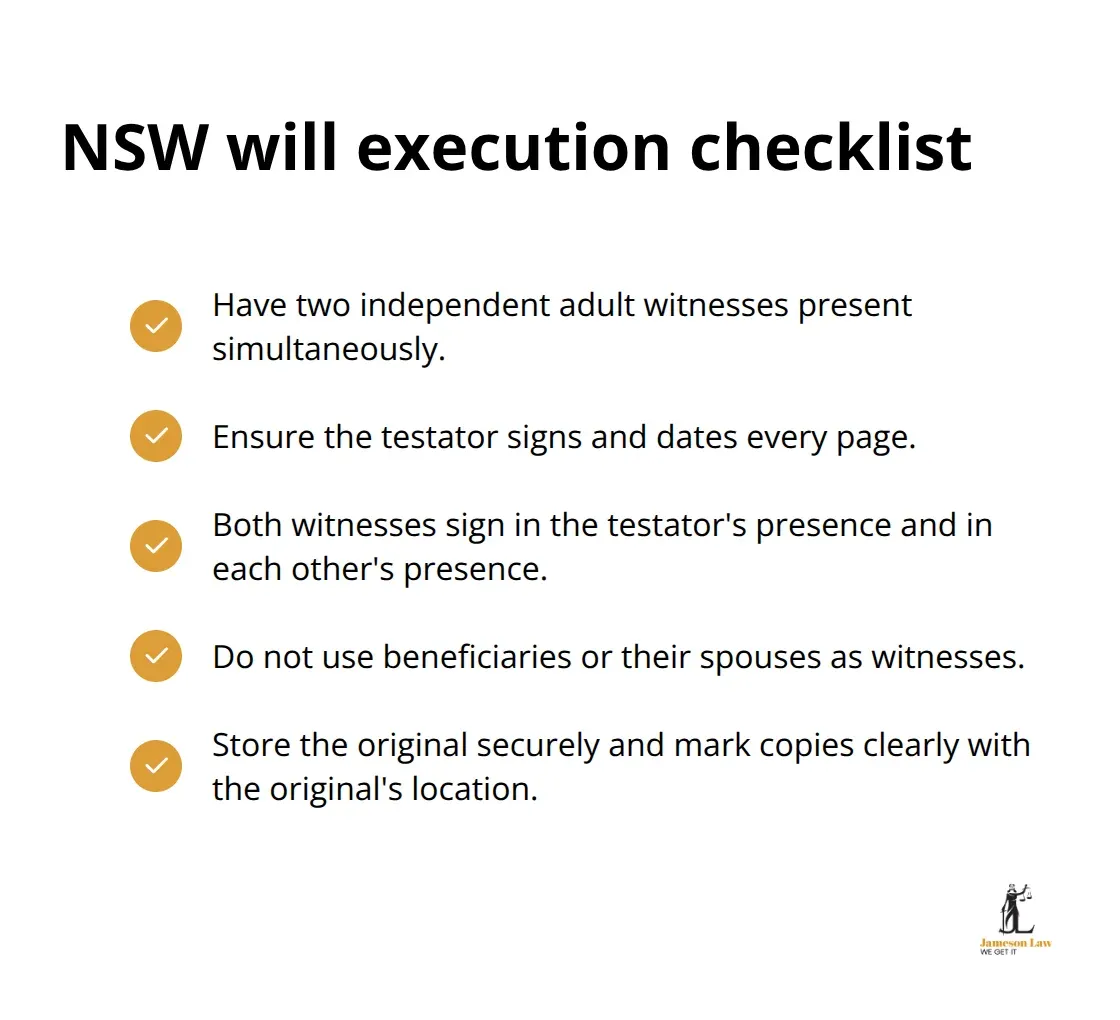
Arrange for two independent adult witnesses. The testator must sign every page and date the document. Both witnesses must sign in the testator’s physical presence and in each other’s presence. Once signed, retain the original will in a secure location, such as a lawyer’s safe custody facility.
Obtain Independent Legal Advice
Professional legal advice eliminates the guesswork about what the NSW Supreme Court requires. The cost of having a lawyer draft and oversee the execution of your will is minuscule compared to the tens of thousands of dollars your estate will spend defending a defectively executed DIY document.
Final Thoughts
Will validity NSW rests on three core elements: strict adherence to the Succession Act 2006 execution procedures, clear documentation of testamentary intention, and independent legal guidance. Most challenges stem from preventable DIY execution failures or inadequate documentation.
The difference between a will that withstands scrutiny and one that collapses lies entirely in the care you take today. We at Jameson Law bring extensive experience to wills and estate planning, helping clients protect their wishes from challenge and their families from unnecessary conflict.
Contact Jameson Law to arrange a consultation with a wills specialist. Ensure your legacy is protected by a properly executed, legally defensible will.