


Family court battles can drag on for months or years, draining your finances and emotional energy. Family law arbitration offers a faster, more private path to resolve disputes outside the courtroom.
We at Jameson Law have seen families save thousands of dollars and months of stress by choosing arbitration over traditional litigation. This alternative dispute resolution method puts you in control of the timeline and process.
What Exactly Is Family Law Arbitration?
Family law arbitration is a private dispute resolution process where you and your former partner select an independent arbitrator to make decisions about your financial matters. The arbitrator, typically a senior family law barrister or retired judge accredited by the Australian Institute of Family Law Arbitrators and Mediators (AIFLAM), reviews your financial disclosure and evidence before issuing a written award that becomes enforceable like a court order within 28 days.
Financial Disputes Only
Arbitration handles property settlements, spousal maintenance, and superannuation splits but cannot resolve parenting disputes under Australian family law. This limitation means you might still need court proceedings for custody matters while using arbitration for financial issues. The Family Law Act 1975 governs this process and requires both parties to sign an arbitration agreement.
Speed and Privacy Advantages
Australian family courts currently face significant wait times for final hearings, while arbitration can resolve simpler financial disputes in as little as eight weeks. The Australian Bureau of Statistics reports an increase in preference for alternative dispute resolution methods. Arbitration offers complete confidentiality compared to public court records. You choose your hearing dates and avoid the formality of traditional court proceedings.
How Arbitration Differs from Court
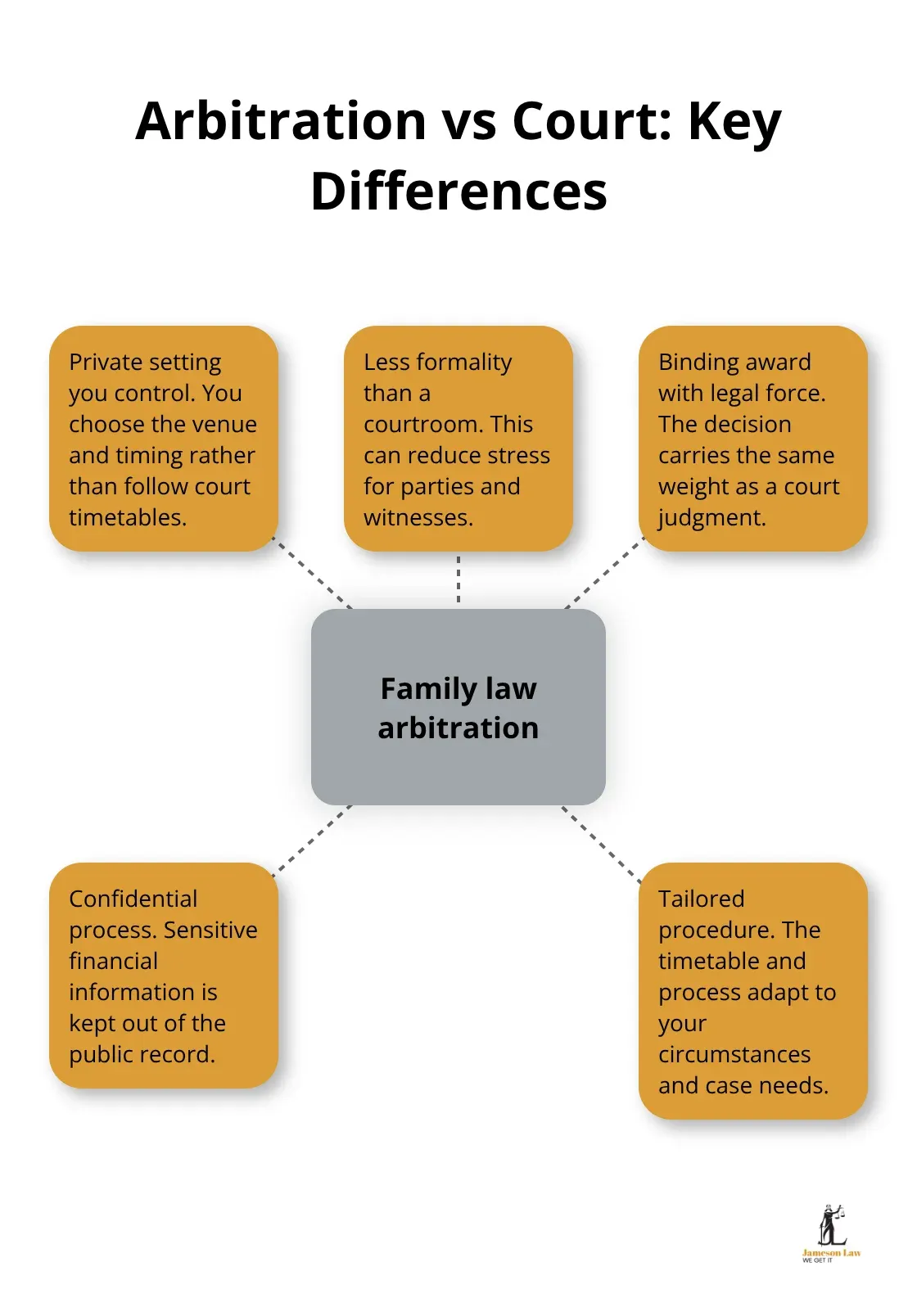
The arbitrator operates with the same authority as a judge but in a private setting that you control. You select the venue, schedule hearings at convenient times, and participate in a less formal environment. The arbitrator issues a binding award that carries the same legal weight as a court judgment.
Why Choose Arbitration Over Traditional Court?
Speed That Actually Matters
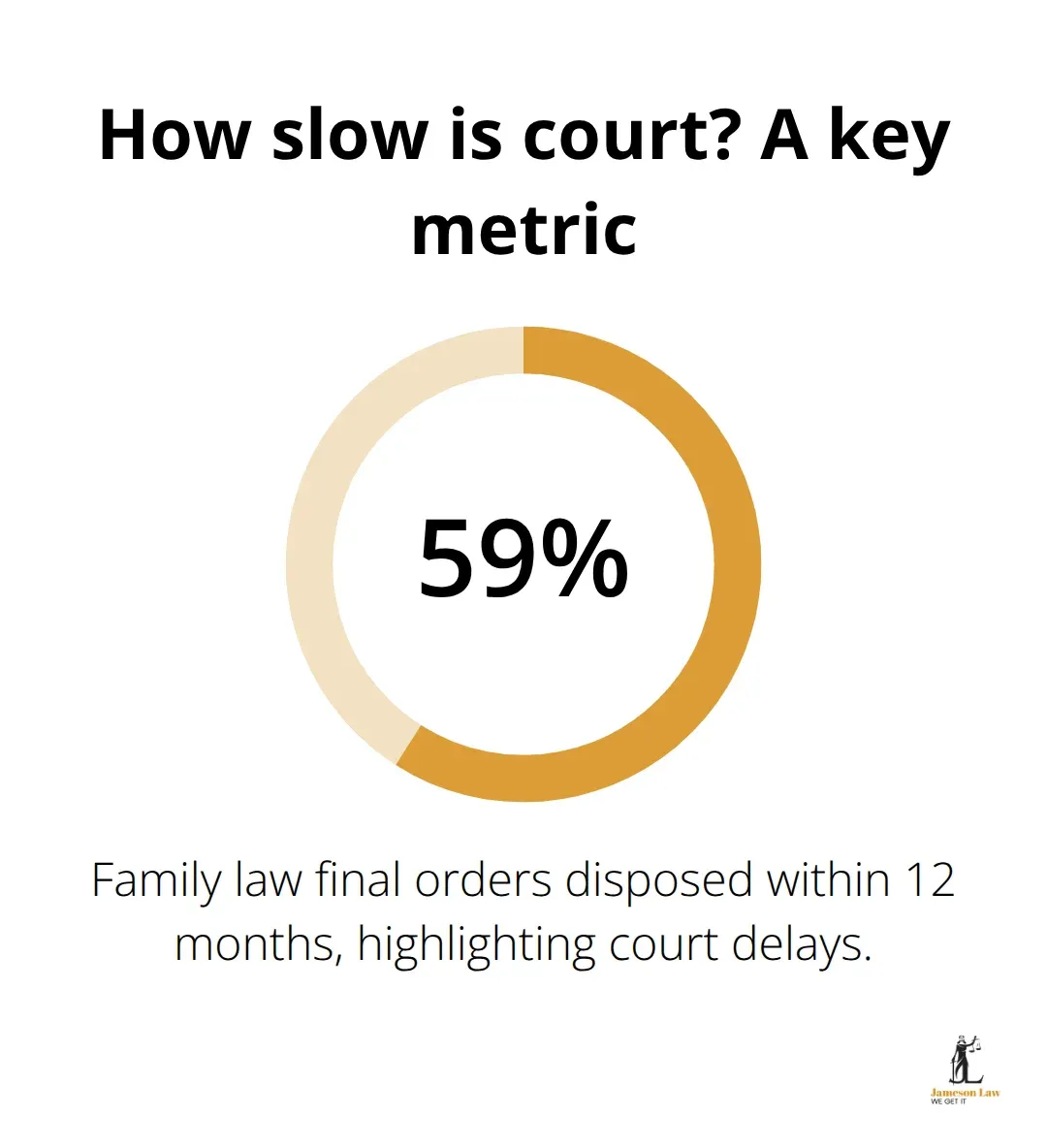
Australian family courts face unprecedented delays. Arbitration cuts through this backlog completely. Financial disputes resolve in 8-12 weeks through arbitration, compared to the multi-year court process. Court data shows that only 59% of family law final orders were disposed of within 12 months.
You control the timeline when you select hearing dates that work for both parties, rather than accepting whatever court dates become available months or years later. This control eliminates uncertainty.
Privacy Protection That Works
Court proceedings become public records that anyone can access, while arbitration maintains complete confidentiality through contractual agreements. This privacy protection proves invaluable for business owners and professionals who want to keep their financial affairs private.
Cost Control You Can Measure
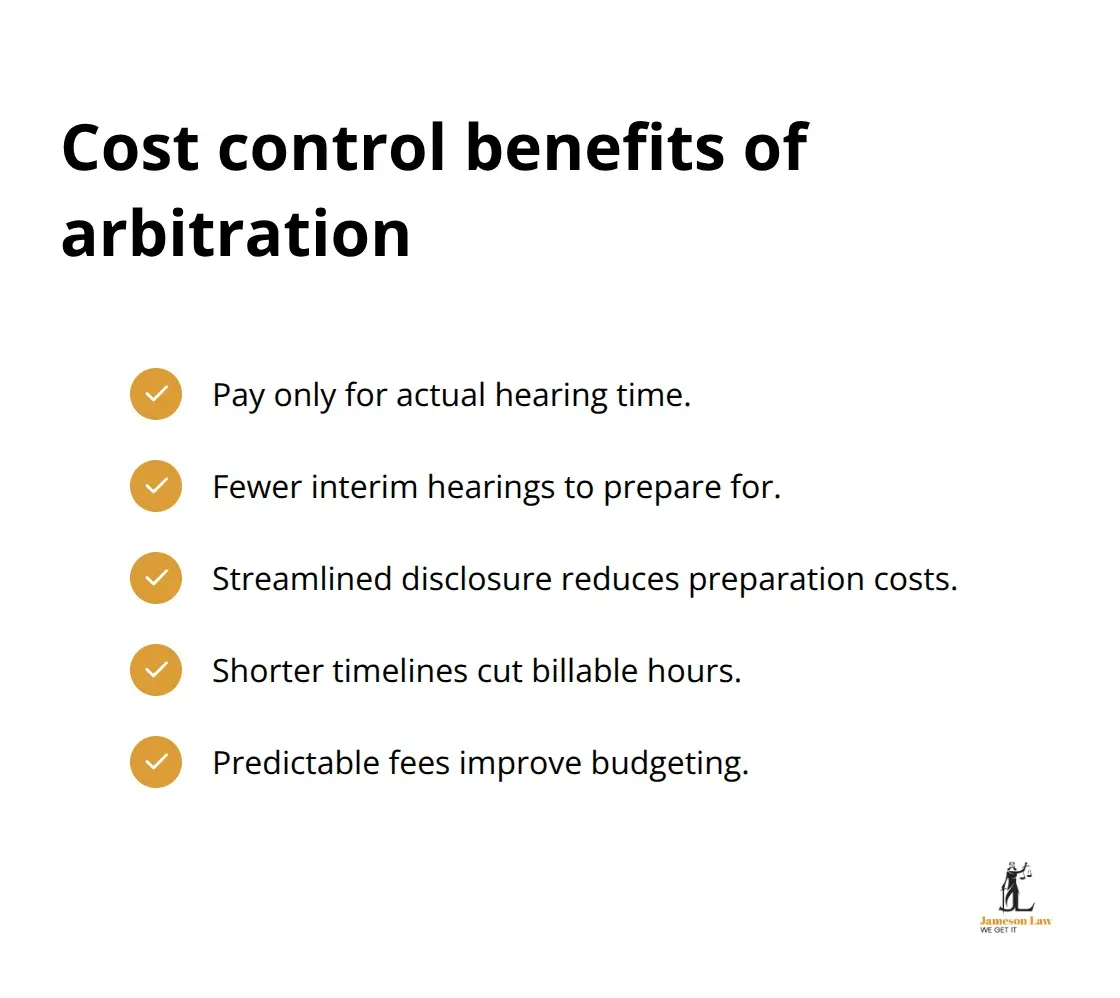
The cost advantages are substantial. Legal practitioners report that arbitration typically costs 30-40% less than court proceedings because you avoid lengthy court preparation and multiple interim hearings. You pay for actual hearing time rather than waiting in court queues.
Flexible Scheduling Advantages
Traditional court systems operate on rigid schedules. Arbitration offers complete flexibility in scheduling hearings at times that suit all parties. This flexibility becomes particularly valuable when coordinating with expert witnesses or financial advisers.
How Do You Start Arbitration?
Both parties must sign an arbitration agreement under the Family Law Regulations to establish the framework. You complete pre-action procedures first that demonstrate genuine attempts at resolution. Both parties file comprehensive Financial Statements and provide full disclosure of assets.
Select Your Arbitrator
AIFLAM trains arbitrators and provides specialist training. Senior barristers and retired judges typically serve as arbitrators. You select your arbitrator based on their specific expertise in complex financial matters, availability, and fee structure.
Prepare Your Documentation
You must file accurate Financial Statements that detail all assets, debts, income sources, and expenses. Full and frank disclosure remains mandatory throughout the family law arbitration process. The arbitrator reviews all financial evidence, bank statements, and property valuations.
Experience the Hearing Process
Arbitration hearings occur in private conference rooms or legal offices. The arbitrator hears testimony from both parties and their witnesses. The arbitrator issues a written award within specified timeframes that becomes enforceable as a court order within 28 days of registration with the Federal Circuit and Family Court.
Final Thoughts
Family law arbitration provides clear benefits over court proceedings. You control the timeline, cut costs, and protect your privacy while resolving financial disputes efficiently. The process gives you flexibility that courts cannot offer.
Arbitration suits straightforward financial matters best. However, cases with controlling behaviour or hidden assets may need judicial oversight. We at Jameson Law evaluate each family’s circumstances to identify whether arbitration serves your interests.
Contact Jameson Law today to discuss if arbitration is the right path for your family law matter.