


The Conveyancing Sale of Land Regulation 2019 transformed property transactions across New South Wales with stricter disclosure requirements and enhanced consumer protections. This legislation, operating alongside the Conveyancing Act 1919, specifically targets the complexities of buying and selling real estate.
We at Jameson Law see property buyers and sellers struggling with these complex compliance obligations daily. Understanding these regulations prevents costly delays and legal complications during settlement.
What Major Changes Did the 2019 Regulation Introduce?
Enhanced Disclosure Requirements Transform Property Sales
The Conveyancing (Sale of Land) Regulation 2019 introduced sweeping changes that fundamentally altered how property transactions operate. The most significant shift involves mandatory Disclosure Statements for off-the-plan contracts. These must now include draft plans prepared by registered surveyors, proposed by-laws, and detailed finish schedules.
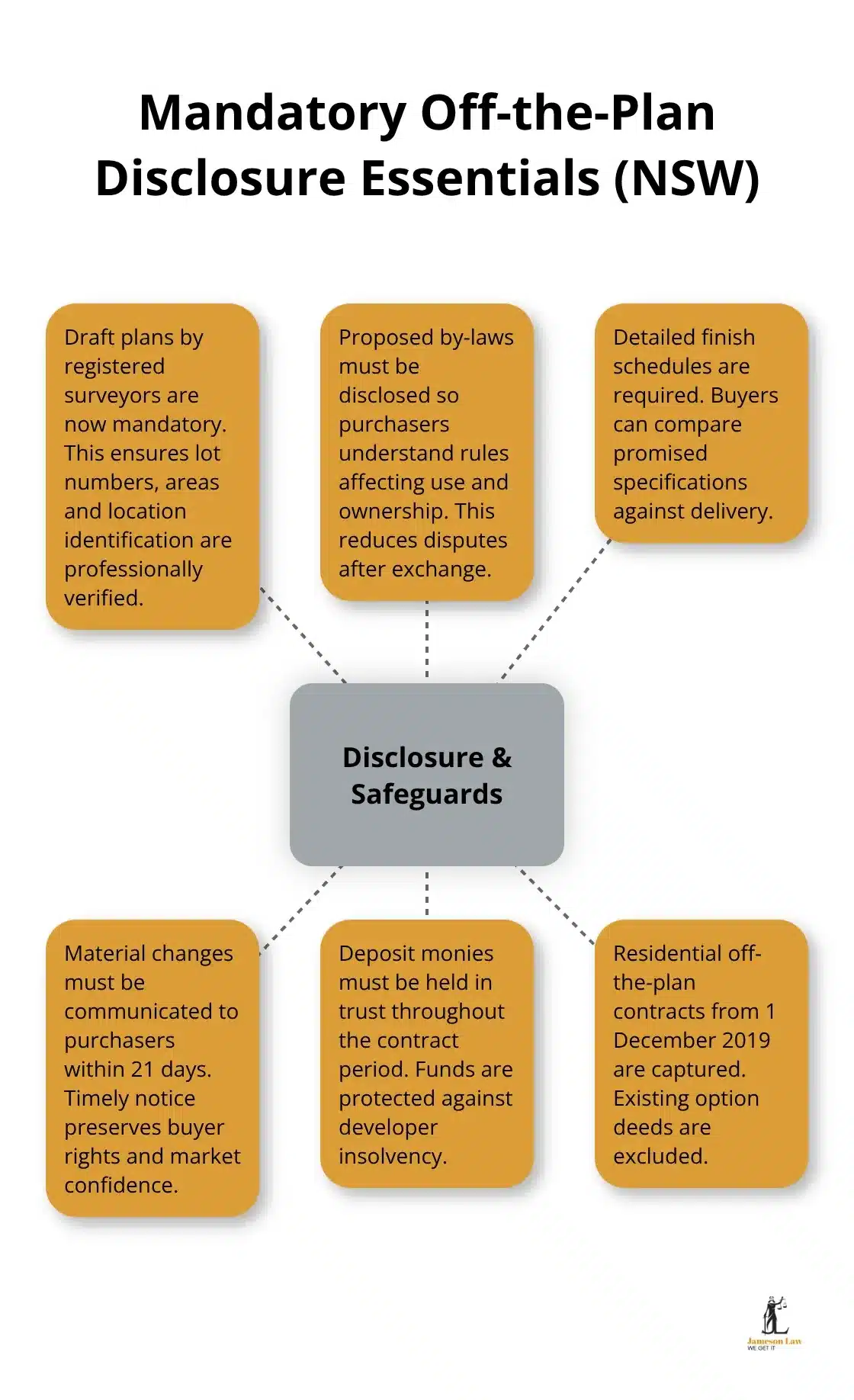
Property developers face stricter obligations to communicate material changes to purchasers within 21 days. This covers alterations to draft plans, by-laws, and management statements, ensuring buyers aren’t left in the dark.
Extended Protection Periods and Financial Safeguards
The cooling-off period for off-the-plan purchases doubled from 5 to 10 business days. This gives buyers significantly more time to review contracts and seek legal advice. Purchasers gain powerful rescission rights if developers fail to provide required disclosure documents.
All deposit monies must now be held in trust throughout the contract period. This change protects buyer funds against developer insolvency, a critical safeguard in the modern property market.
Compensation Rights and Material Change Protections
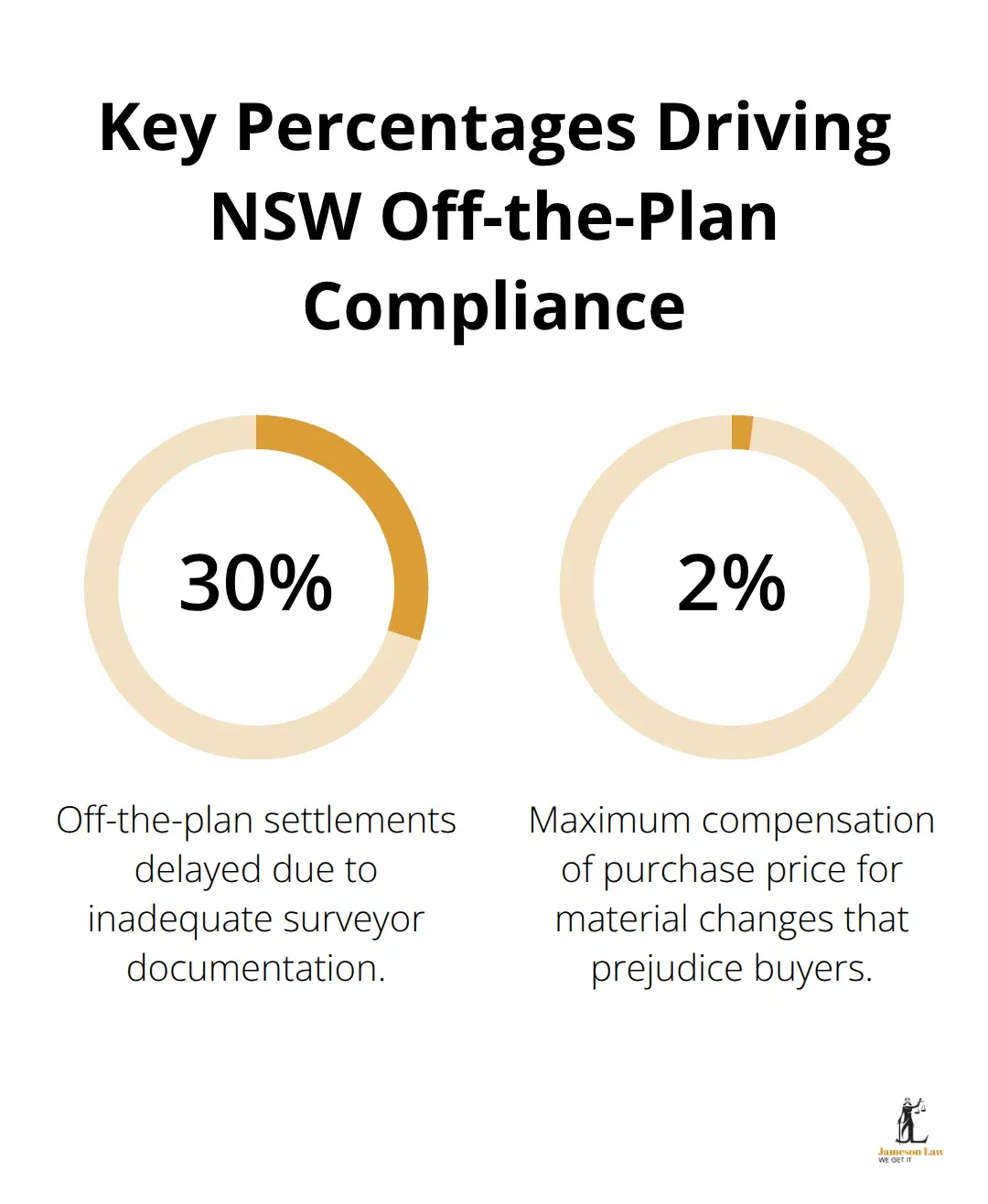
The regulation broadened sunset clause definitions and introduced compensation rights. Purchasers can rescind contracts within 14 days or claim compensation when developers make significant alterations to property specifications. These protections address the gap between promised and delivered properties.
What Documents Must Property Sellers Provide?
Disclosure Statement Requirements Transform Contract Standards
Property sellers face strict documentation obligations. Off-the-plan contracts require comprehensive Disclosure Statements. Sellers must attach these documents at contract exchange, not provide them later. When sellers fail to include required disclosure materials, buyers gain automatic rescission rights within 14 days.
Critical Timing Standards Prevent Transaction Failures
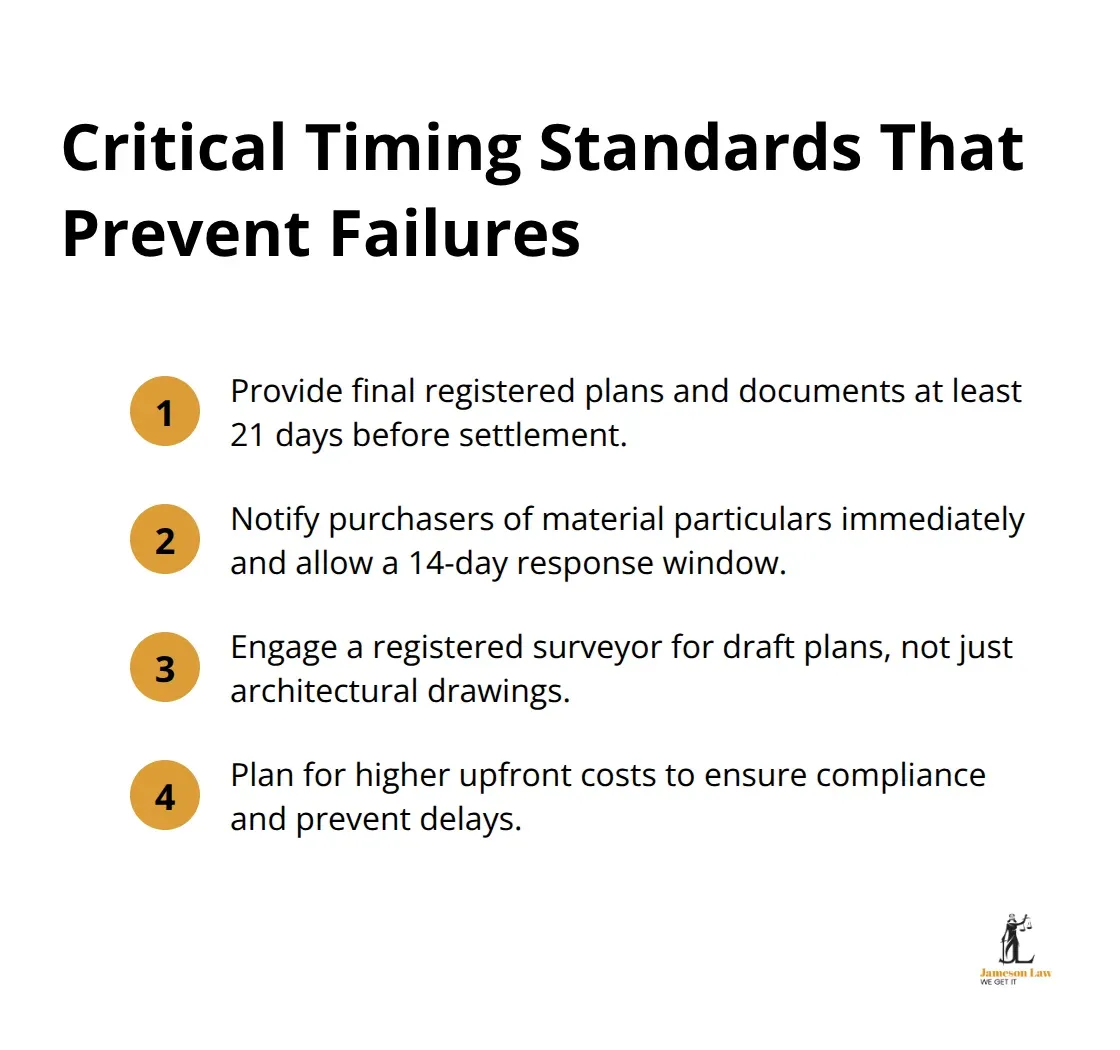
Developers must provide final registered plans and associated documents at least 21 days before settlement. This creates a hard deadline that cannot be negotiated. Contract preparation now demands registered surveyor involvement for draft plans rather than basic architectural drawings.
Contract Preparation Standards Demand Professional Expertise
The regulation eliminates duplicative disclosure requirements while establishing minimum standards. Vendors must include draft plans that indicate proposed lot numbers and areas. Property professionals who treat these as optional recommendations face substantial legal exposure.
What Common Problems Derail Property Transactions?
Draft Plan Preparation Creates Most Settlement Failures
Draft plan preparation generates the highest number of transaction failures. Property developers frequently attempt to use architectural drawings instead of registered surveyor plans. This automatically triggers buyer rescission rights and creates expensive delays.
Material Change Notifications Trigger Buyer Walkouts
Material change notifications represent a significant source of transaction disputes. Changes to draft plans or finish schedules must be communicated immediately. Minor alterations to floor plans often qualify as material changes that give buyers rescission rights.
Disclosure Statement Omissions Cost Developers Thousands
Disclosure statement omissions create automatic buyer rescission rights. Developers who fail to attach complete disclosure statements at contract exchange face immediate rescission periods. Professional Sydney conveyancers recommend triple-checking all requirements before contract exchange.
Final Thoughts
The Conveyancing Sale of Land Regulation 2019 transformed property transactions in NSW. Property professionals must now navigate complex documentation requirements that include registered surveyor plans and precise timing obligations.
Professional legal assistance becomes essential under these regulations. The 21-day notification requirements and 14-day response periods leave no room for amateur mistakes. We at Jameson Law help clients navigate these complex regulatory requirements successfully.
Contact Jameson Law today to ensure your property transaction is compliant and secure.