PUBLICATION

Conveyancing Regulations 2018: What You Need to Know

"Understand Conveyancing Regulations 2018 and their impact. Get insights, practical advice, and stay informed on the latest legal requirements."
Conveyancing Regulations 2018: What You Need to Know

The Conveyancing Regulations 2018 transformed how property transactions operate in New South Wales. These changes introduced stricter disclosure requirements and updated professional standards that affect every buyer and seller.

We at Jameson Law have seen firsthand how these regulations impact property deals. Understanding these rules helps you navigate your transaction more effectively and avoid potential complications.

What Changed Under the Conveyancing Regulations 2018

Mandatory Disclosure Requirements Transform Property Sales

The Conveyancing Regulations 2018 introduced comprehensive disclosure obligations that fundamentally shifted responsibility onto vendors. Property sellers must now provide Section 10.7 certificates, property certificates, and detailed compliance reports before contract exchange. These new requirements affect every property sale across the state.
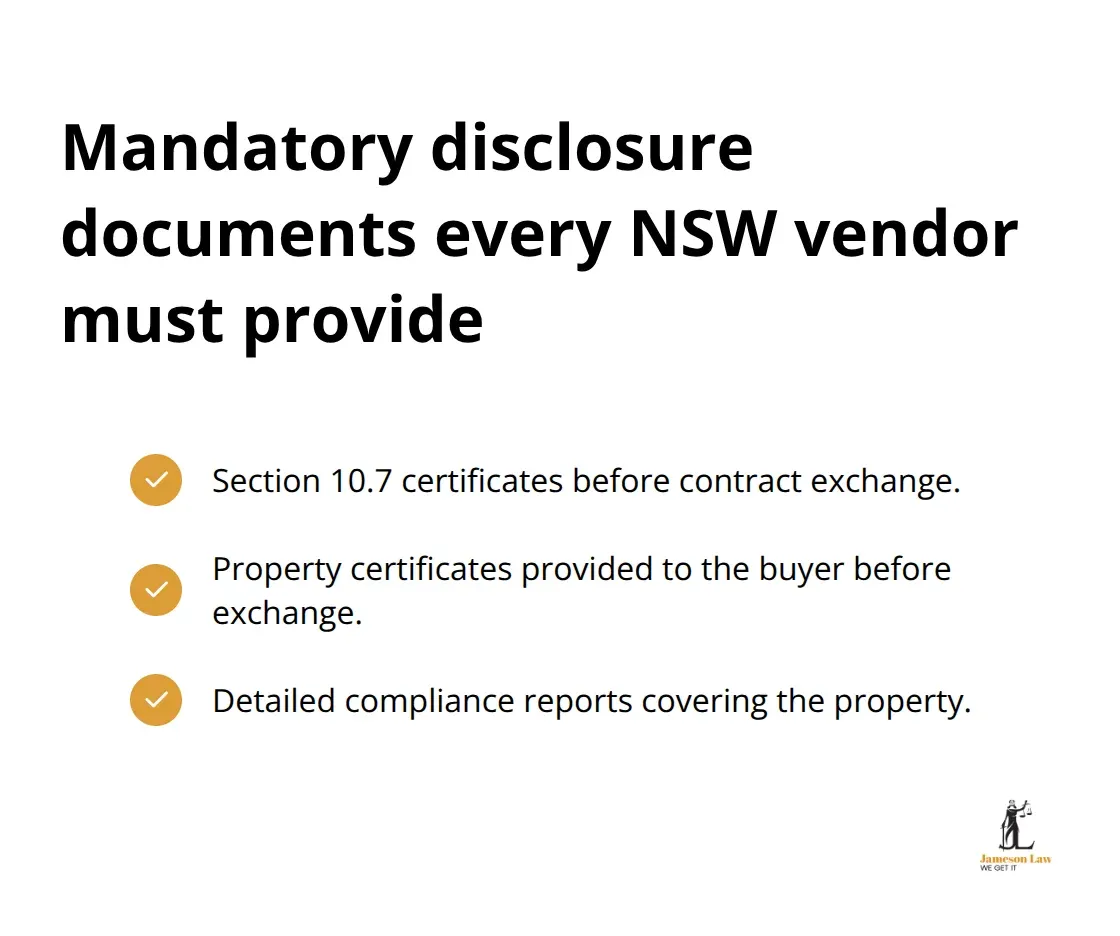
Checklist of disclosure documents vendors must provide before contract exchange in New South Wales.

Vendors who fail to disclose material information face significant liability exposure, particularly regarding unauthorised works or structural modifications. The NSW District Court ruling in Patterson & Anor v Mamou demonstrated how inadequate disclosure can result in substantial damages for both conveyancers and vendors. Courts now hold professionals accountable when they fail to inform clients about special contract clauses or property defects.

Professional Standards and Record-Keeping Obligations

The Conveyancing Licensing Regulation 2015 mandates that conveyancers maintain detailed records of all client communications and advice provided. This requirement stems from cases where lack of written confirmation regarding contract conditions contributed to professional liability claims. Conveyancers must now document their disclosure of special contract clauses, defects, and unauthorised works to clients.

The regulation also requires continuous professional development to stay current with legislative changes. Property transactions can be complex and stressful for buyers, which highlights why proper documentation and clear communication protocols protect both clients and practitioners from future disputes.

Electronic Conveyancing and Technology Standards

Electronic conveyancing became mandatory in New South Wales from October 2021, streamlining the process and reducing errors in property transactions. The PEXA platform now handles most settlements, requiring conveyancers to adapt their practices to digital workflows. This shift eliminated many manual errors that previously occurred during settlement processes and improved transaction security.

These technological changes affect how buyers and sellers experience their property transactions, with faster processing times and enhanced security measures now standard across the industry.

How Do These Regulations Change Your Property Transaction

Stronger Protection Through Enhanced Disclosure Requirements

Property buyers now receive significantly more protection through mandatory disclosure requirements that vendors must provide before contract exchange. Sellers must furnish Section 10.7 certificates, property certificates, and detailed compliance reports that reveal unauthorised works, structural modifications, and potential safety risks. This represents a major shift from previous practices where buyers often discovered problems after settlement.

Enhanced disclosure requirements now protect buyers in property transactions across Australia. Vendors who attempt to hide material defects face substantial liability exposure, particularly regarding unauthorised building works that could require demolition or pose safety concerns. Courts have established an objective test for material prejudice, focusing on buyer circumstances and direct causality when determining compensation claims.

Settlement Timeframes and Electronic Processing Benefits

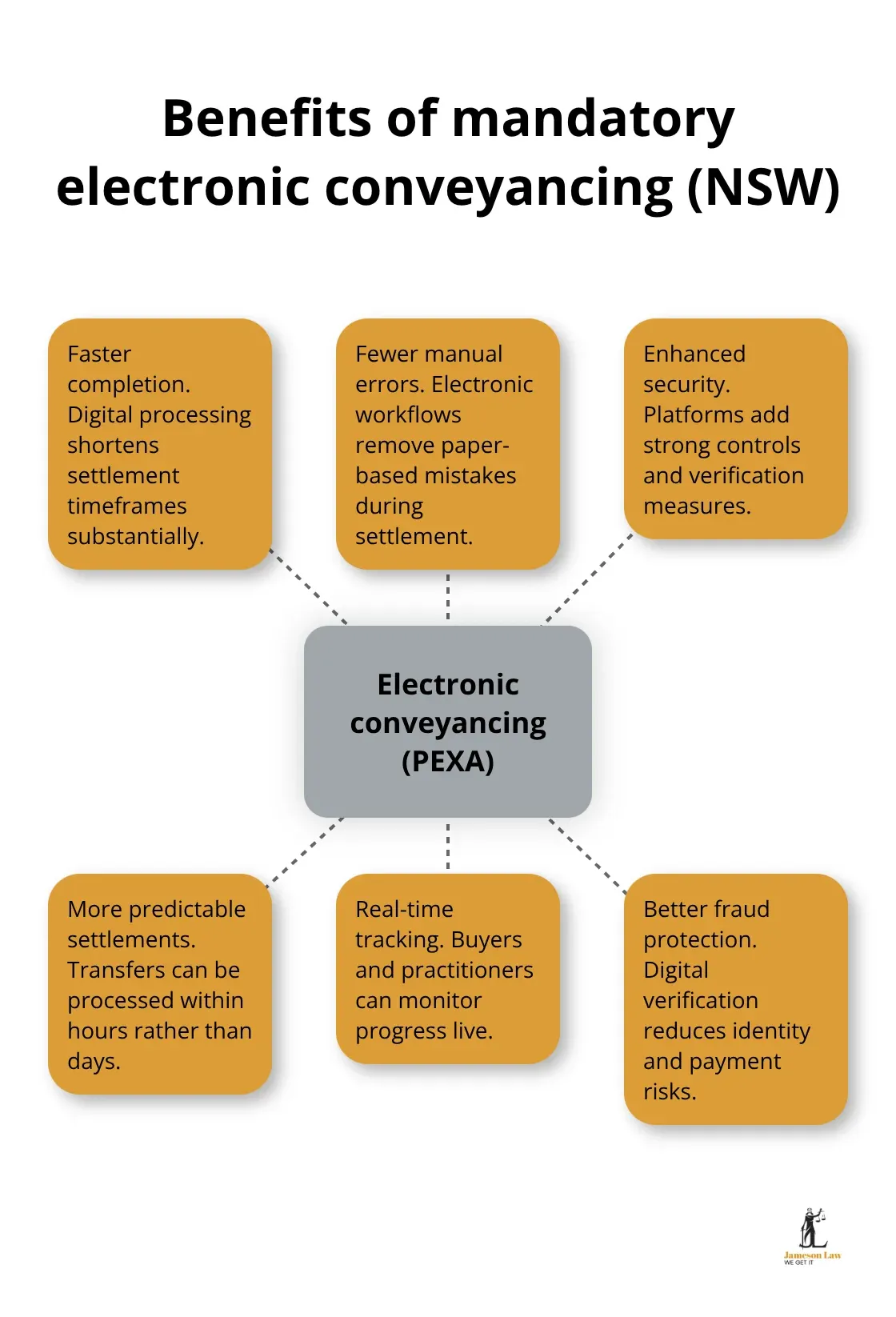
Electronic conveyancing through PEXA became mandatory in October 2021, eliminating manual errors and reducing settlement timeframes across New South Wales. Digital processing now provides faster transaction completion and enhanced security measures, addressing previous concerns about property purchase stress. Settlement periods have become more predictable, with electronic lodgement networks processing transfers within hours rather than days.

Hub-and-spoke diagram showing key benefits of electronic conveyancing through PEXA in New South Wales. - conveyancing regulations 2018

Buyers benefit from real-time transaction tracking and reduced documentation errors that previously caused settlement delays. The electronic system also provides better fraud protection through digital verification processes, giving buyers additional confidence in their transactions.

Cost Structure Changes and Professional Fee Implications

Professional fees have increased due to enhanced compliance obligations and mandatory professional development requirements under the Conveyancing Licensing Regulation 2015. Conveyancers must maintain detailed records of client communications and advice, which adds administrative costs that affect overall transaction expenses. However, these costs provide better protection against professional negligence claims and improved service quality.

Enhanced professional standards justify increased fees due to improved service quality and accountability. Buyers should budget for higher conveyancing costs but receive superior protection through comprehensive disclosure requirements and improved professional accountability measures.

Impact on Contract Terms and Conditions

The regulations have transformed how contracts address special conditions and property defects. Conveyancers must now explicitly advise clients about special contract clauses, particularly those relating to unauthorised works or structural issues. This requirement stems from court decisions where inadequate disclosure led to substantial damages for both conveyancers and vendors.

Property contracts now include more detailed warranties and representations from vendors about the property’s condition. These changes shift liability more clearly onto sellers who fail to disclose material information, providing buyers with stronger legal recourse when problems arise after settlement.

These regulatory changes create a foundation for understanding how conveyancing practice itself has evolved to meet new professional standards and compliance requirements.

How Do These Regulations Change Conveyancing Practice

Licensing Requirements Drive Professional Standards Higher

The Conveyancing Licensing Regulation 2015 requires conveyancers to complete mandatory professional development courses annually to maintain their licences. This represents a significant shift from previous voluntary approaches. Conveyancers must document at least 10 hours of professional development each year, with focus on legislative updates, technology integration, and client service improvements. These requirements directly impact practice costs but create measurably better outcomes for clients through enhanced professional competency.

Professional liability insurance requirements have also increased substantially under the new regulations. Conveyancers must maintain minimum coverage levels that reflect the higher risk environment created by enhanced disclosure obligations. The Conveyancing Licensing Regulation mandates specific coverage amounts based on transaction volumes, which affects smaller practices more significantly than larger firms.

Technology Integration Becomes Non-Negotiable

Electronic conveyancing through PEXA became mandatory across New South Wales in October 2021, which forced all practitioners to abandon paper-based systems entirely. This transition eliminated manual lodgement processes that previously took weeks to complete. Settlement times now average 2-3 days compared to the previous 7-14 day timeframes under manual systems. Conveyancers who resisted digital adoption faced immediate compliance issues and lost competitive advantage.

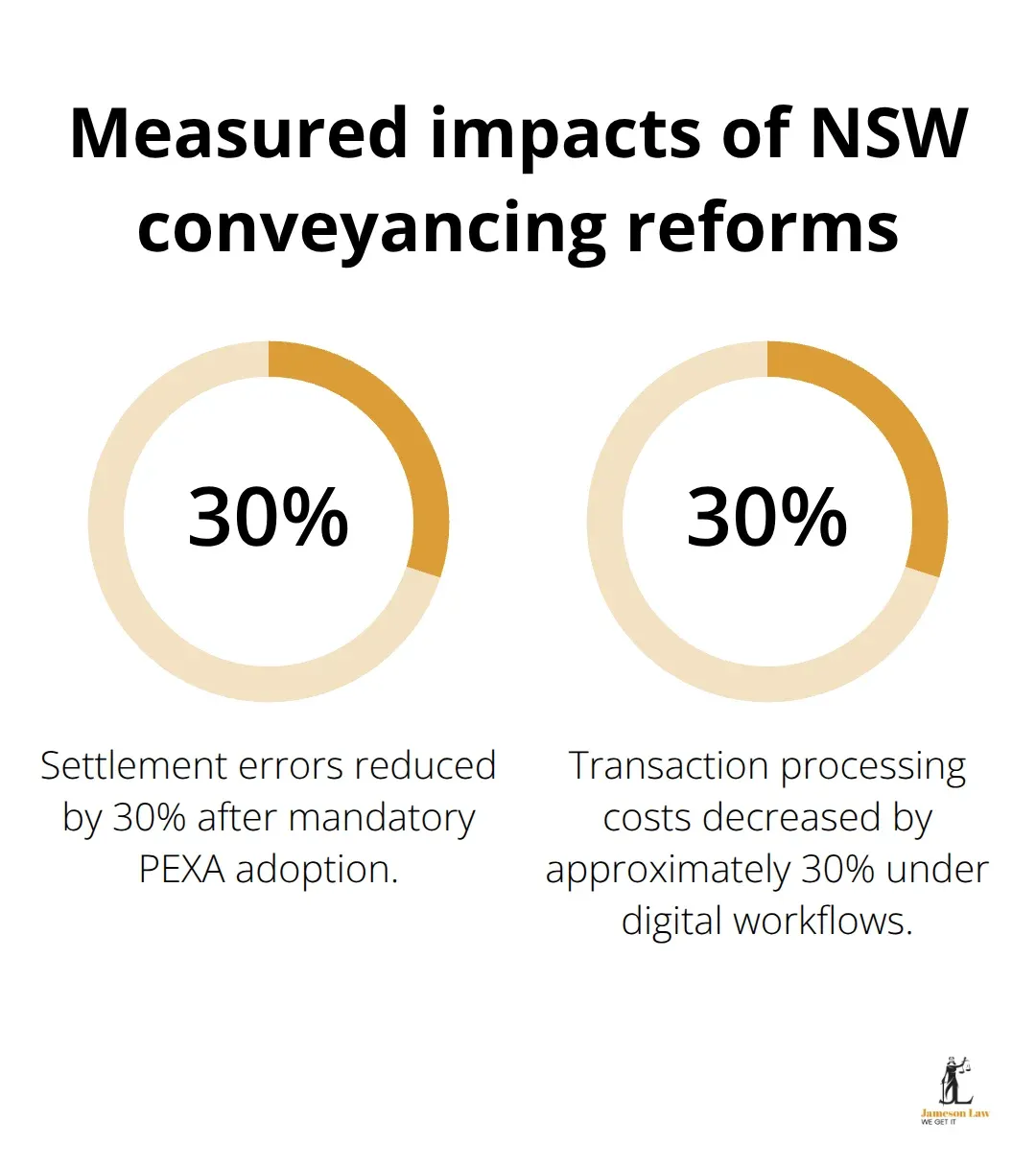
The electronic system requires specific software integrations and staff training that represents substantial upfront investment for practices. However, transaction processing costs have decreased by approximately 30% due to reduced administrative overhead and faster completion times. Digital verification processes also provide superior fraud protection compared to manual document handling (particularly for high-value transactions).

Client Service Standards Demand Documented Communication

The regulations mandate that conveyancers maintain comprehensive records of all client advice and communications throughout transactions. This requirement stems from court decisions where inadequate documentation contributed to professional negligence claims. Practitioners must now document disclosure conversations about special contract clauses, property defects, and unauthorised works in writing within 24 hours of client meetings.

Quality assurance protocols have become mandatory rather than optional under the updated professional standards. Conveyancers must implement systematic review processes for contract analysis, property searches, and settlement preparation. These protocols significantly reduce error rates but require additional time allocation for each transaction, which affects overall practice capacity and fee structures.

Compliance Monitoring and Audit Requirements

The NSW Fair Trading Office now conducts regular compliance audits of conveyancing practices to verify adherence to the new regulations. These audits examine record-keeping practices, professional development compliance, and client communication documentation. Practices that fail audits face penalties ranging from warnings to licence suspension (depending on the severity of non-compliance).

Conveyancers must maintain audit-ready documentation systems that can withstand regulatory scrutiny. This requirement has standardised practice management across the industry and eliminated many informal procedures that previously existed in smaller firms.

Final Thoughts

The Conveyancing Regulations 2018 have fundamentally strengthened property transaction security across New South Wales. Enhanced disclosure requirements now protect buyers from hidden defects and unauthorised works, while mandatory electronic processing through PEXA has reduced settlement errors by 30% and cut processing times from weeks to days. These changes create measurable benefits for property purchasers throughout the state.

Percentage chart highlighting two quantified impacts of NSW conveyancing reforms. - conveyancing regulations 2018

These regulatory changes demand higher professional standards from conveyancers, including mandatory annual training and comprehensive record-keeping obligations. Property buyers benefit from superior protection through documented communication requirements and enhanced liability coverage, though transaction costs have increased to reflect improved service quality. The NSW Fair Trading Office conducts regular compliance audits, and practitioners who fail to meet standards face licence suspension.

Professional conveyancing services have become more important than ever under these updated regulations. At Jameson Law, we provide expert conveyancing services across New South Wales while maintaining full compliance with all regulatory requirements. Future reforms will likely expand electronic integration and strengthen consumer protections further (establishing a solid foundation for continued improvements in property transaction security).

Speak to an Expert Lawyer today

Laywers-Jameson-Law-The-best-law-firm-in-Sydney- Sydney Lawyers - Sydney
BOOK NOW

WE'RE IN IT TO WIN IT

Book your consultation

Book Now
Book Now Mobile 06 02 2025

This form submission is encrypted and secured to ensure your information remains confidential.

What our Clients

Related Publications:

What our clients say

.

Jameson Law - Voted the Best Law firm in Sydney Award

Legal Answers ... In Short

We're here to help

Our mission is to ensure our client matters are resolved successfully every time. Success to us does not simply involve winning, but moreover ensuring we take the most feasible, economic and stress-free path to help our clients achieve their goals. We fight hard for our clients, and always go by the motto: we’re in it to win it.

Jameson Law - Best Law Firm in Sydney

WE'RE IN IT TO WIN IT

Book your consultation

Call us now on (02) 8806 0866 or fill out the form below

Book Now Mobile

This form submission is encrypted and secured to ensure your information remains confidential.

WE'RE IN IT TO WIN IT

Book your consultation

Book Now Mobile 06 02 2025
lock

This form submission is encrypted and secured to ensure your information remains confidential.

Our Sydney Offices

Offices Parramatta and Sydney Jameson Law
Parramatta CBD - Head Office
jameson Law - Blacktown
jameson Law - Liverpool Office
Jameson Law - Bankstown
Court Houses We Frequent Jameson Law

Court Houses We Frequent

Balmain Local Court

Registry: Monday to Friday, 9:00am to 4:30pm

Bankstown Local Court

Court Operating Hours: 9:30am-4:30pm

Blacktown Local Court

Registry Hours: 9:00 – 4:30
Telephone Hours: 8:30 -4:30
Days open: Mon-Fri

Burwood Local Court

Registry Hours: 9:00 – 4:30
Telephone Hours: 8:30 – 4:30
Days open: Mon – Fri

Campbell Local Court

Registry Hours: 9:00 – 4:30
Telephone Hours: 8:30 – 4:30
Days open: Mon – Fri

Central Local Court

Registry Hours: 9:00 – 1:00 and 2:00 – 4:30
Telephone Hours: 8:30 – 4:30

Downing Local Court

Registry Hours: 9:00 – 1:00 and 2:00 – 4:30
Telephone Hours: 8:30 – 4:30

Wollongong Local Court

Registry Hours: 9:00 – 1:00 and 2:00 – 4:30
Telephone Hours: 8:30 – 4:30

Fairfield Local Court

Registry Hours: 9:00 – 1:00 and 2:00 – 4:30
Telephone Hours: 8:30 – 4:30

Hornsby Local Court

Registry Hours: 9:00 – 1:00 and 2:00 – 4:30
Telephone Hours: 8:30 – 4:30

Liverpool Local Court

Registry Hours: 9:00 – 1:00 and 2:00 – 4:30
Telephone Hours: 8:30 – 4:30

Manly Local Court

Registry Hours: 9:00 – 1:00 and 2:00 – 4:30
Telephone Hours: 8:30 – 4:30

Newtown Local Court

Registry Hours: 9:00 – 1:00 and 2:00 – 4:30
Telephone Hours: 8:30 – 4:30

Parramatta Local Court

Registry Hours: 9:00 – 1:00 and 2:00 – 4:30
Telephone Hours: 8:30 – 4:30

Penrith Local Court

Registry Hours: 9:00 – 1:00 and 2:00 – 4:30
Telephone Hours: 8:30 – 4:30

Sutherland Local Court

Registry Hours: 9:00 – 1:00 and 2:00 – 4:30
Telephone Hours: 8:30 – 4:30

Waverley Local Court

Registry Hours: 9:00 – 1:00 and 2:00 – 4:30
Telephone Hours: 8:30 – 4:30

Windsor Local Court

Registry Hours: 9:00 – 1:00 and 2:00 – 4:30
Telephone Hours: 8:30 – 4:30

Wollongong Local Court

Registry Hours: 9:00 – 1:00 and 2:00 – 4:30
Telephone Hours: 8:30 – 4:30

Downing Centre District Court

Registry Hours: 9:00 – 4:30
Telephone Hours: 8:30 – 4:30
Days open: Mon – Fri

Parramatta District Court

Registry Hours: 9:00 – 4:30
Days open: Mon-Fri

Penrith District Court

Registry Hours: 9:00 – 4:30
Days open: Mon-Fri

Campbelltown District Court

Registry Hours: 9:00 – 4:30
Days open: Mon – Fri

Liverpool District Court

Registry Hours: 9:00 – 4:30
Days open: Mon – Fri

Wollongong District Court

Registry Hours: 9:00 – 1:00 and 2:00 – 4:30
Telephone Hours: 8:30 – 4:30

Supreme Court New South Wales

Registry Hours: 9:00 AM – 4:30 PM
Telephone Hours: 8:30 AM – 4:30 PM
Days Open: Monday to Friday

Federal Circuit and Family Court of Australia

Registry Hours: 9:00 AM – 4:30 PM
Telephone Hours: 8:30 AM – 5:00 PM
Days Open: Monday to Friday

Federal Court

Monday to Friday, 8:30 AM – 4:30 PM

High Court

Monday to Friday, 8:30 AM – 5:00 PM

Children’s Court of New South Wales

Registry Hours: 9:00 AM – 4:30 PM
Telephone Hours: 8:30 AM – 4:30 PM
Days Open: Monday to Friday

Coroner’s Court New South Wales

Registry Hours: 9:00 AM – 4:30 PM
Telephone Hours: 8:30 AM – 4:30 PM
Days Open: Monday to Friday

Industrial Relations Commission of New South Wales

Registry Hours: 9:00 AM – 4:30 PM
Telephone Hours: 8:30 AM – 4:30 PM
Days Open: Monday to Friday

Land and Environment Court of New South Wales

Registry Hours: 9:00 AM – 4:30 PM
Telephone Hours: 8:30 AM – 4:30 PM
Days Open: Monday to Friday

WE'RE IN IT TO WIN IT

Book your consultation

Book Now
Book Now Mobile 06 02 2025
lock

This form submission is encrypted and secured to ensure your information remains confidential.