


Family law matters can feel overwhelming, especially when you’re facing court proceedings for the first time. At Jameson Law, we’ve helped countless clients work through family law court in Australia, and we know the process doesn’t have to be confusing.
This guide walks you through each stage of family law proceedings, from preparation to resolution in the Federal Circuit and Family Court.
Where Family Law Cases Get Resolved in Australia?
The Federal Circuit and Family Court of Australia (FCFCOA) handles the vast majority of family law matters. The Court uses a docket case management system to keep cases moving efficiently.
According to the FCFCOA Annual Report, roughly 50% of filings relate to children matters. The Court also manages property settlements, child support, and divorce applications. Safety is a priority; the Family DOORS Triage is an online risk screening tool designed to identify safety risks early.
Who You’ll Actually Encounter in the Courtroom
The judicial officer (Judge or Registrar) presides over your case. In complex parenting matters, an Independent Children’s Lawyer (ICL) may be appointed to represent the child’s interests. Registrars handle many procedural and property matters without a judge.
How the Court Manages Your Case Timeline
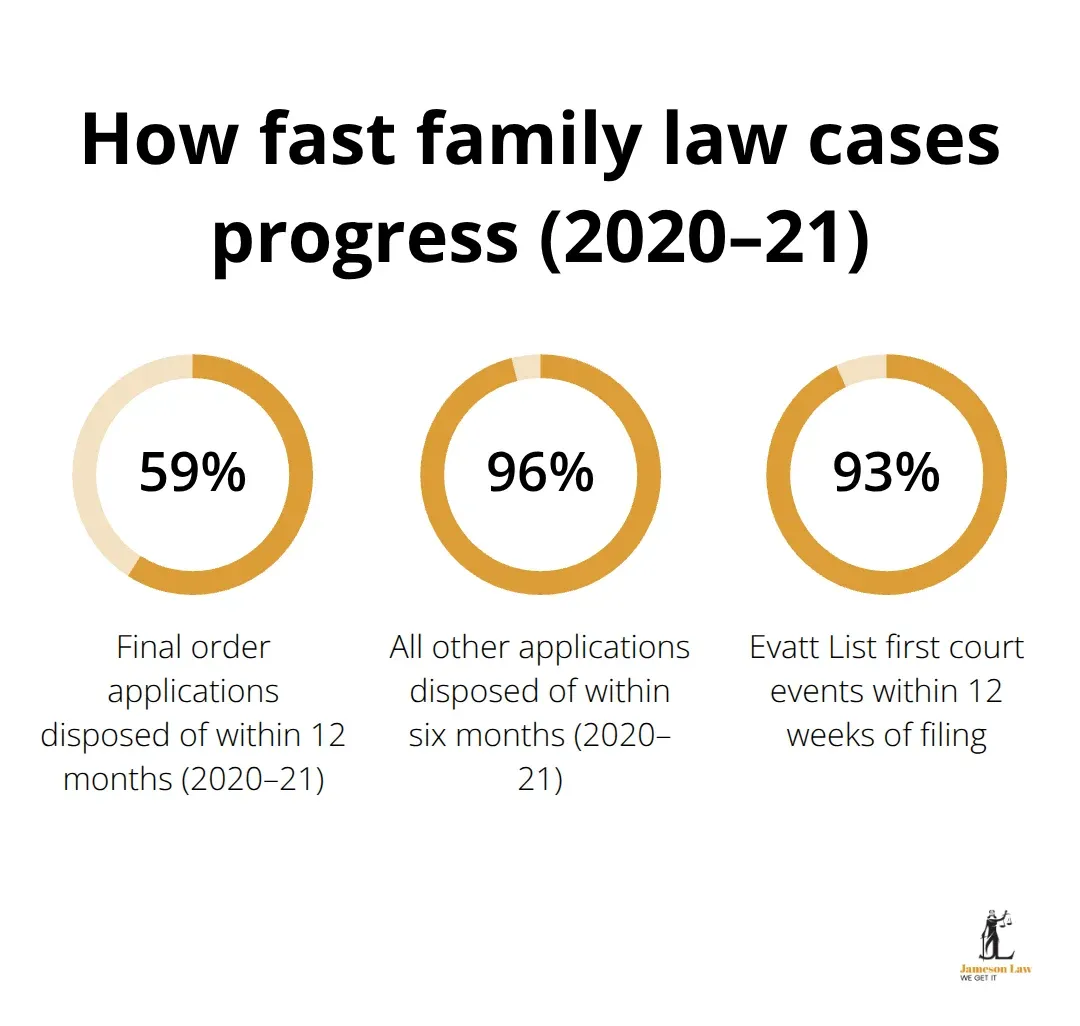
The Court aims to resolve cases efficiently. The Evatt List handles high-risk family violence cases, often listing a first court event within 12 weeks. Standard applications aim for resolution within 12 months.
Getting Your Case Ready for Court
Gather and Organise Your Evidence
Preparation is key. For property disputes, compile financial documents going back at least three years. For parenting matters, document your involvement with the children. The Court makes decisions based on evidence, not impressions.
Meet Pre-Hearing Filing Requirements
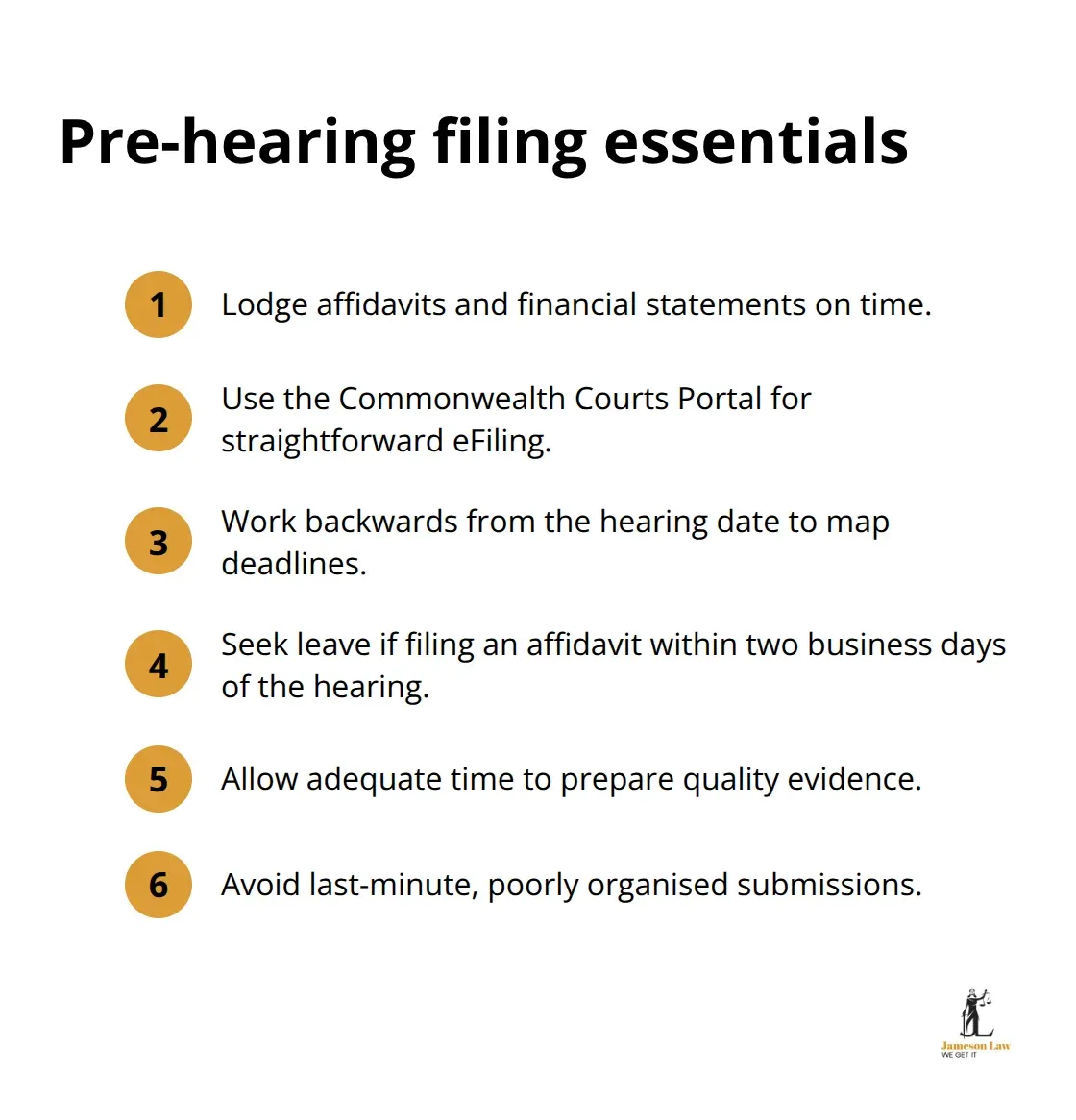
You must lodge affidavits and financial statements via the Commonwealth Courts Portal before your hearing. Failing to comply can result in delays or costs orders against you.
Work with a Family Lawyer to Prioritise Your Case
A family lawyer helps you decide what is worth fighting for. They guide you through specific lists like the Discrete Property List (now Priority Property Pools) for faster resolution of financial disputes under $500,000.
Inside the Family Law Court Hearing
What Happens When Your Case Is Called
When your case is called, you proceed to the bar table. The applicant and respondent sit at opposite ends. The hearing typically begins with the applicant’s case, followed by the respondent.
Types of Orders and Outcomes Available
In parenting matters, the Court makes orders based on the best interests of the child under the Family Law Act 1975. Property settlements adjust entitlements based on contributions and future needs. Spousal maintenance may also be ordered.
Mediation and Alternative Dispute Resolution
The Court encourages Family Dispute Resolution before a full hearing. This saves money and stress. Registrars successfully resolve a significant percentage of property matters through conciliation conferences.
Final Thoughts
Navigating family law court in Australia requires preparation and realistic expectations. Document everything and comply with deadlines. If safety is a concern, the Evatt List pathway provides prioritised support.
We at Jameson Law have helped countless clients across Australia. If you’re facing court proceedings, contact Jameson Law for an initial consultation to clarify your rights and plan your approach.