


Traffic offence penalties in NSW can feel overwhelming, especially when you’re unsure how courts calculate fines or what factors might affect your case. At Jameson Law, we’ve helped countless drivers understand their penalties and explore their options.
This guide breaks down the system, from speeding fines to serious charges, so you know exactly what to expect.
How NSW Courts Calculate Your Traffic Penalty?
NSW courts apply a structured system. They start with penalty units, which Transport for NSW indexes annually. As of 2025/2026, understanding how these units translate into your actual fine matters because the gap can be substantial.
Aggravating and Mitigating Factors
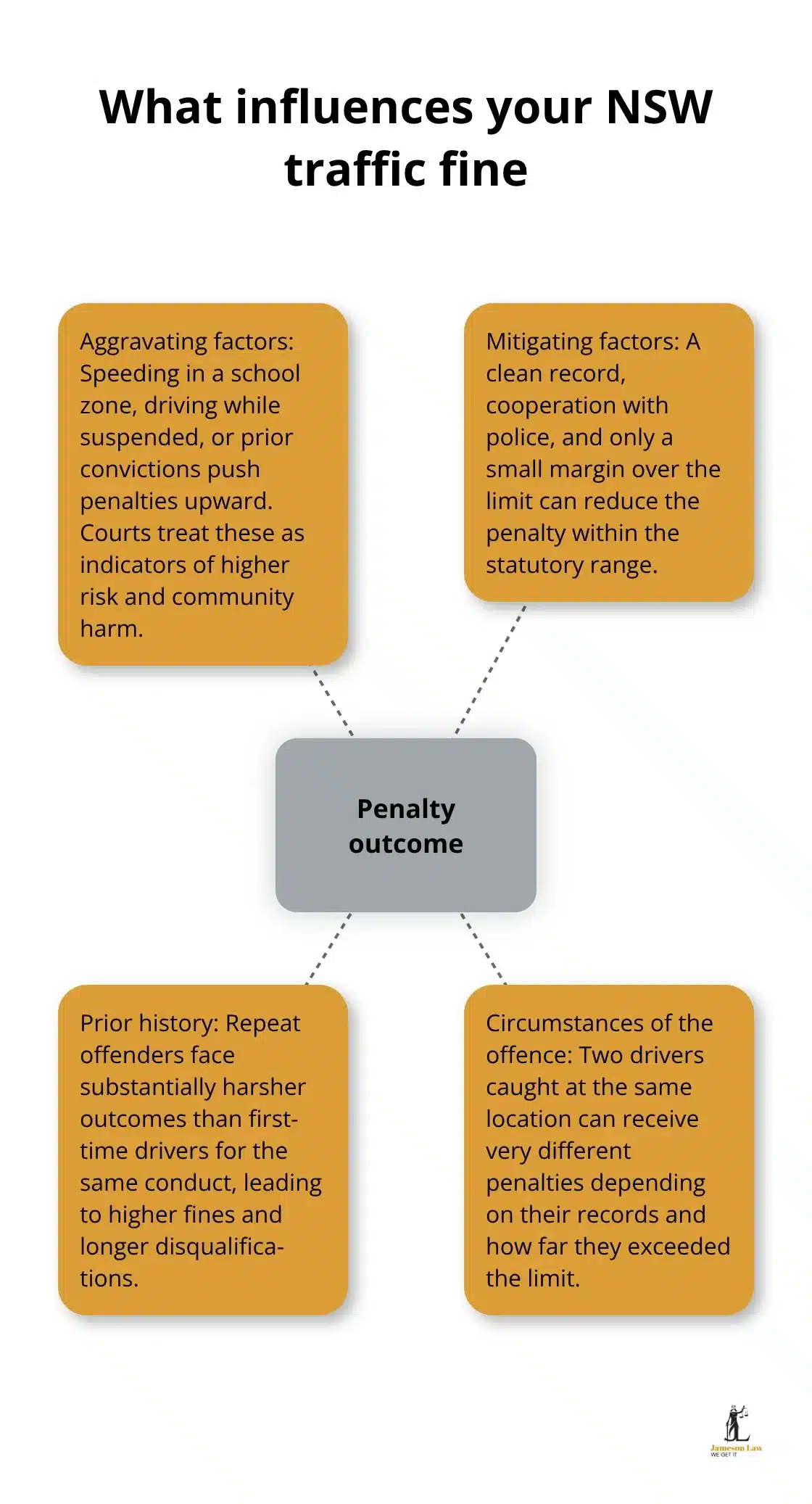
Courts consider aggravating factors—like speeding in a school zone or driving with a suspended licence. Conversely, mitigating factors like a clean driving record can reduce your penalty. The Judicial Commission of NSW provides guidelines, but judges have discretion.
Mandatory Minimums
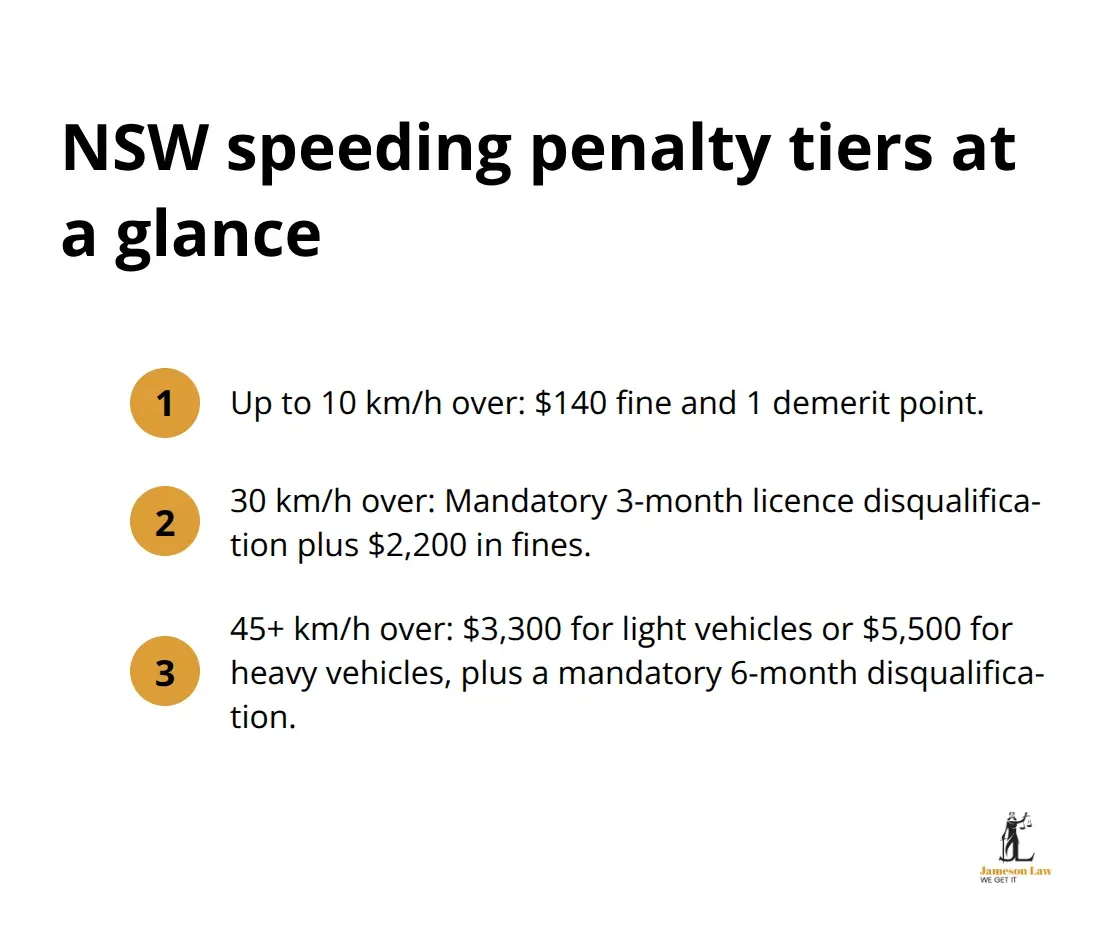
For serious offences like exceeding the speed limit by 45 km/h, a mandatory 6-month disqualification applies automatically. This isn’t discretionary. Courts can impose fines up to $3,300 for light vehicles, but cannot reduce the disqualification below the statutory minimum.
NSW Traffic Offences and Their Penalty Ranges
Speeding Offences
Speeding remains the most common offence. Penalties escalate based on how far you exceed the limit. According to Service NSW, speeding over 45 km/h results in immediate roadside suspension and heavy fines.
Drink Driving and Drug Driving
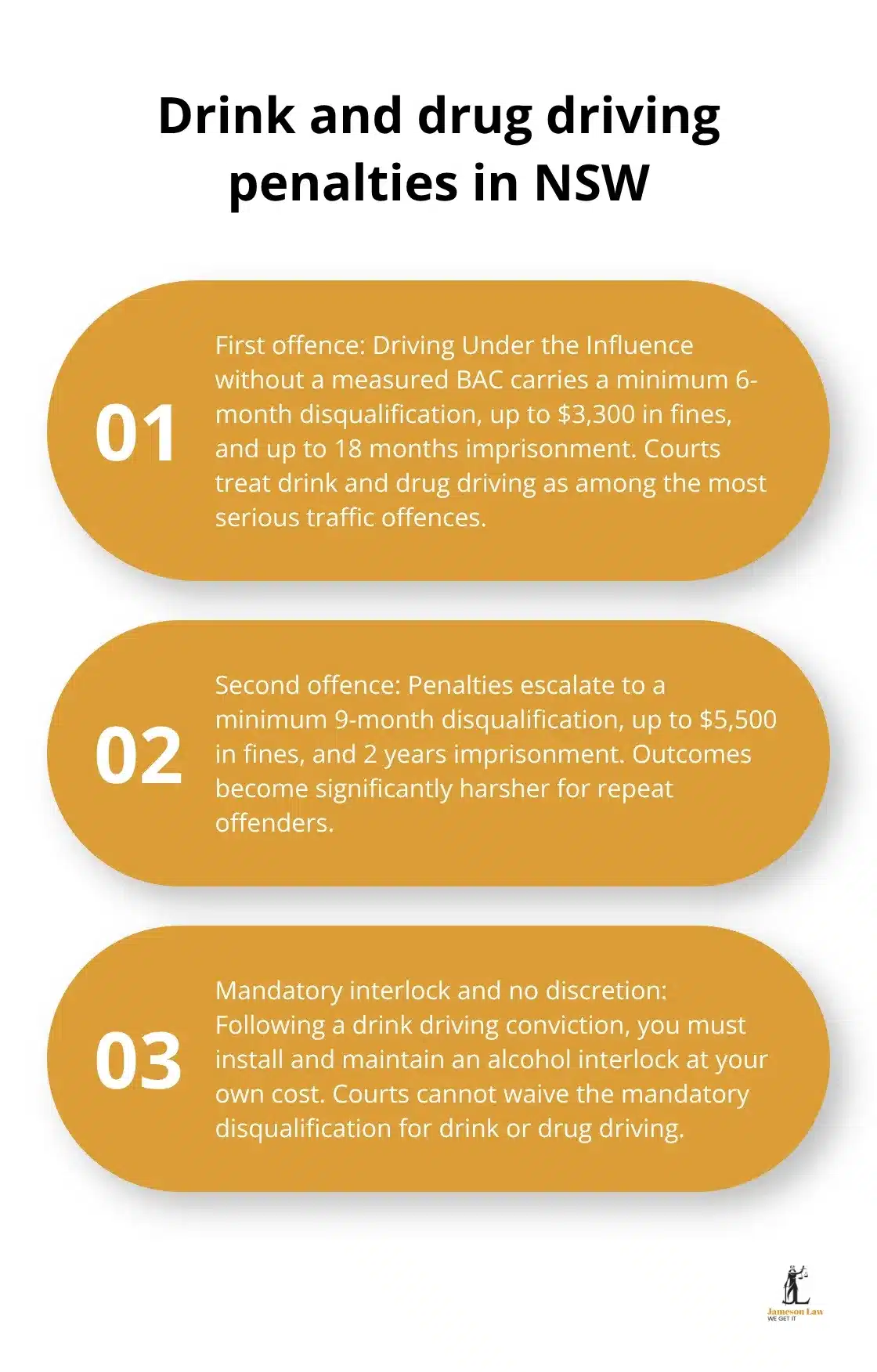
Drink driving offences carry severe penalties. A high-range PCA (0.15 or higher) involves a mandatory interlock period and potential imprisonment. The Mandatory Alcohol Interlock Program requires you to install a breath-test device in your car at your own cost.
Factors That Influence Your Specific Penalty
Your Driving History
Your record is central. A “habitual offender” declaration can be made if you have three major convictions in five years, leading to an additional 5-year disqualification. However, a clean record may help you secure a Section 10 dismissal (now Conditional Release Order without conviction).
Employment Consequences
A conviction can impact your career. Many employers conduct police checks, and a drink driving record can bar you from certain roles. Losing your licence can also lead to job loss if driving is essential. It’s crucial to present evidence of your need for a licence to the Court.
Final Thoughts
Traffic offence penalties NSW reshape your future. Mandatory minimums mean courts have limits on leniency. A clean history helps, but prior convictions guarantee harsher treatment.
We at Jameson Law understand how magistrates weigh these factors. Contact us now rather than waiting for your court date. Early legal advice is your best chance at minimizing the impact on your life.