


A single speeding ticket or drink driving charge can derail your life in NSW. The penalties range from hefty fines and demerit points to licence suspension and even jail time for serious offences.
At Jameson Law, we’ve helped countless drivers understand their rights when facing traffic offence charges. This guide breaks down common traffic offences, penalties, and the legal defences that might apply to your case.
What Traffic Offences Get You in Trouble in NSW?
Speeding Violations and Speed Camera Offences
Speeding remains the most common traffic offence in NSW. The Penalty Notice Dashboard, updated monthly by Revenue NSW, tracks enforcement across vehicle classes and reveals that certain vehicle categories attract more notices than others. A single speeding ticket costs between $137 and over $3,300 depending on how far over the limit you travelled, plus one to six demerit points. Your vehicle type influences enforcement patterns, so understanding where you sit on that dashboard matters for your defence strategy.
Drink Driving and Drug Driving Offences
Drink driving and drug driving offences attract far harsher treatment because they involve impaired judgement. Mid-range PCA offences occur when a driver is found to have a blood alcohol concentration above 0.08 and less than 0.15. The prosecution must only prove you drove with a BAC in that range—they don’t need to prove intent to break the law. Drug driving offences follow similar strict liability principles. The Sober Driver Program becomes mandatory for some offenders, not optional, and completion is a condition of your penalty.
Dangerous and Negligent Driving Charges
Dangerous and negligent driving charges operate on an entirely different level. These serious offences include furious or reckless driving, predatory or menacing driving, extreme speeding, and causing death or grievous bodily harm. Convictions result in imprisonment, heavy fines exceeding $3,000, and permanent licence loss. NSW Police can suspend your licence on the spot for serious driving offences, and vehicle impoundment can occur if your vehicle is registered in your name.
How the Prosecution Builds Its Case
Most driving offences are strict liability matters, meaning the prosecution only needs to prove the act occurred, not your intent. This distinction shapes your entire defence strategy. The standard of proof remains beyond reasonable doubt, which sets a high bar the prosecution must clear. Common defences include challenging whether you actually committed the act, proving accident or mistake of fact, showing you took reasonable steps to avoid the offence, or demonstrating necessity or duress.
Why Early Legal Advice Changes Everything
Waiting to seek advice costs you time and options. Early legal representation shapes your entire case strategy, particularly for serious offences where imprisonment is possible. The decisions you make in the first few days after a charge can determine whether you fight the matter in court or negotiate a better outcome. Understanding your legal position immediately puts you in control of what happens next.
What Happens When You Get Caught?
Fines and Demerit Points Stack Up Fast
The moment you receive a fine or face a traffic offence charge, you enter a system that punishes through multiple mechanisms at once. Fines hit your bank account immediately, demerit points accumulate on your record, and licence suspension looms if you reach your limit. Understanding exactly how these penalties stack up separates informed decisions from discovering too late that your licence is gone.
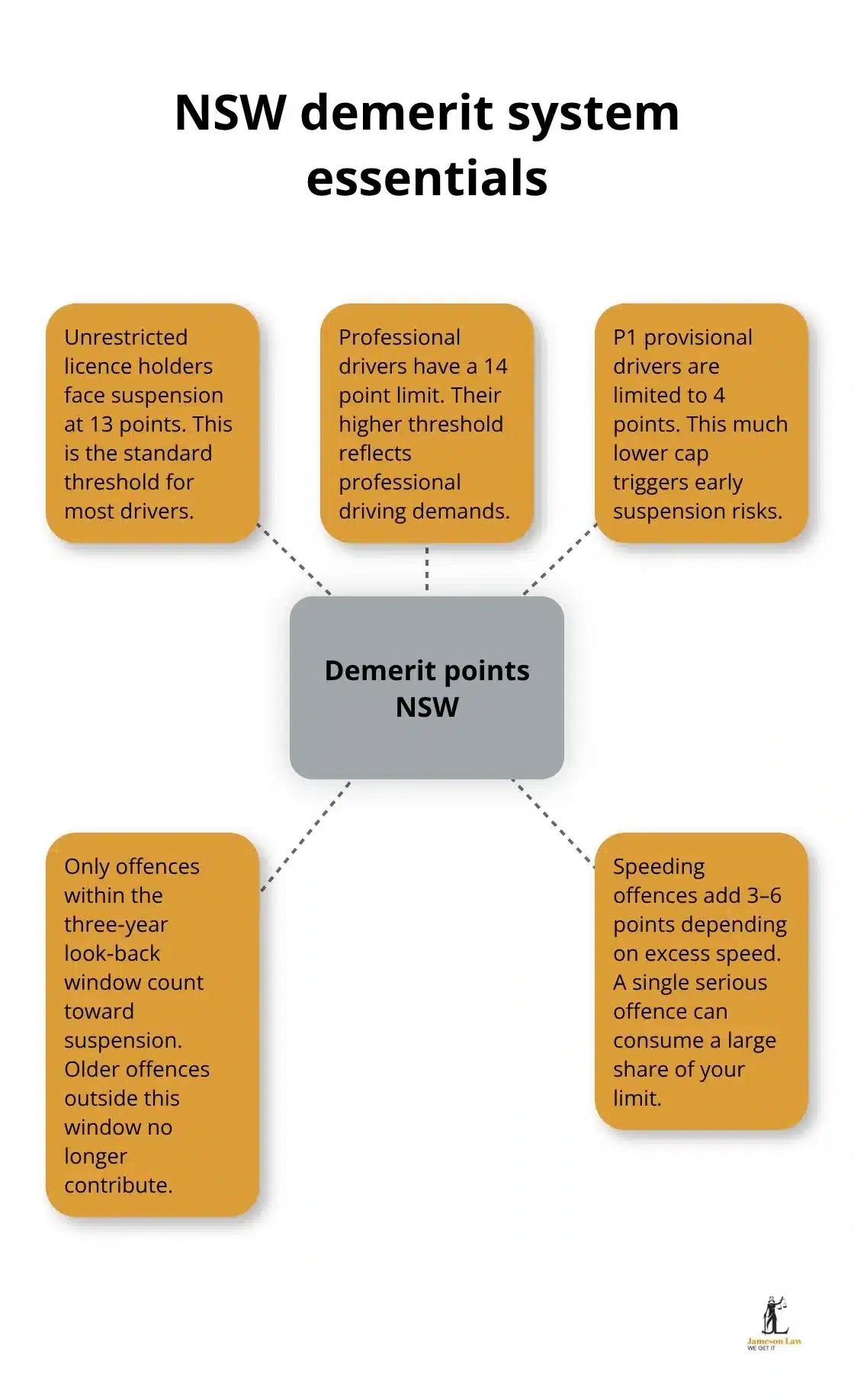
Transport for NSW operates a demerit point system where an unrestricted licence holder can accumulate 13 points before facing suspension, while professional drivers get 14 points and provisional P1 drivers only get 4 points. Each offence carries a specific point value, and these points stay on your record permanently, though only offences within a three-year look-back window count toward suspension. Speeding violations alone range from three to six demerit points depending on how far over the limit you travelled, meaning a single serious speeding offence can consume one-third of your available points.
The system calculates points from the moment you pay a fine, when a court convicts you, or when unpaid fines are enforced, so the clock starts immediately. If you exceed your demerit limit twice within five years, you must retake the Driver Knowledge Test, complete an approved driver education course, and present the completion certificate to a service centre before regaining your unrestricted licence. This creates a compounding problem: the penalty extends far beyond the initial fine into lost time, course fees, and retest costs that most drivers never anticipate.
Licence Suspension and Vehicle Impoundment
Licence suspension and vehicle impoundment represent the most severe consequences short of imprisonment. When you hit your demerit limit, Transport for NSW issues a Notice of Suspension stating the start date, and your licence becomes invalid immediately. For serious offences like dangerous driving or extreme speeding, NSW Police can enact a licence suspension on the spot without waiting for court proceedings.
Vehicle impoundment follows serious driving offences, and if your vehicle is registered in your name, Transport for NSW can confiscate your number plates permanently for repeat offences. The prosecution must prove guilt beyond reasonable doubt for these matters, which means your defence strategy becomes critical from day one.
Jail Time for the Most Serious Offences
Jail time applies to the most serious offences: causing death or grievous bodily harm, furious or reckless driving, and predatory or menacing driving carry imprisonment sentences ranging from months to years depending on the circumstances and your history. These convictions result in permanent licence loss and fines exceeding $3,000, making the stakes substantially higher than standard traffic violations.
Managing Fines You Cannot Afford
If you cannot afford fines, Work and Development Orders (WDO) allow you to reduce fines by approximately $1,000 per month through work or development activities, but you must apply before the situation escalates. Payment plans spread the cost across months, and fine reductions are available if you meet specific eligibility criteria. The good behaviour demerit reward scheme, made permanent in recent legislation updates, allows one demerit point removal after 12 months without offences, helping safe drivers recover their standing.
Check Your Position Before Making Decisions
Check your current demerit points online through MyServiceNSW immediately after any charge to understand your exact position. This step determines whether you face suspension soon, how many points you can afford to lose, and what your realistic options are moving forward. Your demerit point balance shapes every decision you make about your defence strategy and whether to negotiate or contest the charge in court.
How to Strengthen Your Defence Against Traffic Charges
Challenge Speed Camera Evidence
Speed camera calibration failures represent one of the most exploitable weaknesses in traffic prosecutions. Speed cameras require regular calibration certificates, and if Transport for NSW cannot produce documentation proving the camera met calibration standards on the date you received the ticket, the evidence becomes inadmissible. Request the calibration records immediately through your legal representative, as these documents often contain errors or gaps that undermine the prosecution’s case. The prosecution must prove guilt beyond reasonable doubt, which means a single flaw in how evidence was gathered or processed can collapse their case entirely. Understanding speeding defences in NSW can reveal additional technical vulnerabilities in the prosecution’s evidence.
Identify Procedural Breaches by Police
NSW Police must follow strict protocols when issuing notices, conducting breath tests, or obtaining statements. If an officer failed to inform you of your rights, conducted a breath test without proper procedure, or failed to record evidence correctly, the charge may be withdrawn or significantly weakened. Common procedural errors include failing to advise you of your right to legal representation, conducting a roadside breath test without proper equipment certification, or failing to provide a copy of the infringement notice within required timeframes. Transport for NSW maintains detailed records on these procedures, and accessing them early reveals whether shortcuts were taken that compromise the prosecution’s position.
Use Honest Mistake of Fact Defences
Circumstantial defences operate differently from evidentiary challenges. An honest and reasonable mistake of fact applies when you genuinely misunderstood road signs, speed limit changes, or road conditions. If a speed limit sign was obscured by vegetation or damaged, and you travelled at what you reasonably believed was the legal limit, this defence may apply. Courts recognise these circumstances as legitimate grounds to reduce or eliminate liability, provided you can demonstrate the sign was genuinely unclear or the road conditions created genuine confusion about the applicable speed limit.
Document Necessity and Accident Defences
Necessity defences apply in genuinely urgent situations where breaking the law was the only way to prevent serious harm, though courts apply these narrowly. If you were speeding to reach a hospital during a medical emergency, document everything immediately: the medical condition, hospital records, ambulance records if applicable, and any communications showing the urgency. These documents transform a necessity defence from theoretical to concrete. Accident defences apply when mechanical failure or road conditions beyond your control caused the offence. If your vehicle’s speedometer failed and you had no way of knowing your speed, or if you swerved to avoid an obstacle and briefly crossed a line, these circumstances may reduce liability significantly. Get your vehicle inspected immediately after any charge involving mechanical issues, and retain the inspection report as evidence.
Leverage the Three-Year Look-Back Window
The three-year look-back window for demerit points matters strategically in your defence planning. If you’re approaching suspension and an older offence falls outside this window, your position improves substantially once that date passes. Check your demerit points record through MyServiceNSW to identify exactly which offences count toward suspension, then calculate when older offences become irrelevant to your case. This calculation shapes whether you contest a charge immediately or explore negotiation options that might delay proceedings until your demerit position improves.
Final Thoughts
Traffic offences penalties NSW range from minor fines to imprisonment, and the consequences extend far beyond the initial penalty notice. Speeding violations cost between $137 and over $3,300 plus demerit points, while drink driving offences trigger mandatory programs and licence suspension. Dangerous driving charges result in imprisonment, permanent licence loss, and vehicle impoundment, making your immediate response to any charge critical.
The prosecution must prove guilt beyond reasonable doubt, which means weaknesses in their evidence, procedural errors by police, or gaps in calibration records can collapse their case entirely. Speed camera calibration failures, breath test protocol breaches, and honest mistakes of fact represent genuine defences that reduce or eliminate liability. Checking your demerit points through MyServiceNSW immediately after any charge reveals your exact position and shapes your entire strategy moving forward.
Early legal advice changes everything, as the decisions you make in the first few days after a charge determine whether you negotiate a better outcome or fight the matter in court. Waiting costs you time, options, and the ability to gather evidence while circumstances remain fresh. Contact Jameson Law today to take control of your case and protect your licence, your freedom, and your future.