Building disputes NSW can derail your renovation plans and drain your finances. Whether you’re facing defective workmanship, payment disagreements, or project delays, knowing your options makes a real difference.
We at Jameson Law help homeowners navigate these conflicts efficiently. This guide walks you through every resolution pathway available to you.
What Building Disputes Actually Look Like in NSW
Defective Workmanship and Construction Defects
Defective workmanship tops the list of disputes in NSW. Structural cracks, waterproofing failures, and poor electrical work create concrete problems that affect your home’s safety and value. Under the Home Building Act 1989, you have six years to claim for major defects like load-bearing failures or compromised fire safety systems, and two years for minor defects. The Building Commission NSW handles approximately 2,500 disputes annually, with over 80% resolved without enforcement action.
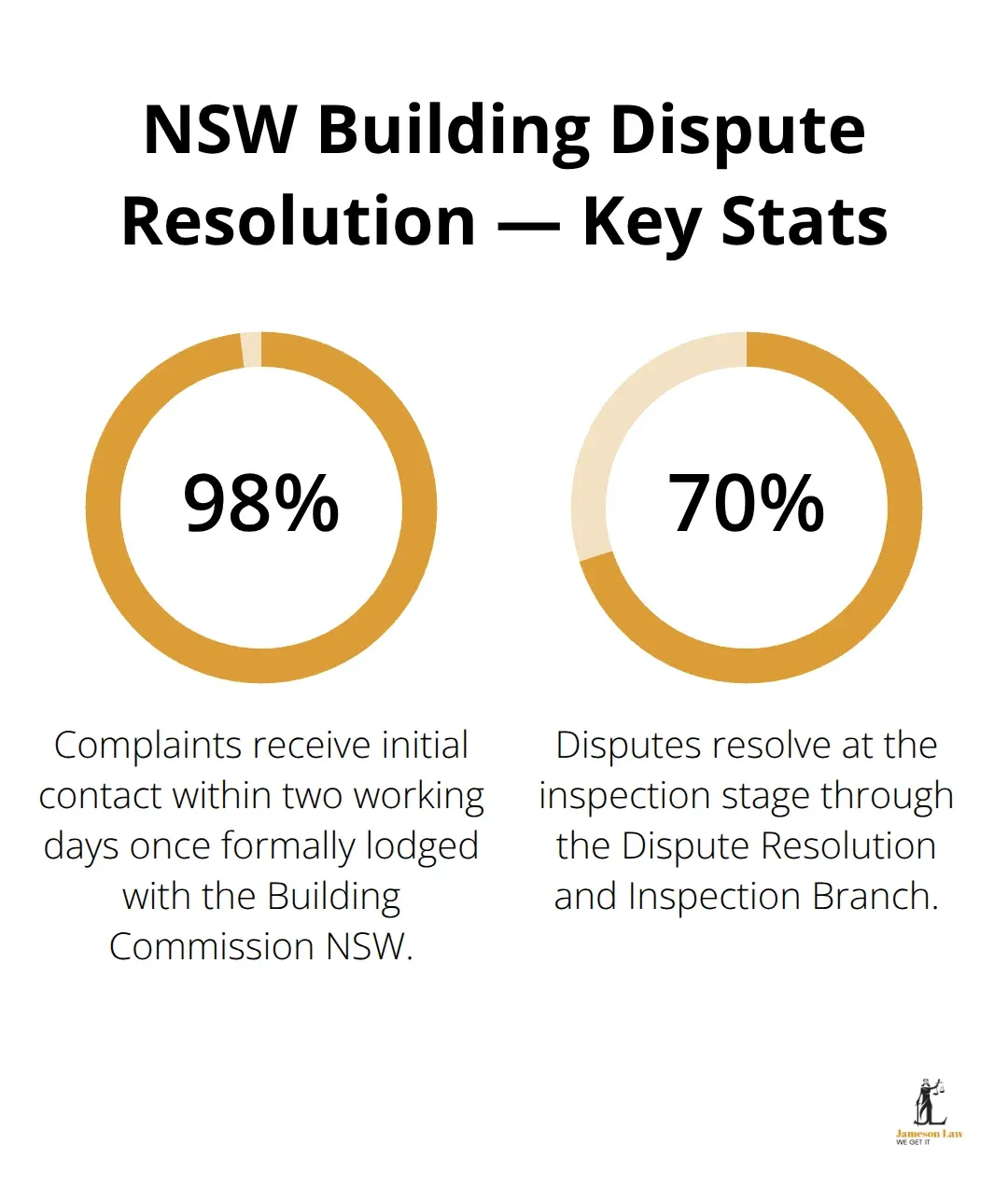
When you spot defective work, act immediately. Photograph the damage, collect invoices and contractor details, and contact your Home Building Compensation Fund provider in writing to protect your position. Then lodge a complaint with the Building Commission NSW’s Dispute Resolution and Inspection Branch. Inspectors typically visit your site within 22 working days and try to resolve issues within 39 days on average. If the inspector finds the contractor responsible, a Rectification Order sets a deadline for repairs. This early intervention approach works because around 70% of disputes resolve at the inspection stage itself.

Payment Disputes and Contract Breaches
Payment disputes and delays represent the second major category of building conflicts. You might face unexpected cost variations, invoices for incomplete work, or a contractor abandoning the project altogether. Contract breaches occur when builders deviate from agreed plans or use substandard materials without your consent. The NSW Guide to Standards and Tolerances defines acceptable workmanship, so you have a clear benchmark for your claims.
If direct negotiation fails, Fair Trading NSW offers mediation services, though these cannot issue binding orders. NCAT, the NSW Civil and Administrative Tribunal, can hear disputes up to $500,000 and order payment for work, rectification of defective or incomplete work, or compensation for damage. You must lodge Fair Trading investigations before NCAT accepts your claim unless your matter falls under exemptions (such as unlicensed contractors or claims expiring within three months). Most homeowners represent themselves at NCAT, and decisions are legally binding and enforceable through the NSW Local Court if the other party refuses to comply.
Building the Right Evidence
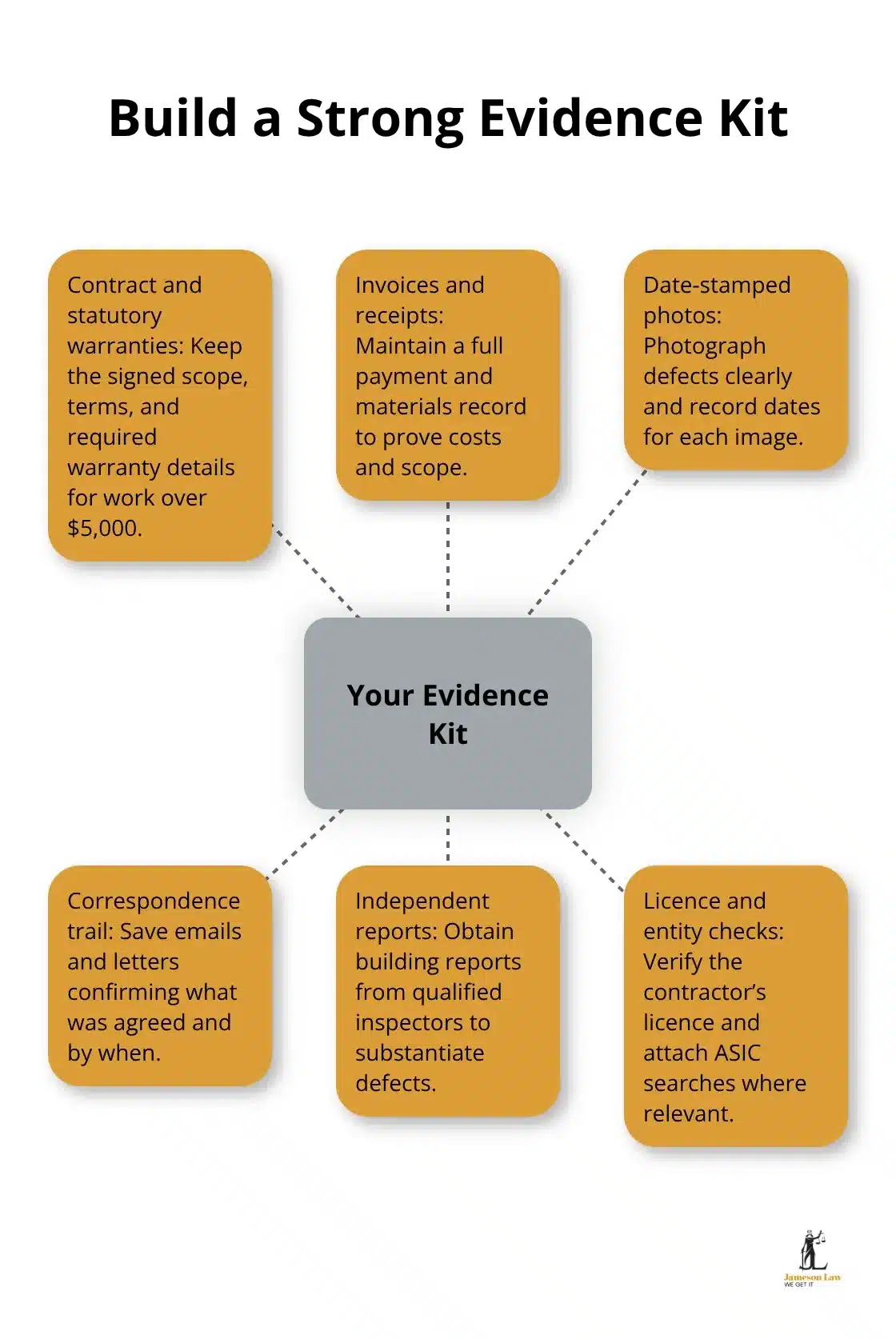
Start gathering your contract, building reports, contractor licence details, and correspondence now rather than waiting until a dispute escalates. Strong documentation strengthens your position at every resolution stage. Written contracts for work costing more than $5,000 (including GST) must detail the work and statutory warranties, so verify you have this in place. Early, proactive communication with the builder or tradesperson prevents misunderstandings and accelerates resolution. Follow up conversations with a written letter or email detailing what you agreed and by when; keep dated copies and use registered post or verified email for proof.
Understanding which disputes fall within NCAT’s scope and which resolution pathway suits your situation determines how quickly you move forward. The next section explores your resolution options in detail.
How to Resolve Your Building Dispute
Start with Written Negotiation
Direct negotiation gives you the fastest and cheapest path forward, but most homeowners underestimate what this stage requires. Contact your builder or contractor in writing, not by phone or text. Describe the specific defect or breach, reference your contract terms, and propose a timeline for resolution. Keep copies of everything. The Building Commission NSW reports that 98% of complaints receive initial contact within two working days when you lodge a formal complaint, which suggests that builders often respond quickly once they understand you’re serious.
If your builder agrees to rectify work or pay disputed amounts, get the agreement in writing with specific dates and amounts. Verbal promises disappear fast when money is involved. This written record also protects you if the contractor fails to follow through and you need to escalate to the next stage.
Use Fair Trading NSW Mediation
When direct negotiation stalls, Fair Trading NSW mediation services offer a path many homeowners overlook. Mediation is not binding, which sounds like a weakness but actually gives you flexibility. A trained mediator helps both parties communicate and find common ground without the formality and cost of tribunal proceedings. The process is free and typically takes weeks rather than months.
However, Fair Trading cannot issue orders or force compliance. If the other party refuses to cooperate or the mediator cannot bridge your positions, you reach a dead end. Mediation works best when the builder or contractor is genuinely willing to negotiate but you both need help finding middle ground. If they ignore your requests or refuse to engage, skip mediation and move to NCAT.
Escalate to NCAT for Binding Outcomes
NCAT is where disputes become legally binding and enforceable. The NSW Civil and Administrative Tribunal handles residential building claims, and NCAT decisions can be enforced through the NSW Local Court if the other party refuses to comply. You must lodge a Fair Trading investigation before NCAT accepts your claim, unless your dispute falls under exemptions such as claims involving unlicensed contractors, matters where time limits expire within three months, or cases where the contractor is insolvent or deregistered.
NCAT first lists your matter for conciliation, a structured mediation attempt. If that fails, your case proceeds to a contested hearing where both parties present evidence and arguments. Most homeowners represent themselves at NCAT without legal representation, though you can bring a lawyer if you choose. Application fees start at around $70 for smaller claims, with concession card holders eligible for reduced fees. The entire process from application to decision typically takes several months, faster than court but slower than mediation.
Understanding When Each Path Works Best
NCAT’s strength lies in binding outcomes and enforcement power, making it essential when the other party refuses to negotiate or when large amounts are at stake. The choice between these three pathways depends on your contractor’s willingness to engage, the complexity of your dispute, and how much time and money you can invest. Your next step involves gathering the right evidence and understanding the specific timeline and costs involved in whichever pathway you choose.
What Each Resolution Path Costs and How Long It Takes
Direct Negotiation: Speed and Savings
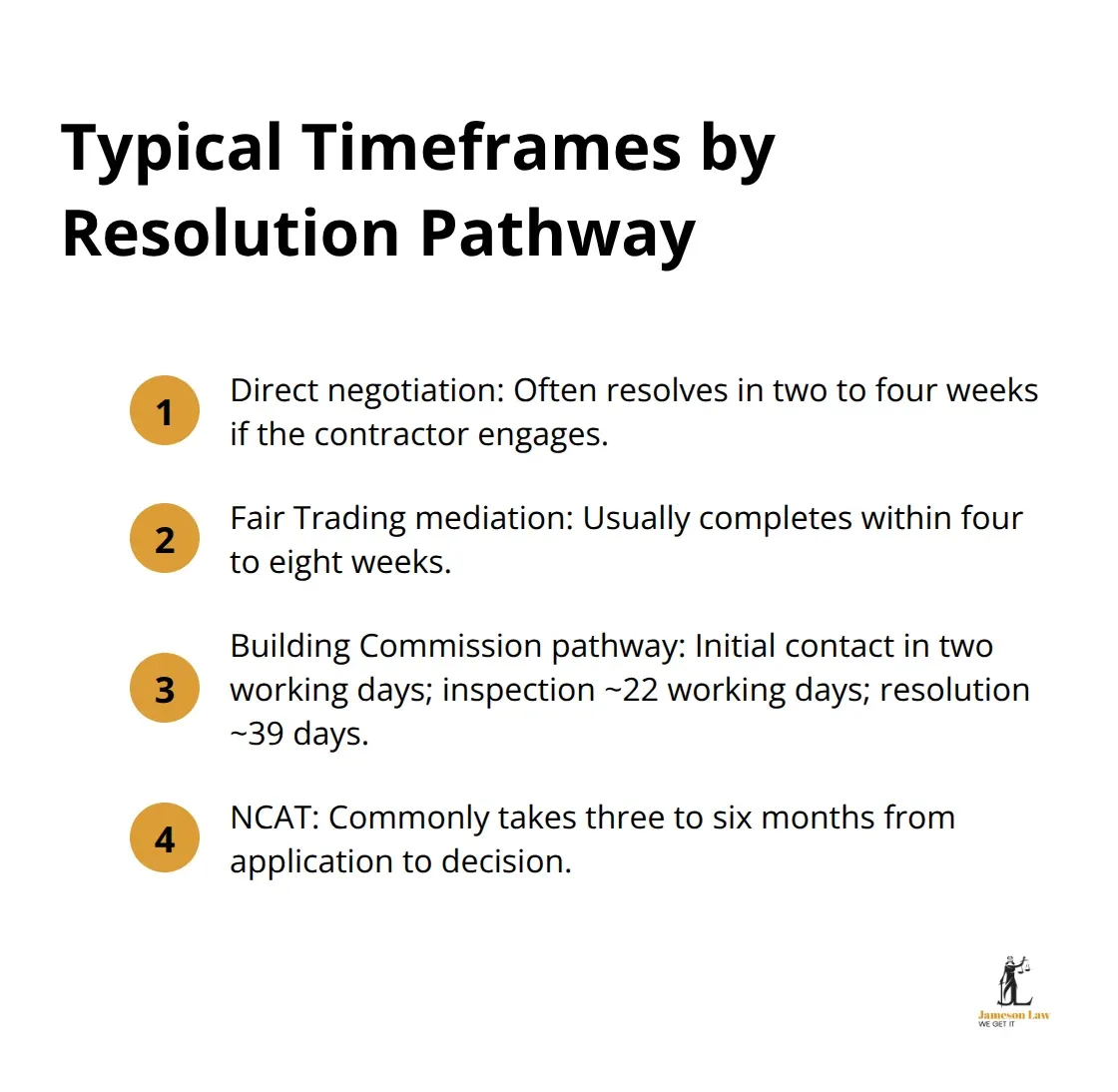
Direct negotiation costs you nothing except time and effort, making it your cheapest option by far. Most disputes that stay at this stage resolve within two to four weeks if the contractor responds to your written communication. The Building Commission NSW reports that 98% of complaints receive initial contact within two working days of lodging, which signals that builders often respond quickly once they understand you’re serious about escalating. If your written communication reaches someone with authority to make decisions, you might reach agreement in under a month. The real cost appears only if negotiation fails and you move forward without a written settlement in place, forcing you into more expensive processes later.
Fair Trading NSW Mediation: Free but Non-Binding
Fair Trading NSW mediation remains free and typically concludes within four to eight weeks. This timeline assumes both parties participate actively and scheduling doesn’t create delays. Mediation works fastest when the contractor acknowledges the problem but you both need help finding middle ground on cost or scope. However, if the contractor ignores your mediation requests or refuses to attend sessions, you lose time waiting for responses and then face the reality that mediation cannot force compliance.
The Building Commission NSW’s dispute resolution service operates on a different timeline. Once you lodge a complaint with the Dispute Resolution and Inspection Branch, expect initial contact within two working days. On-site inspections typically occur within about 22 working days, with resolution including rectification taking approximately 39 days on average. This pathway is free for homeowners, though the contractor must participate.

If the inspector issues a Rectification Order, the contractor has a set deadline to complete repairs. Failure to comply becomes a breach of the Home Building Act 1989, which escalates enforcement options.
NCAT Claims: Binding Outcomes at a Cost
NCAT claims demand more time and money but deliver legally binding outcomes. Application fees start around $70 for claims under $10,000, increasing for larger disputes, with concession card holders eligible for reduced fees. The entire NCAT process from application to decision typically takes three to six months. Your matter first lists for conciliation, a structured mediation attempt lasting one to two months. If that fails, your case proceeds to a contested hearing scheduled weeks or months later.
NCAT can order payment for work, rectification of defective or incomplete work, compensation for damage to other structures, or supply of specialised work like electrical or plumbing repairs. The tribunal handles disputes up to $500,000, with higher amounts heard if both parties agree. Unlike Fair Trading mediation, NCAT decisions are legally binding and enforceable through the NSW Local Court if the other party refuses to comply. Most homeowners represent themselves at NCAT, saving legal costs, though complex disputes benefit from professional representation.
Evidence That Accelerates Resolution
Documentation determines how quickly disputes resolve at every stage. Collect your building contract, invoices for all work and materials, photographs of defects taken with dates, correspondence with the contractor, building reports from qualified inspectors, and the contractor’s licence details verified through the Home Building Commission register. For multi-unit dwellings, include builder, developer, certifier and strata manager information.

Written contracts for work costing more than $5,000 (including GST) must detail the work and statutory warranties, so verify you have this in place. If disputes involve a business entity, search ASIC registers and attach the search results to your NCAT application to avoid delays or unenforceable orders. Witness statements or affidavits from people who observed the defective work add credibility. Strong evidence accelerates resolution because inspectors and tribunal members can see exactly what went wrong rather than relying on competing claims.
Warranty Deadlines: Act Before Time Runs Out
Time limits impose hard constraints on your options. The Home Building Act 1989 provides six years from completion for major defects like load-bearing failures or waterproofing failures and two years for other defects. If a defect becomes apparent within the last six months of the warranty period, you have a further six months after the warranty ends to commence proceedings. This means if you discover defective work late in the warranty cycle, you must lodge complaints or NCAT applications quickly to preserve your rights. If you’re nearing the end of the warranty period, lodge an application with NCAT immediately rather than relying solely on the Building Commission NSW complaint process, which prioritises resolution before tribunal involvement but cannot guarantee it. The practical advice is straightforward: gather your evidence now, contact the contractor in writing immediately, and escalate to the Building Commission NSW or Fair Trading within weeks, not months. Waiting costs you options.
Final Thoughts
Building disputes NSW require you to act decisively once direct negotiation stalls. Written communication changes the dynamic immediately-contractors recognise you’re serious about escalating when you lodge a formal complaint with the Building Commission NSW or Fair Trading. The data shows 98% of complaints receive initial contact within two working days, which means your written message triggers a response fast and moves you toward resolution rather than prolonged waiting.
Timing matters more than most homeowners realise because your statutory warranties provide six years for major defects and two years for minor defects, but these deadlines approach faster than you expect. If you discover defective work late in the warranty period, you must act within weeks, not months-waiting costs you options and potentially your entire claim. Legal advice becomes essential when disputes involve substantial amounts, complex contract terms, or when the contractor refuses to engage at any stage.
We at Jameson Law help homeowners navigate building disputes by providing practical guidance on which resolution pathway suits your situation and how to strengthen your position with proper documentation and communication. Contact us for a consultation if you’re facing a building dispute and need professional advice on your options. Your next step is gathering your evidence, sending that written communication, and moving forward with confidence.