PUBLICATION

NSW Criminal Court Processes: What Happens in Court

"Understand NSW criminal court processes step-by-step, from arrest through sentencing. Learn what to expect when appearing in court."
NSW Criminal Court Processes: What Happens in Court

Facing criminal charges in NSW can feel overwhelming, especially when you don’t understand how the court system works. The NSW criminal court processes involve multiple stages, from your first appearance through to trial and sentencing.

At Jameson Law, we’ve guided countless clients through these stages. This guide breaks down exactly what happens at each step so you know what to expect.

Three Courts Handle NSW Criminal Cases

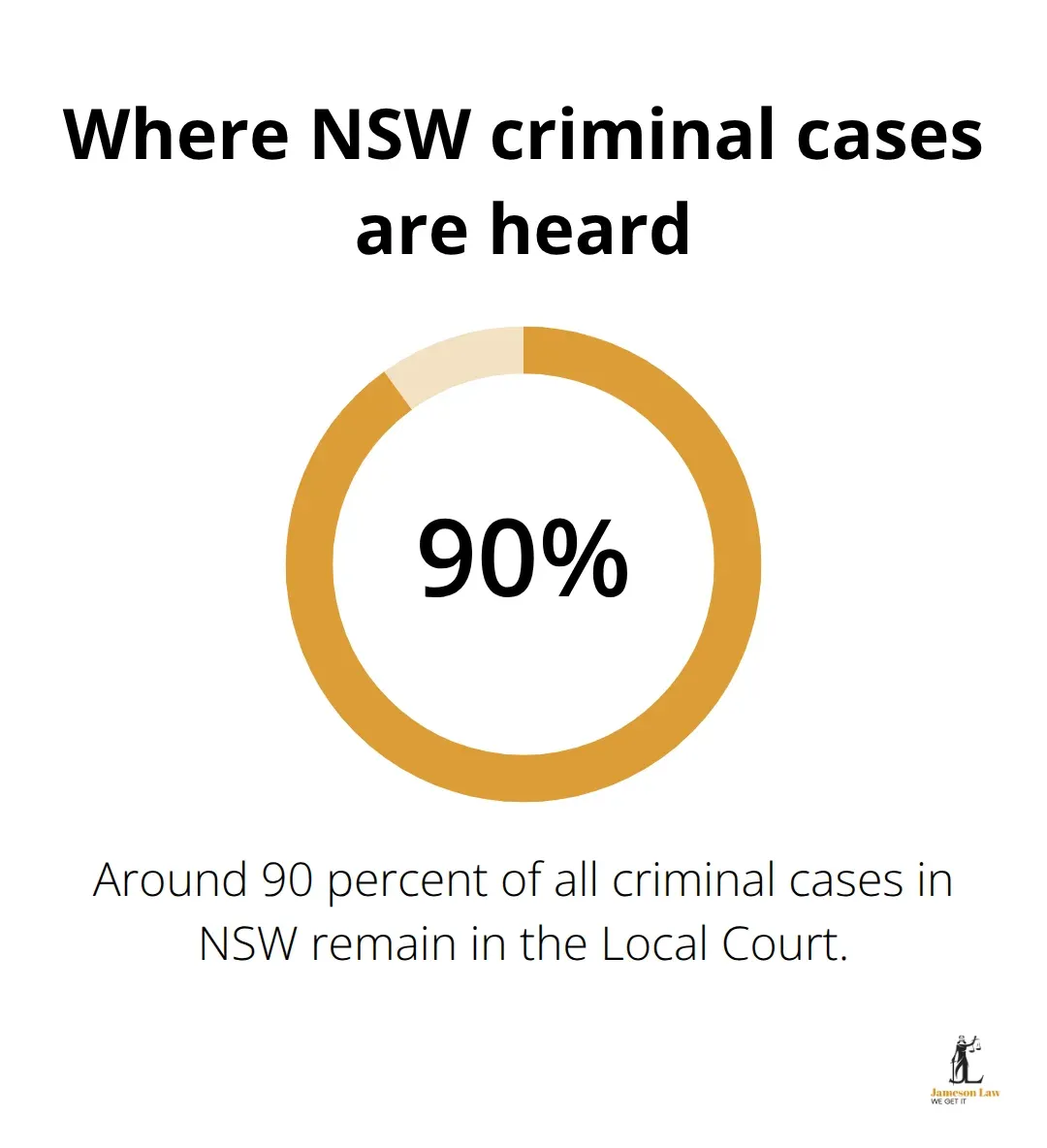
NSW has three main criminal courts, and where your case goes depends on how serious the charges are. The Local Court handles the vast majority of criminal matters-around 90 percent of all criminal cases in NSW never leave this level. This court deals with summary offences like minor assault, shoplifting, and traffic-related crimes, plus less serious indictable offences. If you face serious charges, your case starts in the Local Court anyway through a committal hearing, which acts as a gateway to determine if sufficient evidence exists to send you to a higher court. The District Court takes over for mid-range serious offences such as sexual assault, armed robbery, and drug trafficking. The Supreme Court handles the most serious crimes including murder, manslaughter, and large-scale drug operations. Understanding which court has jurisdiction over your charges matters because it affects the timeline, the people involved in your case, and the potential outcomes you face.

Visual showing that most NSW criminal cases remain in the Local Court - NSW criminal court processes

Local Court Operates Without a Jury

The Local Court operates without a jury-a magistrate hears the evidence and makes decisions. This means your case moves faster than it would in a higher court. If you plead guilty, sentencing can happen immediately or shortly after. If you plead not guilty, the magistrate typically adjourns the matter for around six weeks to allow police to prepare the brief (which contains victim and witness statements, forensic test results, and scene photos or maps). Delays at the next hearing are common because witnesses aren’t available, court schedules fill up, or you need psychiatric assessments.

Early Guilty Pleas Reduce Court Time

The Early Appropriate Guilty Plea reforms introduced in NSW in 2018 actively encourage people to plead guilty early, which reduces court time and stress. If the magistrate finds you guilty, sentencing follows immediately or after reports are prepared. The Local Court can impose sentences up to two years imprisonment for most matters, though some serious offences have higher penalties within the Local Court’s jurisdiction.

District and Supreme Courts Involve Judge and Jury

When your case goes to the District or Supreme Court, you receive a trial before a judge and a jury of twelve people. These trials take longer-sometimes months or years for the most serious cases-because the evidence is more complex and the stakes are higher. Before trial, your matter will be mentioned several times as the court manages case preparation and disclosure of evidence. These courts can impose much heavier sentences, including lengthy prison terms. The Supreme Court handles the most serious offences where life sentences may apply.

Jury Decides Guilt, Judge Determines Sentence

In both courts, the jury decides whether you’re guilty or not guilty based on the evidence presented, while the judge handles legal rulings and, if you’re convicted, determines your sentence. Appeals from District and Supreme Court convictions must be lodged within 28 days of conviction or sentencing, and the appeal process adds further time and cost to your case. The complexity of these higher court proceedings means understanding what happens at each stage becomes even more important for your defence strategy.

From Arrest to Your First Court Appearance

What Happens in the First 24 to 72 Hours

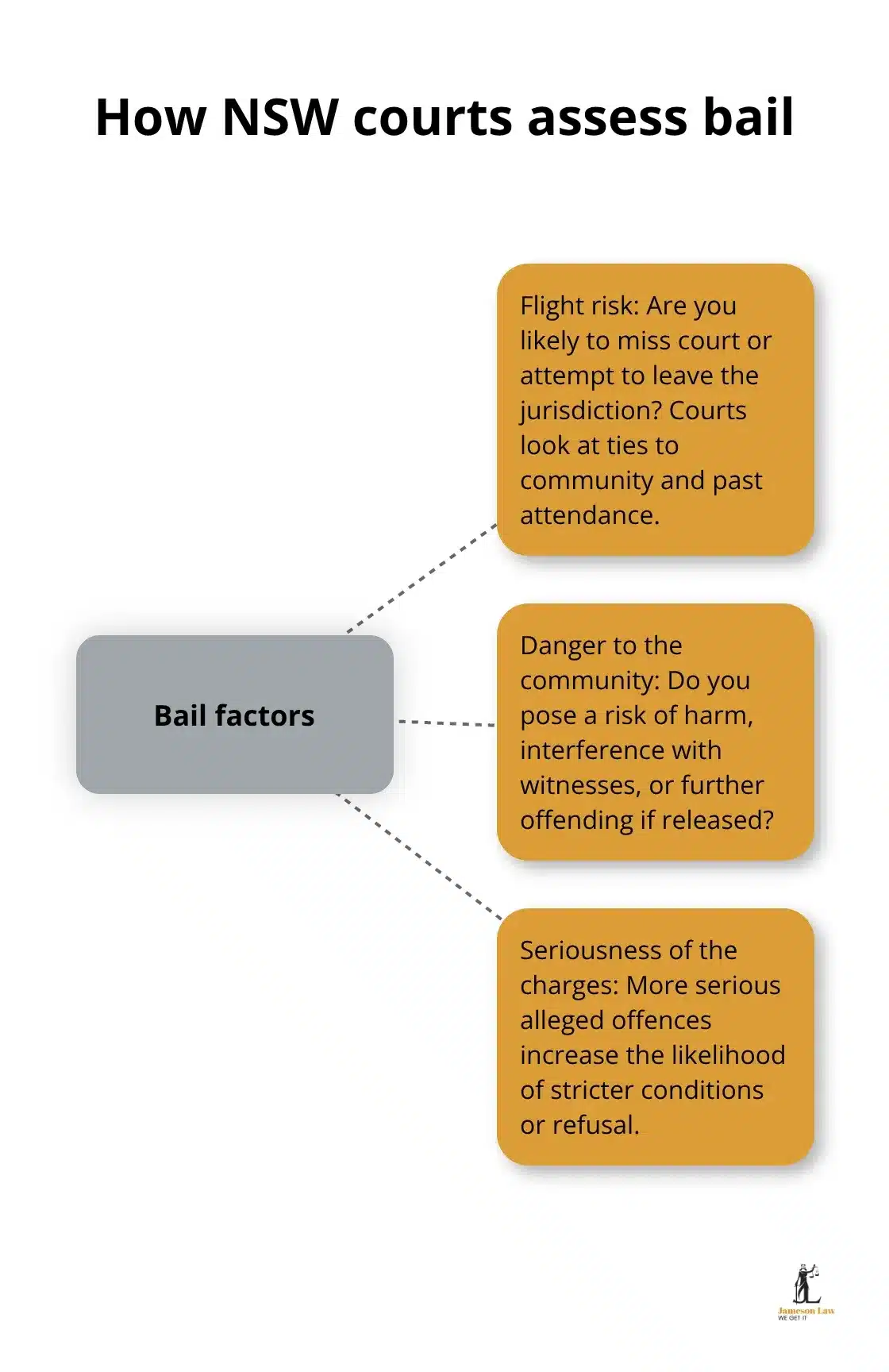
Your first court appearance happens quickly after arrest. In NSW, magistrates typically see you within 24 to 72 hours, though the law requires you to appear within ten days if you remain in custody. At this initial appearance, the magistrate addresses bail. Bail isn’t automatic-the court weighs whether you’re a flight risk, whether you pose a danger to the community, and the seriousness of the charges. If bail is refused, you stay in custody until trial.

Hub-and-spoke chart showing the key factors courts weigh when deciding bail in NSW

If granted, bail conditions might include reporting to police weekly, surrendering your passport, or staying within a certain area.

How the Court Assesses Your Bail Application

The Office of the Director of Public Prosecutions assesses bail objectively based on risk factors, not on your character or how sorry you are. Get legal advice before this hearing because what you say affects bail decisions. Many people make statements that hurt their case when they lack representation. If you can’t afford a lawyer, Legal Aid NSW may cover your costs depending on your financial situation and the seriousness of the charges.

The Committal Stage Filters Cases to Higher Courts

After bail is sorted, your case enters the committal stage if you face indictable offences. Here, the magistrate reviews whether enough evidence exists to send your case to the District or Supreme Court. The prosecution presents its case-witnesses testify, documents are produced, forensic evidence is explained. You have the right to cross-examine witnesses and present your own evidence. Many people skip this stage by consenting to committal, which speeds things up considerably. The committal hearing typically takes days or weeks depending on complexity. Once the magistrate decides sufficient evidence exists, your matter is committed to a higher court. If evidence is weak at committal, the magistrate can refuse to commit, ending the prosecution. If you face summary offences only, you skip committal entirely and proceed straight to trial in the Local Court.

Early Guilty Pleas Deliver Real Sentencing Benefits

The Early Appropriate Guilty Plea reforms introduced in NSW actively encourage people to plead guilty early, which reduces court time and stress. If you plead guilty before committal or shortly after, courts recognise this and factor it into sentencing. The difference between pleading guilty at your first appearance and pleading guilty after months of preparation can be substantial in terms of the sentence you receive. Courts value early pleas because they save time and resources, and magistrates apply sentencing discounts accordingly.

Moving Forward to Trial Preparation

Once committal occurs or you proceed to trial in the Local Court, the focus shifts to evidence preparation and disclosure. The prosecution must provide you with copies of all evidence they intend to use, and your legal representative begins building your defence strategy based on what the Crown has disclosed.

Inside the Courtroom

The trial follows a structured format that remains largely consistent whether you’re in the Local Court with a magistrate or the District and Supreme Courts with a judge and jury. In the Local Court, the magistrate controls proceedings and makes all decisions about guilt and sentencing. In higher courts, the judge manages the legal process while the jury of twelve decides whether you’re guilty or not guilty based on the evidence presented. Your legal representative-either a solicitor or barrister-plays a critical role at every moment. They object to improper questions, challenge weak evidence, and present your case strategically.

How the Crown Presents Its Case

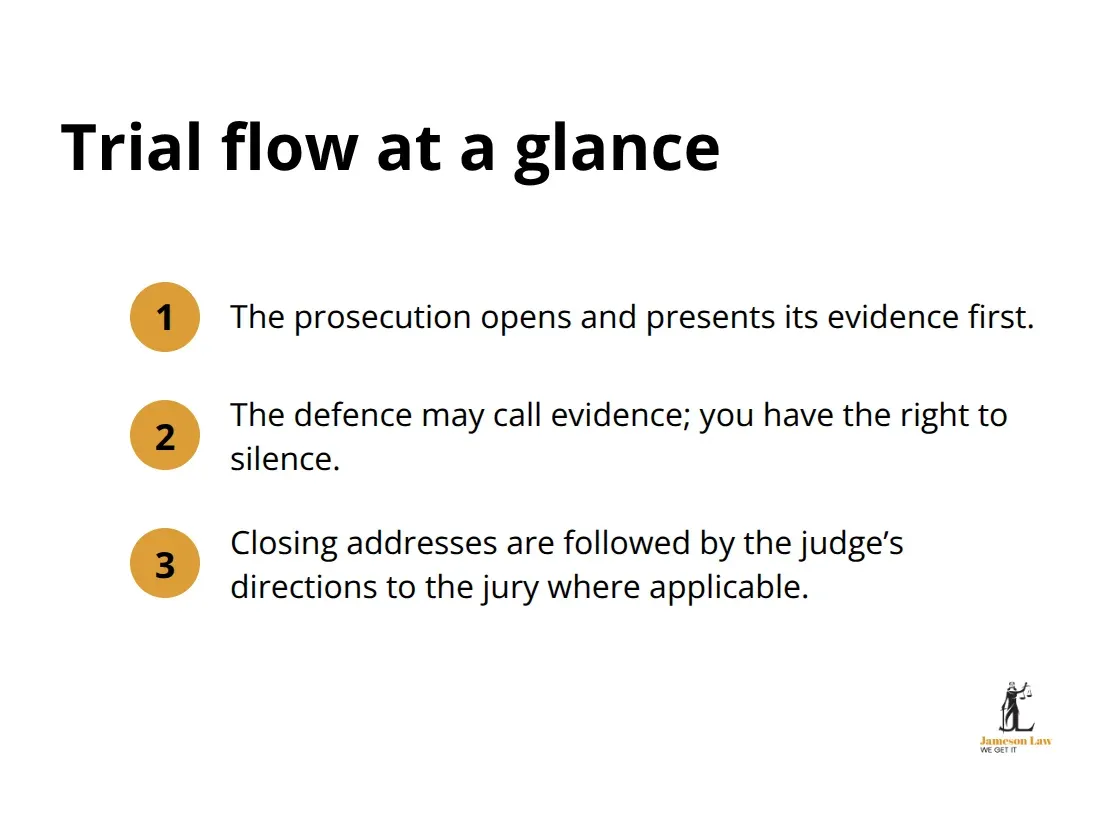
The prosecution opens first, outlining the charges and the evidence they’ll present. You should understand that the Crown must prove guilt beyond reasonable doubt, which is a high threshold. The prosecution calls witnesses in whatever order suits their case, and each witness testifies under oath. Your lawyer cross-examines them to test their credibility and challenge inconsistencies. This is where weak prosecution evidence often falls apart.

Compact list summarising the main stages of a NSW criminal trial - NSW criminal court processes

The Crown must present all their evidence in their case-they cannot hold back and introduce critical evidence later to respond to your defence, though limited exceptions exist for alibi evidence or substantial impairment defences. Once the Crown finishes, if the evidence at its highest cannot prove the charge beyond reasonable doubt, the judge should direct acquittal. This rarely happens because prosecutors know their threshold before proceeding to trial.

Building Your Defence Strategy

Your defence case follows a different strategy. You control when witnesses testify and what evidence you present. You have the absolute right not to give evidence yourself-silence cannot be held against you. Many defendants choose not to testify, particularly if prosecution witnesses have already been effectively challenged. If you do testify, the Crown can cross-examine you extensively. Your lawyer presents any character evidence or expert witnesses that support your case.

Closing Arguments and Jury Instructions

Once both sides finish, closing addresses occur. The Crown goes first, summarising their evidence and why it proves guilt. Your lawyer responds, highlighting weaknesses in the Crown’s case and emphasising reasonable doubt. In jury trials, the judge then provides a detailed summing up, explaining the law, directing the jury on how to assess evidence, and reminding them of the burden of proof. Jury deliberations can take hours or days-complex cases sometimes result in hung juries where jurors cannot reach agreement. If this happens, the judge may give a Black direction encouraging further deliberation, or the Crown may decide to retry the case.

Verdict and Sentencing

Once the jury returns a verdict of guilty or not guilty, it’s final and entered on the indictment. If you’re convicted, sentencing follows. The judge considers your personal circumstances, the seriousness of the offence, and any early guilty plea discount you received. Sentencing can happen immediately or be delayed weeks later for reports to be prepared. You have the right to appeal within 28 days of conviction or sentencing, though appeals succeed only when significant legal errors occurred or the sentence was manifestly excessive. Appeals are expensive and time-consuming, so understanding your position before trial matters enormously.

Final Thoughts

The NSW criminal court processes demand careful navigation at every stage, from your initial appearance through to sentencing. Your lawyer’s role extends far beyond simply appearing in court-they object to improper questions, challenge weak evidence, and build a defence strategy tailored to your specific circumstances. Early guilty pleas can result in substantial sentencing discounts, but only if you understand the strength of the Crown’s case against you.

What you say and do at your first court appearance affects bail decisions, committal outcomes, and ultimately your trial prospects. Appeals must be lodged within 28 days of conviction or sentencing, though they succeed only when significant legal errors occurred or sentences were manifestly excessive. Legal representation makes a measurable difference to outcomes throughout every stage-bail hearings, committal proceedings, trial preparation, and sentencing.

If you face criminal charges in NSW, obtain legal advice before your initial court appearance. We at Jameson Law have guided countless clients through these processes and understand the stress involved. Contact us to discuss your situation and learn what options are available to you.

Speak to an Expert Lawyer today

Laywers-Jameson-Law-The-best-law-firm-in-Sydney- Sydney Lawyers - Sydney
BOOK NOW

WE'RE IN IT TO WIN IT

Book your consultation

Book Now
Book Now Mobile 06 02 2025

This form submission is encrypted and secured to ensure your information remains confidential.

What our Clients

Related Publications:

What our clients say

.

Jameson Law - Voted the Best Law firm in Sydney Award

Legal Answers ... In Short

We're here to help

Our mission is to ensure our client matters are resolved successfully every time. Success to us does not simply involve winning, but moreover ensuring we take the most feasible, economic and stress-free path to help our clients achieve their goals. We fight hard for our clients, and always go by the motto: we’re in it to win it.

Jameson Law - Best Law Firm in Sydney

WE'RE IN IT TO WIN IT

Book your consultation

Call us now on (02) 8806 0866 or fill out the form below

Book Now Mobile

This form submission is encrypted and secured to ensure your information remains confidential.

WE'RE IN IT TO WIN IT

Book your consultation

Book Now Mobile 06 02 2025
lock

This form submission is encrypted and secured to ensure your information remains confidential.

Our Sydney Offices

Offices Parramatta and Sydney Jameson Law
Parramatta CBD - Head Office
jameson Law - Blacktown
jameson Law - Liverpool Office
Jameson Law - Bankstown
Court Houses We Frequent Jameson Law

Court Houses We Frequent

Balmain Local Court

Registry: Monday to Friday, 9:00am to 4:30pm

Bankstown Local Court

Court Operating Hours: 9:30am-4:30pm

Blacktown Local Court

Registry Hours: 9:00 – 4:30
Telephone Hours: 8:30 -4:30
Days open: Mon-Fri

Burwood Local Court

Registry Hours: 9:00 – 4:30
Telephone Hours: 8:30 – 4:30
Days open: Mon – Fri

Campbell Local Court

Registry Hours: 9:00 – 4:30
Telephone Hours: 8:30 – 4:30
Days open: Mon – Fri

Central Local Court

Registry Hours: 9:00 – 1:00 and 2:00 – 4:30
Telephone Hours: 8:30 – 4:30

Downing Local Court

Registry Hours: 9:00 – 1:00 and 2:00 – 4:30
Telephone Hours: 8:30 – 4:30

Wollongong Local Court

Registry Hours: 9:00 – 1:00 and 2:00 – 4:30
Telephone Hours: 8:30 – 4:30

Fairfield Local Court

Registry Hours: 9:00 – 1:00 and 2:00 – 4:30
Telephone Hours: 8:30 – 4:30

Hornsby Local Court

Registry Hours: 9:00 – 1:00 and 2:00 – 4:30
Telephone Hours: 8:30 – 4:30

Liverpool Local Court

Registry Hours: 9:00 – 1:00 and 2:00 – 4:30
Telephone Hours: 8:30 – 4:30

Manly Local Court

Registry Hours: 9:00 – 1:00 and 2:00 – 4:30
Telephone Hours: 8:30 – 4:30

Newtown Local Court

Registry Hours: 9:00 – 1:00 and 2:00 – 4:30
Telephone Hours: 8:30 – 4:30

Parramatta Local Court

Registry Hours: 9:00 – 1:00 and 2:00 – 4:30
Telephone Hours: 8:30 – 4:30

Penrith Local Court

Registry Hours: 9:00 – 1:00 and 2:00 – 4:30
Telephone Hours: 8:30 – 4:30

Sutherland Local Court

Registry Hours: 9:00 – 1:00 and 2:00 – 4:30
Telephone Hours: 8:30 – 4:30

Waverley Local Court

Registry Hours: 9:00 – 1:00 and 2:00 – 4:30
Telephone Hours: 8:30 – 4:30

Windsor Local Court

Registry Hours: 9:00 – 1:00 and 2:00 – 4:30
Telephone Hours: 8:30 – 4:30

Wollongong Local Court

Registry Hours: 9:00 – 1:00 and 2:00 – 4:30
Telephone Hours: 8:30 – 4:30

Downing Centre District Court

Registry Hours: 9:00 – 4:30
Telephone Hours: 8:30 – 4:30
Days open: Mon – Fri

Parramatta District Court

Registry Hours: 9:00 – 4:30
Days open: Mon-Fri

Penrith District Court

Registry Hours: 9:00 – 4:30
Days open: Mon-Fri

Campbelltown District Court

Registry Hours: 9:00 – 4:30
Days open: Mon – Fri

Liverpool District Court

Registry Hours: 9:00 – 4:30
Days open: Mon – Fri

Wollongong District Court

Registry Hours: 9:00 – 1:00 and 2:00 – 4:30
Telephone Hours: 8:30 – 4:30

Supreme Court New South Wales

Registry Hours: 9:00 AM – 4:30 PM
Telephone Hours: 8:30 AM – 4:30 PM
Days Open: Monday to Friday

Federal Circuit and Family Court of Australia

Registry Hours: 9:00 AM – 4:30 PM
Telephone Hours: 8:30 AM – 5:00 PM
Days Open: Monday to Friday

Federal Court

Monday to Friday, 8:30 AM – 4:30 PM

High Court

Monday to Friday, 8:30 AM – 5:00 PM

Children’s Court of New South Wales

Registry Hours: 9:00 AM – 4:30 PM
Telephone Hours: 8:30 AM – 4:30 PM
Days Open: Monday to Friday

Coroner’s Court New South Wales

Registry Hours: 9:00 AM – 4:30 PM
Telephone Hours: 8:30 AM – 4:30 PM
Days Open: Monday to Friday

Industrial Relations Commission of New South Wales

Registry Hours: 9:00 AM – 4:30 PM
Telephone Hours: 8:30 AM – 4:30 PM
Days Open: Monday to Friday

Land and Environment Court of New South Wales

Registry Hours: 9:00 AM – 4:30 PM
Telephone Hours: 8:30 AM – 4:30 PM
Days Open: Monday to Friday

WE'RE IN IT TO WIN IT

Book your consultation

Book Now
Book Now Mobile 06 02 2025
lock

This form submission is encrypted and secured to ensure your information remains confidential.