Criminal charges in NSW can feel overwhelming if you don’t understand the system. The penalties, court processes, and legal options vary significantly depending on the offence you’re facing.
We at Jameson Law have helped countless clients navigate criminal law NSW matters. This guide breaks down offences, penalties, and what happens in court so you know exactly where you stand.
How NSW Classifies Criminal Offences and What You Need to Prove
Summary and Indictable Offences
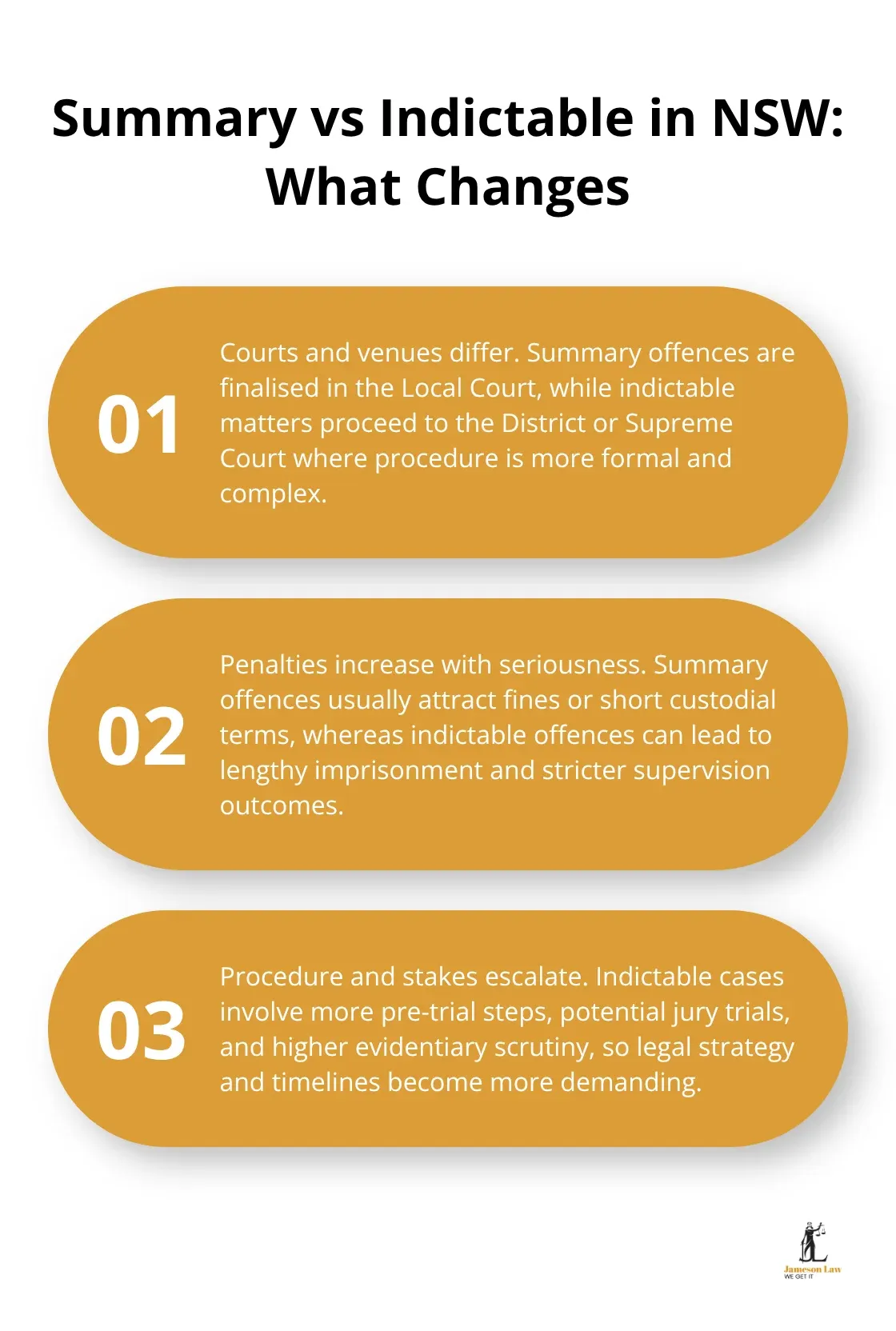
NSW divides criminal offences into two categories that fundamentally change how your case is handled. Summary offences are dealt with in the Local Court and carry lighter penalties, typically fines or short prison sentences under two years. Indictable offences are more serious and can be heard in the District or Supreme Court, with significantly harsher penalties including lengthy imprisonment. The classification matters because it determines which court handles your case, what legal procedures apply, and ultimately how much is at stake.

Some offences can be dealt with either way depending on circumstances and the prosecution’s decision, giving the system flexibility but also creating complexity you need to understand. The Crimes Act 1900 and Criminal Procedure Act 1986 set out these classifications, and knowing which category applies to your situation is the first step toward understanding your exposure.
The Burden of Proof and Required Elements
To secure a conviction, the prosecution must prove every element of the offence beyond reasonable doubt. This is the highest standard in law, and it is genuinely difficult to meet. They need to establish that you committed the specific act (the actus reus) and had the required mental state (the mens rea), whether that is intention, recklessness, or negligence depending on the offence.
For example, theft requires proof you dishonestly took someone else’s property intending to permanently deprive them of it. If the prosecution fails to prove even one element, the charge fails. Understanding the specific elements the prosecution must prove in your offence reveals weaknesses in their case and guides your defence strategy.
Common Offences and Their Penalties
Assault ranges from common assault causing minor injury to grievous bodily harm depending on severity and weapon use. Drug possession carries different penalties for different quantities and drug types. Driving offences like mid-range drink-driving (0.05–0.079 or 0.08–0.089 blood alcohol) attract mandatory licence disqualification and can lead to Alcohol Interlock Programme requirements for repeat or serious offences.
Theft and fraud cover taking property or deceiving someone for financial gain. Sexual assault involves non-consensual sexual contact and carries some of the most serious penalties in NSW. Each offence has distinct elements the prosecution must establish, and the penalties vary significantly based on the specific circumstances and your criminal history.
What Happens Next in Your Case
The way NSW classifies your offence and the elements the prosecution must prove directly shape what happens when you appear in court. Your defence strategy depends on understanding which elements are weak or contestable, and the court procedures that apply to your case type differ substantially between summary and indictable matters.
What Sentences Will You Actually Face
Fines: The Most Common Penalty
Fines represent the most common penalty in NSW, particularly for summary offences. You typically have 28 days to pay, and you can apply to the court for extra time if immediate payment creates hardship. If you fail to pay, Revenue NSW may enforce collection through wage garnishment or asset seizure. The maximum fine varies significantly by offence-minor matters might attract fines under $1,000 while serious indictable offences can result in substantial fines. Courts cannot impose a fine alongside a Conditional Release Order for the same offence, so the court must select one penalty type.
Prison Sentences and Custodial Terms
Prison is not automatic for most criminal convictions in NSW. The Local Court can impose sentences up to two years imprisonment for a single offence or five years for multiple offences, though many cases result in community-based orders or fines instead. The District and Supreme Courts handle indictable matters with no upper limit on imprisonment length. Understanding what penalties exist and how courts apply them helps you grasp the real stakes in your case.
Community-Based Orders: Staying in the Community
Community-based orders keep you in the community under supervision rather than in prison. A Conditional Release Order lasts up to two years with standard conditions (no further offences and regular supervision) plus additional conditions tailored to your situation. Additional conditions might include rehabilitation programmes, drug or alcohol abstinence requirements, non-association orders preventing contact with certain people, or place restrictions banning you from specific locations.
A Community Correction Order is harsher than a Conditional Release Order and typically lasts up to three years with similar standard and additional conditions. An Intensive Correction Order represents the most restrictive community penalty, designed as an alternative to prison, lasting up to three years and often including home detention with strict rules about when you can leave your residence. Home detention conditions vary based on your circumstances-if domestic violence is involved, courts limit home detention carefully to protect victims.
Community Service Hours and Duration
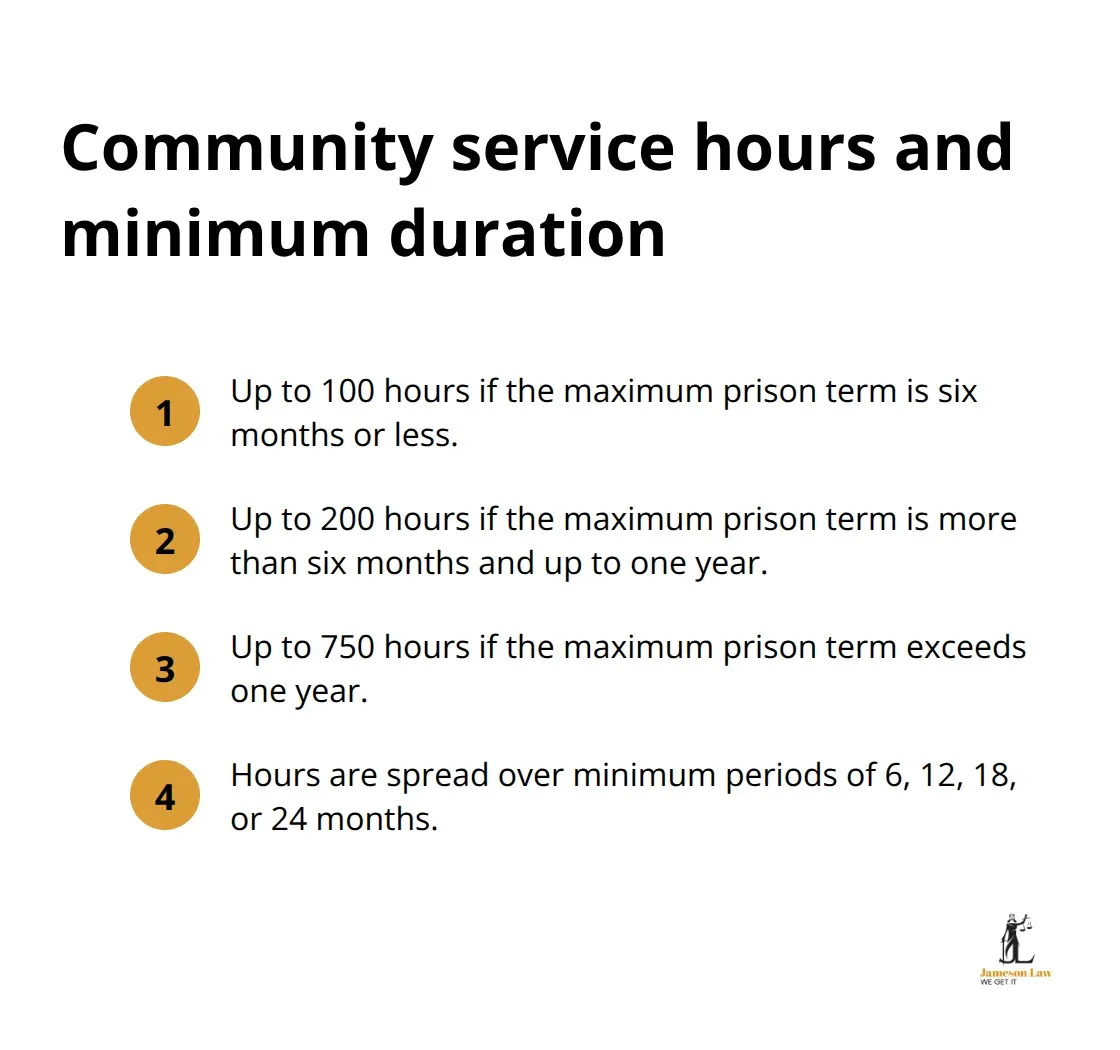
Community service hours form part of these orders and depend on the maximum prison term for your offence. Offences carrying up to six months imprisonment require up to 100 hours, six months to one year require up to 200 hours, and offences exceeding one year require up to 750 hours. The court spreads these hours across minimum periods of 6, 12, 18, or 24 months depending on the offence severity and your circumstances.

When the court sentences you, the judge chooses from this toolkit of penalties that fit the offence severity and your personal situation. The specific penalty imposed shapes your immediate future and your obligations over months or years. Understanding how courts apply these different penalty types-and which factors influence the judge’s choice-becomes critical when you face sentencing.
How Criminal Cases Move Through NSW Courts
What Happens When Police Arrest You
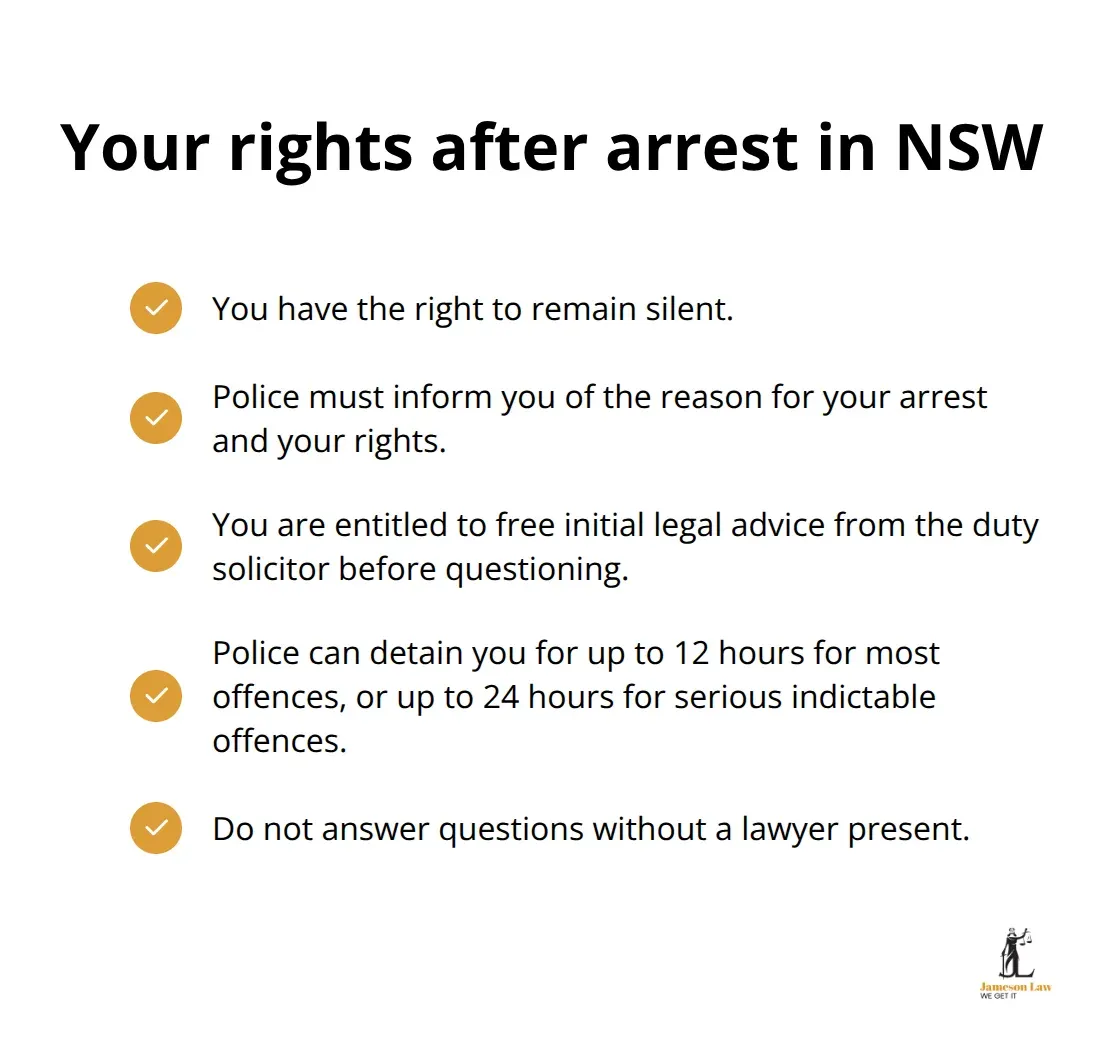
When police arrest you in NSW, the process that follows is strictly governed by law, and understanding what happens at each stage fundamentally changes how you respond. Police must inform you of the reason for your arrest, your rights, and your entitlement to free legal advice through the duty solicitor scheme before questioning. You have the right to remain silent and should exercise it-anything you say can be used against you in court. Police can hold you for up to 12 hours for most offences (24 hours for serious indictable offences) before they must either charge you or release you.

During this time, do not answer questions without a lawyer present; this single decision protects your defence far more than trying to talk your way out of trouble.
LawAccess NSW on 1300 888 529 provides free legal information and referrals if you need immediate guidance after arrest. The duty solicitor offers free initial advice at the police station, and you should take advantage of this service before police question you.
Your First Court Appearance and Bail Decisions
Once police charge you, your case moves to the Local Court for summary offences or begins there for indictable matters before potentially moving to higher courts. In the Local Court, you appear before a magistrate who handles bail decisions, early guilty pleas, and sentencing for summary matters. The magistrate can impose sentences up to two years for single offences or five years for multiple offences. At this stage, the court decides whether to release you on bail, impose conditions on your release, or remand you in custody pending trial.
Bail conditions might include reporting to police, residing at a specific address, or avoiding contact with certain people. The prosecution must prove you pose an unacceptable risk of not appearing in court or committing further offences before the magistrate can refuse bail entirely.
Defended Hearings and Early Guilty Pleas
If you plead not guilty to a summary offence, you will have a defended hearing where the prosecution must prove their case beyond reasonable doubt. The magistrate listens to evidence from both sides and decides whether the prosecution has met this standard. Early guilty pleas can result in significantly reduced sentences-courts consistently reward defendants who accept responsibility early rather than forcing the prosecution to prove every element at trial. This reality means you should carefully consider your position with legal advice before your first court date.
If you face an indictable offence, the Local Court conducts a committal hearing to determine whether sufficient evidence exists to send your case to the District or Supreme Court, where sentences can be substantially longer. At committal, the prosecution presents its case, and your lawyer can cross-examine witnesses to test the strength of the evidence.
Legal Representation Throughout Your Case
Legal representation at every stage matters enormously. The duty solicitor provides free initial advice, but for serious matters you should apply for Legal Aid NSW or instruct a private criminal lawyer who can identify weaknesses in the prosecution’s case, negotiate with prosecutors, and present compelling arguments at sentencing. Your lawyer’s role extends from police station through trial and potentially to appeal, and the quality of that representation directly affects your outcome.
Appeals and Post-Conviction Options
Appeals in NSW allow you to challenge convictions or sentences through higher courts, but the process is expensive and time-limited-you must file a Notice of Appeal within 28 days of sentence. The Court of Criminal Appeal hears appeals on conviction (arguing the verdict was unsafe or unsatisfactory) or sentence (arguing the penalty was manifestly excessive or inadequate). Success rates for appeals are genuinely low; the court will not overturn a conviction simply because you disagree with the verdict-you must identify legal errors or fresh evidence that fundamentally undermines the original decision. This reality makes getting your defence right the first time through proper legal representation far more practical than hoping to fix problems on appeal.
If you cannot afford a lawyer for an appeal, you can apply for Legal Aid NSW, though eligibility criteria apply. Post-conviction, you may seek to vary your sentence if your circumstances have changed substantially, though courts rarely grant such applications unless genuine hardship or changed circumstances warrant reconsideration.
Final Thoughts
Criminal law NSW matters demand immediate action once police arrest you or notify you of charges. The decisions you make in those first hours-exercising your right to silence, requesting legal advice, and understanding bail conditions-shape your entire case outcome. LawAccess NSW on 1300 888 529 provides free information and referrals, while Legal Aid NSW offers representation if you meet eligibility criteria, and private lawyers from experienced criminal firms identify weaknesses in the prosecution’s case that protect your interests.
We at Jameson Law work with clients throughout NSW to navigate the court system, negotiate with prosecutors, and build defences that achieve better outcomes. Our team understands the specific offences you face, the penalties courts apply, and the practical steps that matter most when your future is at stake. Contact Jameson Law to discuss your situation with lawyers who focus on your defence from the moment you need help.