Your immigration interview can determine whether your Australian visa application succeeds or fails. Many applicants underestimate how much preparation matters, and it shows during the interview itself.
At Jameson Law, we’ve seen firsthand how immigration interview tips make the difference between confident applicants and those who stumble under pressure. This guide walks you through what to expect, how to prepare, and how to present yourself effectively when it counts most.
Getting Your Documents in Order
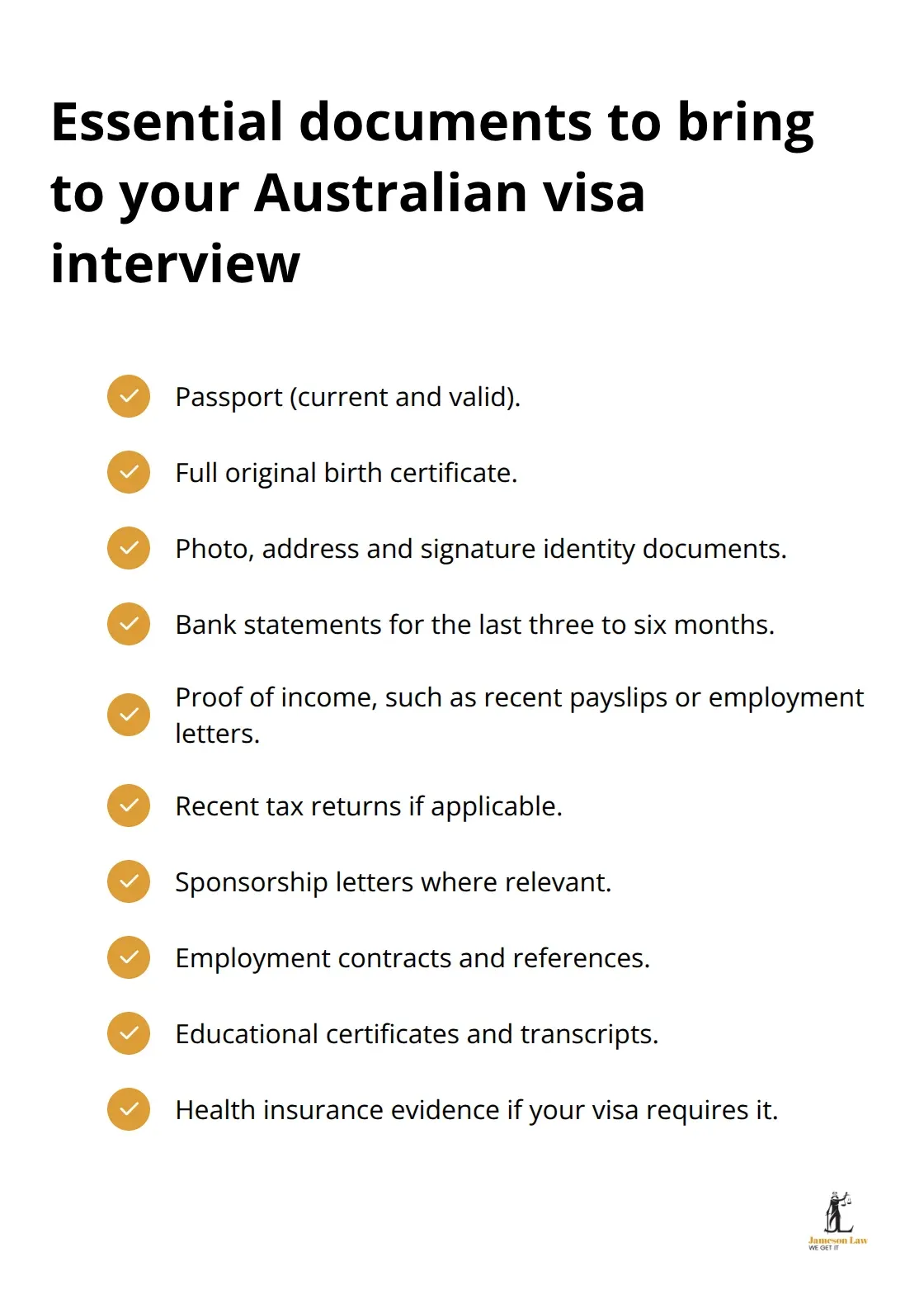
The Department of Home Affairs receives thousands of visa applications monthly, and skilled permanent visa applications are currently taking a median of around 11 months to be processed. This means your documentation must speak for itself before you walk into that room. Create a physical folder organised by category: identity documents, financial records, employment history, educational qualifications, and any visa-specific requirements for your subclass. Original documents matter significantly more than copies. Bring your passport, a full original birth certificate, and other identity documents with your current photo, address and signature. For financial evidence, include recent bank statements covering the last three to six months, proof of income, tax returns if applicable, and any sponsorship letters.

The Department of Home Affairs expects to see clear evidence that you can support yourself without relying on Australian public funds.
Organising Your Financial and Employment Records
If you apply for a skilled migration visa, gather employment contracts, references from previous employers, and certificates proving your qualifications. For student visas, bring your admission letter, proof of course fees paid, and evidence of English language proficiency through IELTS or equivalent testing. Inconsistencies between your documents and your application create red flags that officers investigate thoroughly. Cross-check every detail now rather than explaining discrepancies during your interview. Financial records require particular attention-officers verify that funds you claim as yours actually belong to you and that you can access them in Australia if needed.
Understanding What Your Visa Type Demands
Different visa subclasses trigger different assessment criteria, and officers will test your knowledge of these requirements. If you apply for a skilled migration visa under subclass 189 or 190, you must demonstrate how your occupation aligns with Australia’s labour market needs and your skills match the occupation description. Research the specific occupational requirements listed in the Australian and New Zealand Standard Classification of Occupations and understand how your experience fits. For student visas, officers assess your genuine intention to study by asking detailed questions about your chosen course, university location, and how the qualification supports your career plans. Partner visa applicants face questions about relationship authenticity, shared finances, and future plans together.
Compliance With Your Visa Conditions
Know your visa conditions inside out. If your visa carries work restrictions, health insurance requirements, or study load conditions, explain how you will comply with these. Preparation here isn’t about memorising facts-it’s about understanding why these requirements exist and how your circumstances meet them genuinely. Officers can distinguish between applicants who have genuinely reviewed their conditions and those who have simply skimmed their paperwork. When you walk into your interview, you should be able to articulate not just what your conditions are, but why they matter for your visa category and how you plan to meet them throughout your stay.
What Interviewers Actually Ask About
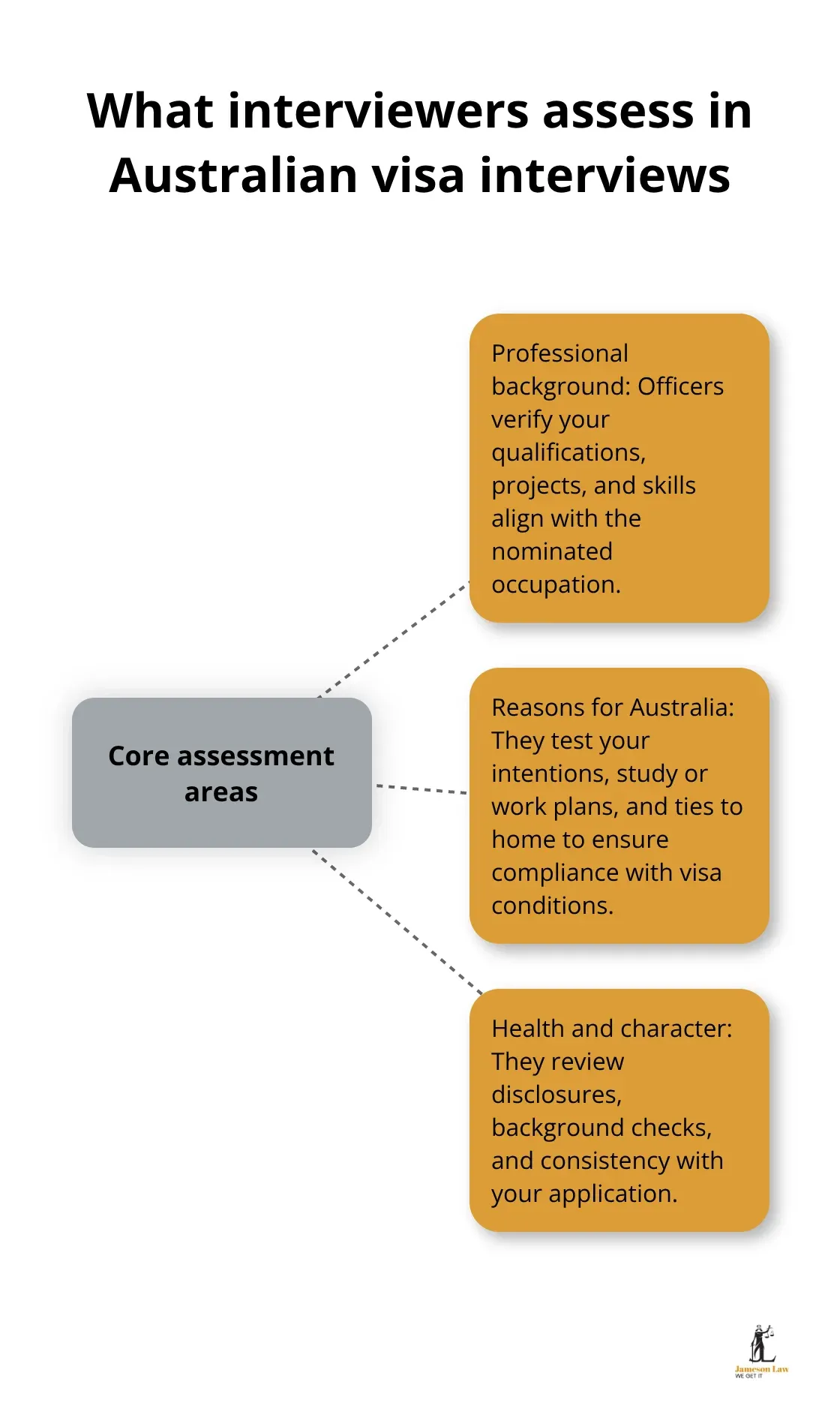
Officers conducting immigration interviews focus on three areas that directly determine whether you meet visa requirements: your professional background, your reasons for coming to Australia, and your suitability based on health and character. Understanding what sits behind each question helps you answer authentically rather than guessing what the officer wants to hear.

Your Employment History and Qualifications
Employment history questions aren’t about reciting your resume. Officers ask about your work experience to verify that your qualifications genuinely match the occupation you’ve nominated and that your claimed skills are real. If you apply for a skilled migration visa, expect detailed questions about specific projects you’ve managed, technical skills you’ve used, and how your experience aligns with the occupation description. An officer might ask you to explain a gap in your employment history or clarify why you left a previous role. They’re testing whether your story holds together and whether you actually performed the work you’ve listed.
If you studied a qualification, officers will ask why you chose that field, what you studied, and how it connects to your current career direction. Inconsistencies here create problems. If your resume says you managed a team but you can’t describe your management responsibilities clearly, that raises flags about the authenticity of your experience. Officers can distinguish between applicants who genuinely performed their claimed duties and those who exaggerate their roles.
Your Ties to Home and Intentions Toward Australia
Your ties to your home country and intentions toward Australia determine whether the officer believes you’ll comply with visa conditions and leave when required. Questions here are direct: why do you want to come to Australia, how long do you plan to stay, what happens after your visa expires, and what are you leaving behind at home. Officers assess whether you have genuine reasons to return to your home country, such as family, property, or employment prospects. Applicants with strong home country ties are more likely to comply with visa conditions.
Be specific about what you’re returning to. Vague answers like “I have family there” work against you. Instead, explain that your parents own a business you’ll join, that you have a partner and children in your home country, or that you own property. For student visas, officers want to understand whether you’re genuinely studying or using Australia as a pathway to permanent residency. Explain how your chosen course directly supports your career goals and how you’ll use that qualification in your home country or globally. If you’re applying for skilled migration, connect your occupation to genuine labour shortages in Australia and explain why you want to contribute in that role.
Your Health, Character and Background
Officers assess your health, character, and security background through questions designed to verify information you’ve already submitted. They ask about any criminal history, health conditions that might affect your ability to work or study, and whether you’ve disclosed everything relevant to your application. Honesty here is non-negotiable. If you’ve had a minor traffic offence or a health issue, disclosing it during your application is far better than hoping the officer doesn’t find out.
The Department of Home Affairs conducts background checks (including police records from your home country and previous residences), so omitting information only damages your credibility when discovered. Officers can spot inconsistencies between what you’ve submitted and what you tell them face-to-face. Your answers during the interview must align with your written application in every detail. When discrepancies emerge, officers question whether you’ve been truthful about other aspects of your application, and that doubt affects their overall assessment of your suitability.
How to Answer Like You Know Your Case
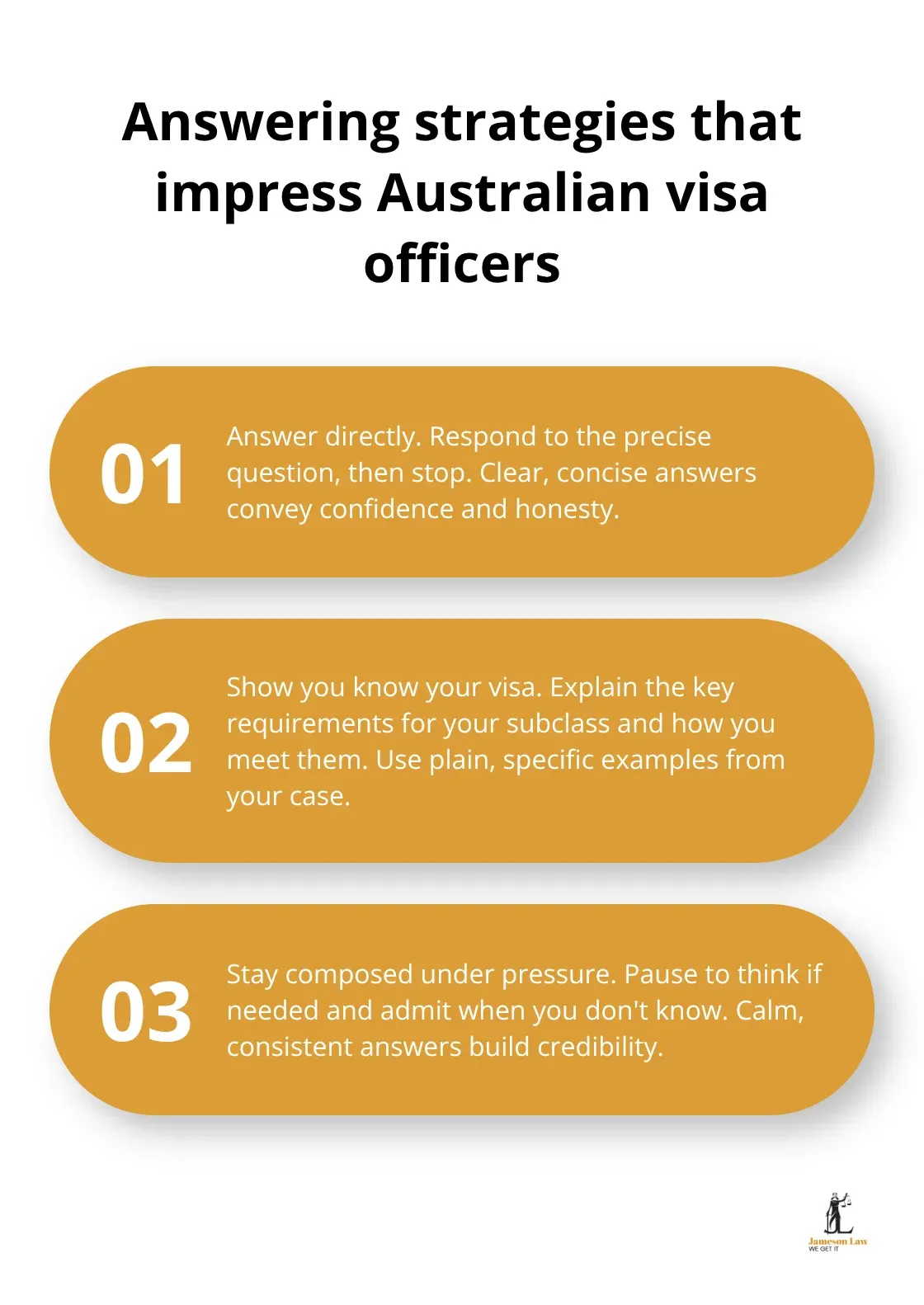
The difference between applicants who succeed and those who don’t often comes down to how they answer questions, not what they know. Officers look for honesty, natural consistency and shared experiences. When you answer a question directly without padding your response with unnecessary details, officers hear confidence and honesty. If you ramble or add information that wasn’t asked for, officers wonder whether you’re unprepared. Answer the specific question posed, pause, and wait for the next question.

Answer Questions Directly and Concisely
If an officer asks why you chose your course, explain your career goals and how the qualification supports them, then stop. Don’t launch into a speech about Australia’s education system or the university’s ranking unless specifically asked. Officers notice this distinction immediately. Your tone and pacing matter as much as your words. Speak clearly, maintain steady eye contact, and avoid fidgeting or defensive body language. When you keep your answers focused, officers perceive you as someone who has genuinely prepared and understands your application thoroughly.
Demonstrate Knowledge of Your Visa Category
Your knowledge of your own visa category and Australia itself demonstrates genuine commitment to your application. If you apply for skilled migration, articulate exactly how your occupation appears on skilled occupation lists and why Australia has demand for your role right now. If you apply for a student visa, know your course code, duration, fees, and how the qualification connects to your career trajectory. This isn’t about memorising facts; it’s about understanding your circumstances well enough to explain them naturally. Officers can distinguish between applicants who have genuinely reviewed their materials and those who have simply skimmed them.
Handle Unexpected Questions With Composure
When an unexpected question catches you off guard, pause for a moment before answering rather than blurting out the first thing that comes to mind. Officers expect some applicants to need a moment to think, and that pause signals thoughtfulness rather than dishonesty. If you genuinely don’t know an answer, say so honestly. Guessing or making something up damages your credibility far more than admitting uncertainty. Your willingness to acknowledge what you don’t know actually strengthens your overall credibility because it aligns with the honesty officers assess throughout the interview.
Stay Focused and Calm Throughout
Stay calm throughout the interview by focusing on each question individually rather than worrying about the overall outcome. Take a breath, listen carefully to what’s being asked, and respond with the information that directly addresses that question. When you concentrate on one question at a time, you avoid the anxiety that leads to rambling or inconsistent answers. Honesty combined with clear communication creates the foundation for a successful interview outcome, and no amount of rehearsal can replace genuine preparation and understanding of your own application.
Final Thoughts
Your immigration interview success rests on thorough preparation and honest, direct communication. Officers assess whether you genuinely meet visa requirements and whether your application reflects your true circumstances. Immigration interview tips work because they address the real reasons applications fail: disorganised documentation creates doubt about your credibility, inconsistencies between your application and your answers raise questions about honesty, and vague responses suggest you haven’t prepared properly.
Understanding what interviewers actually assess transforms how you approach your interview. Officers focus on three core areas: whether your qualifications and experience match your claimed occupation, whether you have genuine reasons to come to Australia and genuine ties to your home country, and whether your health and character meet visa requirements. When you know what sits behind each question, you stop guessing what the officer wants to hear and start answering authentically.
If your immigration case involves complexity, significant documentation, or concerns about how to present your circumstances effectively, professional legal guidance makes a measurable difference. We at Jameson Law provide immigration law services to help applicants navigate visa interviews and applications with confidence. Our team understands Australian immigration requirements and can review your application, identify potential concerns, and prepare you for your interview with practical, experienced guidance tailored to your specific visa category and circumstances.