Being arrested or facing bail conditions can feel overwhelming. At Jameson Law, we’ve helped countless NSW residents understand their bail information and navigate the court process with confidence.
Whether you’re dealing with bail for the first time or challenging existing conditions, knowing your rights makes a real difference. This guide walks you through what bail is, how it works, and what to expect in court.
Understanding Bail in NSW
Bail is a written agreement between you and either the police or the court that allows you to be released from custody while your case progresses through the system. When you sign a bail acknowledgement, you commit to two core obligations: you must attend every court date as directed, and you must comply with any conditions the court imposes. The NSW Bail Act 2013 sets out a clear framework for how bail decisions are made, and understanding this framework helps you know what to expect.
Bail differs fundamentally from being held in custody or being convicted. Many people confuse these outcomes, but they represent distinct stages in the criminal process. If bail is granted, you go home. If it is refused, you remain in custody until your next court appearance or until your case concludes. The NSW Local Court operates a dedicated Bail Division that handles bail matters seven days a week, which means bail applications can be heard quickly even on weekends.
How Courts Assess Bail Risk
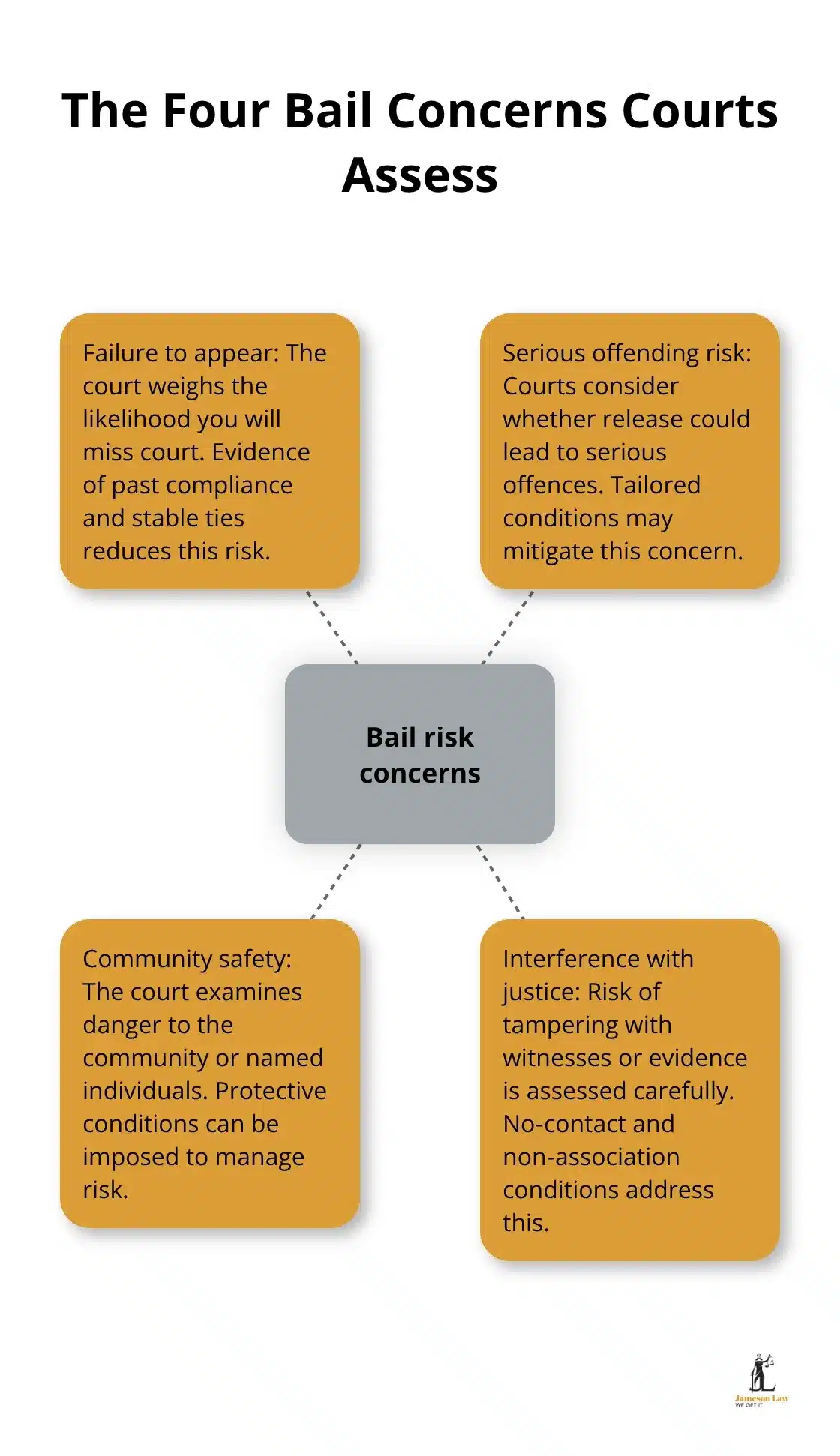
The court evaluates four specific bail concerns when deciding whether to release you. First, it considers the risk you will not attend court as required. Second, it assesses whether releasing you creates a risk of committing serious offences. Third, it evaluates potential danger to the community or specific individuals.

Fourth, it examines the risk of interfering with witnesses or evidence.
Legal Aid NSW notes that the seriousness of your charges, your criminal history, and your ties to the community all factor into this assessment. If the court believes appropriate conditions can address these concerns, it must grant bail. If conditions cannot adequately manage the risks, bail can be refused.
Show Cause Requirements for Serious Offences
For certain serious offences, you must show cause why detention is not justified before bail can even be considered. Show cause requirements apply to offences carrying life sentences or serious indictable offences involving violence or firearms. These requirements make bail significantly harder to obtain for these charges. The show cause rule does not apply if you were under 18 at the time of the offence, which provides some protection for younger accused persons.
Release Options Beyond Traditional Bail
Not all release from custody involves standard bail conditions. The NSW Bail Act allows for several outcomes: release without bail (where no conditions apply), dispensing with bail (where you are released with minimal formality), granting bail with specific conditions tailored to identified risks, or refusing bail entirely.
Some offences carry a right to release-typically fine-only offences or certain summary matters-unless specific exclusions apply. If you face charges for multiple offences, you should ask the court to align your bail conditions across all charges. This makes compliance simpler. For example, requesting the same residential address and reporting requirements for all matters reduces confusion and lowers the risk of inadvertent breaches.
Understanding Breach Consequences
Bail breaches can result in new charges and loss of bail. This is why clarity around your exact conditions matters significantly from day one. When you understand precisely what the court requires of you, you protect yourself from unintended violations that could jeopardise your release.
The specific conditions imposed on you depend entirely on the bail concerns the court identifies. Understanding what those concerns are-and how conditions address them-puts you in a stronger position to comply and to request modifications if circumstances change.
Bail Conditions and Your Rights
What Bail Conditions the Court Can Impose
The court imposes bail conditions based on the specific risks it has identified in your case. These conditions are not punitive-they exist solely to manage the four bail concerns: ensuring you attend court, preventing serious offences, protecting the community, and safeguarding witnesses or evidence. The Bail Act 2013 (NSW) requires courts to impose only the minimum conditions necessary to address identified risks.
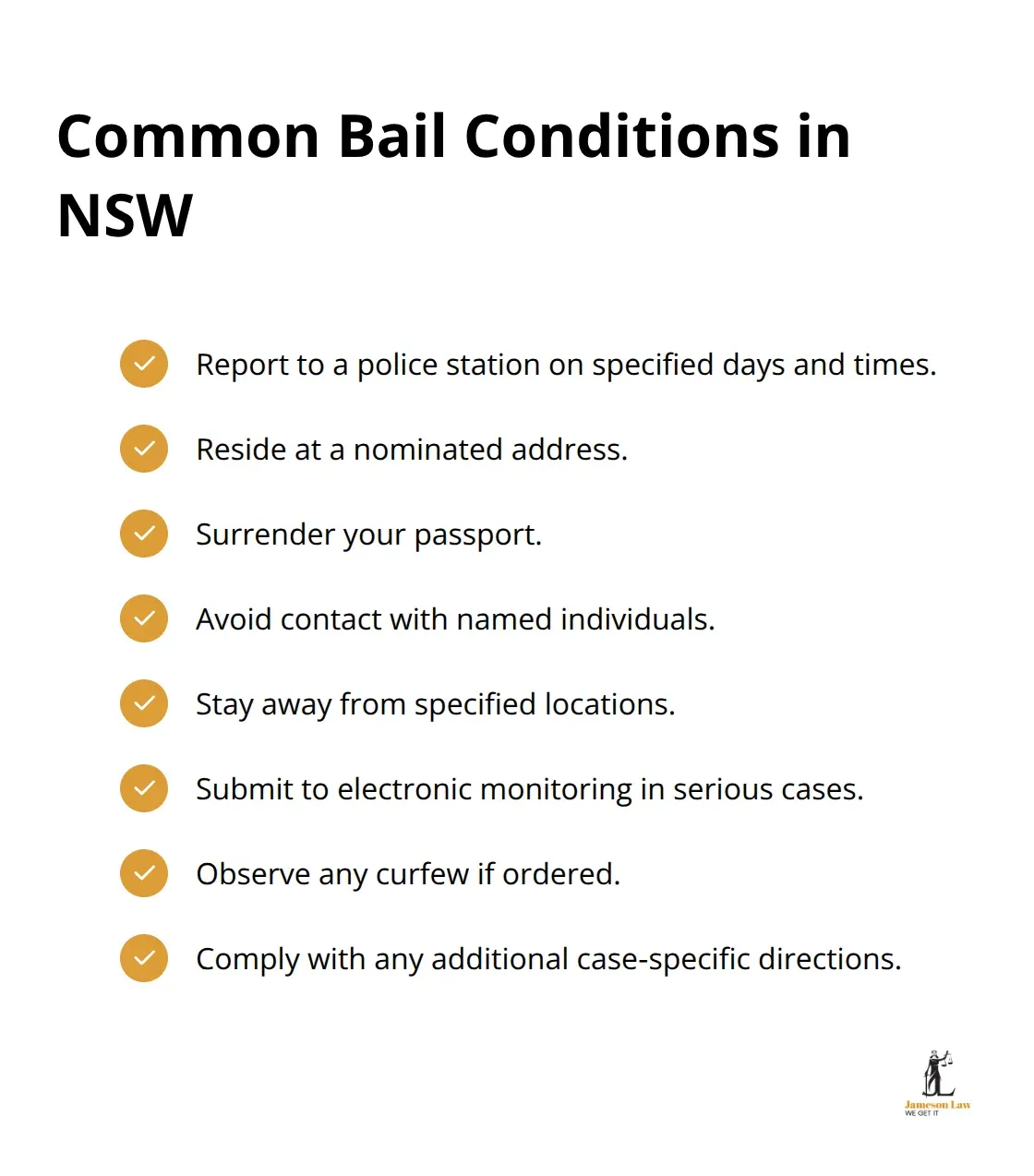
If the court can manage concerns without a curfew, it will not impose one. Common conditions include reporting to a police station on specified days and times, living at a nominated address, surrendering your passport, avoiding contact with named individuals, staying away from particular locations, and submitting to electronic monitoring in serious cases.

Modifying Your Bail Conditions
Some conditions are straightforward to modify-changing your residential address or reporting station typically receives court approval. Removing restrictive conditions like curfews proves significantly harder because the court must be satisfied the underlying risk no longer exists.
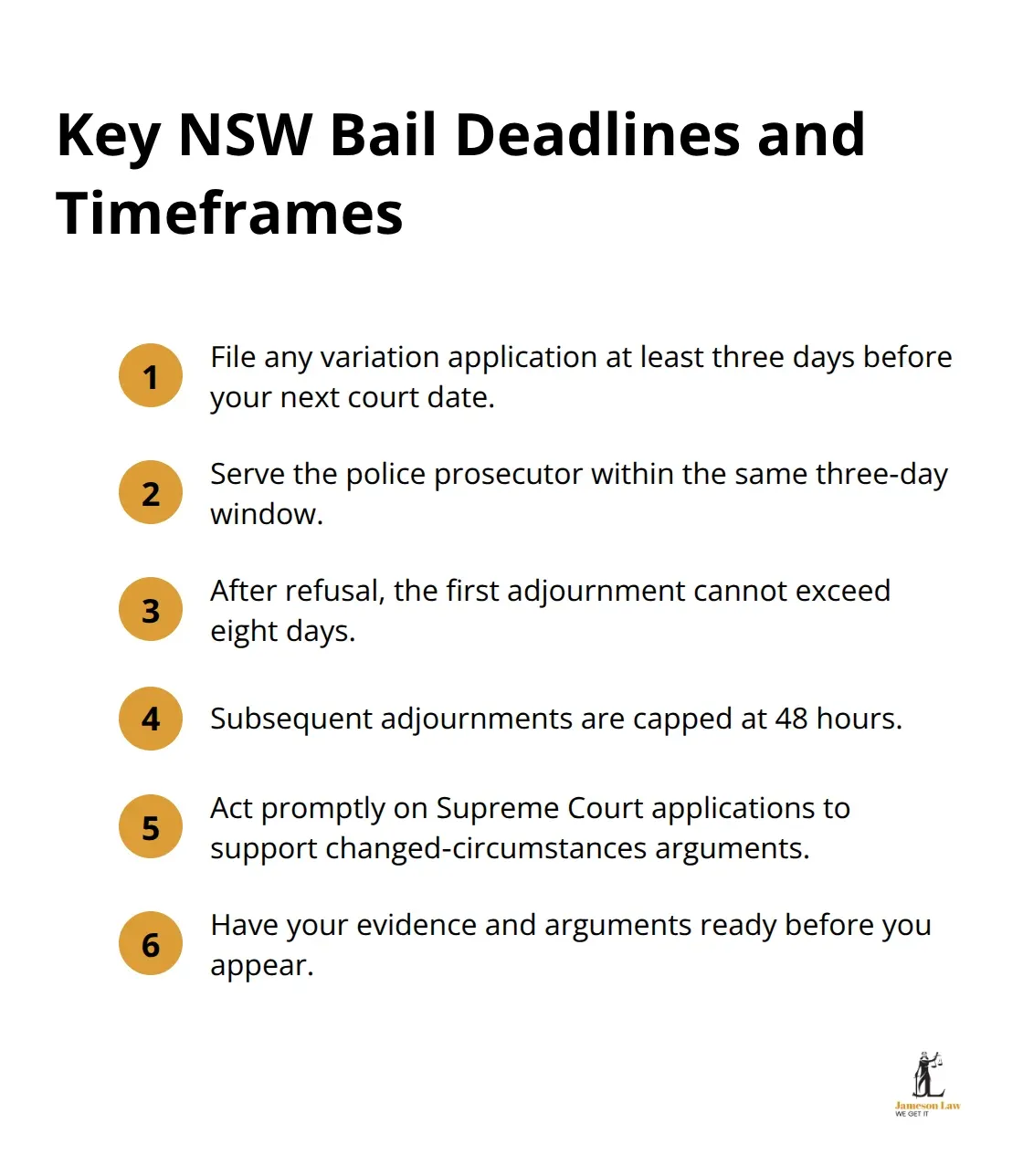
If your circumstances genuinely change and conditions become unworkable, you can apply to vary them. File a Court to Review a Bail Application form at your Local Court Registry at least three days before your next court date, and serve a copy on the police prosecutor within the same timeframe. The court will hear submissions from both sides before deciding whether modification is justified.
What Happens When Bail Is Refused
When bail is refused, you have concrete options available to you. You can apply to the Supreme Court for bail if the Local Court has refused it, though this requires demonstrating either new information, changed circumstances, or that you were previously unrepresented. If you were under 18 at your first appearance and bail was refused, you can reapply at a later court date.
The NSW Local Court’s Bail Division operates seven days a week, meaning even weekend bail applications can be heard. Many people believe a bail refusal is final, but it is not. Between court dates, if your situation improves-such as securing stable housing, obtaining employment, or arranging a suitable surety-these changes strengthen a new application. Legal Aid NSW advises documenting any improvements with supporting evidence.
The Impact of Bail Breaches on Future Applications
Breaching bail conditions makes subsequent applications substantially harder because courts view breaches as demonstrating non-compliance risk. Even minor breaches can damage your credibility in future applications. If you breach a condition, police may arrest you immediately or issue a warning depending on the breach severity.
A new bail application after a breach requires addressing why the court should trust you to comply this time. This is why understanding your exact conditions from day one matters profoundly-ignorance provides no protection in court. Your next step involves understanding how to navigate the formal bail application process itself, which determines how courts evaluate your eligibility for release.
The Bail Application Process in NSW
When police decline to grant bail at the station or when you want to challenge a refusal, the formal application process starts immediately. If you are not released at the police station, the court must bring you before a magistrate within a reasonable time-typically within hours of arrest. The NSW Local Court’s Bail Division operates seven days a week, so your case will not wait for a weekday court sitting. This speed matters because every day in custody affects your ability to prepare a defence and maintain employment or family stability.
What Happens at Your First Court Appearance
At your first appearance, a magistrate or judge will assess whether bail should be granted, what conditions should apply, and whether you need legal representation to present your case effectively. The court will hear from the police prosecutor, who presents the Crown’s position on bail concerns, and from you or your lawyer, who argues why you should be released. This is not a trial-the court is not deciding guilt or innocence. Instead, it assesses the four bail concerns and determines what conditions, if any, will manage those risks adequately.
What Courts Actually Consider in Your Application
Magistrates and judges focus on specific factors during these hearings that reveal what evidence strengthens your application. Courts consider the seriousness of the charges you face, your criminal history, your employment status, your residential stability, your ties to the community, and whether you have complied with bail in the past. If you have stable housing, ongoing employment, family connections in NSW, and no history of bail breaches, your application starts from a stronger position.
Legal Aid NSW research shows that presenting concrete evidence of these factors-such as a letter from your employer, proof of housing, or character references-substantially improves outcomes. If you were previously unrepresented and bail was refused, new legal representation alone can justify a fresh application because courts recognise that proper advocacy makes a difference.
The court also considers whether a surety or acceptable person is willing to support your bail by signing a character acknowledgement. This person vouches for your reliability and compliance, which addresses court concerns about whether you will actually attend as required. Courts are more willing to grant bail when someone with credibility stands beside you.
Show Cause Offences and the Burden of Proof
If you face a show cause offence, the burden shifts dramatically-you must prove why detention is not justified, rather than the court proving why you should be detained. This reversal makes show cause applications substantially harder and makes legal representation genuinely essential rather than merely beneficial.
Critical Deadlines and Timeline Requirements
The timeline for bail applications moves quickly but contains critical deadlines you must meet. If you want to vary existing bail conditions, you must file your application at least three days before your next court date and serve the police prosecutor within that same window. Missing this deadline means waiting for your next scheduled appearance, which could extend restrictive conditions for weeks. Courts typically decide variation applications within days of filing, but only if proper notice has been given.

If bail is refused and you want to apply to the Supreme Court, you must act promptly because delays weaken arguments about changed circumstances. The Bail Act 2013 (NSW) limits adjournments when bail is refused-the first adjournment cannot exceed eight days, and subsequent adjournments are capped at 48 hours. These tight timeframes mean you cannot afford to delay in gathering supporting evidence or securing legal advice. Courts will not grant multiple lengthy adjournments to allow you time to prepare a stronger application, so having your evidence and arguments ready before you appear matters enormously.
If circumstances improve between court dates-you secure employment, arrange stable housing, or obtain a suitable surety-document these changes immediately with supporting evidence and raise them at your next appearance or in a variation application rather than waiting passively for your case to progress.
Final Thoughts
Understanding bail information NSW empowers you to protect your rights and make informed decisions when facing criminal charges. Legal representation makes the most significant difference in bail outcomes because courts recognise that proper advocacy changes results. If bail was previously refused while you lacked representation, reapplying with a lawyer gives you genuine grounds for a fresh hearing, and circumstances that have improved since your last appearance strengthen your application substantially.
Your immediate action depends on your current situation. If you have not yet appeared in court, gather supporting evidence now: employment letters, proof of housing, character references, and documentation of community ties. If bail conditions have become unworkable, file a variation application rather than risking a breach that damages future applications. If bail has been refused, do not assume the decision is final because courts will hear new applications when genuine changes have occurred.
We at Jameson Law help NSW residents navigate criminal law matters including bail applications and variations. Our team understands how bail decisions affect your life and works to achieve outcomes that allow you to maintain stability while your case progresses. If you face bail decisions or need to challenge existing conditions, seeking legal advice early makes a real difference.