PUBLICATION

Immigration Visa Options: Finding the Best Path to Australia

"Explore immigration visa options to Australia with our guide. Compare skilled migration, family visas, and student pathways to find your best route."
Immigration Visa Options: Finding the Best Path to Australia

Moving to Australia requires choosing the right immigration visa option for your situation. Your employment background, financial capacity, and family ties all play a role in determining which pathway works best for you.

At Jameson Law, we help people navigate these decisions every day. This guide walks you through the main visa types available and the factors that shape your application.

What You Must Assess Before Choosing a Visa Path

Before you select a visa option, you need a realistic picture of your situation. This means examining three areas that directly influence which pathways are available to you and how competitive your application will be.

Your Employment and Qualifications

Your work history and qualifications matter significantly for skilled migration visas. If you’re considering the Skilled Nominated visa (subclass 190) for New South Wales, your occupation must appear on the NSW Skills List, and you’ll need a positive Skills Assessment from an approved body that matches an eligible occupation. The NSW Skills List identifies in-demand occupations aligned with the NSW State Migration Plan, so check whether your field is actually in demand before investing time in an application.
For the subclass 190, NSW uses a selection-based invitation process through SkillSelect, meaning you cannot directly apply for nomination. The selection criteria include age, English language proficiency, education level, points score, and work experience. NSW explicitly states that nomination is exceptionally competitive. You should consider all other migration pathways available through the Australian Government Department of Home Affairs rather than assuming one path will work.

If you receive an invitation to apply, you have 14 days to respond. You must provide valid documents to substantiate every claim made in your expression of interest. Qualifications that are recent, directly relevant, and backed by formal assessment give you a stronger position than outdated or loosely related credentials.

Your Financial Capacity and Support Options

Money determines which visa options are realistic for you. Some pathways require proof of funds to support yourself without relying on government assistance, while others depend on employer sponsorship or family support. Business or investor visas demand that you demonstrate significant capital. Skilled migration visas typically require you to show you can support yourself during the transition period.

If you rely on family sponsorship, your sponsor must meet income thresholds and demonstrate they can financially support you. You should be honest about what you can genuinely afford and what support is actually available. Many people overestimate their financial position or assume a family member will sponsor them without confirming whether that person meets the legal requirements and is willing to take on the financial and legal obligations.

If you lack substantial savings or sponsorship options, pursuing a business visa becomes unrealistic. You should focus on skilled or student visa pathways instead. Understanding your actual financial position early prevents wasted application fees and time pursuing options that won’t succeed.

Your Family Structure and Dependants

Your family circumstances reshape your visa strategy entirely. If you have dependants, you typically must include them in your visa application, which affects costs, processing times, and eligibility criteria. Some visa options have age limits or relationship restrictions that may exclude certain family members.

If you plan to bring children, partners, or aging parents, you should confirm whether the visa subclass you’re considering allows dependent visas and what conditions apply. Conversely, if you have no dependants, you have more flexibility in visa selection and lower application costs. If you’re married or in a de facto relationship, your partner’s qualifications and employment history may strengthen your application for skilled visas, or your partner may need to meet character and health requirements.

Family reunion visas exist specifically for sponsoring relatives, but these have long waiting periods and strict eligibility criteria. The Australian Government Department of Home Affairs provides a comprehensive list of visa options. Understanding how your family structure fits into each option prevents you from choosing a pathway that won’t accommodate your actual circumstances and sets you up for the next stage of your application.

Three Main Visa Pathways to Australia

Australia offers three distinct immigration pathways, and your choice depends entirely on which one matches your actual circumstances. The skilled migration route works if you have qualifications in a field Australia needs and can score competitively on points. Family reunion visas exist if you have Australian relatives willing to sponsor you, though processing can take years. Business and investor visas suit people with substantial capital who want to establish themselves in Australia through entrepreneurship. Most people fit into one category more naturally than the others, and trying to force yourself into a pathway that doesn’t match your situation wastes money and time.

Three-point list summarising skilled migration, family reunion, and business or investor visas for Australia. - immigration visa options

Skilled Migration for Workers and Professionals

Skilled migration represents Australia’s largest visa stream, and for good reason. If your occupation appears on the NSW Skills List and you hold a valid skills assessment from an approved body, you have a genuine pathway. The subclass 190 visa specifically targets skilled workers, and NSW issues invitations throughout the financial year with no fixed schedule. However, NSW explicitly warns that nomination is exceptionally competitive. This means having the right qualifications alone is not enough. Your age, English language ability, education, points score, and work experience all factor into the selection process, and the highest-ranking applicants within each occupation group receive invitations.

If NSW invites you to apply, you must respond within 14 days and provide documents that substantiate every single claim in your expression of interest. Nomination assessment typically takes about six weeks after you pay the fee, and NSW advises against contacting them during this period. Once nominated and approved, the subclass 190 gives you permanent residency, allowing you to live, work, and study anywhere in Australia, though you must initially work in NSW in your nominated occupation or meet residency requirements.

Family Reunion and Sponsorship Visas

Family sponsorship visas exist, but they operate under strict rules and face significant waiting periods. The Australian Government Department of Home Affairs recognises family reunion as a legitimate migration pathway, but this route only works if you have an eligible Australian citizen or permanent resident relative willing to sponsor you. Your sponsor must meet income thresholds and accept legal and financial responsibility for your stay.

These visas cover partners, children, parents, and sometimes siblings, but each relationship type has different eligibility criteria and processing timeframes. Many family reunion visas currently have waiting lists measured in years, not months. This matters because if you hope to reunite with family quickly, a family sponsorship visa may disappoint you. The financial commitment required from your sponsor is genuine and legally binding. If you consider this pathway, confirm with your potential sponsor that they understand the obligations before proceeding, as many applications fail because sponsors don’t meet income requirements or change their mind partway through.

Business and Investor Visas for Entrepreneurs

Business and investor visas suit people with capital and entrepreneurial intent. These visas require you to demonstrate substantial funds, with the investor stream requiring at least AUD2.5 million in Australian investments that meet certain requirements. You must show that you will establish or manage a business in Australia and create genuine employment. Unlike skilled migration, these visas don’t rely on occupation lists or points systems. Instead, they focus on your financial capacity and business plan.

Processing times vary, but you should expect the application to take several months and require detailed financial documentation, business plans, and evidence of your experience in business. This pathway appeals to investors who want to move their capital to Australia or entrepreneurs who want to start fresh in the Australian market. However, the financial bar is genuinely high, and if you don’t have substantial savings or investment funds, pursuing this option makes little sense.

Your circumstances will align more closely with one of these three pathways than the others. The next chapter examines the specific factors that immigration authorities assess when they evaluate your application, regardless of which pathway you choose.

What Actually Determines Your Visa Success

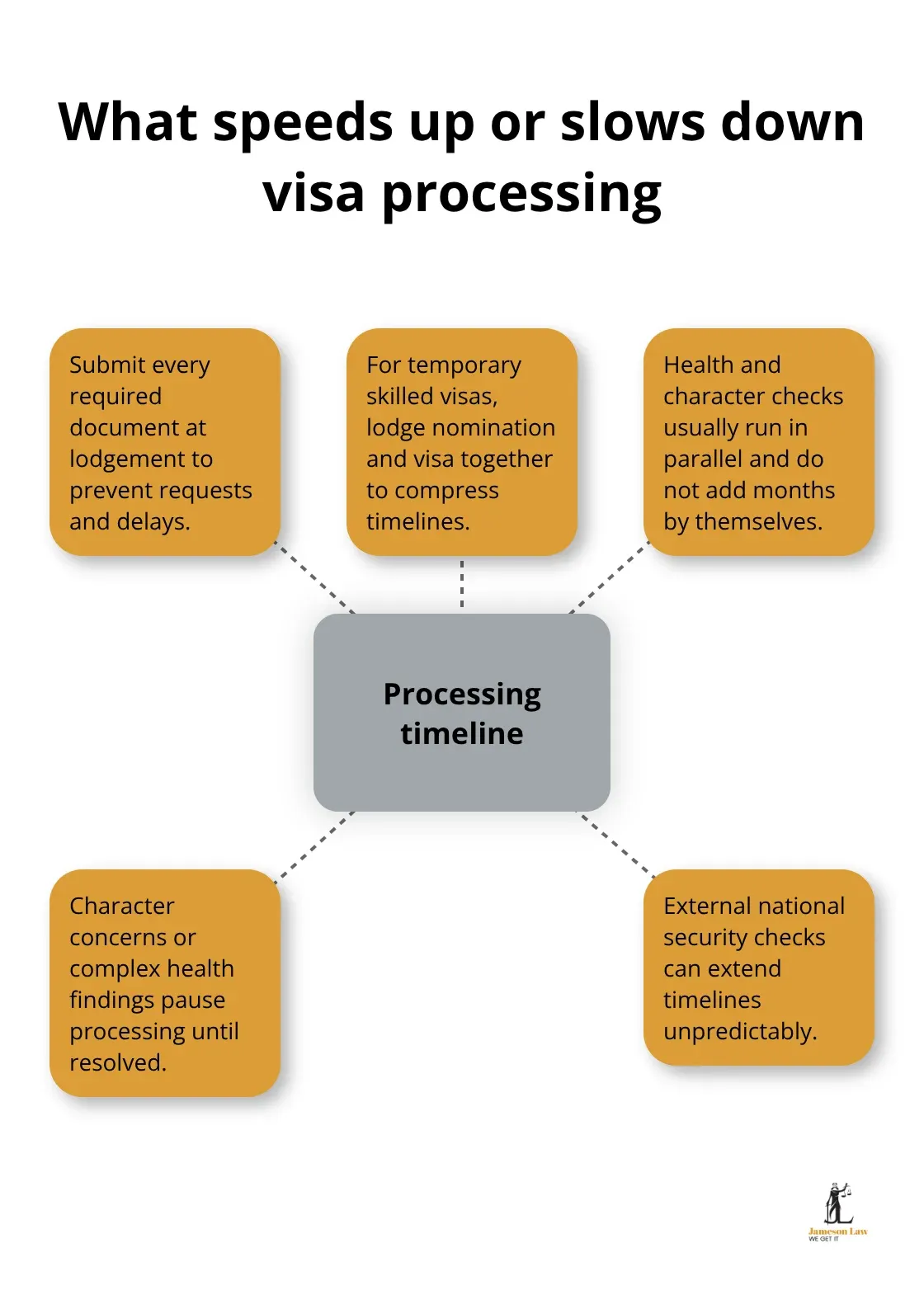
Immigration authorities assess your application across several concrete factors that either strengthen or weaken your case. Understanding these factors before you apply matters far more than hoping your application will somehow succeed. The Department of Home Affairs uses specific criteria to evaluate applications, and knowing what those criteria are allows you to present the strongest possible case.

Points Score and Competitive Ranking

For skilled migration visas like the subclass 190, your points score determines whether you will receive an invitation. Age, English language proficiency, education qualifications, and work experience all contribute to your score, and NSW only invites the highest-ranking applicants within each occupation group. This means two people with identical qualifications can have vastly different outcomes based on age alone. If you are over 45, your points drop significantly compared to applicants aged 25 to 32. If your English proficiency is lower than fluent, you lose points. If your education is a diploma rather than a degree, you lose points.

The system is brutally transparent about this, yet many applicants discover too late that their points fall short of the competitive threshold. Before you invest in skills assessments and application fees, calculate your actual points honestly. Do not assume you will score highly enough. The Department of Home Affairs publishes the points required for recent invitation rounds, so you can compare your likely score against actual thresholds rather than guessing.

Health and Character Assessment

Health and character checks represent another critical gatekeeping function. The Department of Home Affairs requires a medical examination to confirm you do not have serious health conditions that would strain Australia’s health system, and they conduct character assessments that examine your criminal history, financial conduct, and immigration compliance. A single criminal conviction, even a minor one, can trigger character concerns that delay your application or result in refusal.

If you have any criminal history whatsoever, you need to understand how Australian immigration law treats it before proceeding. Financial misconduct (including unpaid debts or fraud allegations) also attracts scrutiny. If you have overstayed a previous visa anywhere in the world, been deported, or made false statements to immigration authorities previously, character assessment becomes far more complex. These issues do not automatically result in refusal, but they require careful handling and honest disclosure.

Processing Times and Application Costs

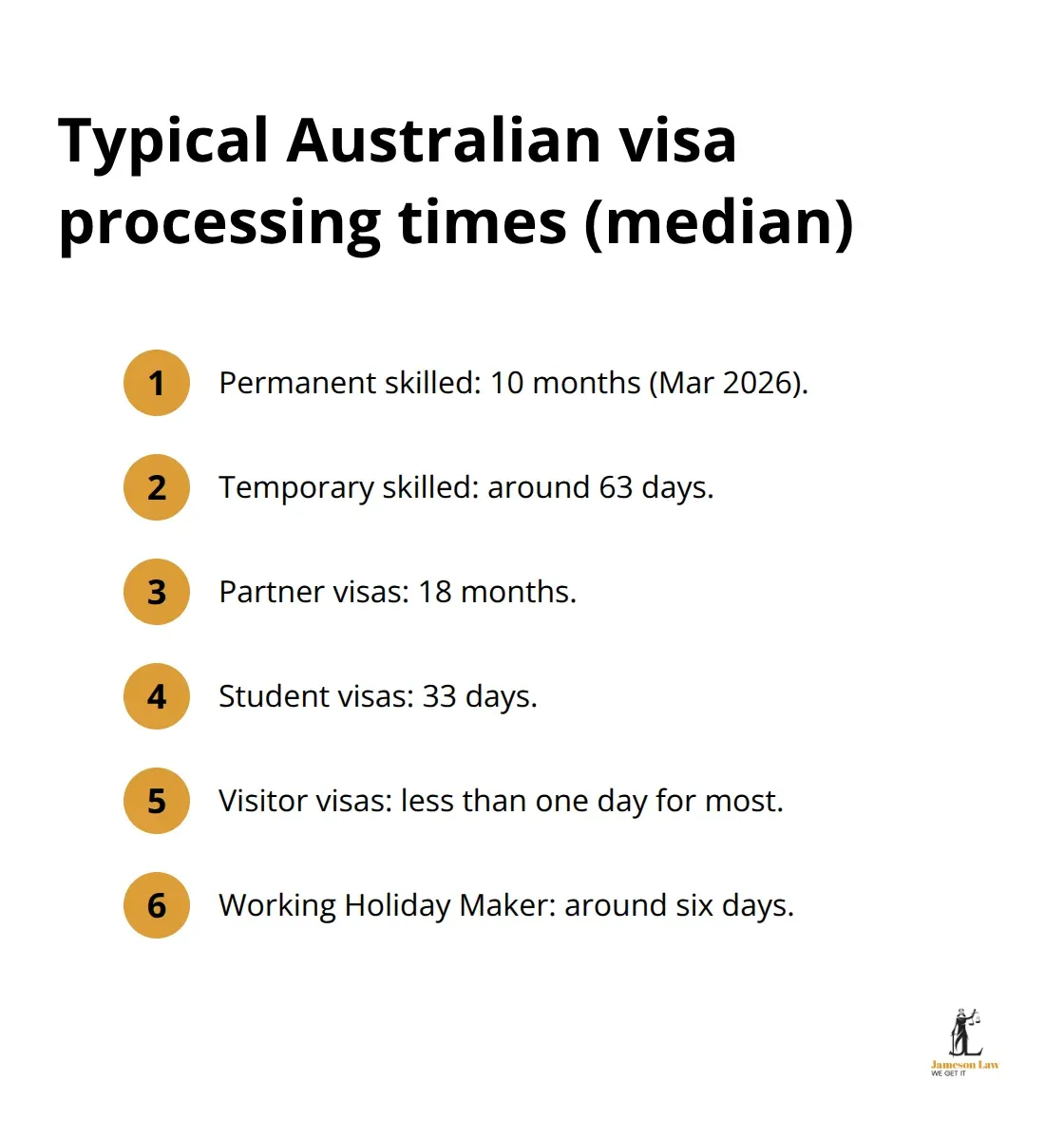
Processing times vary dramatically across visa types and current departmental workload. Skilled migration visas can take anywhere from several months to over a year from invitation to final decision, depending on how many applications the Department of Home Affairs is processing and whether your application requires additional documentation. Family reunion visas face much longer waiting periods, with some visa categories currently experiencing waits of several years. Business and investor visas typically take six months to over a year.

These are not theoretical timeframes; they directly affect your life planning. If you need to move to Australia within six months, certain visa pathways become unrealistic. Application costs add up quickly and represent genuine financial risk. The subclass 190 nomination fee costs money, the skills assessment costs money, health examinations cost money, and the visa application fee itself costs money again. If your application is refused, you do not recover those fees. Many applicants spend thousands of dollars across multiple applications before succeeding, so you need to be genuinely confident in your eligibility before committing financially.

Final Thoughts

Your circumstances determine which immigration visa options actually work for you, and matching them correctly saves time and money. If you have in-demand qualifications and can score competitively on points, skilled migration through the subclass 190 offers a genuine pathway to permanent residency. If you have Australian relatives willing to sponsor you and can wait years for processing, family reunion visas provide an alternative route. If you have substantial capital and entrepreneurial intent, business and investor visas open doors that other pathways cannot.

Most people waste money pursuing visa options that do not match their actual situation. You might have excellent qualifications but insufficient points due to age, or you might have family willing to sponsor you but lack the patience for multi-year waiting periods. You might have some savings but fall short of the capital required for investor visas. These realities are not failures; they simply mean you need to identify which pathway genuinely suits your circumstances rather than forcing yourself into one that does not.

The next step is to calculate your points honestly, confirm your financial capacity realistically, and clarify your family circumstances completely. Then compare those facts against the eligibility criteria for each visa type. At Jameson Law, we help people navigate these decisions with practical legal guidance tailored to their actual circumstances, and immigration law is complex enough that professional legal advice early in your planning process prevents costly errors and strengthens your application significantly.

Speak to an Expert Lawyer today

Laywers-Jameson-Law-The-best-law-firm-in-Sydney- Sydney Lawyers - Sydney
BOOK NOW

WE'RE IN IT TO WIN IT

Book your consultation

Book Now
Book Now Mobile 06 02 2025

This form submission is encrypted and secured to ensure your information remains confidential.

What our Clients

Related Publications:

What our clients say

.

Jameson Law - Voted the Best Law firm in Sydney Award

Legal Answers ... In Short

We're here to help

Our mission is to ensure our client matters are resolved successfully every time. Success to us does not simply involve winning, but moreover ensuring we take the most feasible, economic and stress-free path to help our clients achieve their goals. We fight hard for our clients, and always go by the motto: we’re in it to win it.

Jameson Law - Best Law Firm in Sydney

WE'RE IN IT TO WIN IT

Book your consultation

Call us now on (02) 8806 0866 or fill out the form below

Book Now Mobile

This form submission is encrypted and secured to ensure your information remains confidential.

WE'RE IN IT TO WIN IT

Book your consultation

Book Now Mobile 06 02 2025
lock

This form submission is encrypted and secured to ensure your information remains confidential.

Our Sydney Offices

Offices Parramatta and Sydney Jameson Law
Parramatta CBD - Head Office
jameson Law - Blacktown
jameson Law - Liverpool Office
Jameson Law - Bankstown
Court Houses We Frequent Jameson Law

Court Houses We Frequent

Balmain Local Court

Registry: Monday to Friday, 9:00am to 4:30pm

Bankstown Local Court

Court Operating Hours: 9:30am-4:30pm

Blacktown Local Court

Registry Hours: 9:00 – 4:30
Telephone Hours: 8:30 -4:30
Days open: Mon-Fri

Burwood Local Court

Registry Hours: 9:00 – 4:30
Telephone Hours: 8:30 – 4:30
Days open: Mon – Fri

Campbell Local Court

Registry Hours: 9:00 – 4:30
Telephone Hours: 8:30 – 4:30
Days open: Mon – Fri

Central Local Court

Registry Hours: 9:00 – 1:00 and 2:00 – 4:30
Telephone Hours: 8:30 – 4:30

Downing Local Court

Registry Hours: 9:00 – 1:00 and 2:00 – 4:30
Telephone Hours: 8:30 – 4:30

Wollongong Local Court

Registry Hours: 9:00 – 1:00 and 2:00 – 4:30
Telephone Hours: 8:30 – 4:30

Fairfield Local Court

Registry Hours: 9:00 – 1:00 and 2:00 – 4:30
Telephone Hours: 8:30 – 4:30

Hornsby Local Court

Registry Hours: 9:00 – 1:00 and 2:00 – 4:30
Telephone Hours: 8:30 – 4:30

Liverpool Local Court

Registry Hours: 9:00 – 1:00 and 2:00 – 4:30
Telephone Hours: 8:30 – 4:30

Manly Local Court

Registry Hours: 9:00 – 1:00 and 2:00 – 4:30
Telephone Hours: 8:30 – 4:30

Newtown Local Court

Registry Hours: 9:00 – 1:00 and 2:00 – 4:30
Telephone Hours: 8:30 – 4:30

Parramatta Local Court

Registry Hours: 9:00 – 1:00 and 2:00 – 4:30
Telephone Hours: 8:30 – 4:30

Penrith Local Court

Registry Hours: 9:00 – 1:00 and 2:00 – 4:30
Telephone Hours: 8:30 – 4:30

Sutherland Local Court

Registry Hours: 9:00 – 1:00 and 2:00 – 4:30
Telephone Hours: 8:30 – 4:30

Waverley Local Court

Registry Hours: 9:00 – 1:00 and 2:00 – 4:30
Telephone Hours: 8:30 – 4:30

Windsor Local Court

Registry Hours: 9:00 – 1:00 and 2:00 – 4:30
Telephone Hours: 8:30 – 4:30

Wollongong Local Court

Registry Hours: 9:00 – 1:00 and 2:00 – 4:30
Telephone Hours: 8:30 – 4:30

Downing Centre District Court

Registry Hours: 9:00 – 4:30
Telephone Hours: 8:30 – 4:30
Days open: Mon – Fri

Parramatta District Court

Registry Hours: 9:00 – 4:30
Days open: Mon-Fri

Penrith District Court

Registry Hours: 9:00 – 4:30
Days open: Mon-Fri

Campbelltown District Court

Registry Hours: 9:00 – 4:30
Days open: Mon – Fri

Liverpool District Court

Registry Hours: 9:00 – 4:30
Days open: Mon – Fri

Wollongong District Court

Registry Hours: 9:00 – 1:00 and 2:00 – 4:30
Telephone Hours: 8:30 – 4:30

Supreme Court New South Wales

Registry Hours: 9:00 AM – 4:30 PM
Telephone Hours: 8:30 AM – 4:30 PM
Days Open: Monday to Friday

Federal Circuit and Family Court of Australia

Registry Hours: 9:00 AM – 4:30 PM
Telephone Hours: 8:30 AM – 5:00 PM
Days Open: Monday to Friday

Federal Court

Monday to Friday, 8:30 AM – 4:30 PM

High Court

Monday to Friday, 8:30 AM – 5:00 PM

Children’s Court of New South Wales

Registry Hours: 9:00 AM – 4:30 PM
Telephone Hours: 8:30 AM – 4:30 PM
Days Open: Monday to Friday

Coroner’s Court New South Wales

Registry Hours: 9:00 AM – 4:30 PM
Telephone Hours: 8:30 AM – 4:30 PM
Days Open: Monday to Friday

Industrial Relations Commission of New South Wales

Registry Hours: 9:00 AM – 4:30 PM
Telephone Hours: 8:30 AM – 4:30 PM
Days Open: Monday to Friday

Land and Environment Court of New South Wales

Registry Hours: 9:00 AM – 4:30 PM
Telephone Hours: 8:30 AM – 4:30 PM
Days Open: Monday to Friday

WE'RE IN IT TO WIN IT

Book your consultation

Book Now
Book Now Mobile 06 02 2025
lock

This form submission is encrypted and secured to ensure your information remains confidential.