A road accident can turn your life upside down in seconds. Medical bills pile up, your car needs repairs, and you’re left wondering what happens next.
At Jameson Law, we help NSW residents understand their rights to road accident compensation and navigate the claims process with confidence. This guide walks you through everything you need to know about claiming the damages you’re entitled to.
What Compensation Can You Claim After a Road Accident
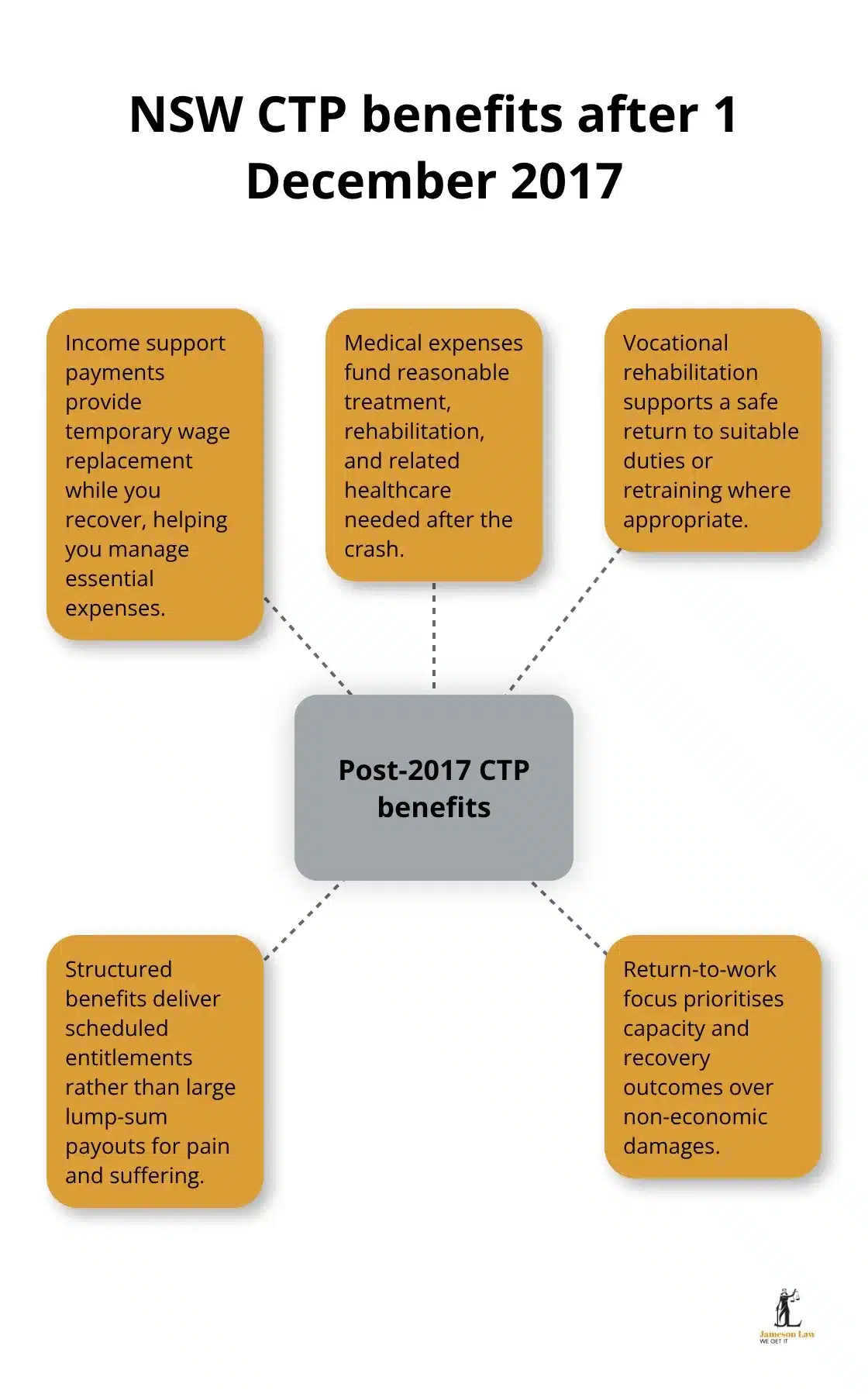
NSW road accident law gives you the right to claim compensation if you’ve been injured, but what you can actually recover depends on when the accident happened and whether you were at fault. The Compulsory Third Party scheme, commonly called a green slip, is the foundation of road accident compensation in NSW. This mandatory insurance covers injuries sustained by anyone involved in a motor vehicle accident, including drivers, passengers, pedestrians, and cyclists. However, the benefits available to you changed significantly on 1 December 2017, when NSW introduced new CTP legislation. If your accident occurred before that date, different rules apply, and you could claim up to $5,000 if you were found at fault, or treatment, rehabilitation, loss of future income, and non-economic loss like pain and suffering if you weren’t at fault. For accidents after 1 December 2017, the system shifted to provide income support payments, medical expenses, vocational rehabilitation, and other structured benefits. The newer scheme focuses on returning injured people to work rather than large lump-sum payouts for pain and suffering.

Fault Determines Your Claim and Your Options
Fault matters because it determines whether you can claim at all and against whom. If you caused the accident, you can only claim your own injuries through your own insurer’s green slip. If the other driver was at fault, you claim against their green slip. The problem is that fault isn’t always straightforward, especially with multiple vehicles involved or when both drivers contributed to the accident. Police won’t always attend minor accidents, so you might not have an official determination. If you’re unsure who caused the accident, obtain legal advice before accepting any settlement offer, because admitting fault at the scene or to the other driver can seriously damage your position later. Transport for NSW holds registered operator information, and you can request this if the other driver won’t provide details, though it takes time. Court proceedings can take 1 to 3 years in NSW motor vehicle claims because ongoing medical treatment often continues throughout the process.
Time Limits That Affect Your Compensation
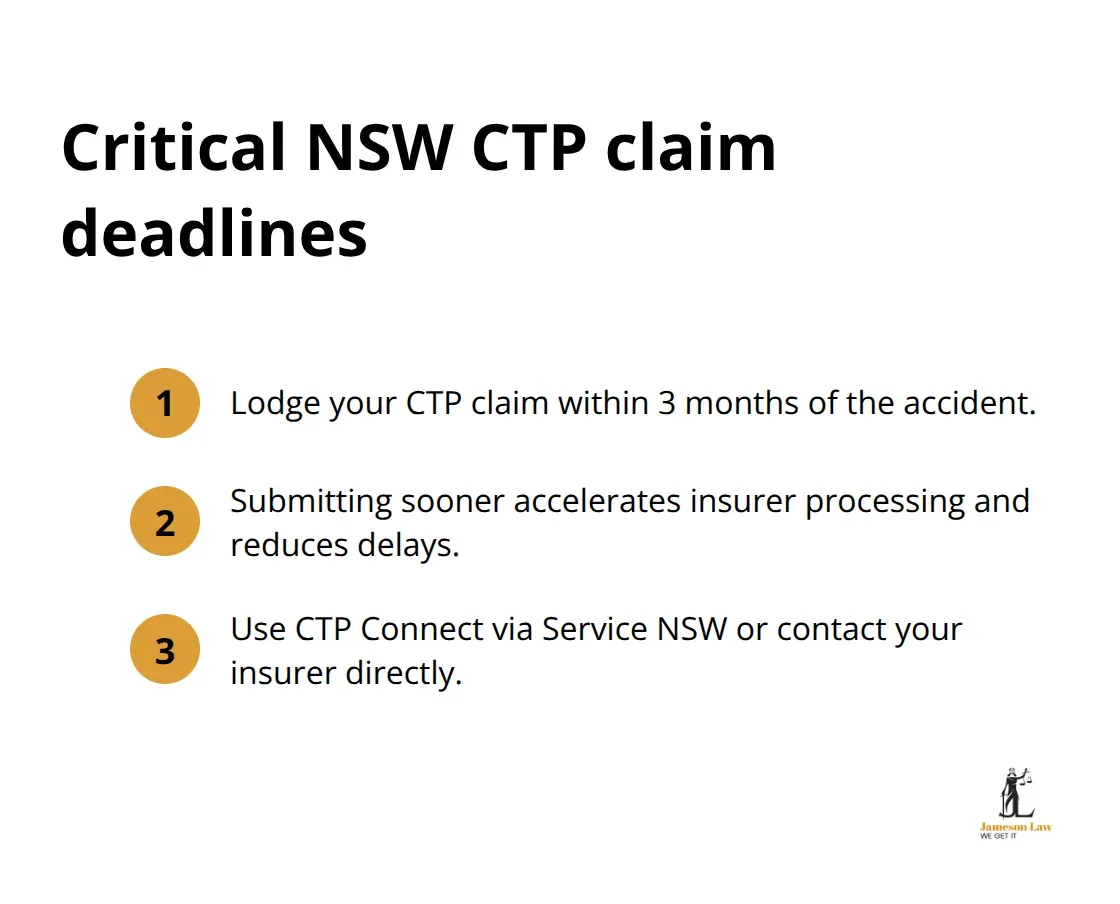
You have 3 years from the accident date to start legal action, but you must lodge your CTP claim within 3 months of the accident. The sooner you submit your application after the accident, the sooner the insurer can begin processing your claim. Waiting beyond 3 months means you forfeit your right to claim CTP benefits entirely, so timing is critical to protecting your entitlements.
Collect Evidence at the Scene and Beyond
The evidence you collect at the scene directly affects your claim’s strength. Take photos of vehicle damage, the accident location, road conditions, traffic signs, and visible injuries. Obtain the other driver’s name, address, driver’s licence details, vehicle registration, and insurance information. Collect contact details from any witnesses who saw what happened, because their statements carry significant weight if liability is disputed. If police attend, obtain the event number (starting with E) because you’ll need this for your CTP claim. Medical records documenting your injuries and treatment are essential, especially a Certificate of Fitness and Capacity completed by your treating doctor, which assesses your ability to work. If you lost income, collect payslips or employment records to prove your earnings. Avoid admitting fault at the scene, even if you think you might have contributed to the accident, because this can be used against you later. Store all documents together and provide them to your insurer when you lodge your claim, as they help speed up assessment and reduce the chance of disputes.
What Happens When Liability Is Disputed
Disputes over liability often slow down claims and create uncertainty about your entitlements. If the other driver contests fault or their insurer denies responsibility, you’ll need strong evidence to support your version of events. Witness statements, police reports, and photographic evidence all strengthen your position when liability is contested. If you face a denial from the insurer, respond with detailed information and additional evidence that supports your claim. Many disputes settle without court involvement if both parties have access to clear evidence and professional assessment of fault. If settlement discussions stall, legal advice helps you understand your options and whether court proceedings are necessary to recover what you’re entitled to.
How to Lodge Your NSW Road Accident Claim
Submit Your Claim Within the Critical Timeframe
Lodging your claim within the correct timeframe determines whether you secure compensation or lose your entitlements entirely. You must submit your CTP claim within 3 months of the accident-submitting sooner accelerates processing and reduces delays. Contact your insurer directly or use the CTP Connect form through Service NSW to start your application.

The 3-month window is absolute; waiting beyond this date forfeits your right to claim CTP benefits entirely.
Gather the Information Your Insurer Needs
Your insurer requires specific information to assess your claim properly. You’ll need your police event number (the code beginning with E obtained at the scene), the accident date and time, location, and a detailed description of what happened. Include details of all vehicles involved, names and contact information for the other driver and witnesses, and any ambulance or hospital records if you received treatment. If you lack every piece of information when you submit, send your claim anyway-your insurer will contact you for missing details rather than rejecting your application outright. Many people delay submission thinking they need everything perfect, but this mistake costs them their 3-month window and their right to claim.
Provide Strong Supporting Documentation
The documents you attach directly influence how quickly your claim progresses and whether disputes arise during assessment. Include copies of medical receipts, payslips showing lost income, repair quotes for vehicle damage, and a Certificate of Fitness and Capacity from your treating doctor confirming your injuries and work capacity. These materials help your insurer assess liability based on the evidence you provide, police reports, witness statements, and the circumstances described in your application. Fault determination often takes weeks or months, especially when both drivers dispute responsibility or when the accident involved multiple vehicles.
Present Your Account Clearly and Factually
Your written account of what happened shapes how your insurer views the accident. Provide a detailed, factual account without admitting fault, and let the evidence speak for itself. Avoid language that suggests responsibility or guilt, even if you think you may have contributed to the accident. Your insurer will determine fault based on all available information, not on statements you make in your claim form. If the insurer denies your claim or questions your version of events, respond with additional evidence and a written statement addressing their concerns rather than ignoring the denial.
Understand That Settlement Often Occurs Outside Court
Most road accident claims resolve without court involvement when both parties have access to clear evidence and professional assessment. Settlement discussions progress faster when you’ve built a strong factual foundation from the start, with comprehensive documentation and witness statements supporting your position. If settlement discussions stall or the insurer continues to dispute liability despite your evidence, legal advice helps you understand your options and whether court proceedings are necessary to recover what you’re entitled to. At this point, many claimants find that professional legal representation shifts the dynamics of negotiations and accelerates resolution.
What Stops Road Accident Claims From Moving Forward
Liability Disputes Block Quick Resolution
Liability disputes create the biggest obstacle to resolving road accident claims quickly. When the other driver or their insurer contests fault, your claim stalls while both parties argue about who caused the accident. The problem intensifies when police did not attend the scene, leaving no official record of what happened. Without an independent account, you rely on your version against theirs, and insurers often side with their own driver when evidence is unclear.
Strong photographic evidence, witness statements, and a detailed account of the accident put you in a far stronger position than relying on your word alone. Many claimants make the mistake of accepting the other driver’s version at the scene or failing to collect contact details from witnesses, which later costs them thousands of dollars when liability is disputed.
Responding to Insurer Denials With Evidence
If the insurer denies your claim outright, respond immediately with written documentation that addresses their specific reasons for denial. Generic responses do not work; you need to counter their exact objections with evidence. For example, if they claim you caused the accident because you were speeding, provide witness statements confirming your speed was reasonable, or traffic camera footage if available.
Settlement often occurs without court involvement when you build an undeniable factual foundation from day one. You can settle your claim with the insurer at any time. If your insurer continues to deny your claim despite substantial evidence, legal advice becomes essential because you need a professional assessment of whether court proceedings are necessary.
Delayed Injuries Create Causation Problems
Injuries that emerge weeks or months after the accident create a different challenge because they are harder to connect to the crash. Soft tissue injuries like whiplash can take days or weeks to become painful, and some people do not seek medical treatment immediately because they feel fine initially. The problem is that insurers scrutinise delayed treatment claims more heavily, questioning whether your injuries actually resulted from the accident or developed independently.
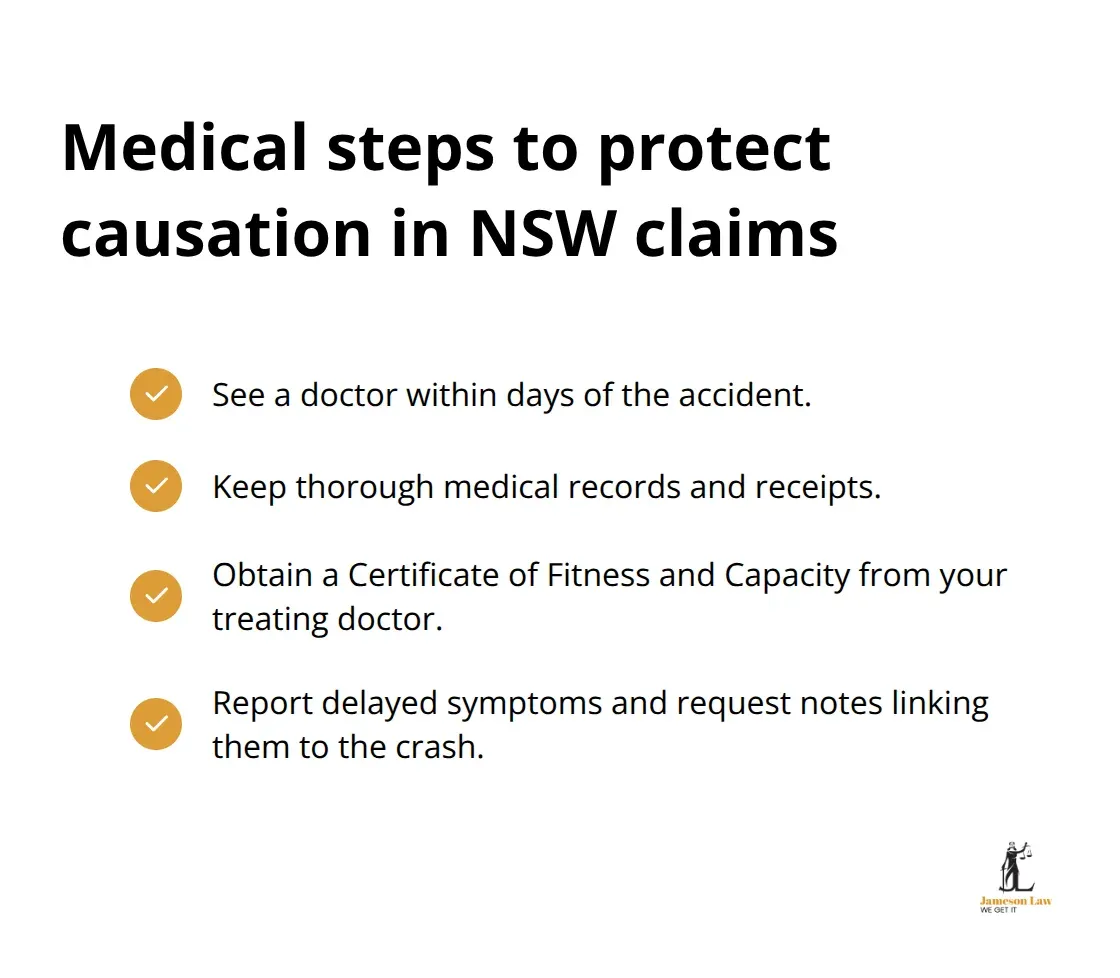
You must see a doctor within days of the accident, even if you feel relatively okay. Medical records create a documented timeline linking your injuries to the crash, which protects your claim when symptoms emerge later. If you develop new symptoms months after the accident, inform your treating doctor about the original crash and request medical notes confirming the connection. Without this documentation, proving causation becomes difficult and your claim may be denied.

Building a Chain of Evidence for Gradual Injuries
Some injuries genuinely take time to manifest, and Australian courts recognise this, but you need medical evidence supporting the connection. Document everything from the moment of impact: your physical state immediately after, any pain or discomfort you experienced in the following days, and all medical appointments related to the crash. This creates a clear chain of evidence that protects your entitlements even when injuries emerge gradually.
Medical evidence transforms a weak claim into a strong one because it removes doubt about causation. When you have doctor’s notes, treatment records, and a Certificate of Fitness and Capacity linking your condition to the accident, insurers find it far harder to deny your claim. The documentation you collect in the weeks after the accident (payslips, medical receipts, witness statements) determines whether you recover full compensation or face a reduced settlement due to disputed liability or injury causation.
Final Thoughts
Road accident NSW compensation is within reach if you act quickly and collect strong evidence from the start. The three-month deadline for lodging your CTP claim is absolute, and missing it costs you everything. Seek medical treatment within days of the accident, submit your application on time, and respond promptly to any requests from your insurer.
Liability disputes and insurer denials create real obstacles, but they are not insurmountable when you have documented evidence supporting your claim. Witness statements, photographic evidence, and medical records shift the balance in your favour when the other driver contests fault. If the insurer denies your claim or disputes liability despite your evidence, professional legal assistance becomes essential to recover what you are entitled to.
We at Jameson Law help NSW residents understand their compensation rights and navigate complex claims. Many road accident claims settle without court involvement once you have legal representation, because insurers respond differently when they know you have professional support. Contact us for advice on your options if settlement discussions stall or you face denial.