Section 52A of the Conveyancing Act sets strict disclosure requirements that every property seller must follow. Non-compliance can result in significant penalties and legal complications, potentially allowing buyers to walk away from the deal.
We at Jameson Law see sellers struggle with these complex obligations daily. This guide breaks down the essential requirements and shows you how to avoid costly mistakes during your property transaction.
What Section 52A Actually Requires?
Mandatory Document Attachment Requirements
Section 52A of the Conveyancing Act 1919 mandates that sellers attach specific documents to every land contract. The Act establishes mandatory disclosure obligations that protect buyers from hidden defects or encumbrances.
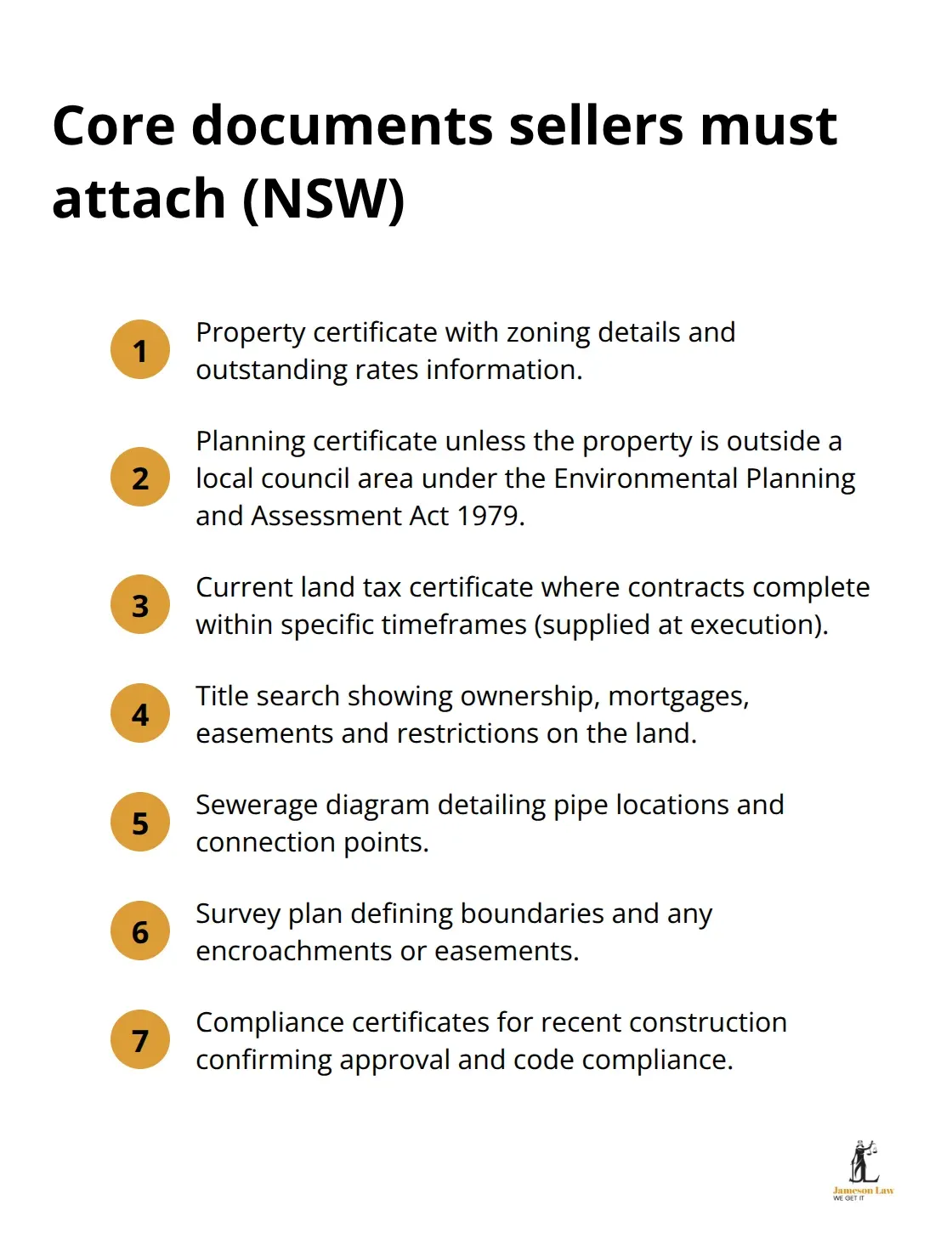
Sellers must provide a property certificate containing zoning details. The Act also requires a planning certificate (Section 10.7 certificate) unless the property sits outside a local council area. For contracts completed within specific timeframes, vendors must supply a current land tax certificate.
Severe Penalties for Document Omissions
The Conveyancing (Sale of Land) Regulation 2022 gives buyers the right to rescind contracts within 14 days if required documents are missing. This rescission right costs sellers significantly more than the standard forfeiture buyers face during cooling-off periods.
Sellers who fail to provide mandatory documentation face contract rescission, forcing them to find new buyers while potentially losing their preferred settlement timeline. The Act makes any attempt to contract out of these requirements invalid.
Comprehensive Buyer Protection Framework
Section 52A creates an implied warranty that land is not subject to adverse affectations. Buyers can claim compensation instead of rescission if discrepancies arise. The Act requires sellers to disclose all known adverse information, such as illegal building works.
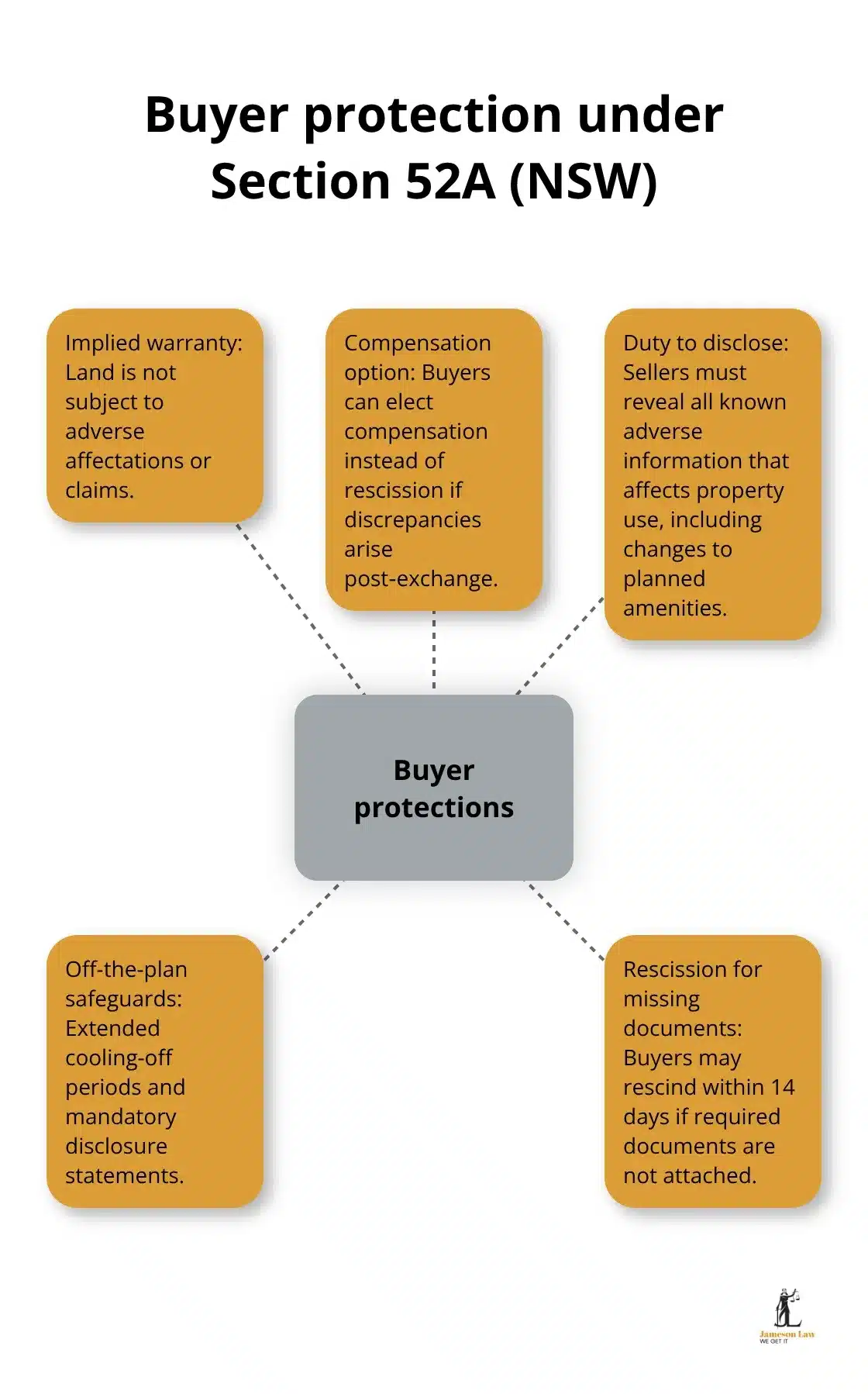
Off-the-plan buyers receive additional protection through extended cooling-off periods. The regulatory framework responds directly to community concerns about buyer vulnerabilities.
What Documents Must You Actually Provide?
Core Documentation Requirements
The Section 10.7 certificate (formerly Section 149) forms the foundation of mandatory disclosures. This certificate from your local council reveals development restrictions and heritage listings. Properties with pools require compliance certificates.
A title search document shows ownership details and mortgages. Sewerage diagrams from Sydney Water detail pipe locations. Survey plans define exact boundaries and identify any encroachments.
Property-Specific Documentation
Strata properties demand additional complexity with by-law changes and levy notices. Off-the-plan contracts require disclosure statements with sunset dates. Properties subject to easements need copies of all relevant documents. Heritage-listed properties require conservation management plans.
Common Documentation Mistakes
Sellers often underestimate the time required to obtain all mandatory documents. Missing or outdated certificates give buyers immediate rescission rights. Incomplete strata documentation packages frequently trigger buyer withdrawals.
Common Pitfalls and How to Avoid Them
Disclosure Errors That Trigger Contract Rescission
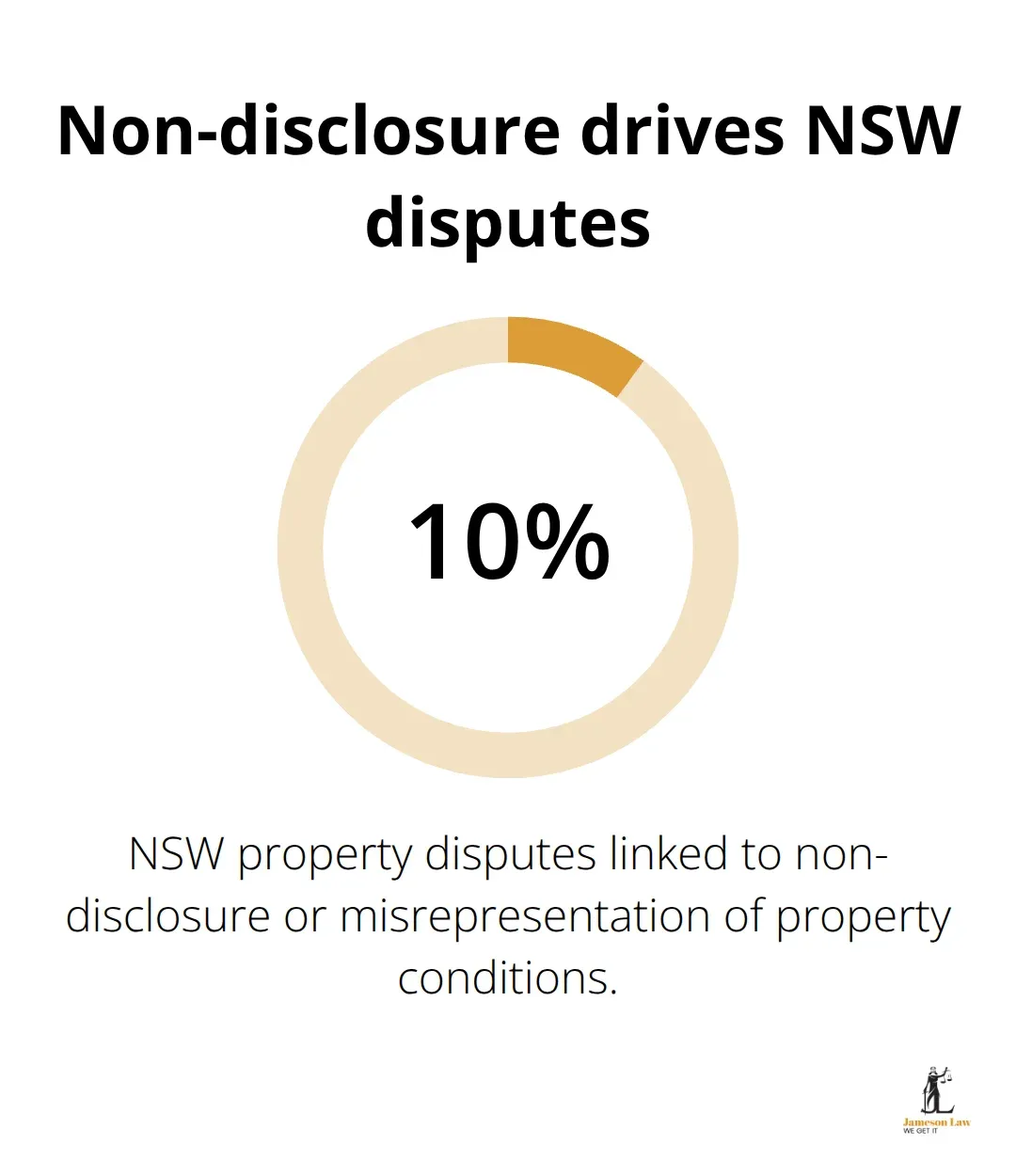
Property sellers consistently underestimate the precision required in their disclosure statements. Around 10% of property disputes in NSW relate to non-disclosure. Sellers frequently omit adverse information about neighbouring developments.
Section 52A sets out the duty of disclosure requirements for vendors. Vendors attempt to minimise obligations through vague language, but courts interpret requirements strictly.
Critical Documentation Timing Failures
Council processing delays create significant compliance risks. Sellers who exchange contracts before receiving all mandatory documents expose themselves to immediate buyer rescission rights. Smart sellers obtain all certificates simultaneously and maintain validity buffers.
Incomplete Property Information Statements
Sellers often provide generic statements that fail to address specific characteristics. Swimming pool compliance certificates must reflect current barrier standards. Environmental factors demand attention; properties near industrial sites require assessments.
Final Thoughts
Property sellers who master the 52A Conveyancing Act requirements protect themselves from expensive rescission claims. The Act demands precise documentation that buyers can verify before contract exchange. Professional legal support eliminates common errors.
We at Jameson Law help property sellers navigate these complex requirements. Our team obtains all mandatory documents and prepares comprehensive disclosure statements. Professional conveyancing support safeguards your property sale from pitfalls.
Contact Jameson Law today to ensure your contract of sale is compliant and bulletproof.