Buying property in NSW involves more than just signing paperwork. You need an NSW property conveyancing lawyer who understands the legal complexities and protects your interests from start to finish.
At Jameson Law, we’ve seen how the right legal guidance makes the difference between a smooth transaction and a costly nightmare. This guide walks you through the conveyancing process and what to look for in legal counsel.
What a Conveyancing Lawyer Actually Handles?
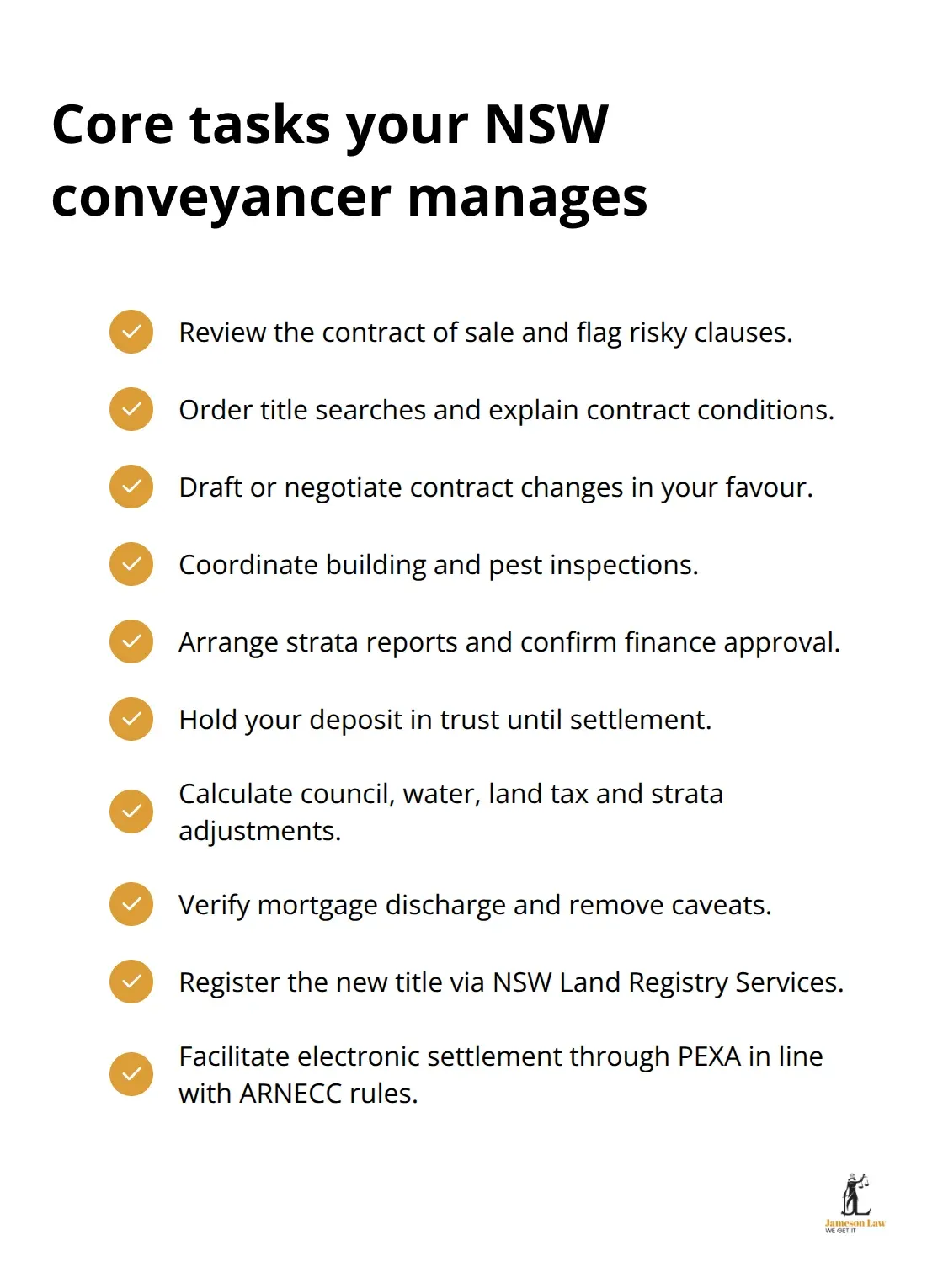
A conveyancing lawyer does far more than shuffle papers. Your conveyancer reviews the Contract for Sale line by line, flagging clauses that could cost you thousands later. According to the Australian Institute of Conveyancers (AIC), key tasks include ordering title searches and drafting contract conditions.
Your lawyer also coordinates building and pest inspections, strata reports, and loan approval. During this phase, the conveyancer holds your deposit in trust, protecting you if the deal falls through.
Title Searches Reveal Hidden Problems
Title searches reveal critical information about the property’s legal boundaries and any caveats. A conveyancer will order NSW Land Registry Services searches, drainage diagrams, and council certificates. These searches uncover undisclosed issues like illegal building work or planning restrictions.
Settlement and Title Transfer
At settlement, your lawyer ensures the title transfer happens and that all adjustments for council rates and water rates are calculated correctly. Most settlements now occur electronically via PEXA, which speeds up processing significantly.
Why a Conveyancing Lawyer Protects Your Financial Future?
Skipping professional conveyancing counsel is a gamble. NSW Fair Trading highlights that property laws carry real financial consequences. Without a conveyancer, you absorb all the risk yourself.
Catching Problems Before You Commit
A lawyer catches problems before you become legally bound. Once you exchange contracts, you commit to the purchase regardless of what title searches reveal. If your lawyer fails to uncover issues like encroachment or illegal structures before exchange, you own the liability.
Navigating Multiple Government Agencies
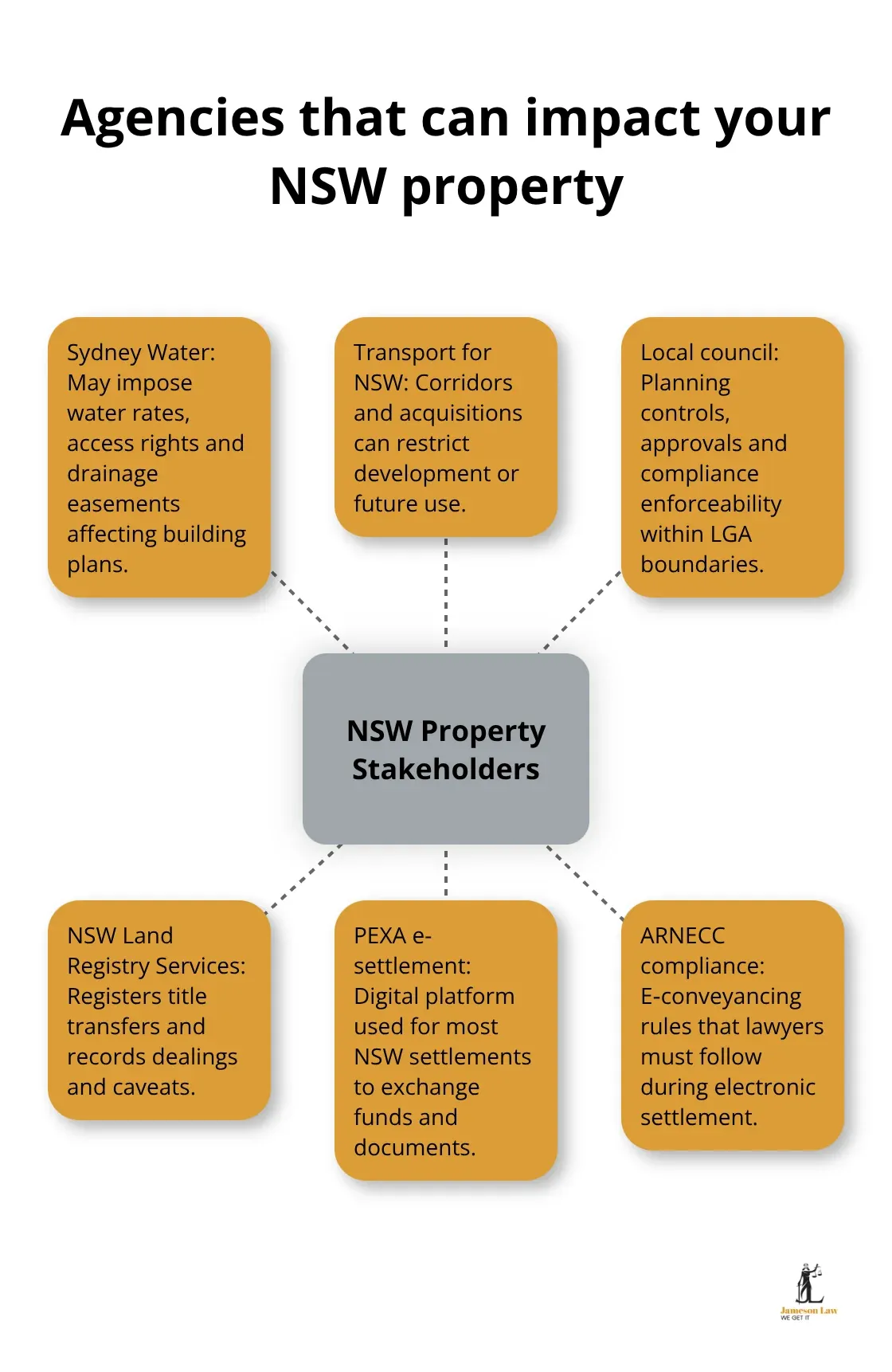
NSW property law involves multiple government agencies. Sydney Water, Transport for NSW, and your local council may all hold rights affecting the land.
Managing Timelines and Technical Calculations
Settlement timelines typically run for 42 days. Your lawyer ensures compliance with deadlines. They also calculate rate adjustments to ensure you aren’t paying for the seller’s arrears. This is crucial for Section 52A compliance.
Selecting a Conveyancing Lawyer Who Matches Your Needs
Verify Qualifications and Local Expertise
Ensure your conveyancer holds a valid licence. Solicitors can provide broader legal advice than licensed conveyancers. Ask if they specialise in your property type—whether it’s residential, strata, or commercial.
Request Transparent Fee Quotes
Fee structures matter. Request a fixed-fee quote that itemises professional fees and disbursements (searches). Verify government charges like stamp duty using the Revenue NSW calculator.
Final Thoughts
Selecting the right NSW property conveyancing lawyer comes down to qualifications, transparency, and a track record of catching problems. The difference between a lawyer who flags issues and one who misses them costs thousands.
Professional support transforms property transactions from stressful ordeals into managed processes. Contact Jameson Law today to discuss your property needs and receive transparent guidance from experienced legal professionals.