Selling or buying property in Australia requires strict compliance with the Conveyancing (Sale of Land) Regulation 2022 (which replaced the 2010/2017 regulations). This regulation sets out mandatory requirements that protect both buyers and sellers throughout the transaction process.
At Jameson Law, we’ve seen countless property deals delayed or complicated because parties didn’t understand their obligations. This guide walks you through the key requirements, common mistakes, and practical steps to keep your conveyancing on track.
What the Regulation Actually Covers?
The Regulation fundamentally changed how property transactions work in NSW. It introduced stricter vendor disclosure requirements that directly affect what documents must attach to every contract for sale. The core purpose is straightforward: vendors must disclose material information upfront so buyers can make informed decisions.
Documents You Must Attach to the Contract
Schedule 1 of the Regulation requires vendors to attach specific prescribed documents. These include a Section 10.7 Planning Certificate (formerly s149) from the local council, a sewerage diagram from a recognized authority like Sydney Water, and a valid title search.
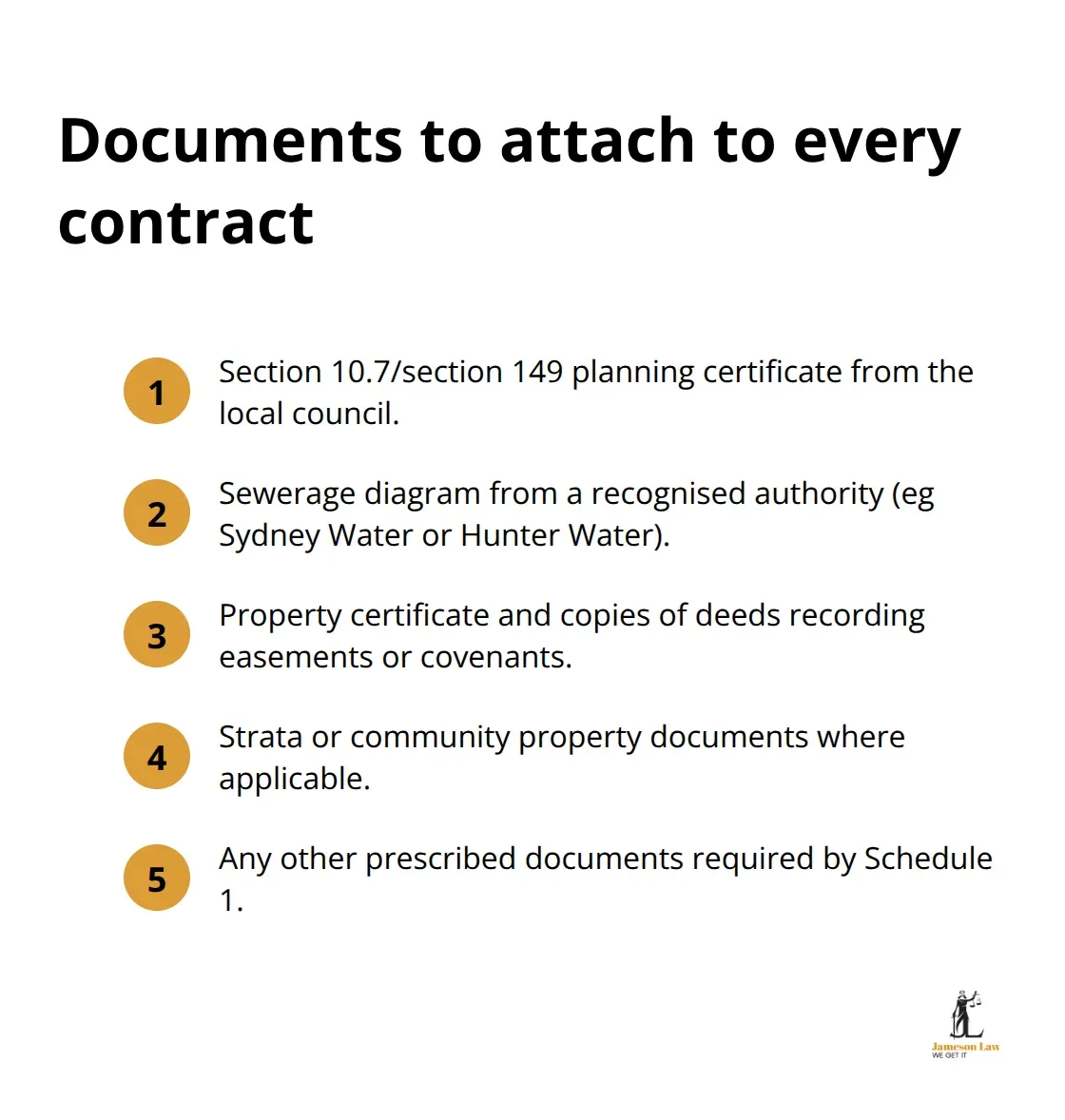
If any of these documents are missing, the purchaser can rescind the contract within 14 days of exchange without losing the deposit. Attaching these documents prevents disputes and keeps settlements on schedule.
Vendor Warranties Under Schedule 3
Vendors must warrant that the land isn’t subject to adverse affectations and that no sewer affects the property without disclosure. Adverse affectations include scenarios where government actions (like road widening proposals by Transport for NSW) may affect the property. If a vendor breaches these warranties, the buyer may have the right to rescind.
What Happens When Documents Go Missing?
The consequences are immediate. A purchaser who discovers that a vendor failed to attach required documents can issue a notice of rescission. The vendor must then refund the purchaser’s deposit. This right exists because vendors control access to these documents. Our contract review lawyers can verify compliance before you sign.
What You Must Do Before Exchange?
Obtaining Council and Sewerage Documents
Vendors must operate under strict timelines. The Section 10.7 Planning Certificate must be current. You cannot attach a stale certificate. Sewerage diagrams from Hunter Water or Sydney Water follow similar rules. Start requesting these documents at least three weeks before exchange.
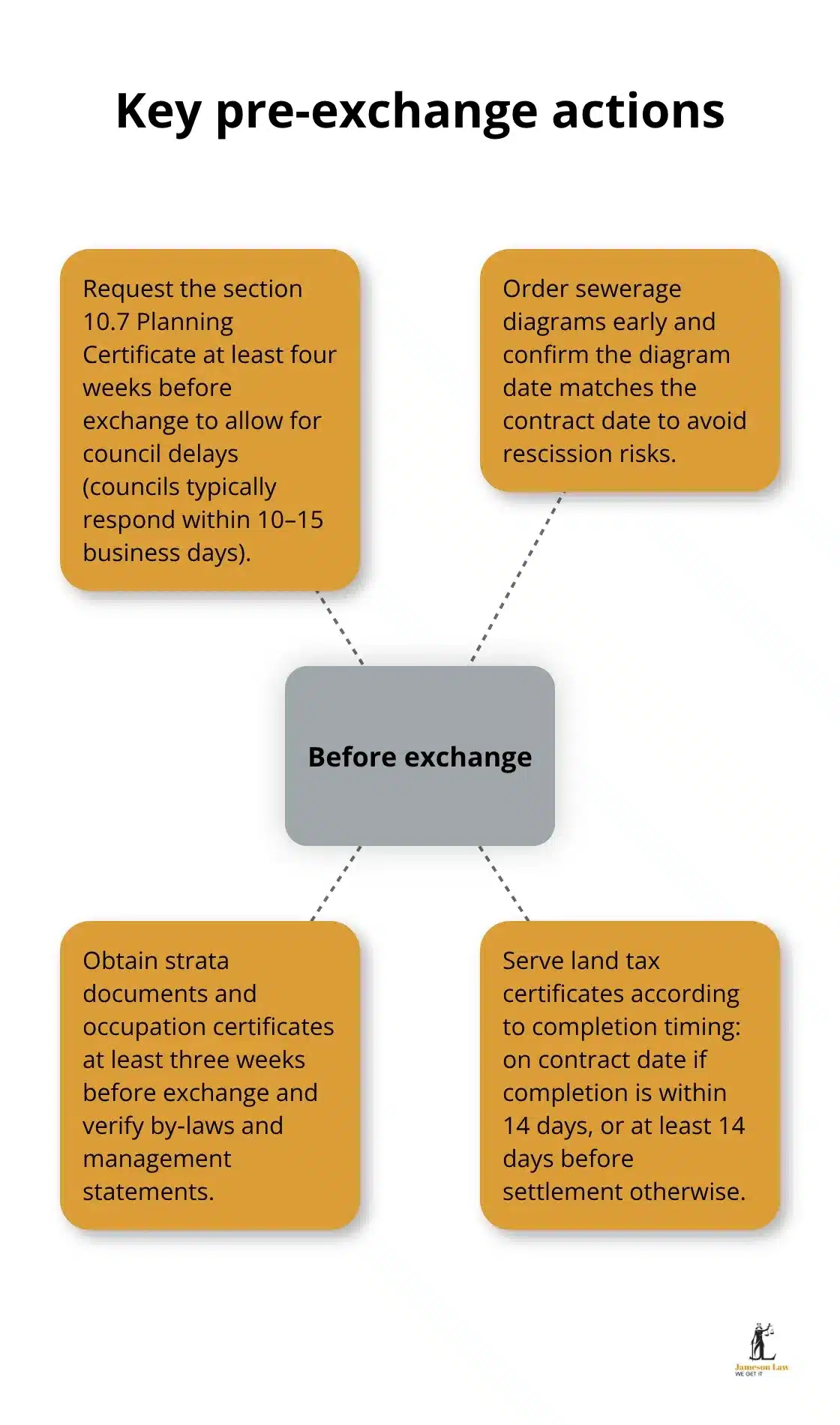
The land tax certificate presents another timing trap. If completion occurs within 14 days of the contract, you must serve a current Land Tax Clearance Certificate immediately.
Managing Strata and Occupation Certificates
Strata schemes add complexity. Vendors must attach by-laws and management statements. For off-the-plan purchases, vendors must provide Occupation Certificates before completion. Breaching these requirements can lead to deposit forfeitures.
The Conveyancer’s Role in Compliance
Conveyancers shoulder the responsibility for verifying compliance. A conveyancer’s role is to ensure the contract contains all prescribed documents. If you’re a purchaser, our Sydney conveyancers will review every attached document to protect your interests.
Understanding Rescission and Cooling-Off Rights
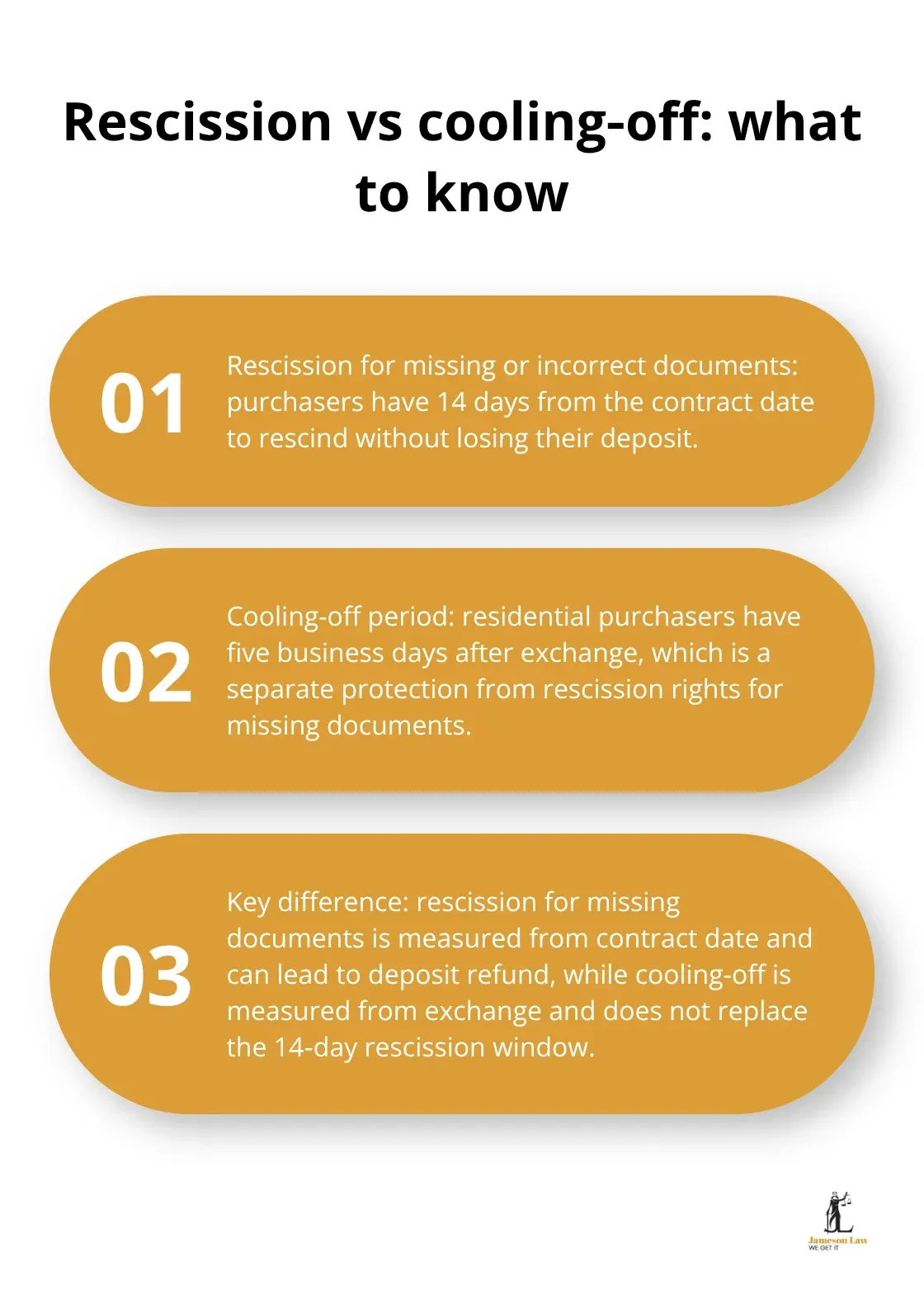
If documents are missing, you have 14 days to rescind. This is separate from the cooling-off period, which is typically 5 business days for residential contracts. Purchasers often confuse these two rights.
Where Conveyancing Deals Fall Apart?
The gap between what vendors think they’ve done and what the Regulation requires destroys transactions. Most collapses occur due to misunderstood documentation requirements. The Section 10.7 Planning Certificate sits at the heart of most failures.
Timing Traps with Planning and Sewerage Documents
Vendors often contact councils too late. If a sewerage diagram arrives after contracts are exchanged, purchasers have legitimate grounds to rescind. Start requesting documents early to absorb delays from local councils.
Land Tax Certificates and Completion Dates
Land tax certificates create a different problem. Conveyancers sometimes misread the completion date. Your conveyancer must flag this deadline to avoid settlement delays with Revenue NSW.
Final Thoughts
The Conveyancing (Sale of Land) Regulation protects both buyers and sellers by enforcing transparency. Vendors must disclose material information upfront. Missing a single required document can derail months of negotiation.
Professional conveyancing assistance matters. Contact Jameson Law to discuss your conveyancing requirements and start with professional guidance that prevents costly delays.