A criminal charge in NSW can feel overwhelming, but understanding your options makes a real difference to the outcome. We at Jameson Law know that criminal law defence in Sydney requires both strategy and deep knowledge of how the courts work.
This guide walks you through the types of charges you might face, how to build an effective defence, and practical ways to reduce penalties in 2026.
How Criminal Charges Work in NSW
Summary and Indictable Offences: Understanding the Distinction
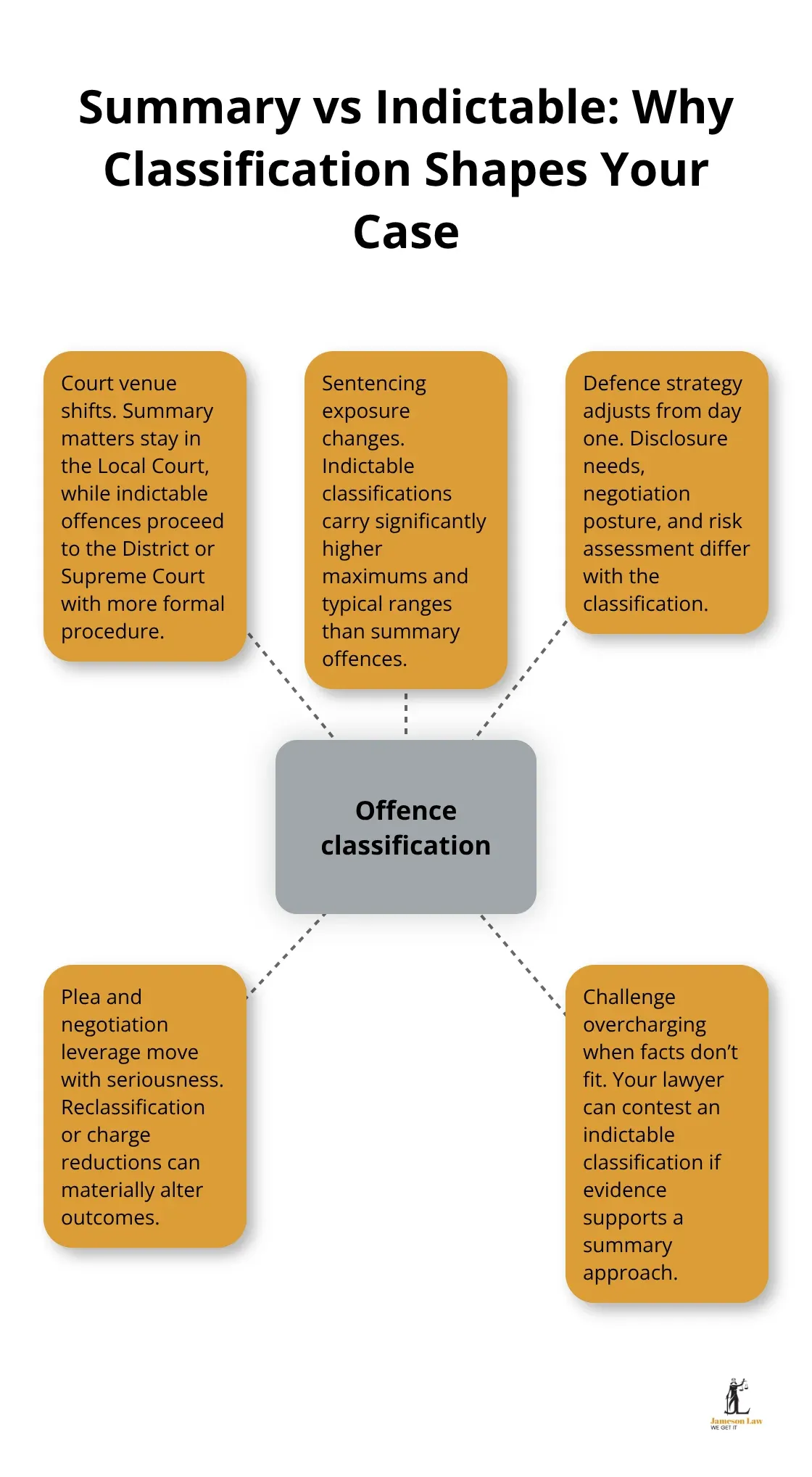
NSW splits criminal offences into two categories. Summary offences stay in the Local Court, while indictable offences move to the District or Supreme Court. This classification is vital as it dictates the court venue and the potential sentencing range.
Your Rights from Arrest to Interview
Your right to silence is absolute under Evidence Act 1995 (NSW). Exercising this right does not create a negative inference. Police must follow strict rules under the Law Enforcement (Powers and Responsibilities) Act 2002 (LEPRA), including the requirement to caution you before questioning.
Building Your Defence Case
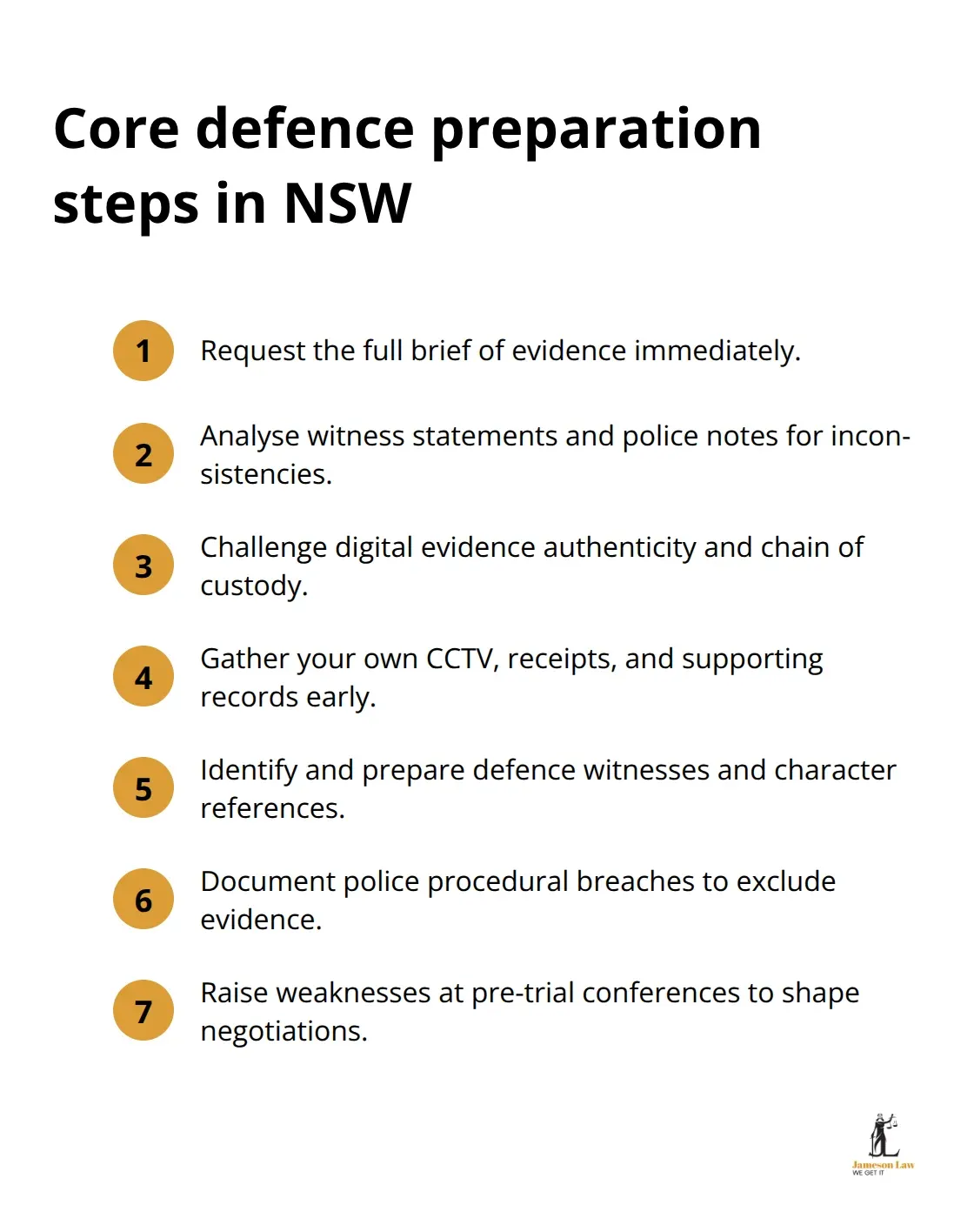
In NSW, the onus of proof rests on the Crown to prove guilt beyond reasonable doubt. Your defence begins with a meticulous review of the Brief of Evidence, identifying procedural errors or inconsistent witness statements that could lead to an acquittal.
Challenging Evidence Admissibility
Expert defence involves challenging how evidence was obtained. If police conducted a search without a valid warrant, evidence may be excluded under Section 138 of the Evidence Act. This is particularly relevant in drug offences and matters involving digital evidence.
Reducing Your Sentence Through Strategic Preparation
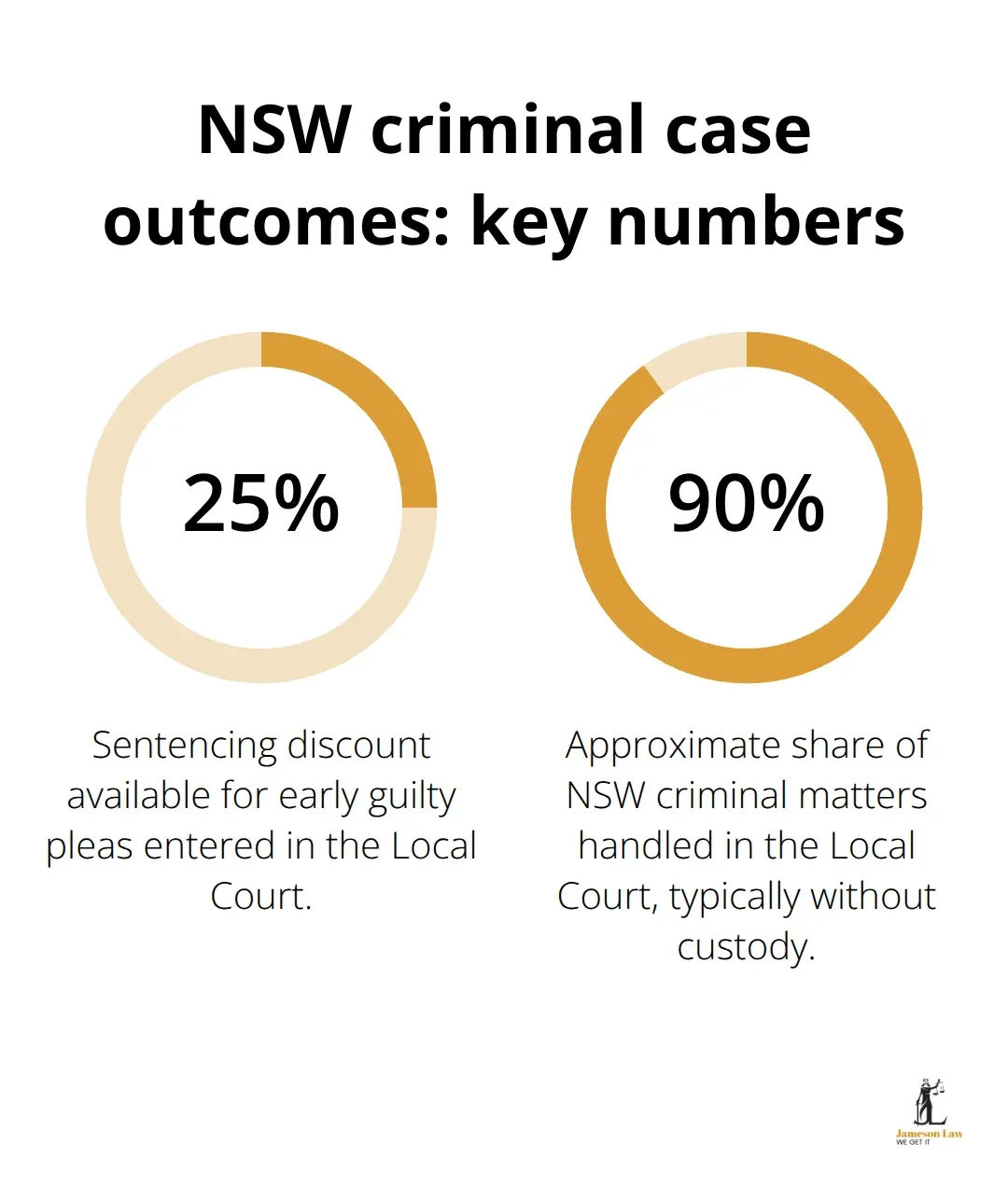
Sentencing judges consider aggravating and mitigating factors under Section 21A of the Crimes (Sentencing Procedure) Act 1999 (NSW). Demonstrating genuine remorse and rehabilitation—such as completing treatment programs—can significantly influence the final outcome.
Final Thoughts
Success in criminal law defence Sydney requires decisive action. Most matters resolve through negotiation, and having an expert lawyer identify evidentiary gaps early shifts the power dynamic in your favor. Whether you are aiming for a Section 10 dismissal or a reduced sentence, preparation is everything.
Contact Jameson Law for a consultation today. Our highly experienced legal team will discuss your charges and map out a realistic pathway to protect your future.