NSW criminal law penalties can range from fines to lengthy prison sentences, depending on the offence and circumstances. The difference between a summary offence and an indictable offence alone can dramatically change your potential outcome.
At Jameson Law, we have seen how quickly a criminal charge can shift someone’s life. This guide breaks down the penalties you might face, what influences sentencing, and why highly experienced legal representation matters from day one.
How Offence Classification Shapes Your Sentence
The distinction between summary and indictable offences fundamentally determines your sentencing range. Summary offences—handled in the Local Court—carry maximum penalties of two years imprisonment, whilst indictable offences can reach significantly longer terms and are heard in higher courts.
This classification isn’t academic; it directly affects whether you face six months in custody or six years. An assault charge, for instance, can be prosecuted as a summary offence with a maximum of two years or as an indictable offence with substantially harsher potential outcomes depending on the circumstances and prosecution decision.
What Aggravation Does to Your Penalty
Aggravated offences exist in a separate tier entirely. Under section 21A(2) of the Crimes (Sentencing Procedure) Act 1999, courts must consider aggravating factors that intensify penalties. Violence involving weapons, offences targeting vulnerable victims, or conduct that demonstrates deliberate cruelty can push sentences from moderate community orders into custodial terms. A common assault might attract a fine or conditional release order; the same assault against an elderly person or with a weapon becomes aggravated and frequently results in imprisonment.
Seriousness Determines Your Sentencing Range
The court’s first step involves assessing objective seriousness—the actual conduct that occurred, not your intentions. Parliament sets maximum penalties for each offence, but courts reserve those maximums only for the worst-category cases. Most offences sit well below the maximum.
Why Early Legal Advice Matters
Criminal defence lawyers can shape how the prosecution frames the conduct and what evidence the court sees at this critical stage. A lawyer who acts early can challenge the prosecution’s framing, present mitigating evidence, and influence how the court assesses objective seriousness before sentencing occurs.
The Penalties You Actually Face
Imprisonment: When Courts Order Custody
Imprisonment remains the most visible penalty, yet most criminal cases in NSW resolve without anyone spending time in custody. The Local Court handles roughly 90% of criminal matters, and the vast majority result in fines, community orders, or conditional release rather than jail time.
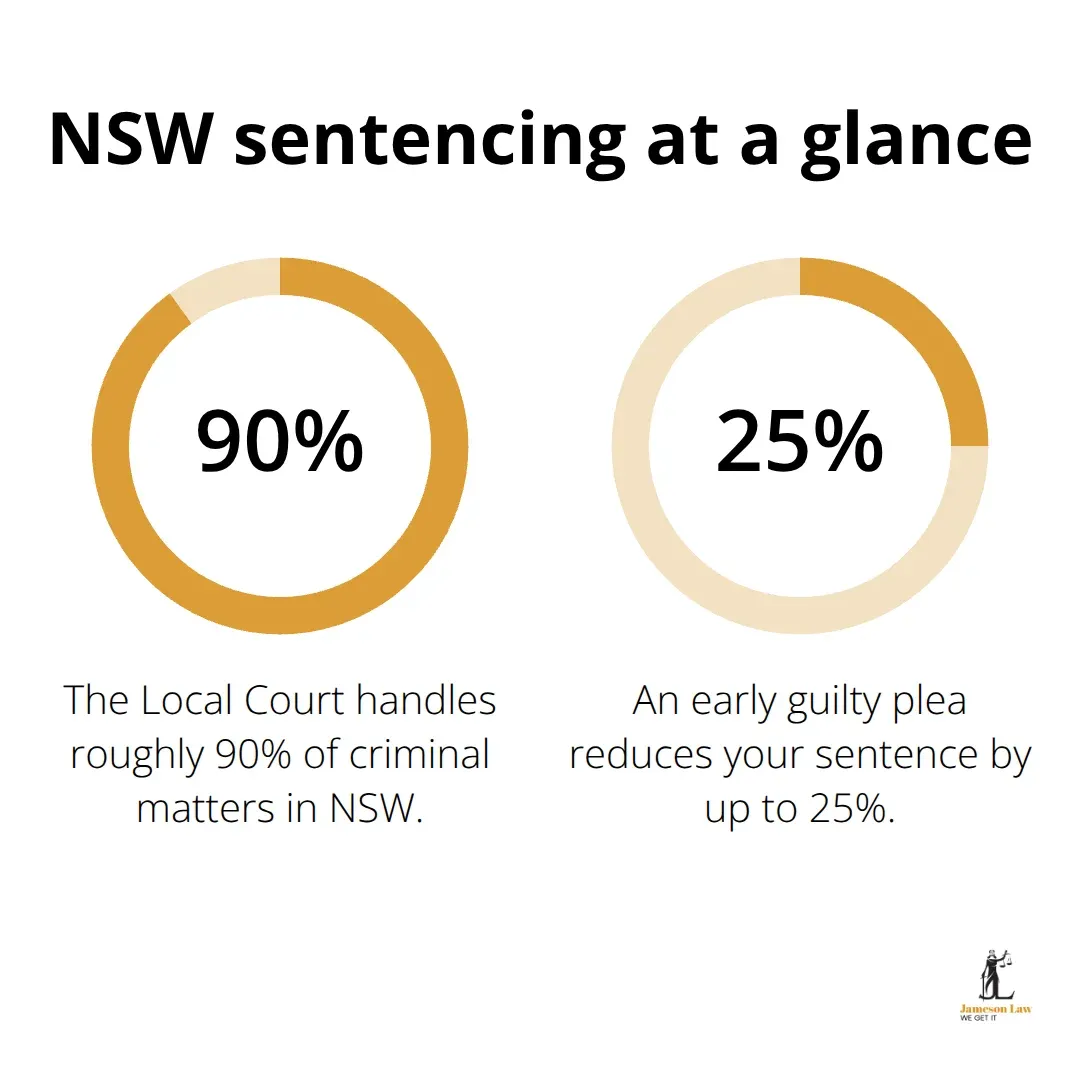
If you face an indictable offence, higher courts can impose substantially longer terms, but courts must consider alternatives first. An early guilty plea reduces your sentence by up to 25%, making the timing of your legal advice genuinely consequential.
Fines: How Courts Calculate What You Pay
Fines operate differently depending on offence severity. For minor matters, fines range from a few hundred to several thousand dollars, and you typically have 28 days to pay. Courts will not impose a fine for indictable offences unless the legislation specifically allows it, meaning serious charges almost always lead to non-monetary penalties instead.
Community Orders: The Most Common Outcome
Community-based sentences dominate NSW sentencing outcomes because they keep people working and supporting families whilst serving their penalty.
- Conditional Release Orders (CRO): Last up to two years and include standard conditions (not committing another offence).
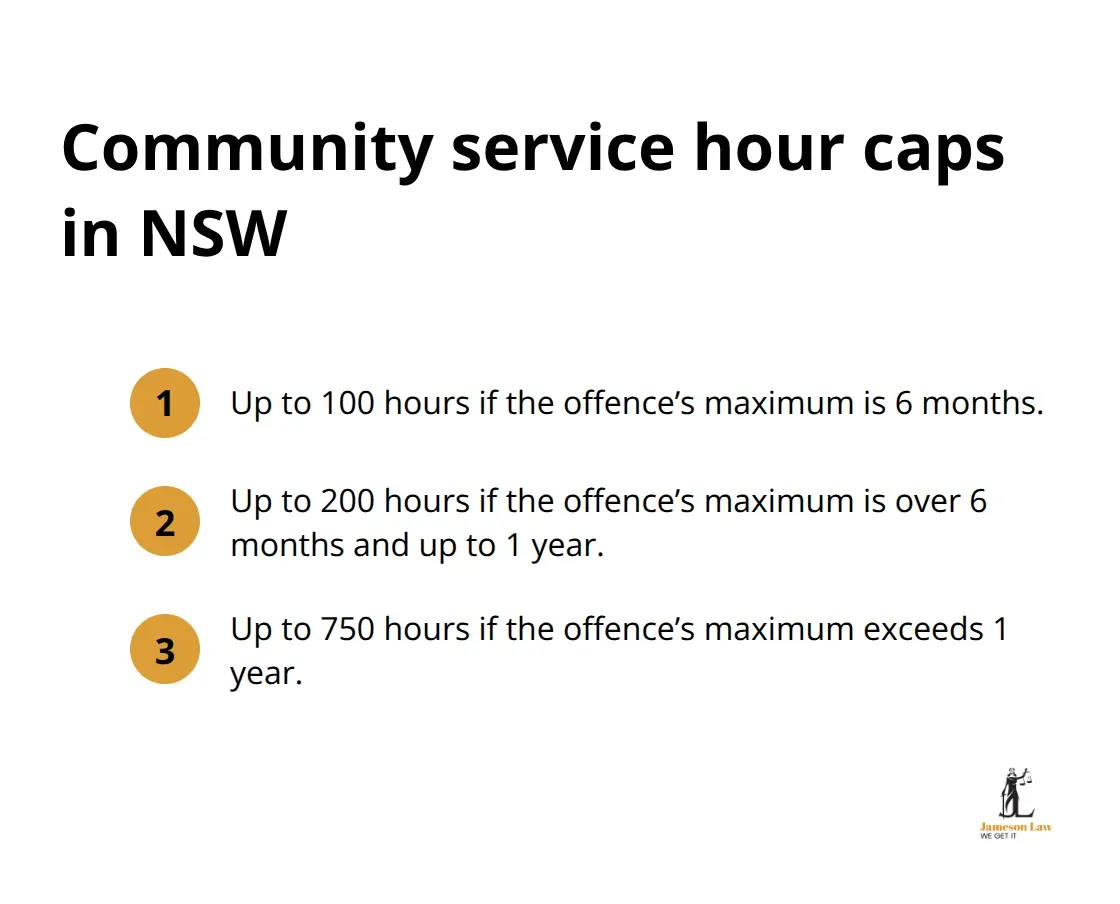
- Community Correction Orders (CCO): Stricter and can last up to three years with conditions such as community service work or curfews.
- Intensive Correction Orders (ICO): Function as a community-based alternative to short prison sentences, with mandatory supervision and program participation.
Breaches: What Happens When You Violate Your Order
A breach of a Conditional Release Order or Community Correction Order can result in revocation and re-sentencing to harsher penalties, including custody. Courts distinguish between minor breaches and serious or repeated breaches.
What Really Changes Your Sentence
Criminal History: The Pattern Courts Cannot Ignore
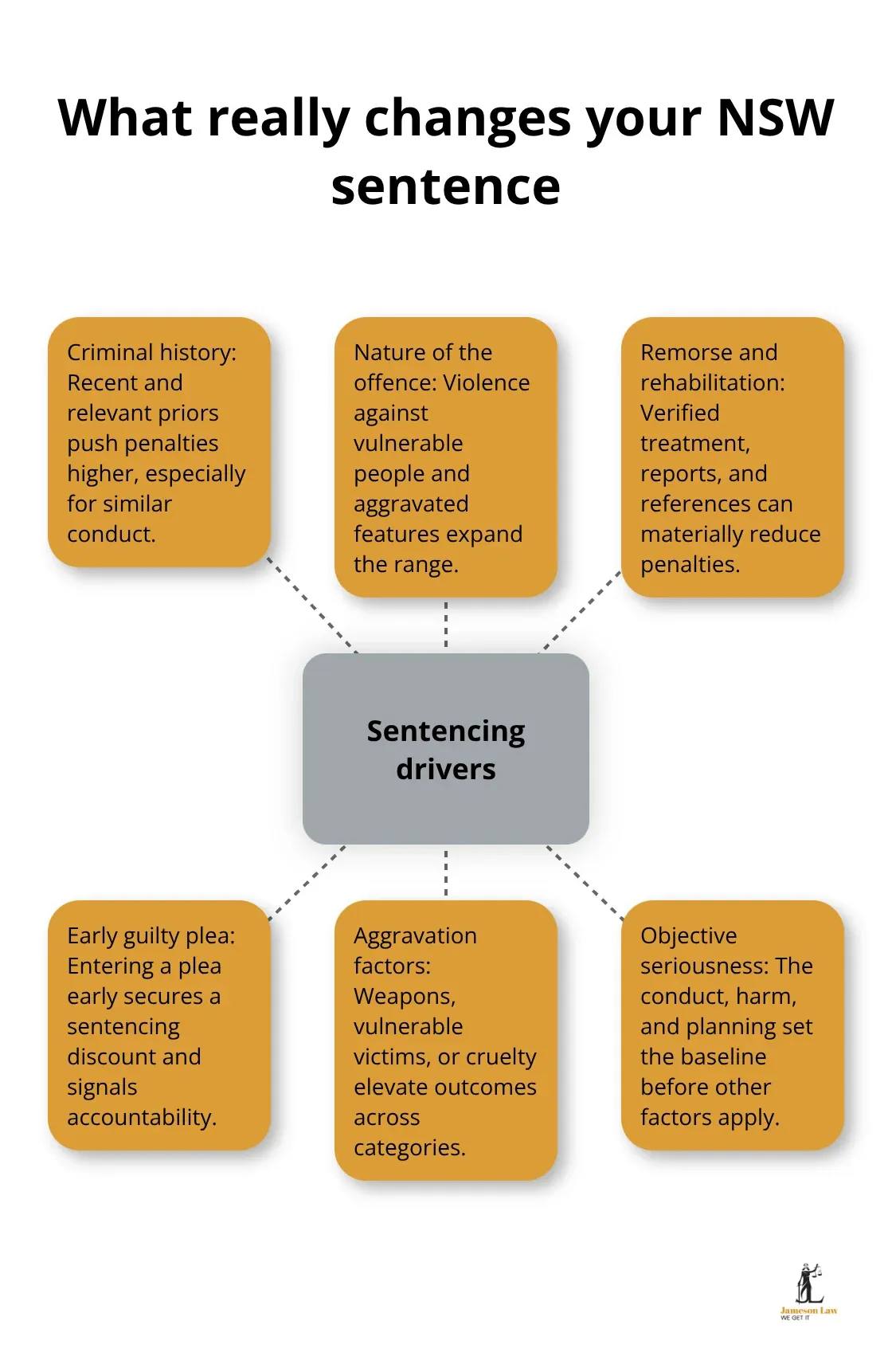
Your criminal history stands as the single most predictive factor in sentencing. Section 21A(3) of the Crimes (Sentencing Procedure) Act 1999 requires courts to weigh prior convictions as either mitigating or aggravating depending on how recent and relevant they are. If your priors involve similar conduct to your current charge, expect the court to treat that as significant aggravation.
Remorse and Rehabilitation: Evidence Speaks Louder Than Words
Remorse and rehabilitation prospects operate as powerful mitigating factors, but only if you support them with evidence. A psychological report showing you have addressed underlying issues, testimony from treatment providers, or concrete steps toward education or employment carry real weight with courts.
Final Thoughts
NSW criminal law penalties range from dismissals through to years of imprisonment, and your outcome depends entirely on how you handle your case from the moment charges arise. The classification of your offence, aggravating factors, your criminal history, and the evidence you present all combine to determine whether you face a conditional release order or custody.
The decisions you make in the first weeks after charges are laid directly influence your final penalty. An early guilty plea can reduce your sentence by up to 25 percent, but only if your lawyer negotiates it strategically and presents it alongside compelling mitigating evidence.
Contact Jameson Law immediately if you face criminal charges. Our highly experienced criminal law team understands how NSW courts approach sentencing and can guide you through the process from your first appearance through to the final outcome.