Family law cases move fast, and missing a single deadline can derail your entire matter. The Central Practice Direction – Family Law Case Management sets out the rules that courts expect you to follow, and understanding these requirements is non-negotiable.
At Jameson Law, we’ve seen too many cases suffer because parties didn’t grasp the procedural framework. This guide walks you through the essential steps to stay compliant and protect your interests in the Federal Circuit and Family Court.
What Central Practice Direction Actually Means for Your Case?
The Federal Circuit and Family Court of Australia (FCFCOA) introduced the Central Practice Direction to establish a consistent national case management system. This direction outlines the core principles applicable to every family law matter filed across Australia.
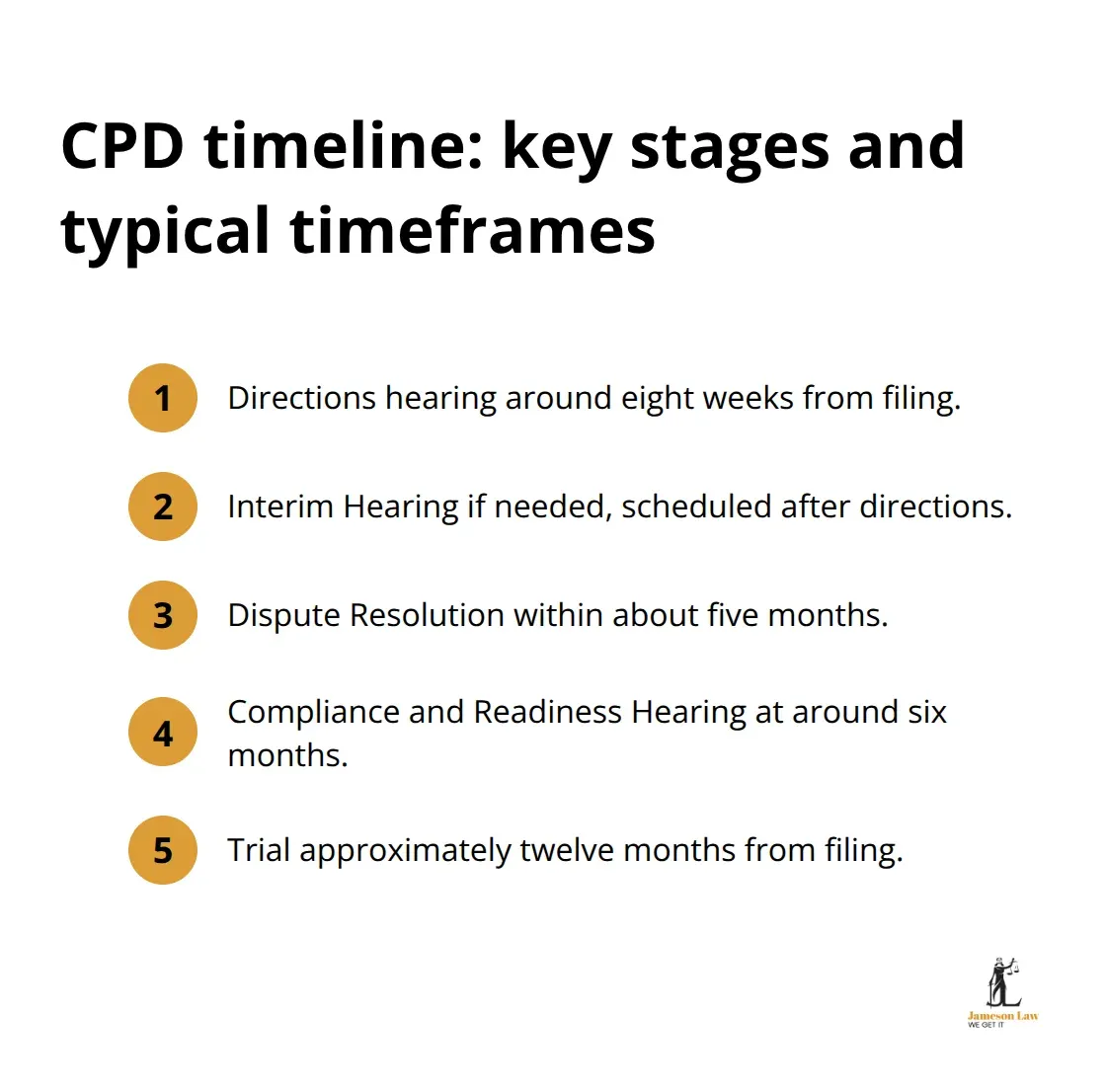
CPD isn’t optional guidance—it’s the procedural framework courts enforce. Non-compliance triggers real consequences under the Family Law Rules 2021. Courts now expect parties to move through defined stages:
- First Court Event: Directions hearing within ~8 weeks.
- Interim Hearing: If urgent issues need resolution.
- Dispute Resolution: Mediation within ~5 months.
- Compliance and Readiness Hearing: Checking trial readiness around 6 months.
- Trial: Aiming for resolution within 12 months.
The Real Purpose Behind Case Management
CPD fundamentally shifts responsibility to parties and their lawyers. The court no longer tolerates vague affidavits. Early risk screening via the Lighthouse Project allows courts to identify safety concerns immediately.
The system explicitly requires parties to be cost-conscious, give full financial disclosure, and pursue resolution-focused processes. If you are unprepared, judges will penalise you through costs orders.
How This Framework Protects Your Interests
Understanding CPD mechanics gives you a tactical advantage. The First Court Event focuses on Consent Orders where possible. Thorough preparation—filing concise affidavits and engaging in dispute resolution—positions your case for faster resolution.
What You Must File and When?
Initial Filing Requirements and Pre-Action Steps
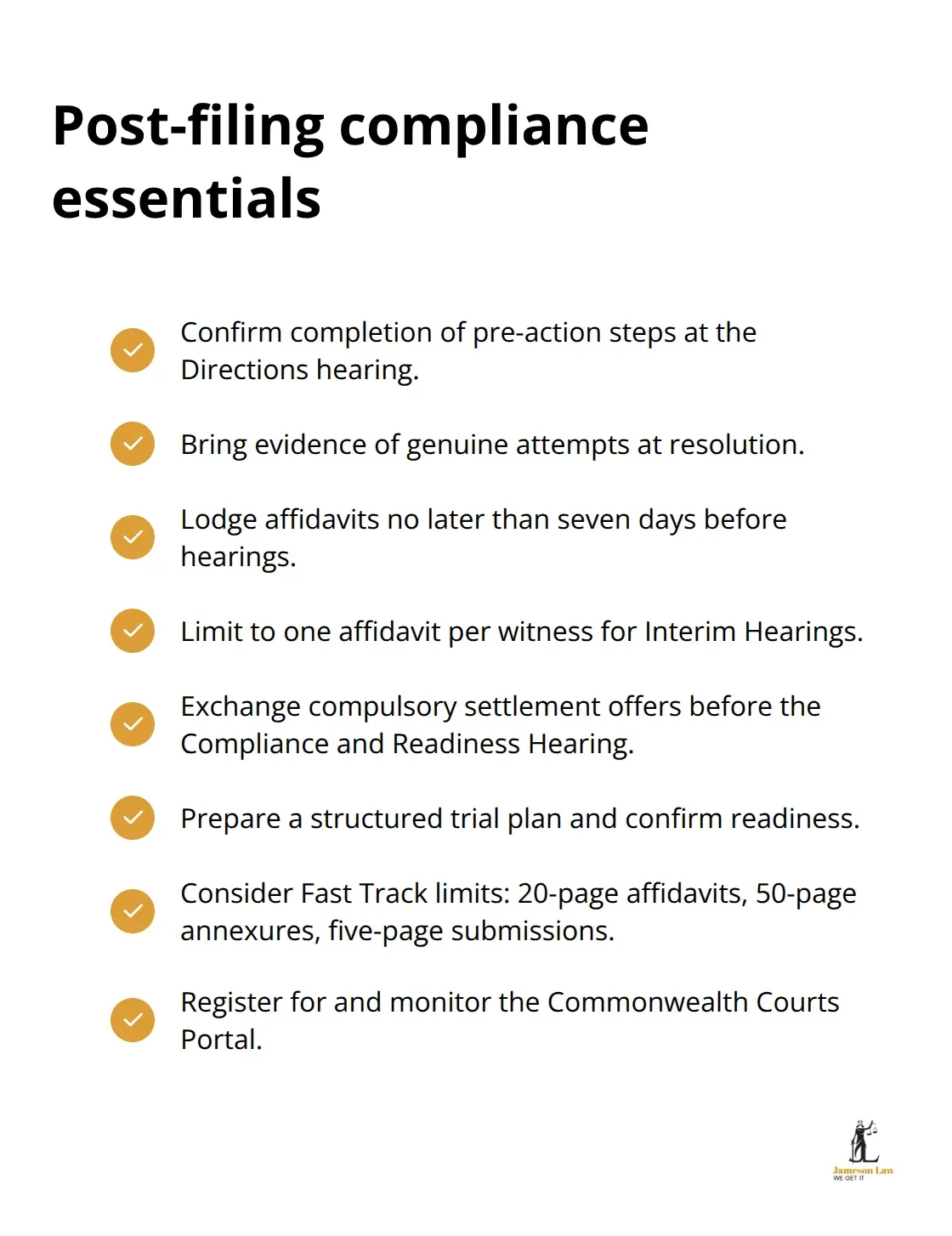
Filing your Initiating Application starts the clock. Before filing, you must satisfy pre-action requirements and obtain a Genuine Steps Certificate. For parenting matters, Section 60I of the Family Law Act requires you to attempt mediation first.
Accessing the Commonwealth Courts Portal
The Commonwealth Courts Portal serves as your gateway to all filings. Register immediately, as all subsequent court communication flows through this system.
Compliance Obligations After Filing
Your compliance obligations intensify after filing. The Compliance and Readiness Hearing around six months from filing demands finalised financial statements and a structured trial plan. Compulsory settlement offers in financial disputes must be exchanged before this hearing.
What Derails Family Law Cases?
Missed Deadlines Destroy Your Position
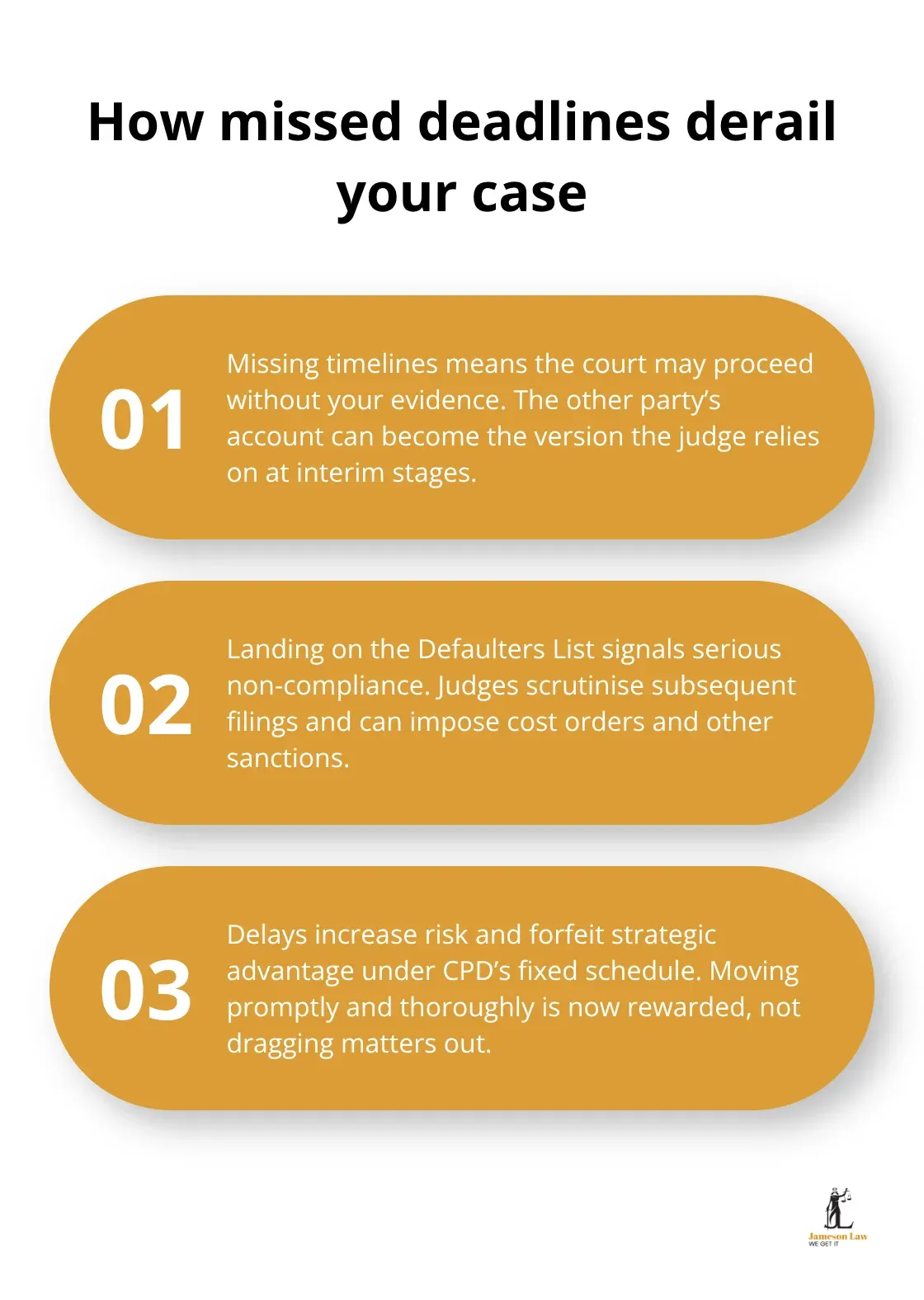
Deadline breaches destroy family law cases faster than substantive weaknesses. Parties who file affidavits late often find the court proceeds without their evidence. The FCFCOA operates under fixed timelines to ensure efficiency.
Incomplete Financial Disclosure Destroys Credibility
Financial disclosure must be complete from day one. If you discover missing superannuation or property months into proceedings, the court views this as bad faith. You cannot confirm trial readiness without secured property valuations.
Final Thoughts
The Central Practice Direction works because it forces parties to prepare thoroughly. The system eliminates delays and uncertainty. Understanding the fixed timelines positions you to navigate proceedings efficiently.
Most parties underestimate how quickly courts now expect cases to move. Professional legal guidance matters more than ever. We at Jameson Law work with you stage by stage to ensure you meet every deadline. Contact us today to discuss your situation and understand exactly what your case requires.