Section 65DAAA of the Family Law Act creates specific obligations that many parents overlook during family disputes. This provision, introduced in May 2024, directly impacts how you handle parenting arrangements and court proceedings when seeking to change existing orders.
We at Jameson Law see families struggle with these requirements daily. Understanding your obligations under this section can prevent costly legal complications and protect your parenting rights.
What Section 65DAAA Actually Does?
Section 65DAAA of the Family Law Act 1975 fundamentally changes how courts handle requests to modify existing parenting orders. This provision codifies the legal principle from the landmark Rice & Asplund case (1979). The section requires courts to consider whether a significant change in circumstances has occurred since the original parenting order was made before they can reconsider or vary those orders.
The Two-Stage Legal Test Courts Must Apply
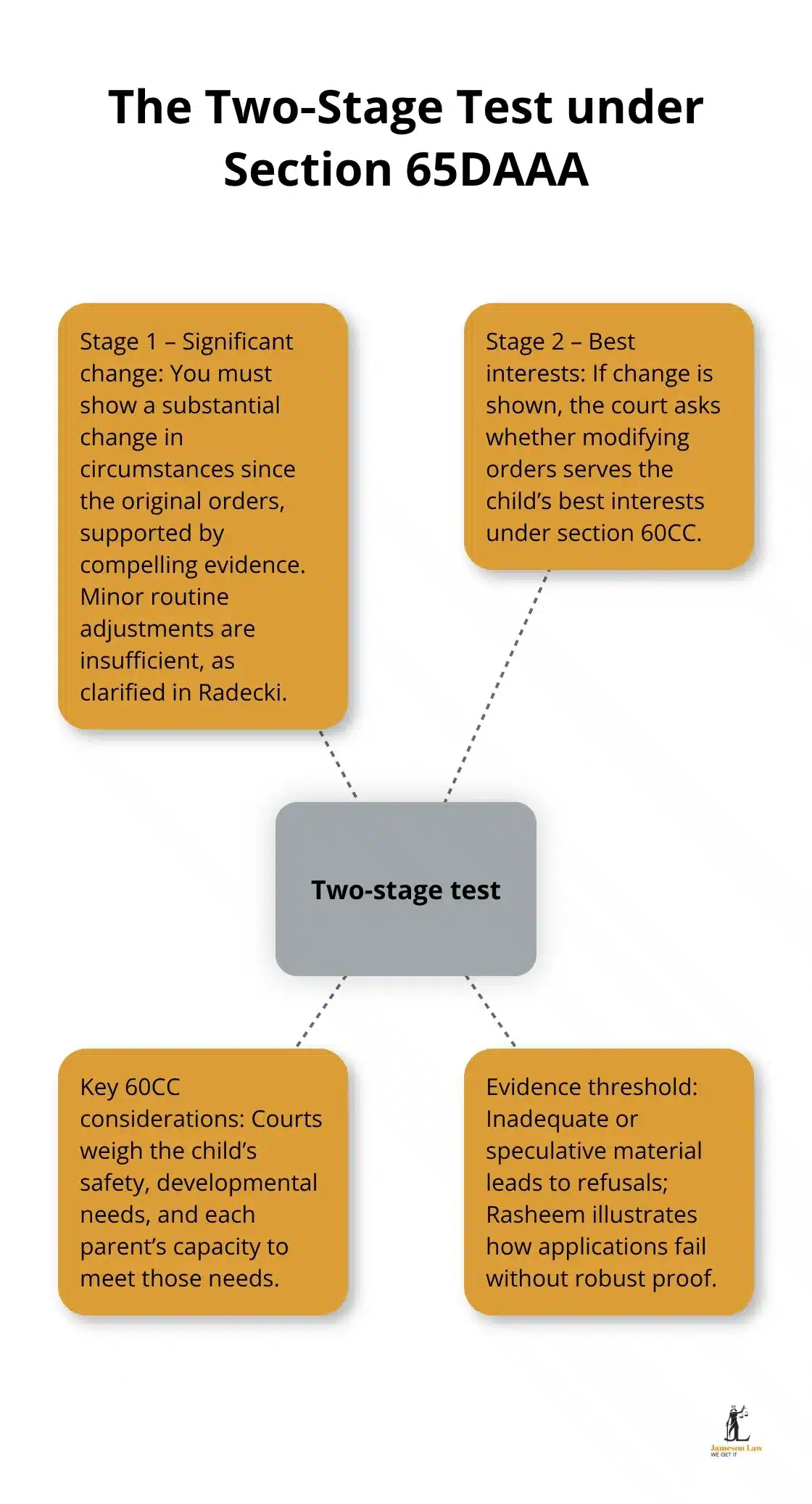
Courts now follow a structured two-stage process when parents seek to change final parenting orders. First, they must determine if significant changes in circumstances have occurred since the original order. The recent Radecki v Radecki [2024] case clarified that courts need compelling evidence of substantial changes, not minor adjustments to daily routines.
Second, even when changes exist, courts must confirm that modification of the orders serves the child’s best interests under Section 60CC factors. These factors include the child’s safety, developmental needs, and each parent’s capacity to meet those requirements.
Common Triggers for Successful Applications
Successful applications typically involve major life changes that courts recognise as significant. Relocation that wasn’t anticipated during the original proceedings frequently qualifies, particularly when it affects the child’s schooling or relationship with the other parent.
Changes in a parent’s mental health status, supported by professional assessments, can also meet the threshold. The evolution of older children’s views may constitute grounds for reconsideration, especially when considerable time has passed since the original orders.
What Courts Consider Insufficient Evidence
Courts consistently reject applications that lack substantial proof of changed circumstances. Minor schedule adjustments, temporary financial difficulties, or personal dissatisfaction with existing arrangements don’t meet the legal threshold. The court aims to prevent children from being exposed to continuous litigation.
How Do You Build a Winning Section 65DAAA Case?
Create an Evidence Portfolio That Courts Accept
Professional documentation forms the backbone of successful Section 65DAAA applications. Courts demand independent verification of claimed changes. Medical practitioners, psychologists, and school counsellors provide the credible evidence that judges rely upon when assessing significant changes.
Start to build your evidence portfolio immediately when changes occur. Current psychiatric evaluations carry more weight than historical assessments. School reports documenting academic decline linked to current arrangements provide compelling evidence.
Navigate Critical Deadlines and Procedures
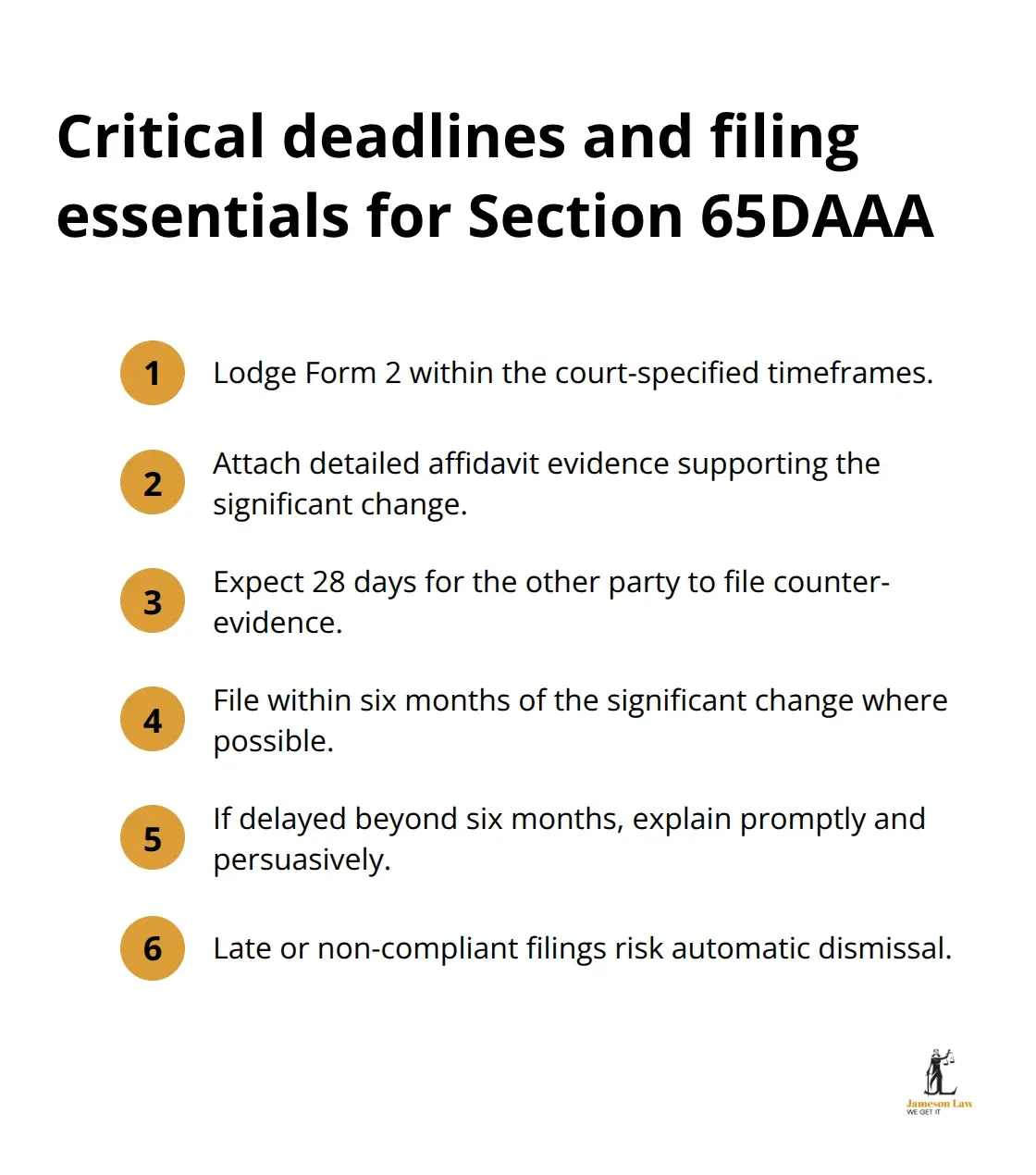
Section 65DAAA applications face strict procedural deadlines. The Federal Circuit and Family Court requires specific forms, and courts may summarily dismiss applications without merit. Applications must include detailed affidavit evidence supporting claims of significant change.
Avoid Application-Killing Errors
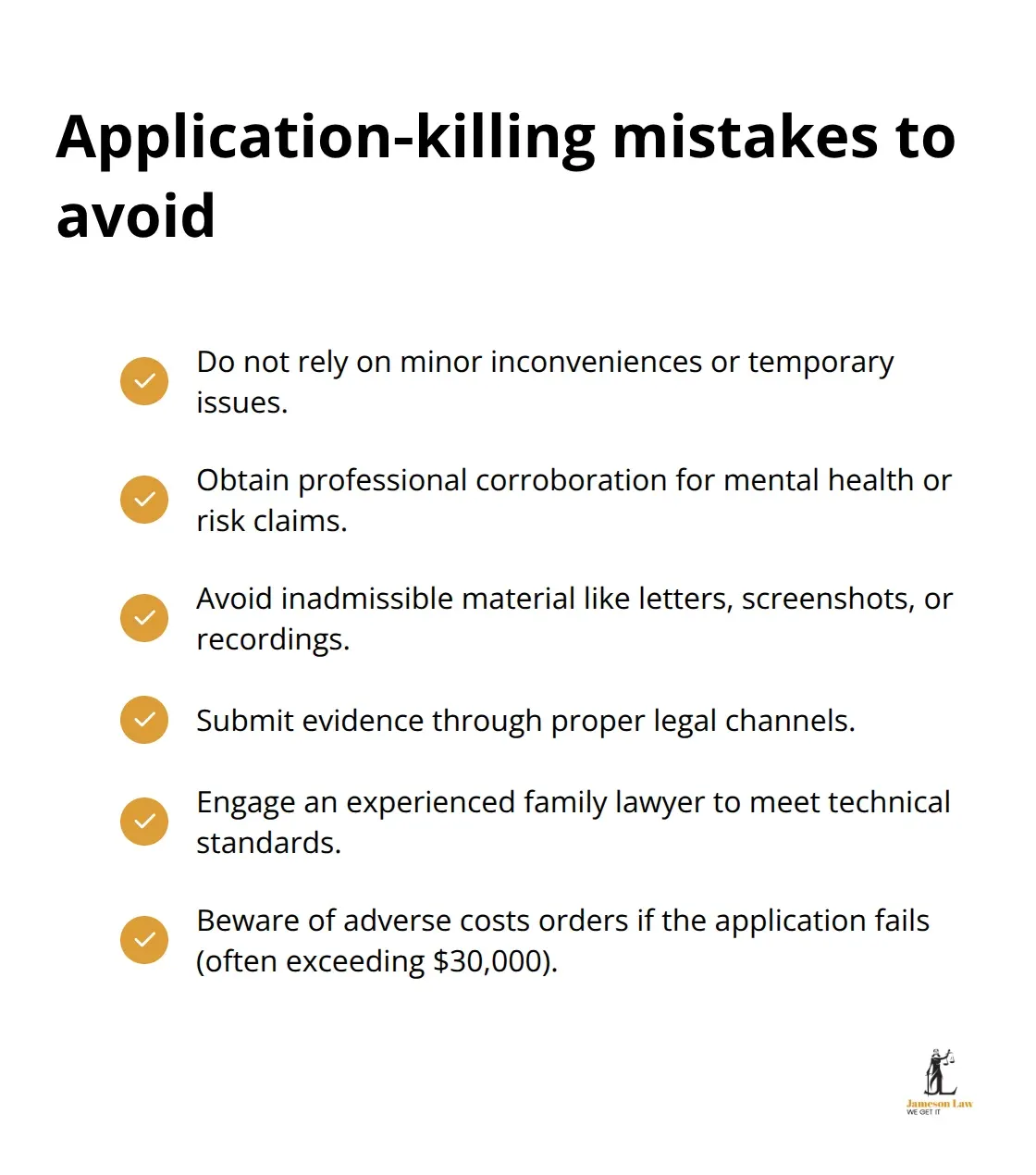
Parents consistently fail Section 65DAAA applications when they conflate minor inconveniences with significant changes. Present evidence through proper legal channels to prevent inadmissible submissions. Professional legal representation becomes essential when navigating these technical requirements.
What Happens to Your Case Under Section 65DAAA?
Section 65DAAA transforms your family law case from the moment you file an application to modify parenting orders. Courts now scrutinise every piece of evidence through this legislative framework.
Financial Consequences Hit Hard When Applications Fail
Failed Section 65DAAA applications can trigger adverse cost orders where losing parties pay the winner’s legal expenses. Courts impose these penalties to discourage frivolous applications that waste judicial resources.
Your Parenting Orders Face Immediate Scrutiny
Courts examine existing parenting orders through the Section 65DAAA lens. Judges compare current circumstances against the situation that existed when original orders were made. The court must be satisfied that reopening the case is in the child’s best interests.
Final Thoughts
Section 65DAAA of the Family Law Act demands rigorous preparation and professional expertise. The legislation’s strict evidentiary requirements make self-representation risky for parents seeking to modify parenting orders.
We at Jameson Law understand the complexities of Section 65DAAA applications. We help families assess whether their situations meet the legal threshold before proceeding to court. Contact us today to discuss your specific circumstances and explore your legal options.