Australian visa processing delays are creating real challenges for migrants and businesses planning moves to Australia. The Department of Home Affairs is currently managing unprecedented application volumes, with some visa categories facing wait times extending well beyond standard timeframes.
At Jameson Law, we’ve seen firsthand how delays impact families, skilled workers, and organisations. This guide walks you through practical strategies to manage your application and reduce the risk of extended waiting periods.
What’s Really Causing Visa Delays Right Now
The Department of Home Affairs processes visa applications under unprecedented strain. As of early 2026, the backlog from December 2025 continues to affect new lodgements across multiple visa categories. Student visas (Subclass 500) face substantial delays due to higher application volumes combined with stricter Genuine Student and financial verification checks. Skilled migration visas (Subclasses 189, 190, 491) experience processing timelines that extend well into late 2026, driven by multiple assessment steps and state nomination requirements. Partner visas (Subclasses 309/100 and 820/801) remain among the longest-processing visas, often exceeding 17 months for provisional partnerships due to stringent relationship evidence requirements. Temporary work visas (Subclasses 482 and 407) show mixed results-accredited sponsor cases move faster than applications from new or unaccredited sponsors. The core issue is not simply volume. It’s the interaction between staffing constraints, heightened compliance verification, and the structural complexity of each visa stream.
Missing Documentation Stops Your Application Cold
Missing or incomplete documentation represents the single largest preventable delay factor. The Department pauses processing to request further information, which resets your timeline significantly. Common culprits include expired passports, outdated police certificates, expired medical examinations, low-quality document scans, missing employment references, and non-English documents lacking NAATI-certified translations. Police certificates from every country you’ve lived in for 12 months or more since age 16 become a major delay trigger if you source them late. Health checks sometimes require additional tests or specialist reviews, which external agencies control entirely. For student visas, a weak Genuine Student statement that fails to articulate how your course aligns with your future goals invites closer scrutiny. For partner visas, insufficient relationship evidence forces the Department to request comprehensive documentation packs, extending processing by months. External agency checks for health, character, and national security remain unpredictable-you cannot control their timelines, but you can control whether your submission is decision-ready from day one.
Financial and Personal Consequences Hit Hard
Visa delays carry concrete financial and personal consequences. Students lose university places if approvals arrive after course start dates, forcing course deferrals and additional accommodation costs. Skilled workers experience deferred salary, delayed job start dates, and the risk of employers withdrawing offers if the visa timeline becomes uncertain. Families planning relocation face extended accommodation commitments, currency fluctuations affecting visa fees, and disrupted childcare and schooling arrangements. For employers sponsoring workers, uncertainty around start dates complicates workforce planning and may require temporary staffing solutions. The emotional toll of prolonged waiting affects decisions around resignations, lease terminations, and family separations. Partner visa applicants endure extended separation periods while relationship evidence undergoes assessment. The December 2025 backlog bleeds into 2026 lodgements, meaning even complete applications face inherited queues ahead of them. This reality demands that you plan for processing timelines substantially longer than the Department’s published median times.
What Happens Next
Understanding why delays occur positions you to take control of your application. The next section outlines concrete strategies that reduce your risk of extended waiting periods and help you prepare a submission that moves through the system efficiently.
How to Stop Your Visa Application Dead in Its Tracks
Incomplete Documentation Triggers Delays Every Time
The fastest way to extend your processing timeline is to submit incomplete documentation. We see this repeatedly across student, skilled migration, and partner visa applications. The Department of Home Affairs explicitly states that submitting all necessary supporting documents at the time of application helps ensure faster processing. Yet applicants routinely lodge with missing police certificates, expired passports, unverified financial statements, or non-English documents without certified translations. Each missing item triggers a Request for Further Information, which pauses your processing clock entirely. The Department then waits for your response, and you lose weeks or months.
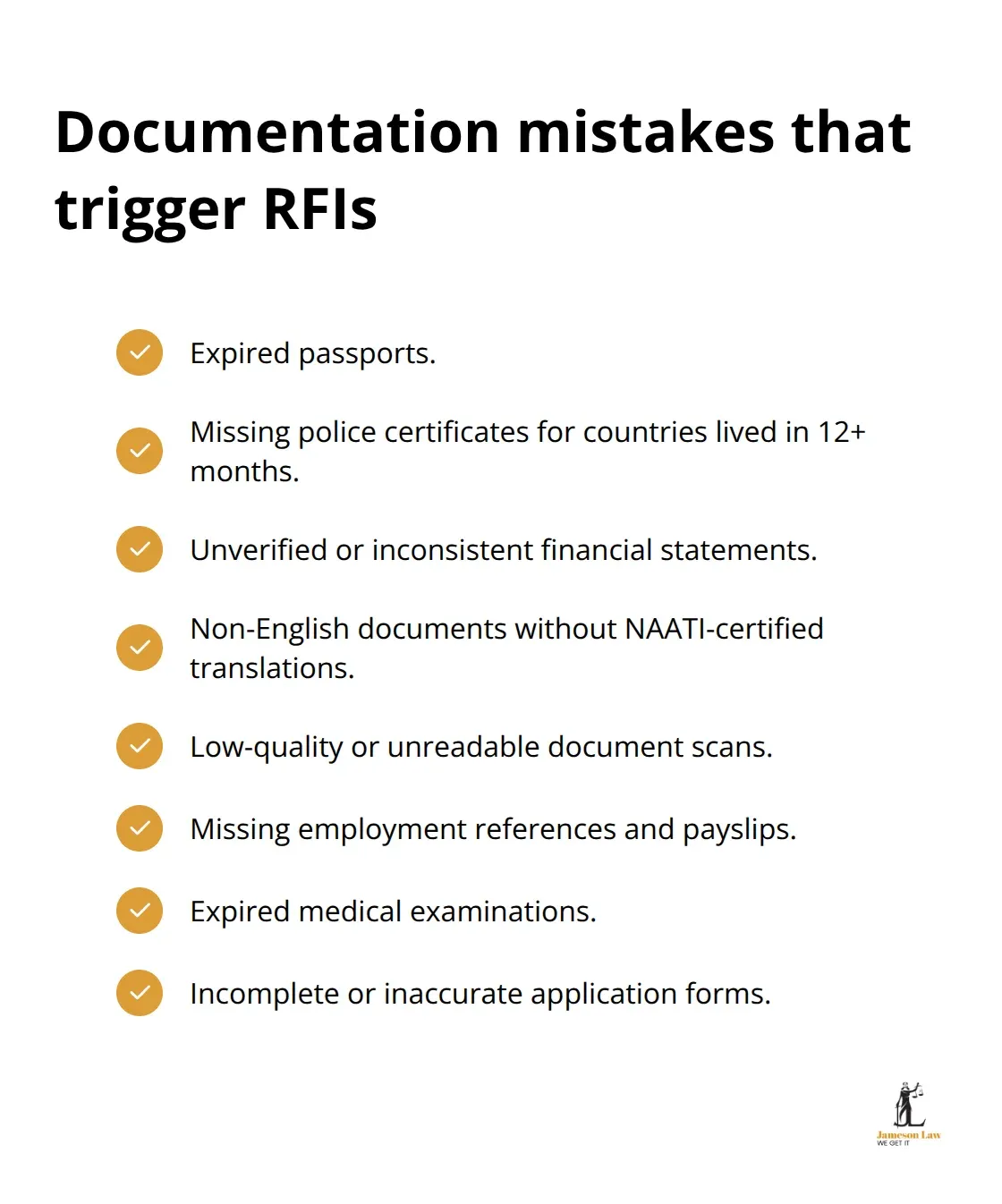
Police checks from every country where you have lived for 12 months or more since age 16 are non-negotiable. Many applicants source these late, only to discover that some countries take months to issue certificates. Health examinations must be completed by Department-approved panel doctors, and if the initial examination flags concerns, specialists may request additional tests that external agencies control entirely.
What Makes Student and Skilled Migration Applications Stall
For student visa applications, the Genuine Student statement must clearly articulate how your chosen course connects to your career trajectory and future plans. Vague statements that fail to address this connection invite deeper scrutiny and additional information requests. For skilled migration visas, your employment history documentation must be contemporaneous and verifiable-payslips, contracts, and references from supervisors carry far more weight than general job descriptions.
Partner Visas Require Coherent Relationship Evidence
For partner visas, relationship evidence must tell a coherent story with clear milestones. Scattered photos and messages without context force Department officers to work harder to understand your relationship, creating delays. Relationship evidence that demonstrates genuine connection and continuity over time moves through assessment faster than disorganised submissions.
Document Quality and Format Matter Significantly
Online lodgement substantially outpaces paper applications. The Department encourages online lodgement because it streamlines processing compared with paper-based workflows. High-quality document scans matter enormously-blurry images, cropped pages, or documents scanned at odd angles create friction during assessment. Certified translations for non-English documents must come from accredited translators, not informal sources. Incomplete or incorrectly completed application forms create unnecessary delays because officers cannot proceed until forms are accurate and comprehensive.
For applications involving multiple family members or complex eligibility criteria, manual officer review becomes necessary, extending timelines substantially. Accredited sponsor status accelerates temporary work visa processing, while applications from new or unaccredited sponsors move slower due to additional compliance verification. The Department updates processing times monthly as decisions are made and migration programme places shift, so published median times for permanent skilled visas of 11 months and partner provisional visas of 17 months represent typical durations, not guarantees. Your individual circumstances, work background, and any country-specific security checks heavily influence your personal processing speed.
Responding Promptly to Department Requests Prevents Cascading Delays
Responding promptly to any Department requests within specified timeframes is critical. Delayed responses can lead to decisions based on incomplete information or outright refusals. A single slow response compounds delays across your entire application timeline. The quality of your submission determines whether the Department processes your application smoothly or requests additional information multiple times. Professional guidance helps applicants navigate these requirements systematically, ensuring submissions are decision-ready from lodgement and reducing the likelihood of information requests that derail timelines. Understanding these pitfalls positions you to take concrete action before you lodge, which brings us to the practical steps that actually prevent delays from occurring in the first place.
How to Control Your Application Timeline
Start your visa application months earlier than you think necessary. The Department of Home Affairs publishes processing times that represent median durations, not guarantees, and they shift monthly as migration programme places fill and policy priorities change. Student visas currently process in a median of 29 days, but this figure masks the reality that applications arriving without complete financial documentation or weak Genuine Student statements face substantially longer waits. Skilled migration visas officially carry median times extending into late 2026, yet this timeline assumes your skills assessment, state nomination, and employment verification are already complete before you lodge. Partner visas routinely exceed 17 months because relationship evidence assessment cannot be rushed. The practical reality is that you should lodge 6 to 12 months before your intended travel or start date, depending on your visa category. This buffer absorbs the inherited backlog from previous months, external agency delays beyond your control, and any information requests the Department issues. Students planning 2026 course intakes should have submitted applications by mid-2025; those planning 2027 intakes should lodge by mid-2026. Skilled migrants should monitor invitation rounds closely and maintain valid skills assessments and current employment evidence throughout the waiting period, recognising that processing queues extend well beyond published estimates. Temporary work visa applicants must avoid committing to fixed employment start dates until the Department grants your visa, because accredited sponsor cases move faster than applications from new or unaccredited sponsors, creating unpredictable timelines.
Know Exactly What Your Visa Category Requires Before You Lodge
Each visa category demands different documentation and verification pathways. Student visa applications hinge on demonstrating genuine student intent, which means your statement must explicitly connect your chosen course to specific career outcomes and explain how this qualification advances your professional trajectory. Financial documentation must be consistent, current, and easy to verify; conflicting bank statements or vague funding sources invite additional scrutiny. Skilled migration applications require employment history verification that spans years, with payslips, tax returns, employment contracts, and supervisor references from every position you claim. The Department cross-checks employment claims against tax office records and professional registration databases, so discrepancies create delays. Partner visa applications demand relationship evidence that tells a coherent story with clear milestones-photos, messages, joint financial arrangements, and travel history together should demonstrate genuine connection over time, not scattered fragments. Temporary work visa applications require employer documentation proving the role cannot be filled by Australian workers, along with evidence that you possess the qualifications and experience for the position. Police certificates from every country where you have lived for 12 months or more since age 16 become non-negotiable for all visa types; sourcing these late is a common delay trigger because some countries take months to issue certificates. The Department’s visa processing times guide should be your starting reference, but you must then cross-reference the specific subclass checklist because differences between visa subclasses can be substantial. For instance, visitor visa subclasses 600, 601, and 651 have combined median processing times under 1 day, yet the subclass 600 visa can take substantially longer than 601 or 651, so you must check the exact subclass timeframe and apply well before your travel date. Online lodgement substantially outpaces paper applications because it streamlines processing, so lodge online rather than by post. Your application must be decision-ready from the moment you submit it, meaning all documents are high-quality scans, non-English documents carry certified translations, and every form field is completed accurately and comprehensively.
Engage Professional Guidance Early to Avoid Costly Mistakes
Complex applications involving multiple family members, unclear eligibility criteria, or applications from new or unaccredited sponsors benefit substantially from professional migration guidance before you lodge. A registered Australian migration agent can review your circumstances, identify documentation gaps, and help you construct a submission that minimises the likelihood of information requests. The cost of professional guidance is far lower than the cost of delays that disrupt your study start date, defer your salary, or extend your family separation. An agent can also help you understand whether your circumstances might trigger additional security checks or country-specific verification that external agencies control, allowing you to prepare realistic timelines and backup plans. For partner visas, professional guidance helps you curate relationship evidence strategically, presenting your case in the strongest possible light rather than overwhelming officers with disorganised documentation. For skilled migration applications, an agent can ensure your employment history documentation is contemporaneous and verifiable, reducing the risk that the Department requests additional references or employment verification. The Department’s published processing times assume straightforward applications with complete documentation; your application falls outside this assumption if it requires manual officer review or multiple information requests. Professional guidance positions your application to move through the system efficiently by anticipating Department concerns and addressing them proactively rather than reactively.
Final Thoughts
Australian visa processing delays demand proactive planning rather than reactive responses. You control three core actions that directly reduce delay risk: submit complete, decision-ready documentation from day one; understand your specific visa category requirements before you lodge; and engage professional guidance early to identify gaps and prevent costly mistakes. These steps eliminate information requests that reset your processing timeline and extend your waiting period.
Published processing times represent median durations, not guarantees, and your personal timeline depends on application completeness, documentation quality, external agency responsiveness, and whether your circumstances trigger additional verification. Start your application months earlier than you think necessary to build a buffer against inherited backlogs and unforeseen delays. For students, this means lodging well before course intake deadlines; for skilled migrants, this means maintaining valid skills assessments and monitoring invitation rounds throughout the waiting period; for partner visa applicants, this means curating relationship evidence strategically and organising documentation coherently from the outset.
Professional migration guidance reduces refusal risk, minimises information requests, and helps you set realistic timelines for Australian visa processing delays. We at Jameson Law work with individuals and businesses navigating Australian visa requirements, and we understand how delays disrupt study plans, defer employment, and complicate family relocation. Contact Jameson Law to discuss your situation and explore how professional support can strengthen your application and reduce delay risk.