A visa refusal can feel like a dead end, but it’s not. At Jameson Law, we know that Australian visa refusal appeal rights give you real pathways to challenge a decision you believe is wrong.
This guide walks you through your options, from understanding why your application was refused to navigating the appeals process with confidence.
Why Your Visa Gets Refused
Visa refusals happen for specific, documented reasons, not random rejections. The Department of Home Affairs assesses every application against strict criteria, and when something doesn’t align, they refuse it. Your appeal strategy depends on understanding what triggered the refusal.
Identity and False Information Issues
Identity issues rank among the most common reasons applications fail. Public Interest Criterion 4020 (PIC 4020) covers identity verification and false or misleading information. If you cannot satisfy identity requirements or the Department suspects bogus documents, your visa faces refusal under this criterion.
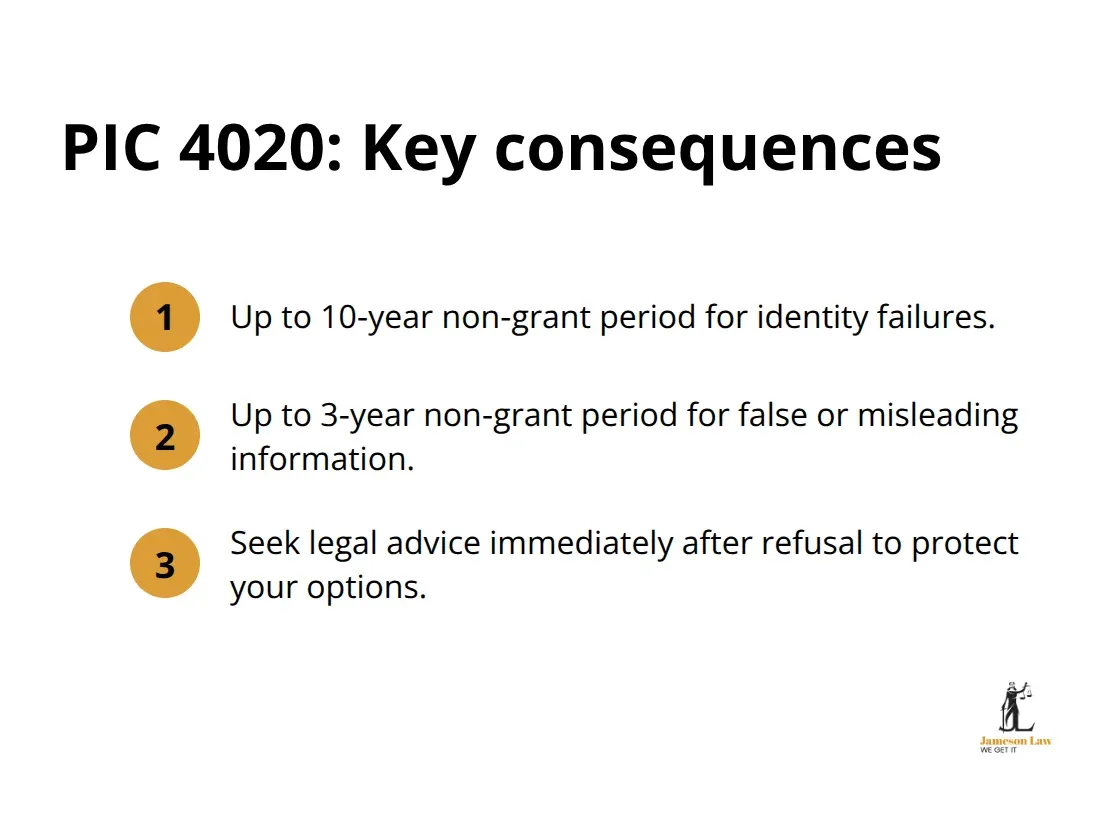
A PIC 4020 refusal carries serious consequences. You face a non-grant period of up to 10 years for identity failures, or up to 3 years for false information related to a visa you held in the prior 12 months. This means you cannot apply for most visas during that period. You need legal advice immediately after refusal-waiting costs you time and options.
Character-Based Refusals and Tight Deadlines
Character-based refusals happen when the Department believes you pose a risk to Australian community safety or security. These decisions carry strict appeal deadlines: you have only nine days to lodge an appeal with the Administrative Review Tribunal, and this deadline cannot be extended. Missing this window closes your appeal rights permanently.
Some cancellations are mandatory, meaning the Department has no discretion-they must cancel your visa. Mandatory cancellations include serious criminal convictions or certain safety-related grounds, and the Tribunal cannot review these decisions. However, you have 28 days to ask the Department of Home Affairs to revoke a mandatory cancellation. If they refuse revocation, you then have nine days to appeal that refusal to the Administrative Review Tribunal. This two-step process matters because it represents your only pathway when mandatory grounds apply.
Refusals Across Common Visa Types
Partner visas often fail due to relationship authenticity concerns or insufficient evidence of genuine commitment. Skilled migration visas get refused when your qualifications don’t match the assessed occupation or skills assessment requirements aren’t met. Student visas face refusal when you cannot demonstrate financial capacity or when character concerns emerge. Temporary work visas, family visas, and visitor visas all experience refusals regularly, though the reasons vary by visa type.
Non-Mandatory Character Grounds and Review Costs
Non-mandatory character cancellations can be reviewed directly by the Tribunal. The application fee for reviewing a character-based refusal or cancellation is $1,121. Understanding whether your situation involves mandatory grounds determines your entire appeal pathway-this distinction shapes whether you face a two-step process or can appeal directly.
The nine-day deadline for character-based appeals and the 28-day window for mandatory cancellation revocation requests mean you must act fast. Getting advice within days of refusal makes the difference between keeping your case alive and losing your rights permanently. Your next step involves understanding which appeal pathway applies to your specific refusal.
How the Administrative Review Tribunal Works
The Administrative Review Tribunal replaced the AAT and IAA on 14 October 2024, and this shift matters for your appeal strategy. The ART now handles all migration and protection visa reviews, with cases automatically transferred from the old system. Understanding how the ART operates gives you a realistic picture of what happens after you lodge your appeal and what timelines to expect. The process is not quick, but it is structured, and knowing the steps removes uncertainty from an already stressful situation.
Getting Your Appeal Lodged Correctly
You must lodge an appeal with the ART with precision because deadlines are non-negotiable. For protection visas refused while you are in immigration detention, you have 14 days to lodge your appeal; if you are not detained, the window extends to 28 days. For character-based refusals or cancellations, the deadline is nine days, and the ART cannot extend it under any circumstances. Missing these windows means your appeal right disappears permanently.
The ART application fee varies by visa type: protection visa reviews cost nothing to lodge. General visa reviews such as visitor, student, partner, family, business, or skilled visas carry a standard fee of $3,496, though you can request a 50% reduction if paying would cause severe financial hardship. Character-based refusal or cancellation reviews cost $1,121, reduced to $100 in concessional circumstances.
You must collect evidence early. Start gathering documents, statutory declarations, and supporting materials immediately after your refusal notice arrives. The ART will not wait, and weak evidence submitted late weakens your case significantly.
Realistic Processing Timeframes and What They Mean
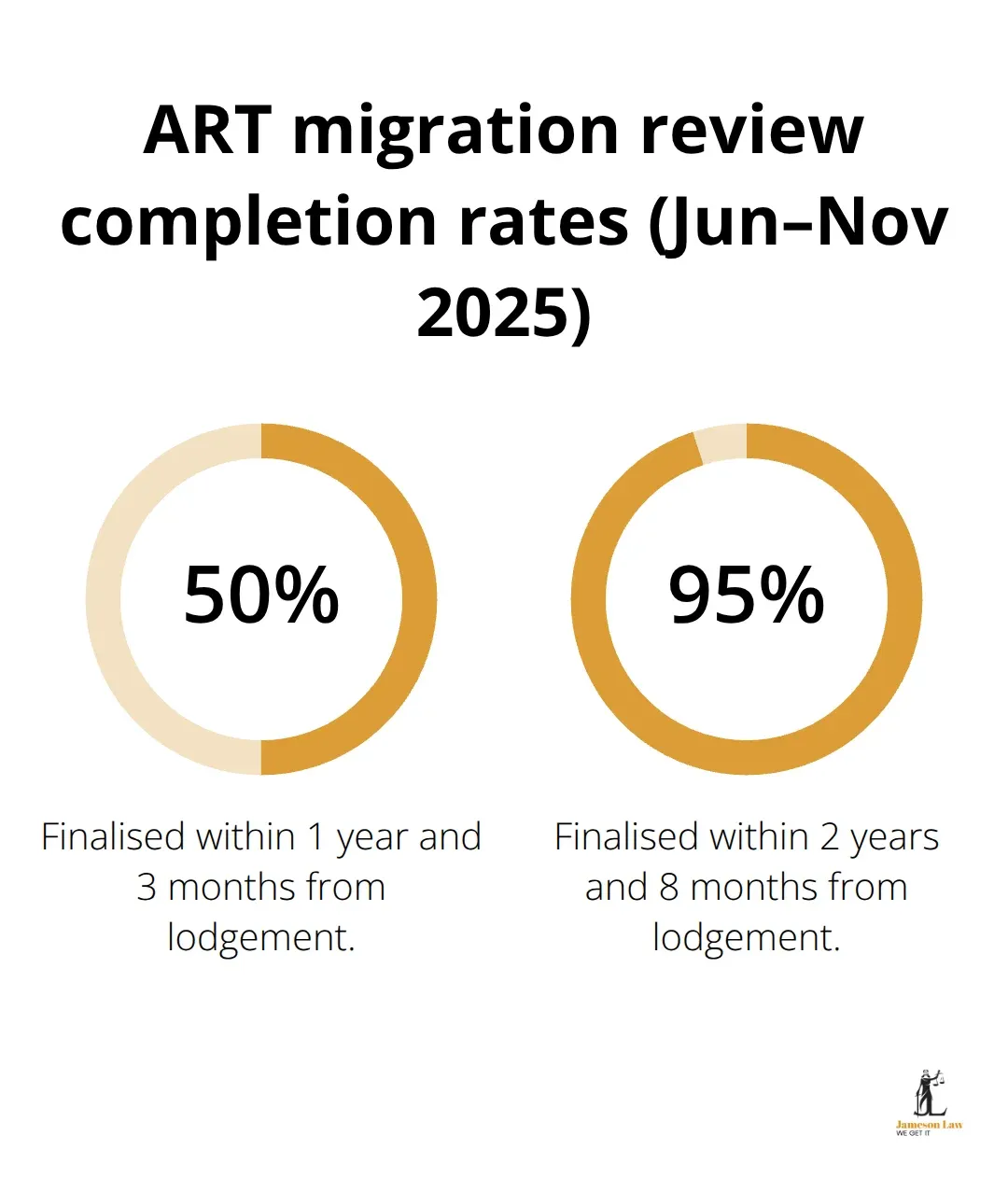
Processing times at the ART vary dramatically depending on your visa category. Data from reviews finalised between 1 June and 30 November 2025 shows that 50% of all migration cases combined were finalised within one year and three months from lodgement, with 95% finalised within two years and eight months.
However, these figures hide important variations. Bridging visa reviews move fastest, finalised within 10 days at the median. Student cancellation reviews sit around one year and two months. Partner visa reviews are among the slowest, with a median of two years and five months. Protection and refugee reviews are substantially longer, with 50% finalised within three years and seven months and 95% within five years and five months.
These timeframes reflect real tribunal workload constraints, the complexity of your case, and the number of tribunal members available. The ART publishes caseload data on its website, and you should check these figures regularly to understand where your case sits in the queue. Plan your life around these timelines rather than hoping for faster outcomes. If you are on a temporary visa awaiting review, your work and study rights may depend on understanding exactly how long the process takes (your visa conditions do not pause while your appeal progresses). Use Visa Entitlement Verification Online to check your current visa details and conditions regularly during the review process.
Preparing for Your Hearing and What Actually Happens
The ART offers different hearing formats depending on your case complexity and circumstances. You may have a hearing before a tribunal member, or your case may be decided on the written submissions you provide. Language support is available at no cost if English is not your first language, and interpreter services help you communicate effectively during proceedings. Accessibility services are also provided to ensure you can participate fully.
Hearings involve presenting your evidence, making oral submissions about why the original decision was wrong, and answering questions from the tribunal member. The member then considers the decision and issues one of three outcomes: the original decision is upheld, the decision is varied, or the decision is set aside entirely.
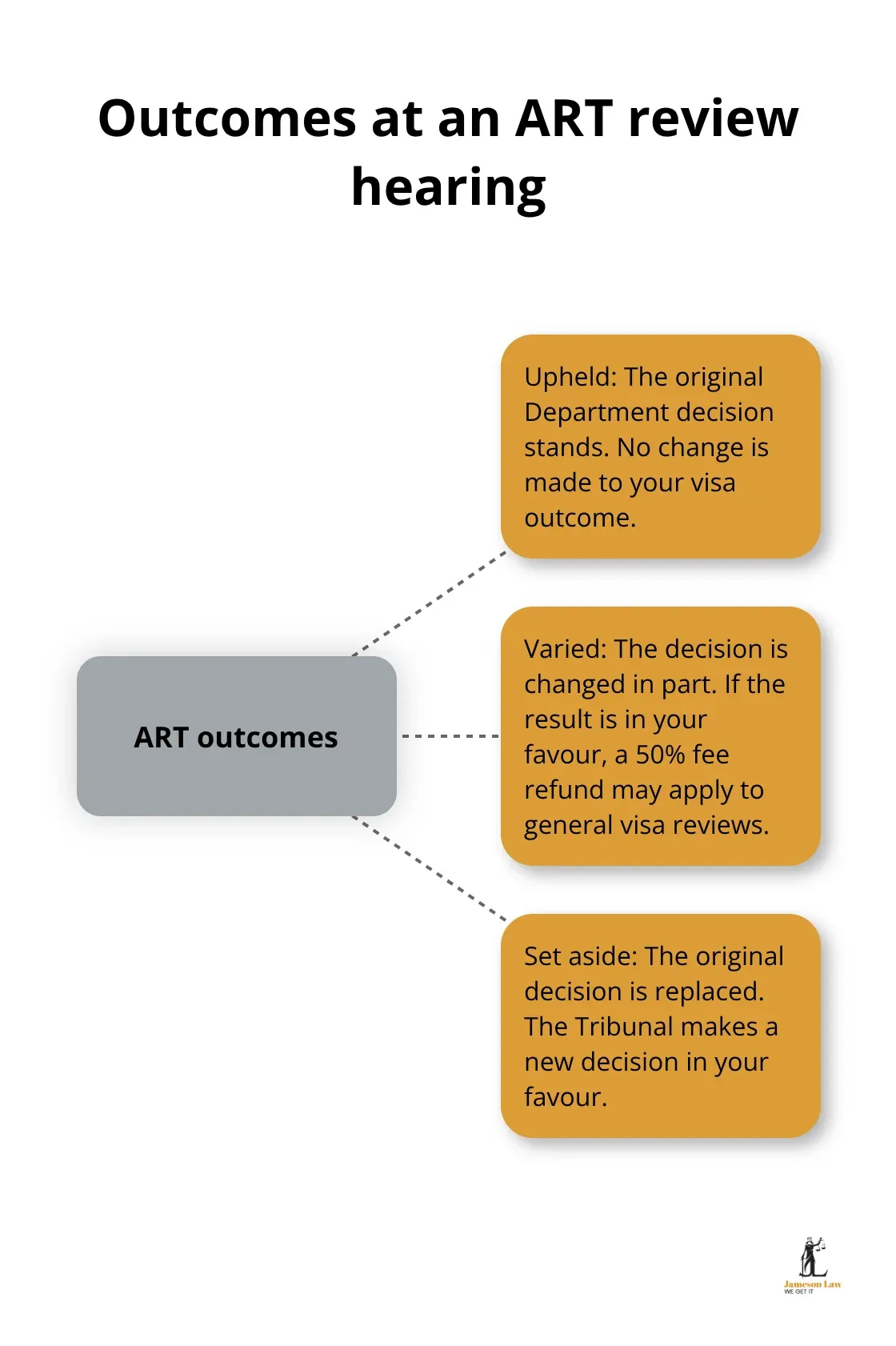
If the ART decides in your favour on a general visa review, 50% of the full fee is refunded. If the decision is found invalid, you receive a full refund.
What Happens If You Lose at the ART
Losing at the ART is not the end, though your options narrow significantly. You may appeal to the Federal Court of Australia, but only on grounds that the ART made a legal error, not on the merits of your case. Federal Court appeals are expensive and require strong legal representation. Most people who reach the Federal Court stage need a specialist migration lawyer who understands the narrow grounds available for challenge (legal error, procedural fairness, or jurisdictional issues). The Federal Court will not reconsider the facts of your case or the tribunal member’s assessment of your evidence-it will only examine whether the ART applied the law correctly.
Understanding your Federal Court options requires careful analysis of the ART’s reasons for decision. A migration lawyer can review the tribunal’s findings and advise whether a legal error occurred that a court might overturn. This decision should come only after thorough examination of the judgment and realistic assessment of your prospects. If you decide to pursue a Federal Court appeal, you need experienced legal representation from the outset because the procedural rules are strict and the stakes are high.
Getting Legal Help for Your Appeal
You need a migration lawyer involved in your case before you lodge your appeal with the ART, not after. The nine-day deadline for character-based refusals and the tight windows for protection visa appeals mean waiting costs you critical time to collect evidence, identify legal errors in the Department’s decision, and construct a compelling submission. A lawyer reviews the refusal letter, identifies weaknesses in the Department’s reasoning, and spots procedural fairness breaches that the ART can overturn. Without this analysis upfront, you submit a weak appeal and waste the application fee.
Spotting Legal Errors and Procedural Breaches
Your lawyer’s first task involves spotting legal errors and procedural breaches in the original decision. The Department must follow proper process, notify you of concerns, give you a chance to respond before refusing your application, and apply the correct legal test to your circumstances. Many refusals contain procedural errors that make them invalid, even when the Department’s underlying concerns have merit.
A lawyer reads the refusal letter line by line, cross-references it against the Migration Act 1958 and relevant policy, and identifies what went wrong. For character-based refusals, lawyers understand the distinction between mandatory and non-mandatory grounds because this determines your entire pathway forward. For identity-related refusals under PIC 4020, a lawyer assesses whether the Department actually proved you failed identity requirements or whether they simply suspected it without evidence. This analysis shapes your appeal strategy and determines whether you challenge the decision head-on or focus on demonstrating compliance now.
Accessing Funded Legal Assistance
Victoria Legal Aid offers assistance with protection visa appeals. Contact them at PVAssistance@vla.vic.gov.au or 1300 792 387 or use their online chat to explore whether you qualify for funded representation. They also provide language support and interpreter services throughout the appeal process, which removes a major barrier for non-English speakers navigating complex tribunal procedures.
Collecting and Presenting Evidence Strategically
Your lawyer coordinates evidence collection within the tight timeframes the ART imposes. You cannot submit evidence late and expect the ART to consider it, so you must collect documents, statutory declarations, character references, and supporting materials immediately after lodging your appeal. A lawyer tells you exactly which evidence matters for your specific refusal reason, which documents waste space, and how to present information so the tribunal member understands your case quickly.
For partner visa refusals based on relationship authenticity concerns, this means collecting joint financial records, communication histories, photos, and witness statements that demonstrate genuine commitment. For skilled migration refusals, it means obtaining updated skills assessments, employment references, and qualifications documentation that addresses the original concerns. For character-based refusals, it means collecting evidence of rehabilitation, community ties, employment, and character references that outweigh the Department’s concerns. A weak submission loses even when the law is on your side. A strong submission with targeted evidence wins cases that seemed impossible.
Representation at Hearings and Appeals
Most ART hearings proceed with legal representation, and tribunal members expect applicants with complex cases to have lawyers present. A lawyer conducts your examination-in-chief, cross-examines any Department witnesses, makes oral submissions about legal principles and how they apply to your facts, and responds to tribunal member questions. This removes the burden from you and ensures your case receives presentation by someone who understands migration law and tribunal procedure.
If you lose at the ART, your lawyer assesses whether a Federal Court appeal on legal error grounds has prospects of success. This assessment remains honest and realistic because pursuing a doomed Federal Court appeal wastes money and time. If prospects exist, your lawyer prepares the application to the Federal Court and manages the appellate process. Federal Court appeals require specialist representation because the procedure differs from tribunal appeals and the grounds for challenge are narrow.
Final Thoughts
A visa refusal does not end your immigration journey. Your Australian visa refusal appeal rights provide a structured pathway to challenge a decision, and the Administrative Review Tribunal exists specifically to review Department of Home Affairs decisions that contain errors or lack proper foundation. Tribunal members overturn refusals regularly when the original decision failed to follow correct procedure or when new evidence demonstrates your compliance with visa requirements.
Your immediate action determines your outcome. If you received a character-based refusal, you have nine days to lodge an appeal-this deadline cannot move. If your visa was refused on identity grounds under PIC 4020, you face a non-grant period that could last years, making urgent legal advice essential. If you hold a protection visa refusal, your window depends on whether you are in immigration detention, but missing your deadline closes your appeal rights permanently.
Contact Jameson Law before you lodge your appeal. Our migration lawyers identify legal errors in the Department’s decision, spot procedural breaches that make the refusal invalid, and construct submissions that present your case compellingly to the tribunal. We understand that visa refusals create uncertainty, and your refusal does not define your immigration future-the right legal strategy, submitted within required timeframes with compelling evidence, gives you a genuine chance to overturn the decision and move forward with your goals in Australia.