Buying a home in NSW involves more than just finding the right property and making an offer. You need to navigate the legal side of things, and that’s where conveyancing comes in.
At Jameson Law, we’ve helped countless buyers understand this process. This guide walks you through each stage, from inspections to settlement, so you know exactly what to expect and how much it’ll cost.
What Conveyancing Actually Covers
Conveyancing transfers property ownership from the seller to you. It’s not just paperwork-it’s a thorough examination of everything tied to that property, from the title to hidden debts. The process involves reviewing the contract for sale, conducting title searches through NSW Land Registry Services, checking for outstanding mortgages or land tax obligations, arranging building and pest inspections, obtaining strata reports if applicable, calculating stamp duty, and coordinating the electronic settlement via PEXA. You’ll also need searches for council rates, water and sewer obligations, and any government interests that could affect the land-information from local councils, Sydney Water, and Transport for NSW. The conveyancer uncovers what wasn’t disclosed, like fence disputes or illegal building work, before you’re legally bound. NSW law requires this under the Conveyancing Act 1919 and Real Property Act 1900, which means the process is standardised but also non-negotiable. Most buyers underestimate how many moving parts exist; a conveyancer coordinates with your lender, the seller’s conveyancer, government bodies, and PEXA to prevent anything from falling through the cracks.
Who Can Handle Your Conveyancing
In NSW, both licensed conveyancers and solicitors can handle your conveyancing, and both must carry professional indemnity insurance-a legal requirement that protects you if they make a mistake or act negligently. NSW Fair Trading regulates licensed conveyancers; the Law Society of NSW regulates solicitors. The difference in fees can be significant, so it’s worth comparing quotes from both. If a conveyancer mishandles your funds, you may access the Property Services Compensation Fund administered by NSW Fair Trading, adding another layer of protection.
Why DIY Conveyancing Fails
Never attempt conveyancing yourself unless you’re transferring property between family members and have expert guidance; DIY conveyancing leaves you with zero professional indemnity insurance and exposes you to costly errors. Misinterpreting local zoning restrictions, easements, or covenants-especially in areas like Byron Shire with complex planning overlays-can derail a deal entirely. Small documentation errors like misspelled names or incorrect lot numbers can void contracts or delay settlement. The upfront savings on legal fees rarely offset the risk of disputes, penalty interest for late settlements, or disputes that require litigation. For the vast majority of NSW property transactions, hiring a licensed conveyancer or solicitor is the only sensible choice.
What Happens Next in Your Purchase
Once you understand what conveyancing covers and who handles it, you’re ready to move through the actual process itself. The next stage begins before you even sign a contract-the pre-contract phase where inspections and property checks happen.
How to Navigate the Conveyancing Process
The conveyancing process in NSW unfolds across three distinct phases, each with specific actions and deadlines that directly affect your settlement. Understanding what happens at each stage helps you stay on track and avoid costly delays.

Pre-Contract Phase: Inspections and Checks
The pre-contract phase starts the moment you decide to make an offer. Before you sign anything, you must arrange a building and pest inspection immediately-this typically costs between $400 and $800 and identifies structural or pest risks that could cost thousands to fix later. If you’re buying an apartment or townhouse, request a strata inspection report; this document reveals the owners corporation’s financial health, upcoming levies, and any disputes that could drain your budget after purchase.
Order a title search through NSW Land Registry Services to confirm ownership and check for any mortgages, easements, or covenants attached to the property. Contact your local council for a Section 10.7 certificate, which shows the zoning of the property and its relevant planning controls. Check with Sydney Water for any sewerage or water issues, and contact Transport for NSW if the property sits near planned infrastructure changes.
At the same time, you should arrange your finance pre-approval with your lender; this step takes one to two weeks and shows sellers you’re serious. Set your budget early by calculating stamp duty NSW plus disbursements for searches, inspections, and registration fees, which typically add $1,500 to $2,500 to your total costs.
Contract Review and Exchange
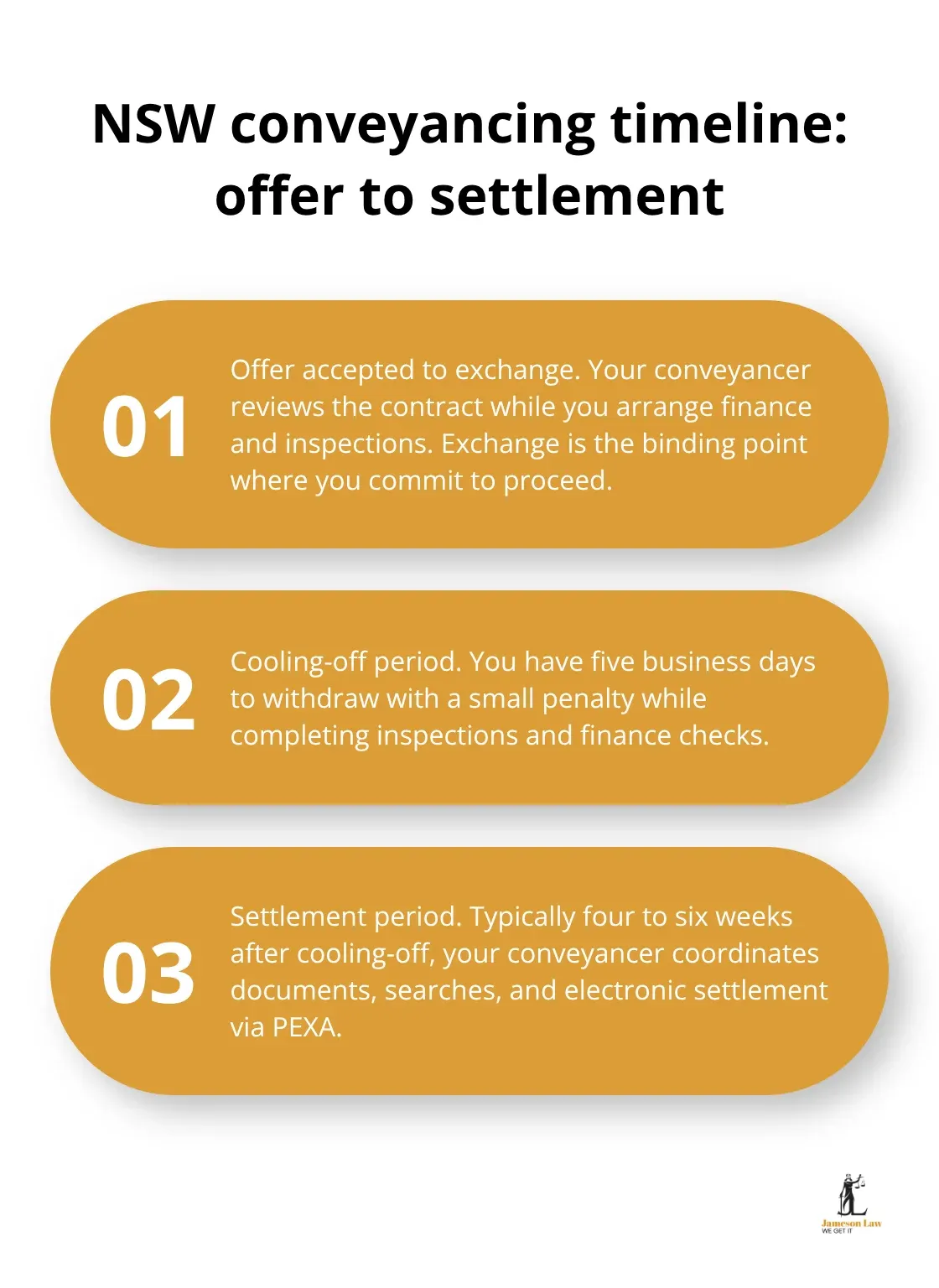
Once you’ve completed inspections and secured pre-approval, contract review and signing begins. Your conveyancer will examine the Contract for Sale line by line, negotiate any amendments on your behalf, and flag risks before you commit. In NSW, private treaty sales include a five-business-day cooling-off period after acceptance, giving you a window to withdraw from the contract-but auction purchases have no cooling-off period, so thorough due diligence before the auction is non-negotiable.
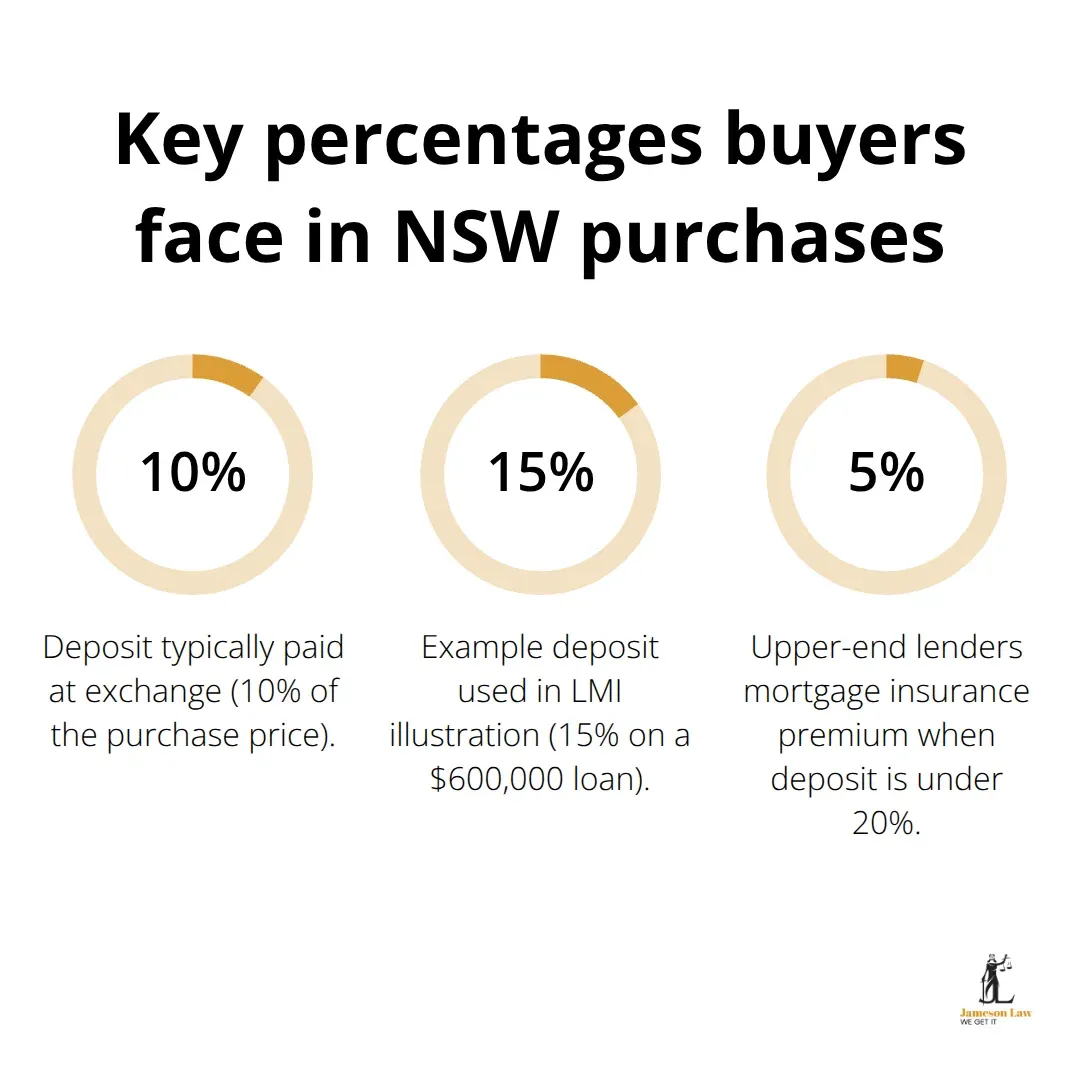
Exchange of contracts marks the legally binding moment; at this point, you’ll pay a 10% deposit, typically held in trust by the seller’s conveyancer. Between exchange and settlement (which generally occurs four to six weeks later), you must finalise your home loan, arrange building and contents insurance, set up utilities, and perform a final walk-through inspection to confirm the property matches the contract.

Settlement and Title Transfer
Your conveyancer coordinates with your lender, the seller’s conveyancer, and NSW Land Registry Services to ensure all conditions are met and stamp duty is paid on time. Settlement day transfers legal ownership; your lender pays the balance, adjustments for council rates and water charges are finalised, and the transaction settles electronically via PEXA, which has become the standard for NSW property transfers. After settlement completes and the title registers in your name, you’ll receive the keys and ownership officially transfers to you.
With the conveyancing process mapped out, you now need to understand what this journey will actually cost you and how long it will take from start to finish.
Costs and Timeline for NSW Conveyancing
Breaking Down Your Professional Fees and Disbursements
Professional conveyancing fees in NSW typically range from $2,000 to $4,000 including GST for a standard residential property, though more complex transactions cost considerably more. We at Jameson Law structure conveyancing costs into three distinct components: the professional fee, which covers legal work, disbursements, which are third-party costs passed through at cost, and government charges. Your professional fee handles contract review, title searches, coordinating with your lender, managing settlement, and lodging documents with NSW Land Registry Services.
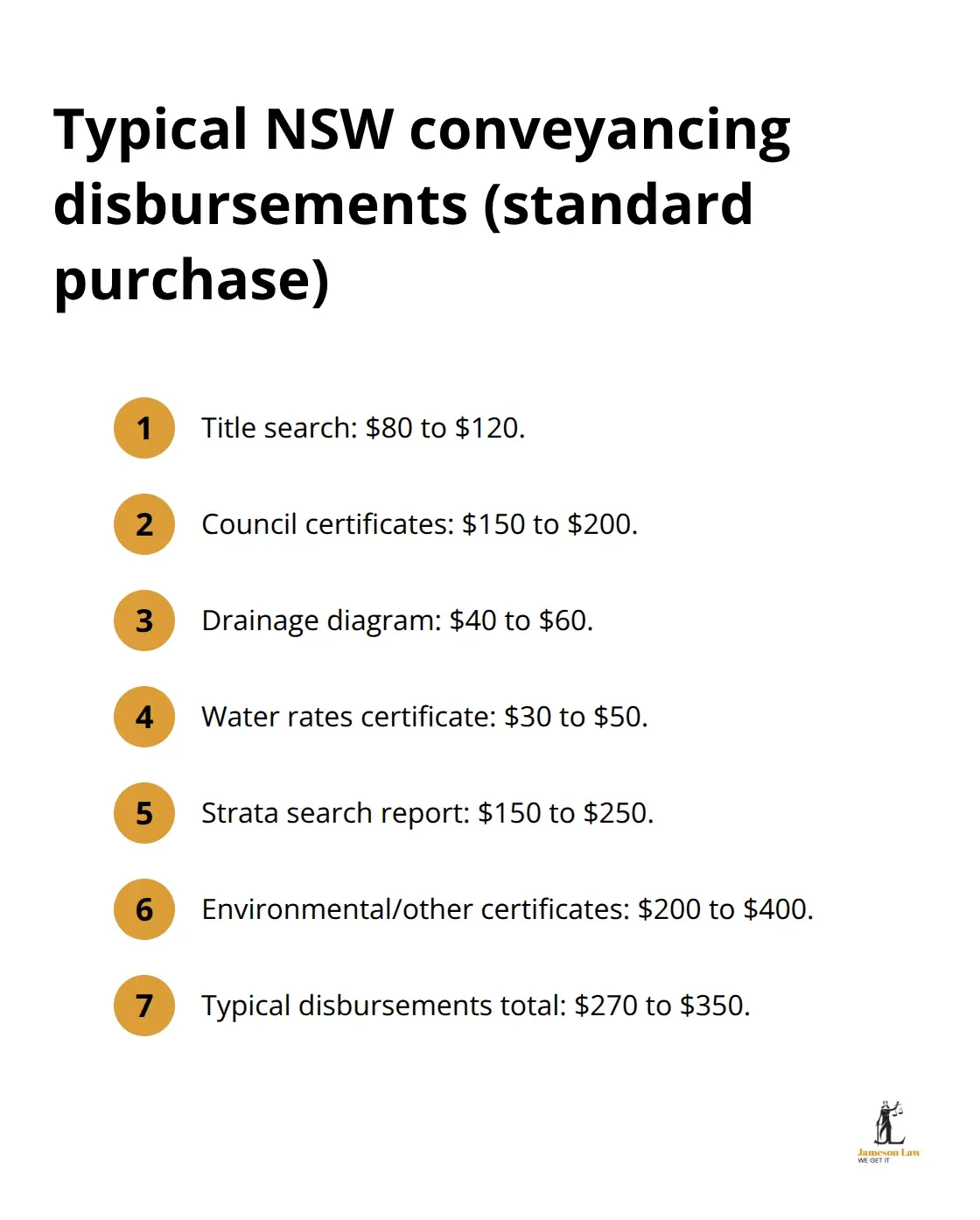
Disbursements are fixed by government bodies or service providers and are non-negotiable. They typically include the title search certificate, Section 10.7 certificate from your local council, land tax search, building and pest report costs ($400–$500), strata inspection report for apartments or townhouses, council and water rates certificates, PEXA settlement fee, final search and registration fees, and any additional certificates specific to your property. For a buyer, expect disbursements to total between $1,500 and $2,500 depending on property type and location.
Understanding Stamp Duty and Major Costs
Stamp duty represents a separate major cost that Revenue NSW calculates based on your purchase price. A property valued at $575,000 incurs significantly different duty than one at $400,000. Fixed-fee conveyancing provides budgeting certainty because it clearly separates the professional fee from estimated disbursements upfront, preventing surprise charges later. Avoid quotes that seem unusually low, as they often mask reduced service levels or hidden charges that emerge during settlement.
Request a detailed breakdown that itemises each component and flags potential additional costs if your property or transaction becomes more complex. First-home buyers in NSW can access transfer duty exemptions or concessions for homes valued under $550,000, with concessions available between $550,000 and $650,000. For vacant land, exemptions apply to purchases under $350,000, with concessions between $350,000 and $450,000.
Timeline From Offer to Settlement
Conveyancing timelines in NSW typically run eight to twelve weeks from offer to settlement, though the search and inspection phase can extend this depending on property type and responsiveness from councils or utility providers. Once you exchange contracts, settlement generally occurs within four to six weeks, giving your lender time to complete their valuation, arrange funds, and coordinate with your conveyancer. Missing finance or settlement deadlines triggers penalties or deposit loss, so your conveyancer must track every deadline rigorously.
Eligibility for First-Home Buyer Assistance
Eligibility for the First Home Buyers Assistance Scheme requires the property to be your first home in Australia, you must be at least eighteen, at least one buyer must be an Australian citizen or permanent resident, and you must live in the home within twelve months and continue for at least six continuous months. Managing expenses effectively means calculating stamp duty early, exploring any available concessions or exemptions, and building a contingency buffer of 10–15% above your estimated costs to cover unexpected disbursements or property-specific searches.

Final Thoughts
Buying home conveyancing in NSW requires professional guidance because property law in this state is complex, deadlines are strict, and one small error-a misspelled name, a missed easement, or a misunderstood zoning restriction-can derail your purchase or cost thousands in disputes later. Licensed conveyancers and solicitors exist to protect you from these mistakes, and professional indemnity insurance covers you when things go wrong. The Property Services Compensation Fund provides additional security if funds are mishandled.
Your conveyancer negotiates contract terms on your behalf, coordinates with your lender and the seller’s legal team, tracks every deadline, arranges stamp duty payments, and manages electronic settlement through PEXA. They uncover problems before you become legally bound-fence disputes, illegal building work, outstanding land tax, or planned infrastructure changes that could affect your property’s value. The financial investment in professional conveyancing typically ranges from $2,000 to $4,000 plus disbursements, but this cost is minimal compared to the risk of handling the transaction alone.
We at Jameson Law have guided countless NSW buyers through this process with transparent pricing and expert local knowledge. Contact Jameson Law for a fixed-fee conveyancing quote tailored to your transaction, and let a professional handle the legal complexity while you focus on your new home.