The Family Law Act 2025 brings significant changes that affect how property is divided, parenting arrangements are handled, and financial support is calculated. These updates reshape the landscape for anyone going through family law matters.
At Jameson Law, we’ve seen firsthand how legislative changes impact our clients. Understanding these new rules now helps you prepare and make informed decisions about your family’s future.
What Changed in Property Division, Parenting, and Financial Support
Property Division Now Accounts for Family Violence
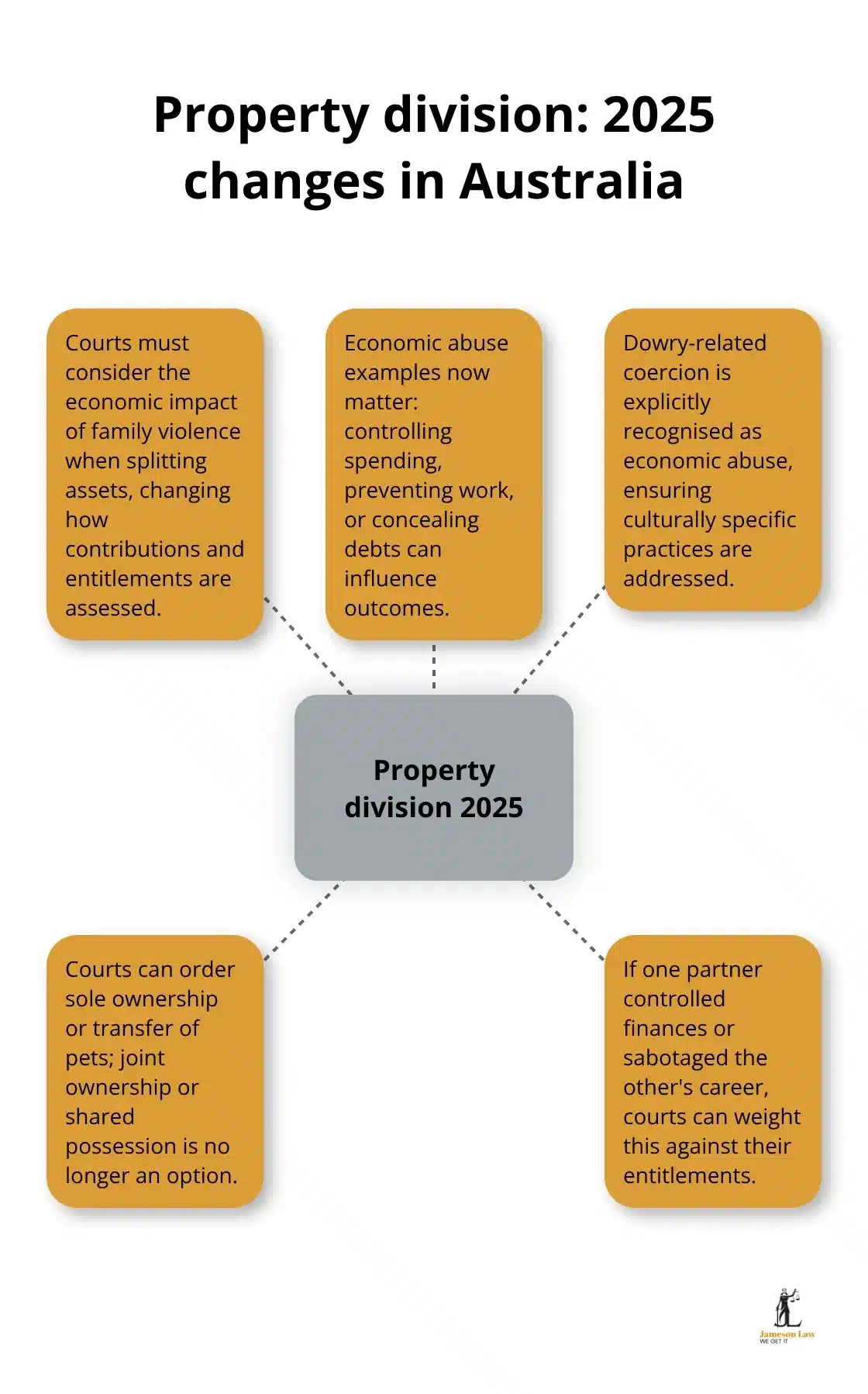
From 10 June 2025, the Family Law Act 1975 requires courts to consider the economic impact of family violence when splitting assets. This includes financial abuse such as controlling spending, preventing work, or concealing debts. The Attorney-General’s Department factsheet confirms that dowry-related coercion is explicitly recognised as economic abuse. If your ex controlled finances or sabotaged your career, courts can now weight this against their entitlements.

Family violence’s impact on asset division receives new treatment under the reforms. Courts can make orders about sole ownership or transfer, considering factors like who has primary attachment to the pet and any abuse history. Joint ownership or shared possession is no longer an option.
Parenting Requirements Have Shifted
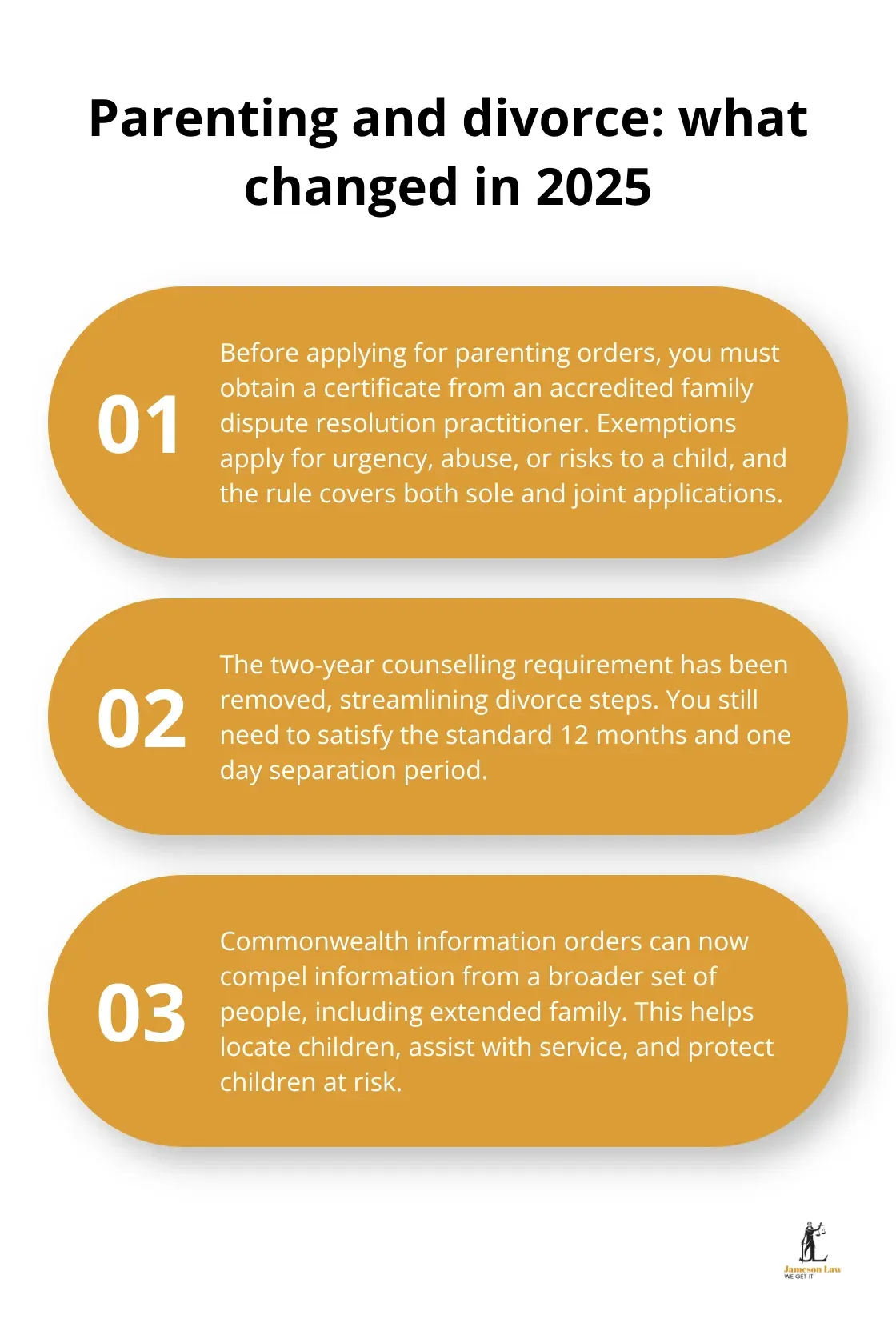
The two-year counselling requirement for divorce has been removed, streamlining the process considerably. However, you must now obtain a certificate from an accredited family dispute resolution practitioner before applying for parenting orders, unless specific exemptions apply (urgency, abuse, or risk to a child). This requirement applies to both sole and joint applications.

Commonwealth information orders can now compel information from a broader set of people, including extended family members, to locate a child and assist with service of parenting applications. These changes strengthen the court’s ability to identify and protect children at risk.
Financial Support Reflects Family Violence Impact
Spousal maintenance decisions now explicitly factor in family violence and its economic effects on the receiving party. Courts assess current and future circumstances differently, including material wastage of property, liabilities, and housing needs for children.
Financial disclosure obligations have been elevated from the Family Law Rules into the Act itself. Non-disclosure can trigger contempt charges, costs orders, or adverse rulings. The Attorney-General’s Department emphasises that these changes apply to all separating couples, whether negotiating outside court or proceeding formally, and to both new and existing cases unless a final hearing has already commenced.
Understanding how these three pillars interact with your specific situation requires careful attention to your documentation and obligations. The next section outlines exactly what records and information you need to gather to navigate these new requirements effectively.
How the 2025 Changes Impact Your Separation
Your Divorce Timeline Just Changed
The removal of the two-year counselling requirement means you can now proceed with a standard Part VI divorce application without waiting for reconciliation documentation. However, this doesn’t mean your separation moves faster overall. Courts still require the standard 12 months and one day separation period before you can apply, and if you have children under 18, you’ll face a new mandatory step: obtaining a certificate from an accredited family dispute resolution practitioner before applying for parenting orders. The Attorney-General’s Department confirms this requirement applies unless specific exemptions exist, such as urgency, abuse allegations, or safety risks to a child.
Sole divorce applications can now proceed without court attendance, aligning with joint application rules. This procedural shift removes the formality of appearing before a judge, but it doesn’t eliminate the substantive requirements around separation periods or parenting arrangements. If you’re planning to separate, document the exact date you stop cohabiting. Courts use this date to calculate your 12-month separation eligibility, and getting this wrong delays your entire process.
Financial Disclosure Now Carries Legal Teeth
From 10 June 2025, the duty to disclose all assets, liabilities, superannuation interests, and trust arrangements moved from the Family Law Rules directly into the Family Law Act 1975. Non-disclosure results in contempt of court charges, costs orders against you, or adverse rulings that assume hidden assets exist and award them to your ex. The Attorney-General’s Department emphasises these obligations apply whether you negotiate a settlement outside court or proceed formally, and they continue from the initial negotiations through to final resolution.
Your ex cannot hide financial information, and neither can you. Courts now treat disclosure failures as serious breaches with real consequences. If you fail to disclose assets or liabilities, the court can make orders against you that favour your ex significantly.
Family Violence Changes How Courts Calculate Financial Support
If your ex controlled your finances during the relationship, your spousal maintenance claim now explicitly factors in family violence and its economic impact. Courts assess current and future circumstances differently under the new framework, including material wastage of assets, liabilities incurred by either party, and housing needs for children. This means if your ex squandered joint savings, prevented you from working, or forced you to take on debts, the court can weight these factors against their financial entitlements.
Gather bank statements, employment records, and evidence of financial control from the entire relationship period, not just recent years. Courts now look at the full economic picture of how family violence affected your earning capacity and asset accumulation. The more comprehensive your documentation, the stronger your position when courts assess what financial support you need going forward.
What Documentation Matters Most Right Now
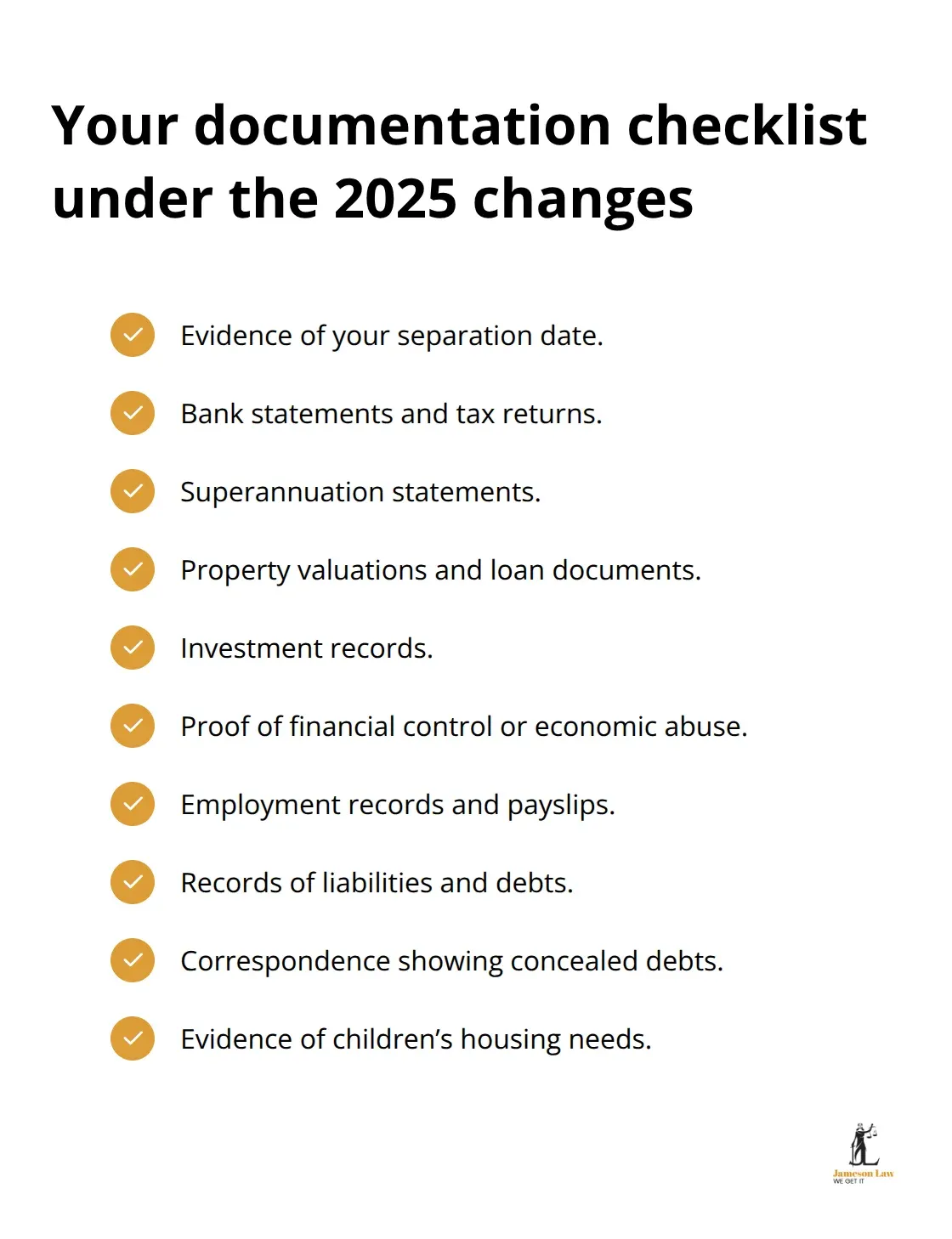
Start collecting evidence of your separation date, all financial records (bank statements, tax returns, superannuation statements), and any documentation showing family violence or economic abuse. If your ex controlled spending, prevented you from working, or concealed debts, gather proof of these actions. Property valuations, loan documents, and investment statements all matter when courts determine your entitlements under the new framework.

The timing of your documentation collection affects how thoroughly courts can assess your circumstances. Courts cannot make fair decisions without complete financial information from both parties, so your records become the foundation for any settlement negotiation or court order. With these documents in hand, you’re ready to understand exactly what property division looks like under the 2025 changes and how courts will assess your share of assets and liabilities.
Getting Your Documentation and Support in Place
Collect Your Financial Records Now
The Attorney-General’s Department confirms that the new Family Law Act changes apply to all separating couples, whether you settle outside court or proceed formally. Start your preparation immediately, regardless of whether you’re considering separation or already in the process. First, establish your separation date-courts use this to calculate your 12-month eligibility for divorce, and errors delay everything. Next, collect every financial record from the past three to five years: bank statements, tax returns, superannuation statements, investment records, property valuations, and loan documents. If family violence or economic abuse occurred, gather specific evidence showing how your ex controlled finances, prevented work, or concealed debts. The Attorney-General’s Department emphasises that non-disclosure of assets now carries contempt charges and costs orders, so completeness matters more than ever.
Photograph or scan documents rather than relying on originals, which protects against loss. Create a spreadsheet listing all assets, liabilities, and superannuation with dates and values-courts need this level of detail to assess your entitlements fairly under the new property division framework.
Select a Family Law Specialist Who Understands the 2025 Changes
Finding the right family law specialist matters far more than rushing the process. You need someone who understands how family violence now affects property division, spousal maintenance calculations, and parenting arrangements under the 2025 changes. When you contact a family law firm, ask directly how they’ve handled cases involving economic abuse or financial control, and whether they’ve worked with clients on the new disclosure obligations that moved into the Family Law Act itself.
The timeline for transitioning to new rules varies depending on whether your case started before or after 10 June 2025, so your specialist needs to clarify which rules apply to your specific situation. If your proceedings began before June 2025 and haven’t reached a final hearing, the new laws apply to you. If a final hearing commenced before that date, the old rules generally continue. A family law specialist can also guide you on whether you need an accredited family dispute resolution practitioner before applying for parenting orders, or whether exemptions apply because of urgency, abuse, or safety risks.
Start Legal Conversations Early
Contact specialists now rather than waiting until separation feels imminent-early advice on documentation and strategy prevents costly mistakes later. Your specialist will clarify which rules apply to your situation and help you understand your obligations under the new disclosure requirements.
Final Thoughts
The changes to the Family Law Act 2025 reshape how courts handle property division, parenting arrangements, and financial support. Family violence now directly influences asset distribution and spousal maintenance calculations, while financial disclosure obligations carry legal weight with non-disclosure triggering contempt charges and costs orders. Parenting applications require accredited family dispute resolution certificates unless exemptions apply, and these reforms affect all separating couples whether negotiating outside court or proceeding formally.
Understanding these changes matters because they affect your entitlements and obligations immediately. Courts now consider economic abuse, material wastage of assets, and housing needs for children when determining what’s just and equitable. Your documentation becomes the foundation for any settlement or court order, so gathering financial records, separation dates, and evidence of family violence now prevents costly delays later.
Professional legal guidance helps you navigate these complexities without mistakes. We at Jameson Law have extensive experience helping clients through family law matters, and we can clarify which rules apply to your specific situation, guide you on disclosure obligations, and explain whether you need family dispute resolution before applying for parenting orders. Contact us now to discuss how the changes to family law act 2025 affect your circumstances and what steps you should take next.