Commercial disputes can drain your resources, damage relationships, and disrupt operations faster than you’d expect. At Jameson Law, we’ve seen businesses face contract breaches, IP conflicts, and shareholder disagreements that spiral into costly litigation.
This guide walks you through what commercial litigation in NSW actually involves, how it affects your bottom line, and when you need professional help.
Types of Commercial Disputes in NSW
Contract Breaches: The Most Common Problem
Contract breaches remain the most common commercial dispute we encounter, and they’re often far messier than business owners expect. A contract breach occurs when one party fails to meet agreed obligations, whether that’s non-payment, failure to deliver goods, or breach of service terms. NSW small businesses face an estimated $100 billion in disputes, and contract disputes form a substantial portion of this figure.
The problem isn’t just the breach itself-it’s the cascading costs. When a supplier fails to deliver on time, your production stalls. When a client refuses to pay, your cash flow evaporates. What makes contract disputes particularly frustrating is that they’re often preventable. We regularly see disputes arise because contracts were poorly drafted, vague on payment terms, or lacked clear dispute-resolution clauses.
If you’re currently operating without written contracts or using generic templates, you’re essentially gambling with your business. The solution is straightforward: invest in properly drafted contracts that specify obligations, timelines, payment conditions, and what happens if things go wrong. This single step eliminates most contract disputes before they start.
Intellectual Property Conflicts: Protecting What Makes You Valuable
IP disputes typically involve trademark infringement, copyright breaches, or unauthorised use of your branding or products. If someone copies your logo, steals your product design, or uses your company name, you lose market position and customer trust simultaneously. These conflicts strike at the heart of what makes your business valuable and carry disproportionate consequences.
The financial stakes are substantial. A competitor using your trademark can confuse customers and erode your brand reputation in months. You need to act fast when infringement occurs. IP Australia provides guidance on enforcement, and early intervention prevents further damage to your market position.
Partnership and Shareholder Disagreements: When Trust Breaks Down
Partnership and shareholder disputes escalate quickly because they involve people who once trusted each other, making resolution emotionally charged and expensive. These disputes cover everything from disagreements over profit distribution and management decisions to one partner wanting to exit while the other doesn’t.
The financial stakes are high-disputes over ownership percentages or business direction can paralyse decision-making for months. Early intervention in partnership disputes yields better outcomes and lower costs. If you sense tension with a business partner or notice a shareholder acting against the company’s interests, address it immediately through a formal demand letter outlining the issue, your desired outcome, and a response deadline.
Taking Action Before Disputes Spiral
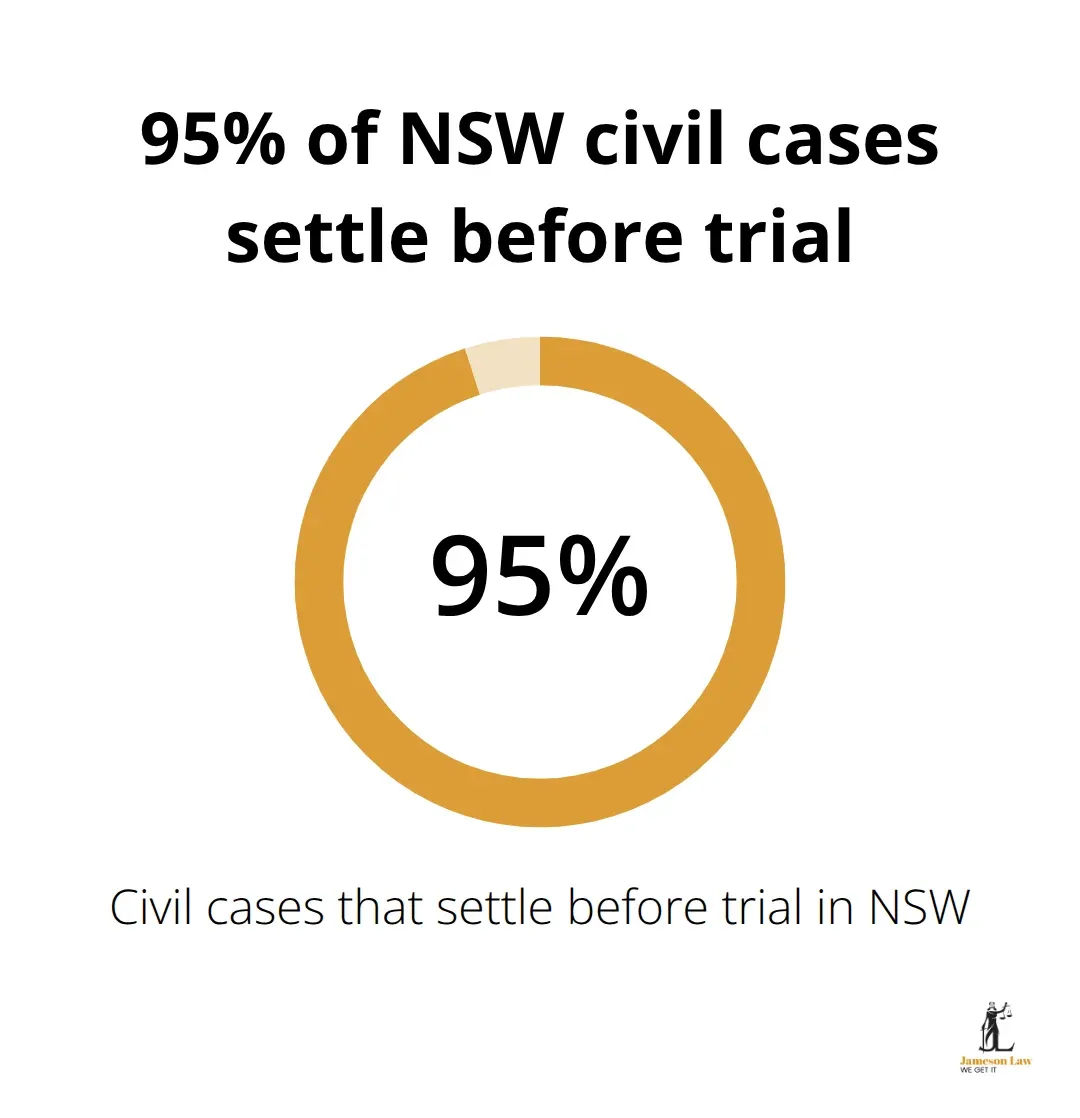
Address any commercial dispute the moment it emerges. NSW courts support alternative dispute resolution methods like mediation, and roughly 95% of civil cases settle before trial, meaning disputes that reach this stage have already cost both parties significantly. Your best defence against any commercial dispute is understanding your contracts, protecting your IP through proper registration, and addressing conflicts early.
When you identify a problem-whether it’s IP infringement, a contract breach, or partnership tension-don’t wait. A formal demand letter often resolves disputes without court involvement and costs far less than litigation. The next section walks you through the actual process you’ll face if a dispute does escalate to court proceedings.
How NSW Commercial Litigation Actually Works
The Demand Letter: Your First Strategic Move
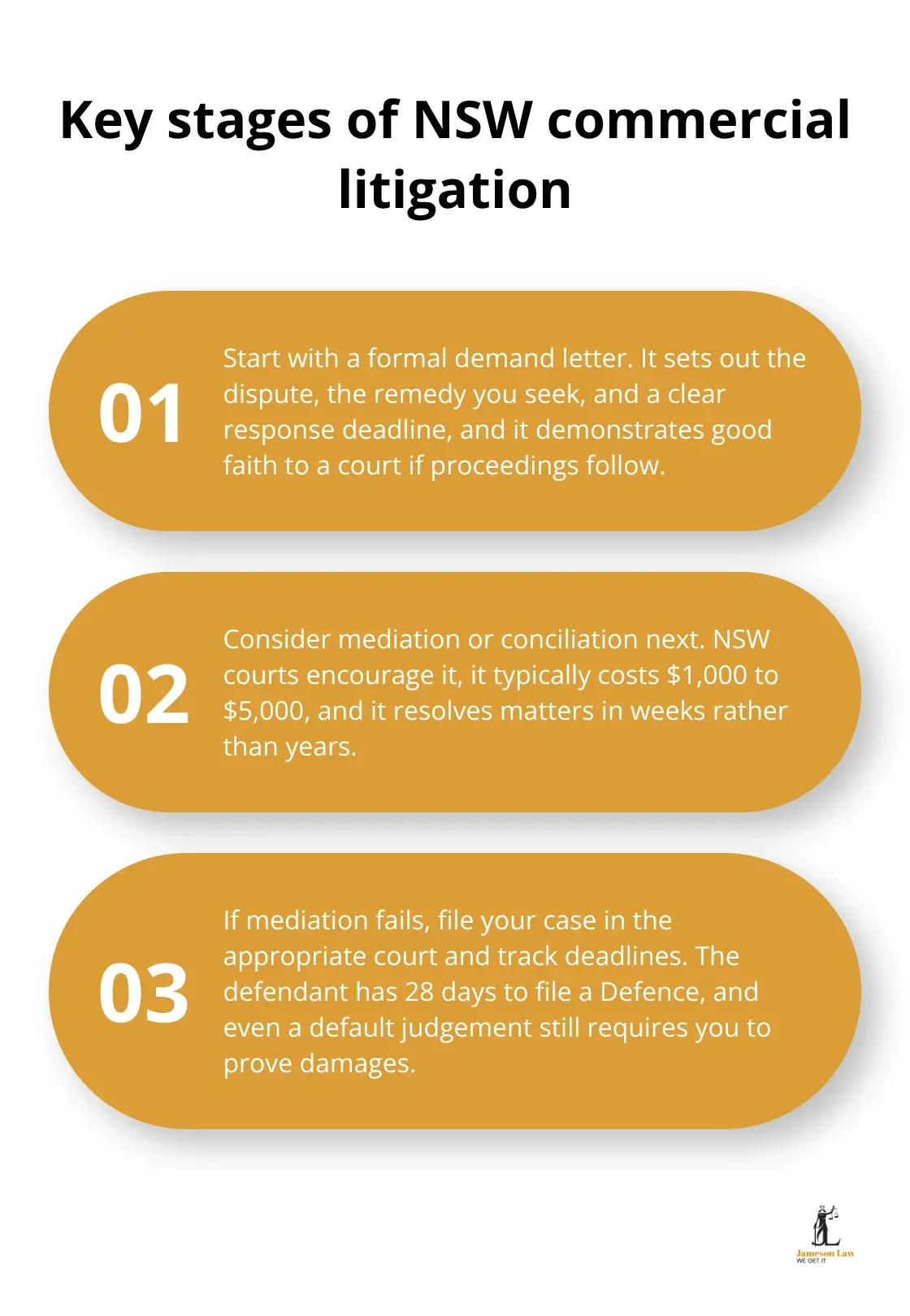
The moment a dispute escalates beyond negotiation, you enter a structured legal process that demands precision, timing, and strategic decision-making. The first critical step is a formal demand letter, which outlines your dispute, specifies what you want (payment, performance, or damages), and sets a response deadline. This isn’t optional busywork-it’s your documented attempt to resolve the matter without court.
Courts in NSW expect you to have made this effort, and mediators take it seriously. If the other party responds positively, you avoid court entirely. If they ignore it or reject your position, you’ve created a paper trail that strengthens your case later and demonstrates good faith to a judge.
Mediation and Conciliation: The Cost-Effective Alternative
Before filing anything in court, consider mediation or conciliation with a neutral third party. NSW courts strongly encourage this approach, and the data backs it up: most disputes that reach the courtroom have already cost both parties substantially. Mediation typically costs between $1,000 and $5,000 and takes weeks, not months. Court proceedings, by contrast, stretch across years and drain six figures or more.
Filing Your Case: Court Selection and Timelines
If mediation fails and you proceed to court, your case goes to the Local Court for claims under $100,000, or the District or Supreme Court for larger disputes. Once you file your Statement of Claim, the defendant has 28 days to file a Defence. Missing this deadline triggers a default judgement against them, which sounds advantageous until you realise you still need to prove damages.
Discovery and Evidence: Building Your Case
The discovery phase follows, where both sides exchange documents, witness statements, and evidence under the Uniform Civil Procedure Rules 2005. This phase separates serious cases from weak ones-your ability to produce contemporaneous emails, contracts, payment records, and witness accounts determines whether you win or lose. ASIC recommends retaining business records for at least seven years, which means you should have documentation ready now.
Trial and Settlement: The Final Stages
Most NSW commercial trials are heard by a judge alone, not a jury, and the judge delivers written reasons with their decision. Settlement discussions continue throughout the process, even during trial, because both parties eventually realise the cost-benefit calculation shifts as trial approaches. Understanding these stages helps you prepare for what lies ahead and make informed decisions about whether to settle, proceed, or adjust your strategy. The financial and operational impact of this process extends far beyond legal fees alone.
What Commercial Litigation Really Costs Your Business
Legal Fees That Spiral Beyond Expectation
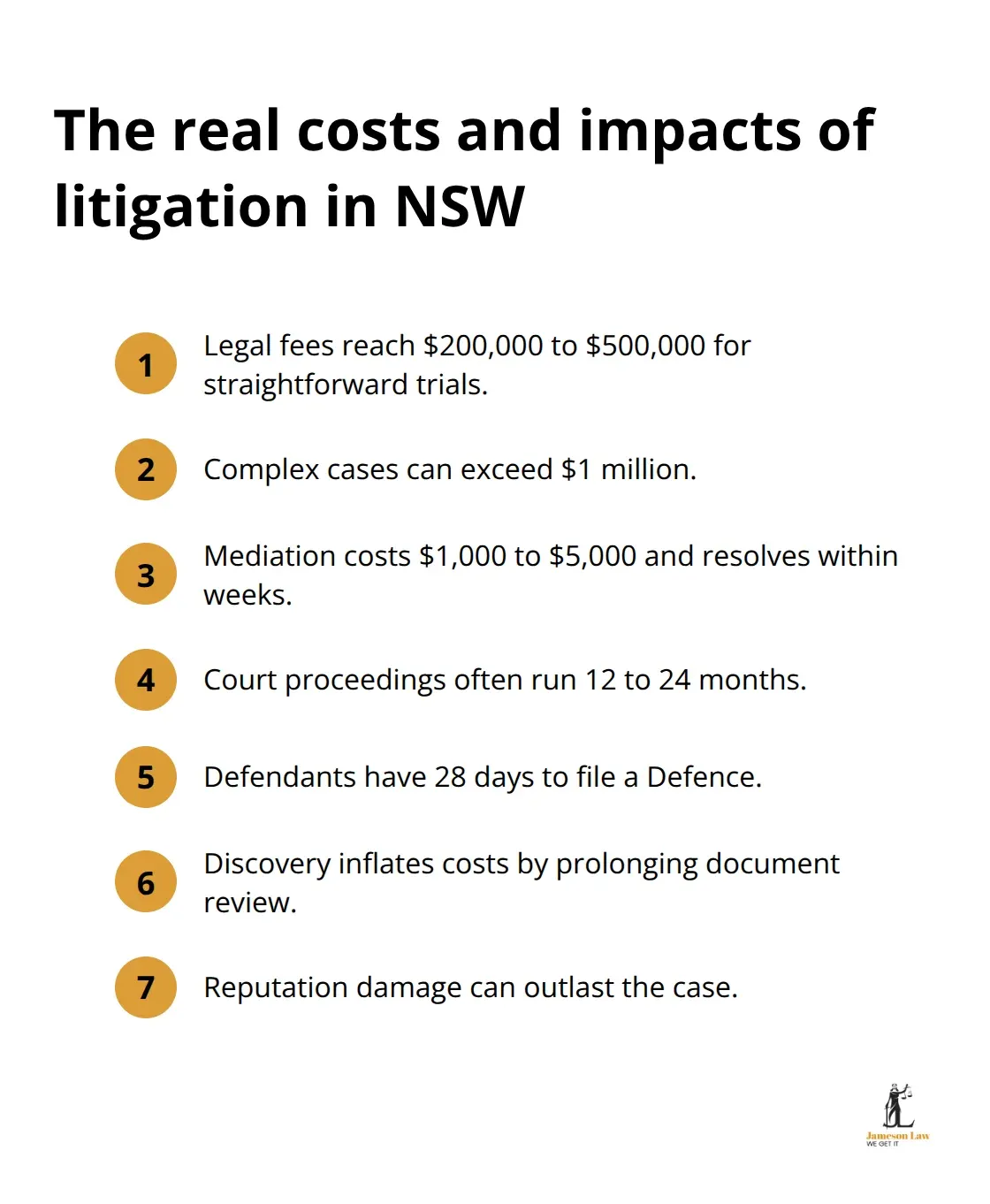
Commercial litigation drains finances in ways most business owners underestimate. Legal fees alone consume $200,000 to $500,000 for straightforward disputes that reach trial, and complex cases exceed $1 million. These aren’t theoretical figures-they’re what NSW businesses regularly spend when disputes escalate beyond negotiation. What makes this worse is that costs accelerate unpredictably. The discovery phase, where both sides exchange documents and evidence under the Uniform Civil Procedure Rules 2005, routinely extends timelines and inflates fees because lawyers spend weeks reviewing emails, contracts, and communications.
Court filing fees, expert witness costs, and document production expenses accumulate alongside hourly legal bills. A strategic approach to cost management means setting a realistic budget early, staging work in phases, and considering fixed-fee arrangements for specific tasks rather than open-ended hourly billing. More importantly, it means understanding that every month of litigation costs you money whether progress occurs or not.
Settlement Timing Changes Everything
Settlement timing and cost savings in commercial litigation show that resolving disputes early typically saves substantial costs compared with cases that proceed to trial. Your management team spends time preparing witness statements, gathering documents, and attending meetings instead of running operations. That diverted attention has a real cost you won’t see on a legal invoice.
Operational Paralysis and Timeline Uncertainty
Court proceedings typically span 12 to 24 months from filing to trial outcome, during which uncertainty paralyses decision-making. You can’t confidently commit to expansion, hire permanent staff, or secure financing when a lawsuit creates financial and operational unpredictability. Employees become anxious when they learn the company faces litigation, particularly in partnership disputes where business direction becomes unclear. Suppliers and customers ask questions when they sense instability.
Reputational Damage That Outlasts the Case
Your reputation suffers when disputes become public-court documents are accessible records, and negative outcomes become part of your searchable history. Most civil cases settle before trial, which means most disputes that reach courtrooms have already cost both parties substantially while damaging relationships that may have been worth preserving. Reputational recovery takes longer than litigation itself. A business known for fighting in court attracts cautious partners and sceptical customers who worry about their own vulnerability.
Why Early Intervention Matters
Mediation costs $1,000 to $5,000 and resolves disputes within weeks, preserving business relationships while protecting your reputation. The choice between court litigation and structured negotiation isn’t just financial-it’s about whether your business emerges from the dispute stronger or weakened.
Final Thoughts
Commercial litigation in NSW demands early action and strategic thinking. The disputes that cost businesses the most are those that fester unaddressed until they reach court, where contract breaches, IP conflicts, and partnership disagreements transform into exponentially more expensive problems. Your best protection is prevention-invest in properly drafted contracts that specify obligations and dispute-resolution processes, register your intellectual property through IP Australia to establish ownership before conflicts arise, and address partnership tensions immediately through formal communication rather than hoping they resolve themselves.
When disputes do emerge, timing determines outcomes. A formal demand letter costs almost nothing and resolves many conflicts without further escalation, while mediation or conciliation with a neutral third party typically costs between $1,000 and $5,000 and takes weeks rather than years. Court litigation, by contrast, stretches across 12 to 24 months and consumes $200,000 to $500,000 in legal fees alone for straightforward cases-the financial difference is staggering, and the operational disruption from prolonged uncertainty damages your business far beyond what any legal invoice shows.
The moment you identify a commercial dispute, seek professional legal advice from Jameson Law, where we specialise in commercial litigation NSW and can assess your position, outline your options, and guide you toward the most cost-effective resolution. Early intervention prevents disputes from spiralling into expensive court battles that damage your business far beyond the immediate financial cost.