Buying property in NSW means facing a range of costs beyond the purchase price itself. Conveyancing costs NSW can quickly add up, and without proper planning, they often catch buyers off guard.
We at Jameson Law help property buyers understand exactly what they’ll pay. This guide breaks down every fee, tax, and expense so you can budget confidently from day one.
What Makes Up Your Conveyancing Bill in NSW
Conveyancing costs in NSW break into distinct categories, and understanding each one prevents you from facing shock at settlement. The average conveyancing cost in NSW sits around $1,650 according to data compiled from multiple sources, but this varies significantly based on transaction complexity. Your bill will include the conveyancer’s professional fee, government charges like transfer duty, and third-party disbursements for searches and certificates. Transfer duty alone can be substantial-for a property worth $500,000, you’d pay around $16,250 under the 2025/26 NSW rates, which use a tiered structure starting at 1.25 per $100 for the first portion and increasing through successive bands. For properties exceeding $3,721,000, premium duty applies at $186,667 plus $7.00 per $100 over the threshold. The conveyancer’s professional fee typically ranges from $800 to $1,500 for standard residential transactions, though complex deals involving leasehold properties, company titles, or old-title systems can push this to $2,200 or beyond because they require additional searches and legal work.
How Conveyancers Price Their Services
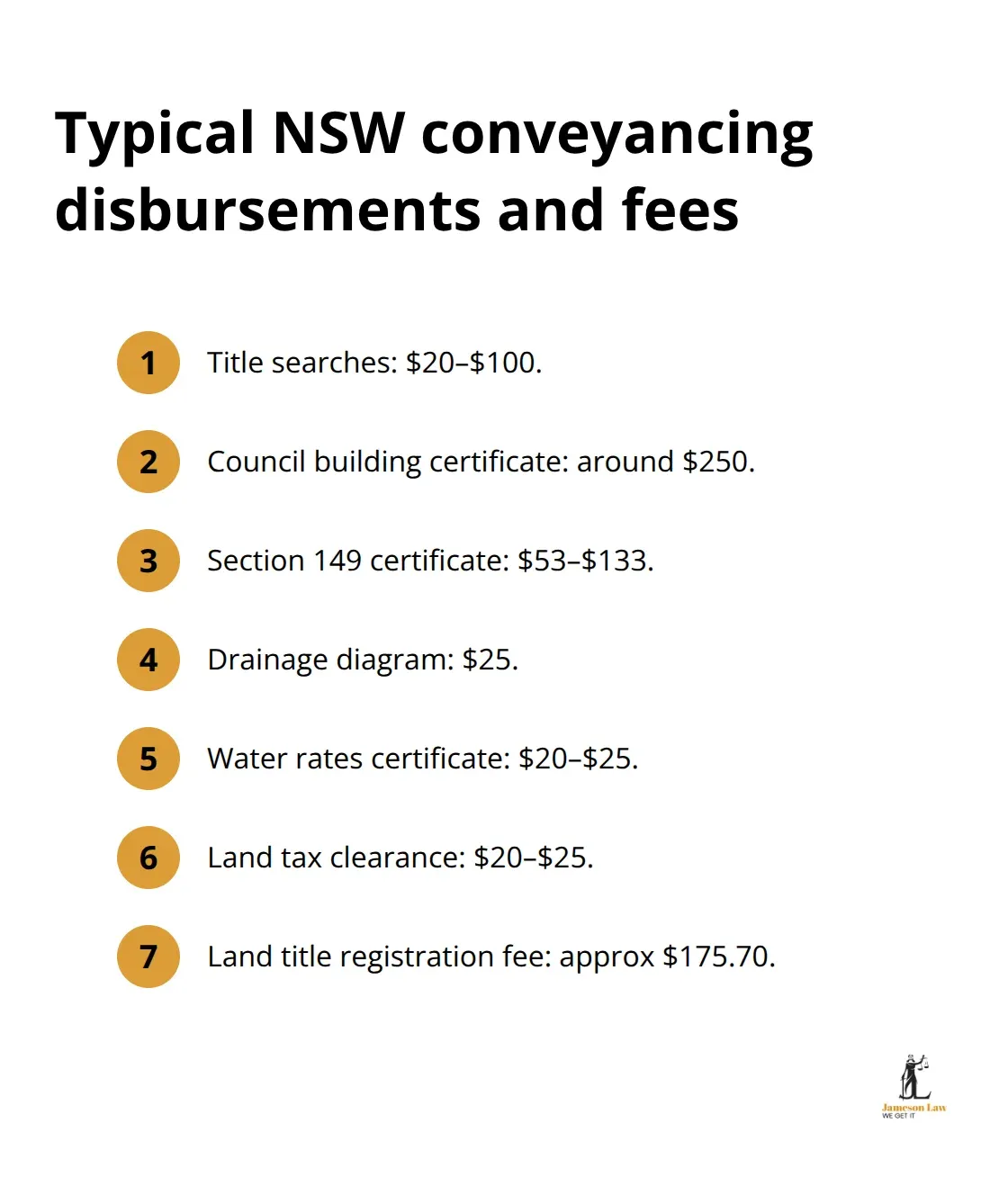
Most conveyancers charge fixed fees for straightforward transactions, which gives you certainty upfront. Some still use sliding-fee models based on property value, so always request a detailed written quote before you commit. When you receive a quote, it should itemise the conveyancer’s fee separately from disbursements-this distinction matters because disbursements are third-party costs paid on your behalf and aren’t negotiable, whereas the professional fee has some flexibility between firms. Disbursements typically total $270 to $300 for a purchase and include title searches ($20–$100), local council building certificates (around $250), Section 149 certificates ($53–$133), drainage diagrams ($25), water rates certificates ($20–$25), and land tax clearances ($20–$25). Registration fees of approximately $175.70 apply when the new title is registered at the Land Registry. You should obtain quotes from three or four licensed conveyancers in your area to reveal the market rate and spot outliers-some firms charge premium prices without delivering premium service.
Government Charges You Cannot Avoid
Transfer duty rates are non-negotiable and must be paid within three months of you signing the contract; settlement cannot proceed until Revenue NSW receives it. You can estimate your duty liability using the Revenue NSW transfer duty calculator before you commit to a purchase, which helps with budgeting. First-home buyer concessions may apply depending on the property value and whether it’s your principal place of residence, so verify your eligibility with Revenue NSW before you assume you’ll pay the full amount. Mortgage registration fees of around $175.70 apply if you’re borrowing, and if you’re discharging an existing mortgage, add another $175.70 for discharge costs. These government fees are fixed by legislation and don’t vary between conveyancers, so there’s no point shopping around for them-focus your comparison on the conveyancer’s professional fee and service quality instead.
What Disbursements Actually Cover
Disbursements represent the out-of-pocket expenses that your conveyancer pays to third parties on your behalf. Title searches confirm the property title is free of encumbrances and typically cost $20–$100 depending on the search type and council area. Local council building certificates (approximately $250) reveal whether the property complies with building codes, while Section 149 certificates ($53–$133) confirm whether the property is affected by environmental planning matters. Water rates certificates ($20–$25) and land tax clearances ($20–$25) verify that no outstanding charges exist on the property. Drainage diagrams ($25) show the location of drainage infrastructure, and environmental authority fees ($20–$25) confirm compliance with environmental regulations. Your conveyancer should provide an upfront estimate of these costs so you can budget accurately, and the final invoice will itemise each disbursement separately.
Comparing Quotes to Find Real Value
Licensed conveyancers must hold professional indemnity insurance and complete at least two years of tertiary study in property law plus two years of supervised practical experience. When you compare quotes from different firms, look beyond the headline fee and examine what services each one includes. Some conveyancers offer additional services like title insurance or mortgage discharge coordination, which may justify a higher fee. You should ask each firm to clarify which government fees and charges you will pay and when, as this affects your cash flow planning. The cheapest quote isn’t always the best value-a conveyancer who charges less but misses critical issues or delays settlement costs you far more in the long run. Once you’ve selected your conveyancer and received a detailed quote, you’re ready to understand how these costs fit into your overall property purchase strategy.
What Each Component of Your Conveyancing Bill Actually Costs
Your conveyancing bill splits into distinct components, and understanding what you pay for at each stage helps you spot overcharging and plan your cash flow accurately. The conveyancer’s professional fee typically ranges from $800 to $1,500 for a standard residential purchase, but this fee alone tells you little without context. When you receive a quote, the conveyancer should separate their professional fee from the disbursements and government charges, because these three categories behave differently. The professional fee is where you can negotiate between firms and find genuine value differences. Disbursements are third-party costs that your conveyancer pays on your behalf, and while you cannot negotiate these amounts, you should verify each one is necessary for your transaction. Government charges like transfer duty and registration fees are fixed by law and identical regardless of which conveyancer you use, so comparing these between quotes wastes your time. For a $500,000 property purchase in NSW, transfer duty alone totals approximately $16,250 under the 2025/26 tiered rates, which start at 1.25 per $100 and increase through successive bands. This single charge often shocks buyers because it is substantial and non-negotiable, yet many people focus their cost comparison entirely on the conveyancer’s fee instead of understanding the full picture.
Professional Fees Vary More Than You Think
The conveyancer’s professional fee is the area where you will find real price variation between firms. A straightforward house purchase might cost $800, but a strata unit with a leasehold component or a property with an old-title system can cost $1,500 to $2,200 because the legal work is significantly more complex. When you request quotes from three or four licensed conveyancers, you will likely see a $300 to $400 spread between the cheapest and most expensive options for the same transaction type. This variation exists because different firms have different cost structures, experience levels, and service offerings. Some conveyancers charge a fixed fee regardless of property value, while others use a sliding scale based on the purchase price, so the fee model itself affects your final cost. Your responsibility is to understand what is included in each quote before you compare prices. One firm might include mortgage discharge coordination in their base fee while another charges extra, or one might provide title insurance recommendations while another does not. The cheapest quote often reflects a firm cutting corners on service rather than genuine efficiency, and you will pay the difference later through delays, missed issues, or poor communication during a stressful settlement period. Ask each conveyancer explicitly what happens if complications arise during the transaction and whether their quoted fee covers additional work or if you will face extra charges.
Registration and Stamp Duty Cannot Be Negotiated
Transfer duty must be paid within three months of signing the contract, and this is the single largest government charge in most NSW property transactions. The 2025/26 transfer duty rates use a tiered structure where properties valued up to $17,000 attract duty at 1.25 per $100, properties from $17,001 to $80,000 are charged at $212.50 plus 1.50 per $100 of the amount above $17,000, and the rates continue to increase through higher bands. Premium duty applies to properties exceeding $3,721,000 at $186,667 plus $7.00 per $100 above the threshold, which means a $4 million property incurs significantly higher duty than the standard rate structure alone would suggest. First-home buyers may qualify for concessions on transfer duty depending on the property value and whether it is their principal place of residence, but you must verify your eligibility with Revenue NSW before assuming you will pay the full amount. Land registration fees of approximately $175.70 apply when your new title is registered at the Land Registry, and if you are discharging an existing mortgage, add another $175.70 for discharge costs. These government charges do not vary between conveyancers, so you gain nothing by shopping around on these costs. Your conveyancer handles lodging the transfer duty assessment and arranging payment as part of settlement, which is why their coordination role matters even though the duty amount itself is fixed.
Building Inspections and Title Protection Are Your Choice
Building and pest inspections are not technically conveyancing costs because you order them directly rather than through your conveyancer, but they form part of your total property purchase expenses. A building inspection typically costs $300 to $600 depending on the property size and age, and a pest inspection costs roughly $150 to $300. Try obtaining both inspections for any property older than 20 years, and for newer properties in areas with known pest activity. These inspections protect you from purchasing a property with hidden structural defects or termite damage that could cost tens of thousands to repair. Title insurance offers a simple yet powerful solution, protecting homebuyers and owners from unexpected problems that could impact your property ownership. Title insurance costs vary depending on the property value and the level of coverage, typically ranging from $200 to $800 for a standard policy. This insurance protects you against future claims on the property title and covers legal costs if someone challenges your ownership, which provides genuine peace of mind in complex transactions. Your conveyancer can advise whether title insurance is appropriate for your specific property and provide quotes from insurers, but the decision to purchase it remains yours. Understanding these optional costs allows you to move forward to the next stage of your transaction with full clarity on what you will pay.
How to Get Real Value From Conveyancing Quotes
Comparing Professional Fees Across Multiple Quotes
Contact three to four conveyancers in your area and provide each one with identical information about your property and transaction type, then request a detailed written quote that separates the professional fee from disbursements and government charges. This separation reveals where genuine price variation actually exists. Government charges like transfer duty and registration fees remain identical regardless of which conveyancer you use, so ignore any firm quoting these differently and focus instead on comparing professional fees across the quotes you receive.
For standard residential purchases, professional fees typically range from $1,000 to $3,000, which means you should compare quotes carefully to identify the best value for your circumstances. That spread represents real money in your pocket, but only if you understand what each quote actually includes. Some conveyancers charge fixed fees while others use sliding scales based on property value, so a firm quoting $900 on a fixed basis might cost more than one quoting $950 on a sliding scale if your property is lower-priced.
Ask each firm whether their quoted fee covers additional work if complications arise, because some conveyancers include complexity management in their base fee while others charge extra for anything beyond a straightforward transaction. Request clarification on whether the quote includes title insurance recommendations, mortgage discharge coordination, or other value-add services that some firms provide at no extra cost.
Verifying Conveyancer Credentials and Experience
Licensed conveyancers must hold professional indemnity insurance and complete at least two years of tertiary study in property law plus two years of supervised practical experience. Verify licensing with the Australian Institute of Conveyancers NSW Division before you commit to any firm. This verification protects you from unqualified operators and confirms that your conveyancer meets the legal standards required to handle your transaction properly.
Consider asking the 7 key questions to ask a conveyancer before making your final selection, including their qualifications, property specialisation, cost breakdown, and expected timeline.
Understanding Fixed-Fee Structures
Most conveyancers quote fixed fees for straightforward transactions, which gives you budgeting certainty and removes the risk of surprise charges at settlement. Fixed-fee conveyancing works well for standard house purchases where the legal work is predictable and uncomplicated, but complex transactions involving strata properties, leasehold land, or company titles require additional searches and legal work that may exceed the quoted fee if the conveyancer underestimated the complexity.
When you receive a fixed-fee quote, ask explicitly what triggers additional charges and whether the firm will notify you before incurring extra costs. This prevents settlement day surprises and establishes clear communication expectations from the outset.
Estimating Disbursements and Planning Your Budget
Disbursements include conveyancing searches, council certificates, registration fees, and drainage diagrams, but these amounts vary depending on your specific property and location. Request that your conveyancer provide an upfront estimate of expected disbursements rather than simply stating an approximate range, because this allows you to budget accurately and spot inflated charges on the final invoice.
Set aside a contingency fund of $500 to $800 beyond your quoted costs to cover unexpected disbursements or additional searches that sometimes emerge during the transaction process, particularly for older properties or those with title complications. Planning for unexpected expenses means understanding that some properties reveal hidden complications only after your conveyancer begins detailed legal work, and having cash reserves prevents these discoveries from derailing your purchase timeline.
Final Thoughts
Conveyancing costs NSW represent a significant portion of your property purchase budget, and understanding each component prevents financial surprises at settlement. Transfer duty alone can exceed $16,000 for a $500,000 property, making it the largest single cost you’ll face, while professional fees typically range from $800 to $1,500 for standard transactions and disbursements add another $270 to $300. The key to managing these expenses is obtaining detailed quotes from multiple licensed conveyancers, understanding what each cost covers, and budgeting early in your property journey.
Start your conveyancing process as soon as you decide to buy or sell, which gives your conveyancer time to identify potential complications and provide accurate cost estimates. Request itemised quotes that separate professional fees from disbursements and government charges, then compare the professional fees across firms to find genuine value. Verify that your chosen conveyancer holds professional indemnity insurance and meets the required qualifications through the Australian Institute of Conveyancers NSW Division.
Set aside a contingency fund of $500 to $800 beyond your quoted costs to cover unexpected expenses that sometimes emerge during the transaction. We at Jameson Law provide practical conveyancing advice to help you navigate property transactions confidently, and you can contact us to discuss your specific situation and receive guidance tailored to your circumstances.