A criminal charge in NSW can feel overwhelming, but understanding your options makes a real difference to the outcome. We at Jameson Law know that criminal law defence in Sydney requires both strategy and knowledge of how the courts work.
This guide walks you through the types of charges you might face, how to build an effective defence, and practical ways to reduce penalties. Whether you’re facing a minor offence or a serious charge, knowing your rights and next steps matters.
How Criminal Charges Work in NSW
Summary and Indictable Offences: Understanding the Distinction
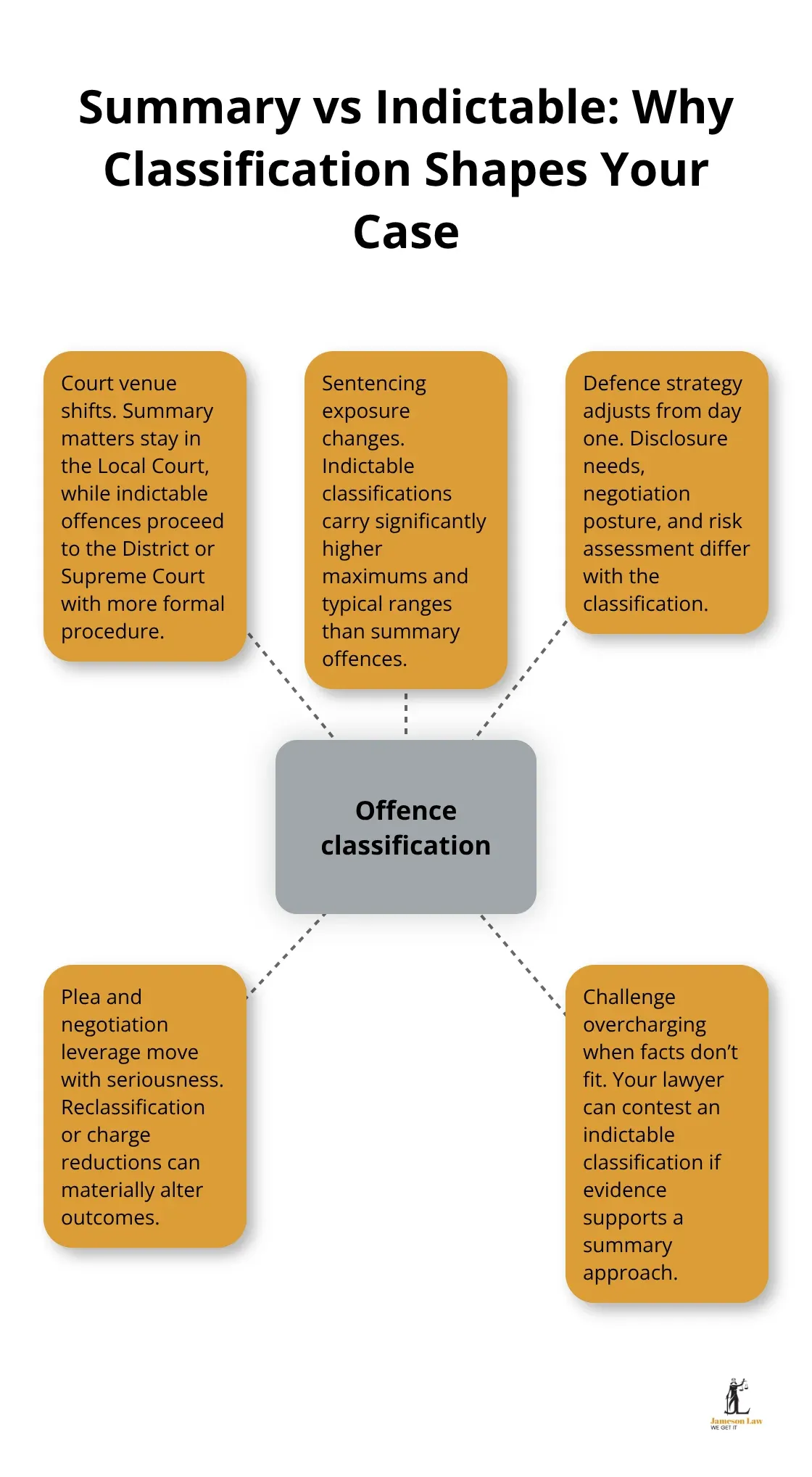
NSW splits criminal offences into two categories that fundamentally change where your case is heard and what penalties apply. Summary offences stay in Local Court with a maximum penalty of two years imprisonment, while indictable offences move to District or Supreme Court with significantly harsher sentencing ranges. This distinction matters immediately because it shapes your entire defence strategy from day one. An aggravated assault charge, for example, can be either summary or indictable depending on the circumstances, and that classification directly affects whether you face a few months or several years in prison. The prosecution’s choice of how to charge you isn’t neutral-it reflects their assessment of seriousness, but your defence lawyer should challenge this classification if the facts don’t support the higher category.
The Committal Process and Early Evidence Testing
Most cases in NSW never reach trial. The Australian Bureau of Statistics shows that the vast majority of matters are resolved through negotiation or guilty pleas, which is why early legal advice fundamentally changes your position. When you’re charged, the case starts in Local Court with what’s called a committal process, where the prosecution must prove there’s enough evidence to proceed. This is your first real opportunity to test their case and identify weaknesses-inconsistent witness statements, procedural errors, or breaches of your rights during investigation. Police must follow strict rules under the Law Enforcement (Powers and Responsibilities) Act 2002, including obtaining valid search warrants and maintaining proper evidence handling. If they break these rules, evidence gets excluded, which can collapse the Crown’s case entirely.
Your Rights from Arrest to Interview
Your right to silence is absolute from the moment of arrest, and exercising it doesn’t create any negative inference at trial. The moment you’re charged or arrested, contact a criminal defence lawyer before any police interview. This isn’t paranoia; it’s standard practice that protects your interests when the police have significant resources and you don’t. Police must caution you before questioning and must respect your request for legal representation. Understanding these entitlements before any interview takes place puts you in control of the process rather than reactive to it.
Early Guilty Pleas and Sentencing Discounts
Early guilty pleas entered before committal in Local Court can attract a 25% sentencing discount under the Early Appropriate Guilty Plea reforms, but this only works if you’ve negotiated properly and understand the real risks of proceeding to trial. This discount is substantial and can mean the difference between a custodial sentence and a community order. However, accepting a guilty plea without proper advice leaves you vulnerable to harsher outcomes than necessary. Your defence lawyer should map out both the plea pathway and the trial pathway so you make an informed choice based on the strength of the Crown’s evidence and your circumstances.
Building Your Defence Case
Start with the Full Brief of Evidence
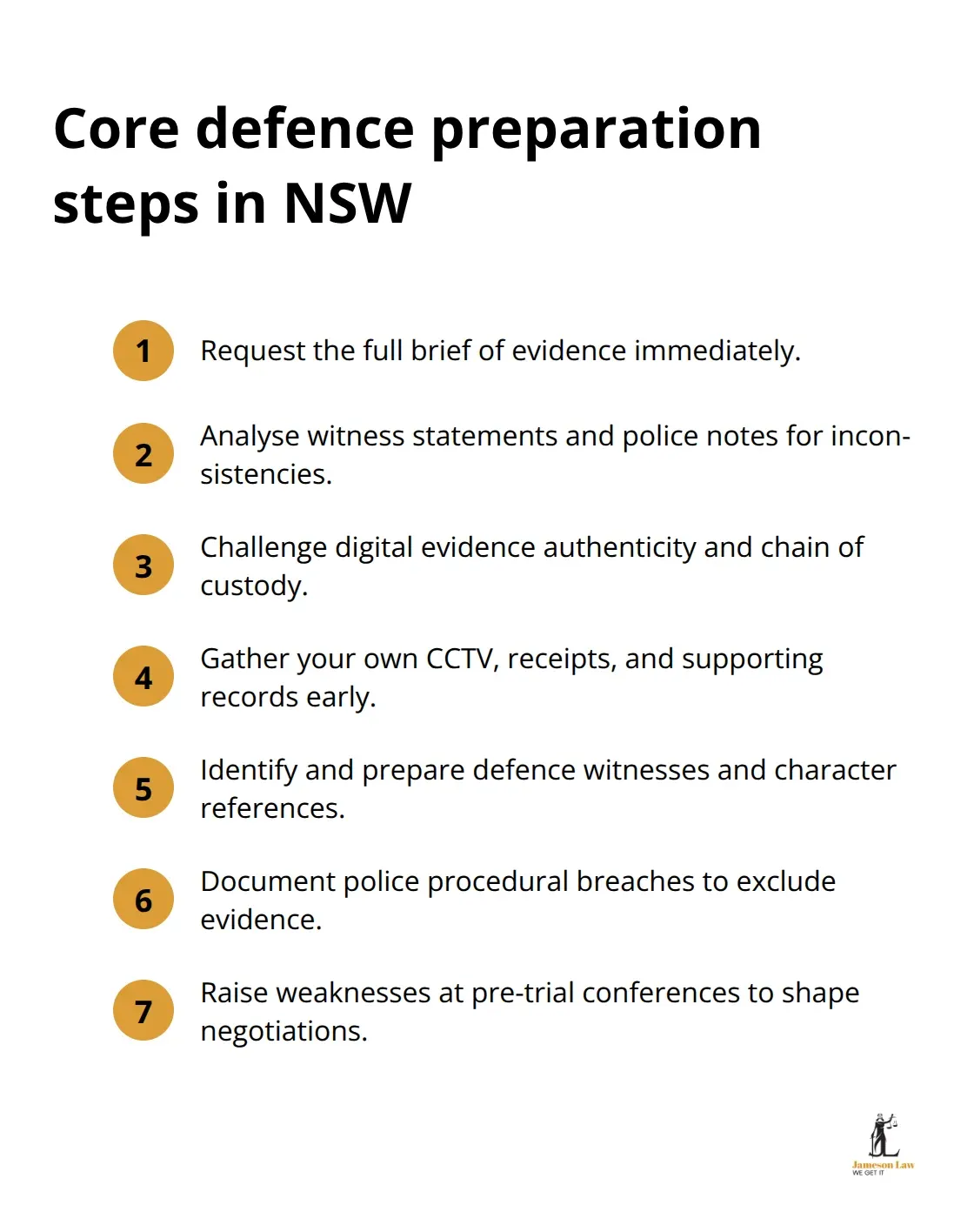
Your defence strategy starts the moment you’re charged, not when you walk into court. The Crown bears the burden of proving guilt beyond reasonable doubt, which means your job is to identify weaknesses in their evidence and expose them systematically. Request the full brief of evidence immediately from police or the prosecution. This document contains witness statements, police notes, forensic reports, and any other material the Crown intends to rely on.
Police investigations frequently contain procedural errors, contradictory witness accounts, or gaps in logic that become your leverage points. Many defendants miss this step or wait passively for disclosure, which squanders your early advantage when memories are fresh and evidence hasn’t been sanitised. The moment you obtain this material, review it carefully with your lawyer to map out inconsistencies and weaknesses.
Challenge Digital Evidence and Chain of Custody
Digital evidence is increasingly central to criminal cases, and it must be properly authenticated under the Evidence Act 1995. If the prosecution obtained phone records, text messages, or CCTV without valid warrants or with improper handling, your lawyer can apply to have that evidence excluded entirely. A broken chain of custody under the Law Enforcement (Powers and Responsibilities) Act 2002 can collapse entire charges.
For example, if police seized your phone without a warrant or failed to properly document how evidence was stored and accessed, that material becomes inadmissible. Text messages, online interactions, and intercepted communications can be taken out of context or misinterpreted by prosecutors. The prosecution must prove authenticity, and your defence can challenge whether a message actually came from you or whether the context supports their interpretation.
Build Your Own Evidence and Witness Support
Your defence narrative should address the prosecution’s strongest arguments head-on rather than hoping they go away. If they have four witnesses claiming you were present at a location, don’t argue you weren’t there; instead, explain why your presence doesn’t prove the alleged conduct. Building a credible defence case also means gathering your own evidence early.
Identify potential witnesses who support your account, obtain CCTV footage from nearby premises, preserve receipts or digital records that establish your whereabouts, and collect character references from employers, family, or community members. These materials don’t prove innocence, but they create reasonable doubt about the Crown’s version of events. Prepare to identify these weaknesses early and raise them at pre-trial conferences so prosecutors understand where their case is vulnerable.
Expose Police Procedure Violations
Challenging police procedures and evidence admissibility is where many defences succeed before trial even begins. Police must follow strict procedural rules, and violations give you grounds to suppress critical evidence. If officers conducted a search without a valid warrant or with a defective warrant, evidence obtained from that search can be excluded.
Your lawyer should scrutinise whether police obtained proper authorisation, whether they complied with caution requirements, and whether they respected your right to silence. Cross-examine witness testimony for inconsistencies, particularly in assault or domestic violence cases where credibility is everything. If a witness statement contradicts CCTV footage or earlier police notes, that contradiction weakens the Crown’s case materially.
Strengthen Your Negotiating Position
Most cases resolve through negotiation rather than trial, and thorough preparation strengthens your negotiating position significantly. When prosecutors know you’ve identified evidentiary weaknesses and procedural errors, they become more willing to withdraw charges, downgrade offences, or accept negotiated pleas with reduced sentences. The strength of your defence preparation directly influences what outcomes prosecutors will accept at the negotiation table. With solid evidence of police breaches or witness inconsistencies documented and ready to present, you shift the power dynamic away from the Crown’s resource advantage and toward a more balanced discussion about realistic outcomes.
Reducing Your Sentence Through Strategic Preparation
How Courts Determine Sentencing Outcomes
Sentencing in NSW criminal cases isn’t random, and courts don’t start from the maximum penalty then work downward. Objective seriousness of your actual conduct forms the starting point, and from there, judges consider aggravating and mitigating factors under section 21A of the Crimes (Sentencing Procedure) Act 1999. Prior criminal history is the strongest predictor of sentencing outcomes, particularly if you have recent or similar convictions. This means your defence strategy must address your record head-on rather than hoping the court overlooks it.
Countering Your Criminal History
If you have prior offences, your lawyer should present evidence of rehabilitation, employment, education, or treatment completion to counter the narrative that history predicts future behaviour. Aggravating factors like weapons, targeting vulnerable victims, or cruel conduct push sentences higher, and the prosecution will emphasise these relentlessly. Your job is to contest the framing of your conduct and present alternative interpretations supported by evidence. For instance, if you’re charged with assault, the Crown will argue you acted violently; your defence might establish that you used proportionate force to prevent imminent harm, which is lawful self-defence.
Demonstrating Genuine Remorse and Rehabilitation
Remorse and rehabilitation carry genuine weight in sentencing, but courts see through hollow apologies. Genuine remorse requires concrete action: psychological reports showing insight, treatment completion for substance or anger issues, character references from employers or community members, and evidence of stable employment or education. These materials don’t erase conduct, but they persuade judges that you’re not a continuing risk. A 25% sentencing discount is available for early guilty pleas entered in the Local Court, representing real money in penalty terms, but only if you’ve negotiated properly with prosecutors first.
Many defendants accept guilty pleas without understanding what sentence they’ll actually receive, which is a critical error. Before you plead, your lawyer should have frank discussions with the Crown about their sentencing position and obtain a realistic range rather than guessing. Most NSW criminal matters resolve without custody; Local Court handles roughly 90% of cases with outcomes typically fines, community orders, or conditional release rather than imprisonment. This means if you’re facing a serious charge, pushing for early negotiation often yields better results than waiting for trial.

Leveraging Guideline Judgments and Penalty Options
Guideline judgments issued by the Court of Criminal Appeal provide sentencing judges with frameworks for particular offence types, including drug importation, armed robbery, break and enter, and dangerous driving. These guidelines aren’t binding rules but rather indicators judges must consider. Defence can leverage guideline factors to seek mitigation by gathering evidence that matches the factors courts look for: early guilty plea, genuine remorse, rehabilitation prospects, and stable personal circumstances. If your case has features that justify departing from guideline ranges, your lawyer should articulate those reasons clearly so the judge understands why your circumstances warrant a lower sentence than the guideline might suggest.
Penalty categories include imprisonment, fines, community correction orders up to three years, and intensive correction orders as alternatives to short prison terms. For many offences, courts prefer non-custodial options if they can safely manage risk, which is why presenting a credible rehabilitation plan and stable living arrangements matters enormously. Breaches of conditional release or community correction orders get revoked and re-sentenced, so compliance from day one is essential. The prosecution bears the burden throughout sentencing as well; they must prove aggravating factors beyond reasonable doubt, which means your defence can challenge their assertions about your conduct or circumstances.
Building Your Sentencing Strategy Early
Early consultation with an experienced NSW criminal defence lawyer fundamentally improves sentencing strategy and outcome prospects by identifying which factors the court will view favourably and which require tactical mitigation.
Final Thoughts
Criminal law defence Sydney succeeds when you act quickly and strategically from the moment you’re charged. Contact a criminal defence lawyer before any police interview or court appearance to protect your right to silence, prevent statements from being used against you, and give your lawyer time to obtain the brief of evidence and identify weaknesses in the Crown’s case. Waiting passively costs you leverage when prosecutors are most willing to negotiate.
The sentencing outcomes we’ve achieved for clients demonstrate that preparation changes results enormously. A 25% discount for early guilty pleas, non-custodial alternatives to imprisonment, and successful challenges to police procedures all flow from thorough preparation and strategic advice. Your criminal history, remorse, and rehabilitation prospects can be presented persuasively if your lawyer builds the right narrative and gathers supporting evidence early.
Most criminal matters in NSW resolve through negotiation rather than trial, which means your defence preparation directly influences what prosecutors will accept. When you’ve identified evidentiary gaps, procedural breaches, or witness inconsistencies, you shift the negotiating dynamic in your favour. Contact Jameson Law for a free initial consultation to discuss your charges, understand your options, and map out a realistic pathway forward.