Drink driving NSW carries serious consequences that can reshape your life in seconds. A single mistake behind the wheel can result in hefty fines, licence loss, and court appearances that derail your future.
At Jameson Law, we’ve guided countless clients through drink driving charges. This guide breaks down the laws, penalties, defences, and how we can help you navigate what comes next.
What the Law Actually Says About Drink Driving in NSW
The Six Offence Categories and BAC Limits
The Road Transport Act 2013 sets out six distinct drink driving offences in NSW, each with its own blood alcohol concentration limit and consequences. Understanding which category applies to you matters because the difference between a low-range and high-range charge can mean the difference between a $704 fine and up to 18 months in prison. Unrestricted drivers have different limits depending on licence type, while learner and provisional licence holders have zero tolerance.
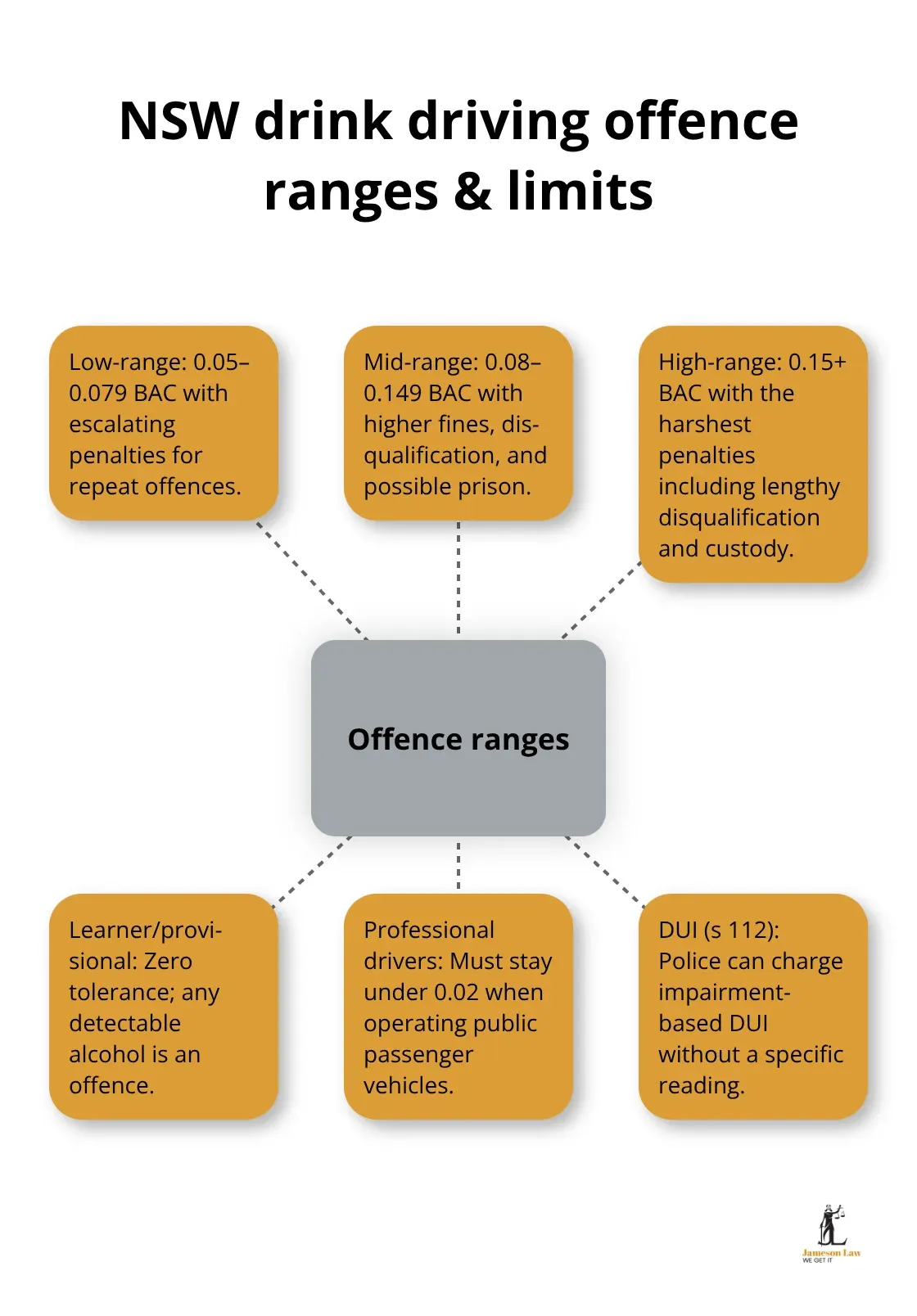
Professional drivers operating public passenger vehicles must stay under 0.02. The law divides offences into low-range (0.05–0.079), mid-range (0.08–0.149), and high-range (0.15 or above). NSW Police can also charge you with driving under the influence under section 112 of the Road Transport Act if they suspect impairment without a specific reading.
How Police Test for Alcohol
NSW Police use roadside breath testing to detect alcohol at the scene. The breath testing procedure itself matters legally because NSW Police must conduct the test within two hours of driving. If they test you more than two hours after you stopped driving, that evidence can be challenged in court. Blood tests follow a different protocol and require proper chain-of-custody procedures; any break in that chain weakens the prosecution case. Transport for NSW data shows drink driving contributes to about 1 in 7 crashes, which explains why courts take these offences seriously, but that same data also means judges have heard countless cases and understand context varies.
Automatic Licence Disqualification Periods
Licence disqualification is automatic under NSW law, not discretionary. A first low-range offence triggers a minimum 3-month disqualification, though courts can reduce this. Mid-range first offences carry a minimum 6-month disqualification, and high-range first offences mean at least 9 months off the road. If you receive a second offence within five years, the disqualification periods jump significantly-a second mid-range offence means minimum 12 months without a licence.
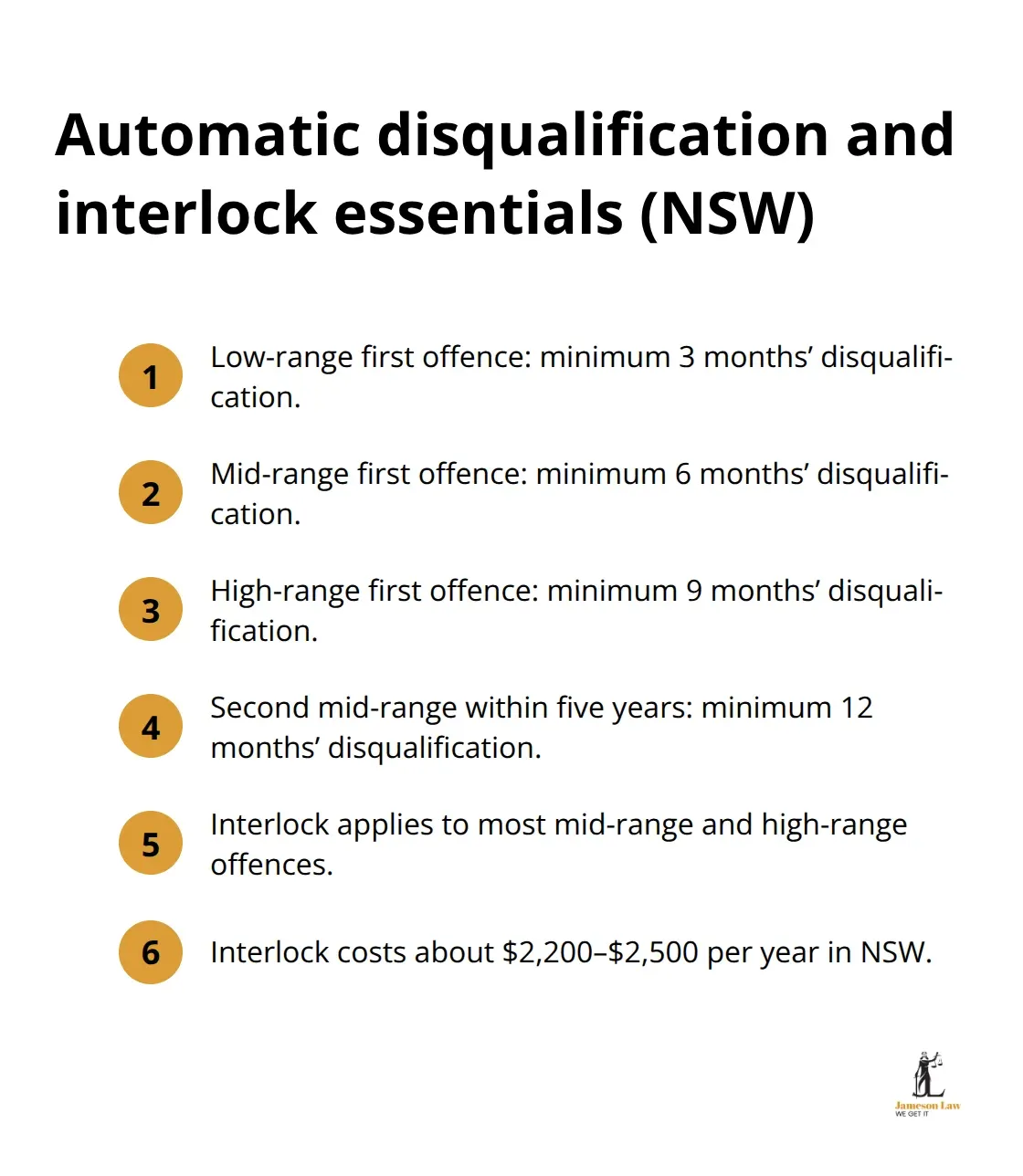
The interlock device requirement kicks in for most mid-range and high-range offences, meaning you cannot drive until the device is installed and you hold an interlock licence. This is not optional; courts impose it as a condition of sentencing unless you successfully argue an exemption applies. The cost runs between $2,200 and $2,500 annually through accredited NSW providers like Guardian Interlock Systems, Draeger Australia, Smart Start Interlocks, or Affordable Interlock Systems.
Your Right to Appeal Roadside Suspension
The timing of police action affects your options. If NSW Police suspend your licence at the roadside for a mid-range, high-range, or special-range offence, you have 28 days to appeal that suspension in Local Court if you can show exceptional circumstances. Many drivers miss this window and lose the chance to keep driving while their case proceeds. The prosecution must prove beyond reasonable doubt that you drove with a BAC over the limit or that you were impaired.
Procedural Defences That Weaken the Crown Case
This is where procedural defences matter-if the officer did not properly calibrate the breath testing device, if they did not observe you for the required 20 minutes before testing, or if they tested you outside the two-hour window, the evidence weakens. A pharmacologist can prepare a report showing your BAC may have been lower at the time of driving than when tested, since alcohol absorption continues for up to two hours after drinking. The at-home defence also applies; if you drank after arriving home and before driving, you may have been under the limit at the time of driving. These defences require evidence and expert input, which is why early legal advice is essential. Understanding which defences apply to your specific circumstances sets the foundation for what penalties you might face and what options exist to reduce them.
What Penalties Actually Apply to Your Drink Driving Charge
The Financial Impact Beyond the Fine
A drink driving conviction costs far more than the court-imposed fine. A first low-range offence under section 110 of the Road Transport Act 2013 carries a maximum fine determined by penalty units under NSW legislation, though NSW Police often issue penalty notices of around $704 with an immediate three-month licence suspension. Court fees, legal representation, and interlock device expenses add substantially to this amount. Mid-range offences jump to maximum fines of $3,300, while high-range offences reach $3,300 for a first offence and $5,500 for a second offence within five years. Prison becomes a realistic possibility at mid-range level-up to nine months for a first offence-and escalates to 18 months for high-range charges. The Road Transport Act makes these penalties mandatory minimums, not suggestions, though courts retain discretion to reduce licence disqualification periods in limited circumstances. A conviction itself creates ongoing costs: higher insurance premiums, employment barriers in transport or security sectors, and travel complications that extend well beyond sentencing.
How Disqualification Periods Work
Your licence disqualification period depends entirely on the offence category and whether you have prior convictions. Low-range first offences attract a minimum three-month disqualification, though courts commonly impose six months. Mid-range and high-range drink driving offences carry minimum disqualification periods that increase with severity. A second offence within the five-year lookback period triggers significantly harsher penalties; your disqualification extends from a minimum of 12 months to potentially three years. The Road Transport Act makes disqualification automatic, not discretionary, though courts can reduce the period in limited circumstances.
The Interlock Device Requirement and Costs
Once you complete your disqualification period, you cannot simply return to normal driving. Most mid-range and all high-range offences require installation of an approved interlock device before you obtain an interlock licence-a special restricted licence that permits driving only with the device fitted. This device costs between $2,200 and $2,500 annually through NSW-accredited providers and demands compliance for 12 to 24 months depending on offence severity. The device itself requires zero alcohol before your vehicle starts, and random in-journey tests occur during your drive. If you fail to maintain the interlock or breach its conditions, Transport for NSW can extend your participation by up to six months.
Tampering and Breach Consequences
Attempting to tamper with interlock results triggers penalties up to $5,500 and automatic disqualification of three to five years. For second or subsequent offences within five years, the interlock periods double-a second mid-range offence typically demands 24 months with the device. These escalating penalties reflect the seriousness with which NSW courts treat repeat offending.
Exemptions and How to Apply
Exemptions from interlock orders exist but are narrowly granted. You must prove severe financial hardship, demonstrate you own no vehicle, or show a medical condition preventing breath samples. Applications occur during sentencing, not afterwards, so your lawyer must raise this before the judge imposes the order. The difference between securing an exemption and facing years with an interlock device depends on how well you present your case at that critical moment in court.
How to Challenge the Evidence Against You
The Two-Hour Rule and Breath Test Timing
The prosecution case against you rests entirely on the reliability of breath or blood test results and the procedures police followed when collecting that evidence. If either fails scrutiny, the charge can be dismissed or reduced to a lesser offence. Under section 112 of the Road Transport Act 2013, it is an offence to drive or attempt to drive under the influence of a drug or alcohol. Police must conduct a breath test as soon as practicable after a positive roadside test, because alcohol absorption continues for up to two hours after drinking and your BAC at the roadside may have been significantly lower than the reading taken later. If police tested you significantly later without justification, that evidence becomes legally challengeable in court.
Procedural Defects in Testing
Police must follow strict procedures when conducting breath tests, and any deviation weakens their case substantially. If officers failed to observe you for the required 20 minutes before testing, did not properly calibrate the device, or conducted the test on private property rather than at an approved station, the evidence loses credibility. Blood tests require unbroken chain-of-custody procedures; any gap in documentation, mislabelling of samples, or improper storage provides grounds to challenge admissibility. These procedural defects occur more often than many drivers realise, which is why early instruction to a lawyer experienced in traffic offences matters significantly.
Expert Evidence and the At-Home Defence
A pharmacologist can prepare a report demonstrating your actual BAC at the time of driving versus the time of testing, and this evidence has successfully challenged prosecution cases in NSW courts. The at-home defence applies if you consumed alcohol after arriving home and before driving, meaning you may have been under the limit when driving even if the test showed a higher reading later. These defences require expert evidence and careful procedural analysis to succeed.
Mitigating Your Penalty at Sentencing
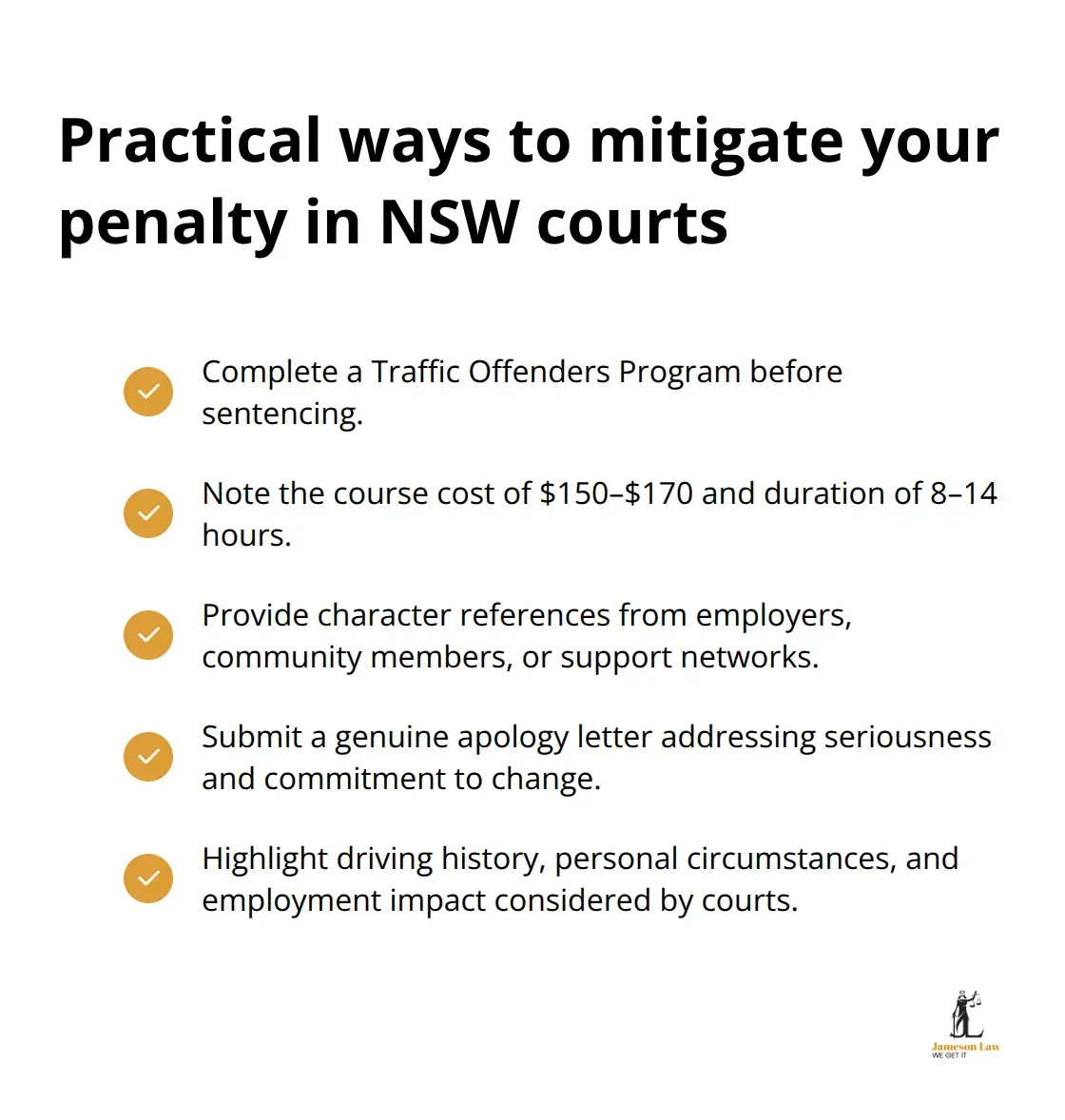
Courts consider your driving history, personal circumstances, employment impact, and steps taken to address the offence when determining final sentences. Completing a Traffic Offenders Program before sentencing demonstrates genuine insight and typically results in reduced penalties; these courses cost around $150–$170 and run for 8–14 hours, with completion documented for court consideration. Character references from employers, community members, or support networks carry weight, as does a genuine apology letter addressing the seriousness of drink driving and your commitment to change.
Securing an Interlock Exemption
If you face an interlock order, raising severe financial hardship, proving you own no vehicle, or providing medical evidence that you cannot provide breath samples may secure an exemption, though courts grant these rarely and only if you raise them at sentencing. Second offences within five years trigger mandatory escalation of penalties, so a first offence is the time to present the strongest possible mitigation case before the court. Negotiating with the prosecution to reduce the charge from high-range to mid-range, or mid-range to low-range, depends on weaknesses in their evidence and the strength of your defence case.
Final Thoughts
Drink driving NSW charges demand immediate action because the difference between a conviction and a non-conviction outcome often hinges on how quickly you seek legal advice and how thoroughly your lawyer challenges the evidence against you. We at Jameson Law have represented clients facing low-range, mid-range, and high-range offences, and we understand that your circumstances matter. Some clients have secured exemptions from interlock orders by presenting hardship evidence at the right moment in court, while others have had charges reduced through procedural defects we identified in police testing.
Your first step is straightforward: contact us for an initial consultation where we review the police materials, assess the strength of the prosecution case, and identify which defences apply to your specific facts. We explain the penalties you face, the interlock requirements that may apply, and realistic options for reducing the impact on your licence and record. We handle the court process from start to finish and negotiate with prosecutors where weaknesses exist in their evidence.
Contact Jameson Law today for practical, accessible legal advice tailored to your situation. The sooner you instruct us, the sooner we can begin building your defence strategy and protecting your future.