Sponsoring skilled workers through an employer sponsorship visa in NSW is a strategic move for businesses facing talent shortages. The pathway offers clear benefits, but navigating the requirements demands precision from both employers and applicants.
At Jameson Law, we’ve guided countless organisations through this process. This guide breaks down what you need to know to succeed.
What Businesses Must Establish Before Sponsoring Workers
Registering as an Approved Sponsor
The Department of Home Affairs requires your organisation to register as an approved sponsor before you can nominate any skilled worker. This registration forms the foundation of your sponsorship pathway, and the Department maintains strict standards because sponsor obligations directly affect visa holder compliance and Australia’s skilled migration integrity. Registration is not automatic-your organisation must demonstrate financial stability, genuine business operations, and a lawful track record. The Department assesses your company’s ABN, tax compliance history, and any prior involvement with visa programmes.
If your business is new, you must show at least two years of financial records or provide accountant-prepared projections. Organisations with unresolved tax debts, ongoing litigation, or previous visa breaches face rejection or significant delays. Once the Department approves your sponsor status, it remains active for five years, but the Department conducts random audits and can revoke approval if you breach conditions.
Maintaining Sponsor Obligations
After approval, you must maintain accurate employment records, payroll documentation, and evidence that sponsored workers remain in their nominated roles at agreed salary levels. This requirement is non-negotiable. The Department expects you to demonstrate ongoing compliance through regular record-keeping and transparent employment practices. Any breach of these conditions can result in revocation of your sponsor status and damage to your organisation’s reputation in the migration system.
Meeting Financial and Salary Requirements
Financial eligibility extends beyond basic business viability-you must prove capacity to support the worker’s employment and meet salary thresholds set by the Department. For most occupations, you must pay at least the Temporary Skilled Migration Income Threshold (TSMIT), which sits well above award rates. The Department maintains strict compliance standards to ensure genuine labour shortages and fair employment practices.
Demonstrating Labour Market Testing
You must demonstrate that no suitably qualified Australian worker is available for the position before you sponsor an overseas applicant. This typically involves advertising the role locally for four weeks through mainstream recruitment channels, documenting all applications received, and explaining why Australian candidates were unsuitable. The Department expects genuine recruitment efforts-posting a role on an obscure job board for a weekend will not satisfy this requirement.
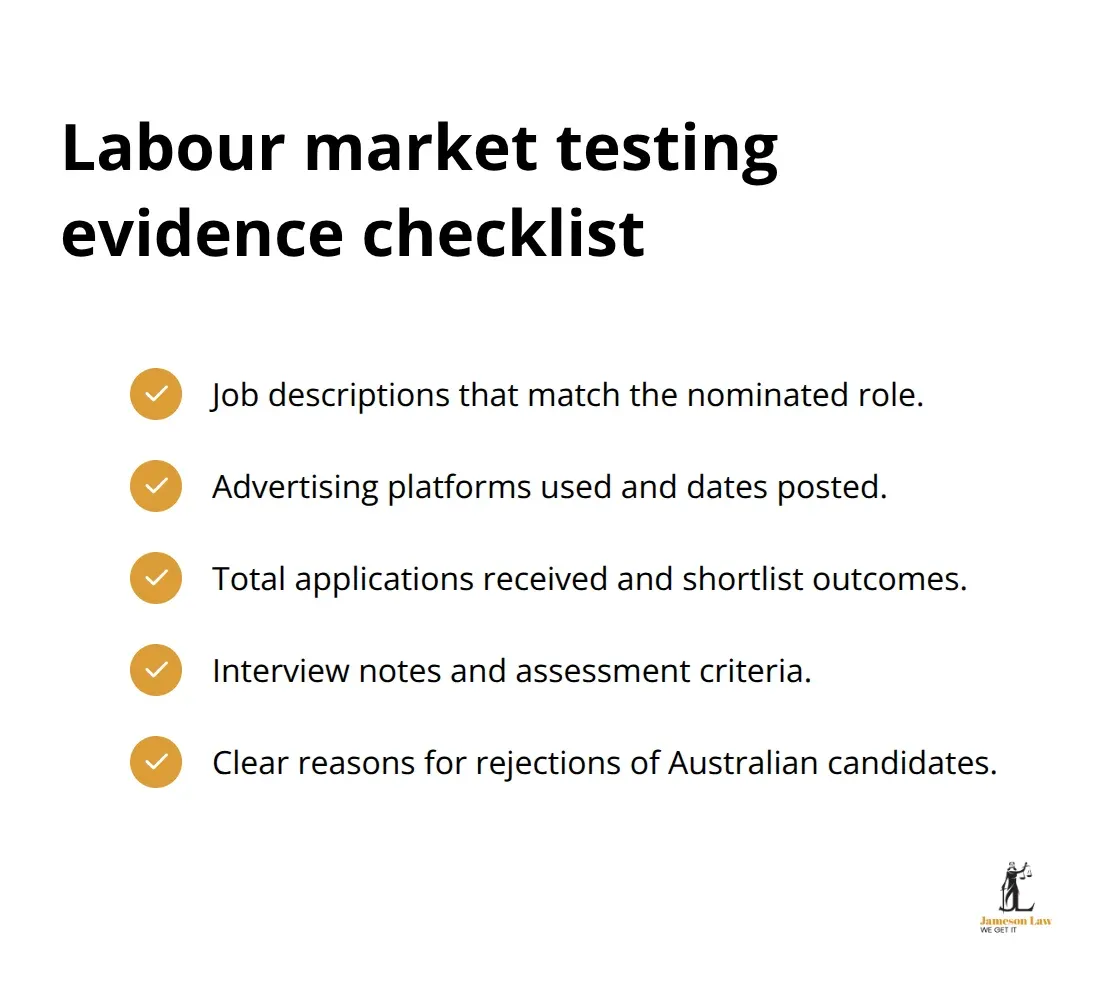
Keep detailed records showing job descriptions, advertising platforms used, application numbers, interview notes, and reasons for rejections. If you receive applications from qualified Australians but reject them based on subjective criteria like cultural fit or minor skill gaps, the Department will likely refuse your nomination. Your labour market testing strategy should reflect genuine occupational demand, but testing remains mandatory regardless of the role’s popularity.
What Comes Next for Applicants
Once you establish your sponsor credentials and complete labour market testing, the focus shifts to the applicant’s eligibility. Skilled workers must meet their own set of requirements before they can proceed with a nomination, and understanding these standards helps you identify the right candidates to sponsor.
What Applicants Must Prove to Qualify
Skilled workers pursuing employer sponsorship in NSW face rigorous eligibility requirements that demand careful preparation and honest documentation. Your sponsoring employer has already cleared significant hurdles, but your individual credentials determine whether the nomination succeeds. The Department of Home Affairs treats applicant requirements with the same strictness it applies to employers, so gaps in qualifications or character can derail an otherwise solid sponsorship opportunity.
Skills Assessment and Qualification Verification
A valid skills assessment from approved assessing authority stands as your first non-negotiable requirement. The Department requires assessment from an approved assessing authority specific to your occupation before you submit your Expression of Interest to NSW. This assessment verifies that your qualifications, work experience, and training genuinely match the nominated occupation at the required standard.
For occupations like Software Engineer (261313), which attracted 1,120 grants in the 2024-25 year, the assessing body scrutinises your technical credentials against current industry standards. For Chef (351311), which led NSW nominations with 1,940 grants in the same period, assessors verify your practical culinary experience and formal qualifications. The assessment itself typically costs between $300 and $600 and takes four to eight weeks.
Many applicants underestimate this timeline and rush the process, resulting in assessments that lack sufficient detail or fail to address specific skill gaps. You should invest time in providing comprehensive evidence during assessment because the Department will cross-reference your assessment outcome against your visa application documents. Discrepancies between your assessment and application claims trigger requests for further evidence or outright refusals.
Health Examination and Character Requirements
Your health examination and character requirements run parallel to skills assessment but demand equal attention. The Department mandates health clearance through an approved panel physician, and this examination includes chest X-rays, blood tests, and a full medical history review.
You must declare any criminal history, visa breaches in other countries, or character concerns, because the Department cross-checks your declarations against international criminal databases and immigration records. Character grounds for refusal include fraud or a history of serious breaches of immigration law. Even minor dishonesty in your application triggers character concerns that can result in permanent refusal of this visa and future Australian visas. The Department takes character assessment seriously because visa holders remain in Australia for extended periods under sponsorship arrangements.
Work Experience Documentation
Work experience requirements typically demand at least six months in your nominated occupation or a closely related field within the past ten years, though some pathways like the Skilled Work Regional visa (subclass 491) impose stricter timeframes. The Department verifies this experience through employment letters from your employer, payslips, tax records, and sometimes direct contact with your previous employers.
Generic employment letters stating you worked in a role without specific duties or achievements carry minimal weight. You should provide detailed letters that outline your key responsibilities, the proportion of time spent on core tasks, and specific achievements or projects. This documentation forms the backbone of your work experience claim, and weak evidence at this stage creates vulnerability later in the assessment process.
English Language Proficiency
English language proficiency represents the final critical requirement. The Department accepts English test results from approved providers like IELTS, TOEFL, or PTE, typically requiring scores that demonstrate functional workplace communication. For the Skilled Work Regional visa, you need at least functional English, while other pathways demand higher proficiency levels depending on your occupation and points strategy.
Test results remain valid for three years, so you should schedule your examination strategically around your visa timeline. Many applicants delay English testing until after nomination, creating unnecessary pressure and risking application failure if test results fall short of expectations. You must co-ordinate this requirement with your other documentation to maintain momentum through the nomination process.
Once you have satisfied these applicant requirements, your sponsoring employer can proceed with the formal nomination and visa application stages, where timing and documentation accuracy become equally important to success.
The Nomination and Visa Application Process
How the Nomination Stage Works
The nomination stage begins after your employer registers as an approved sponsor and completes labour market testing. Your employer submits a nomination to the Department of Home Affairs, formally proposing you for the visa. This nomination includes your job description, salary details, employment contract, and evidence of labour market testing. The Department typically processes nominations within six weeks of receiving the complete application, though complex cases can extend longer.
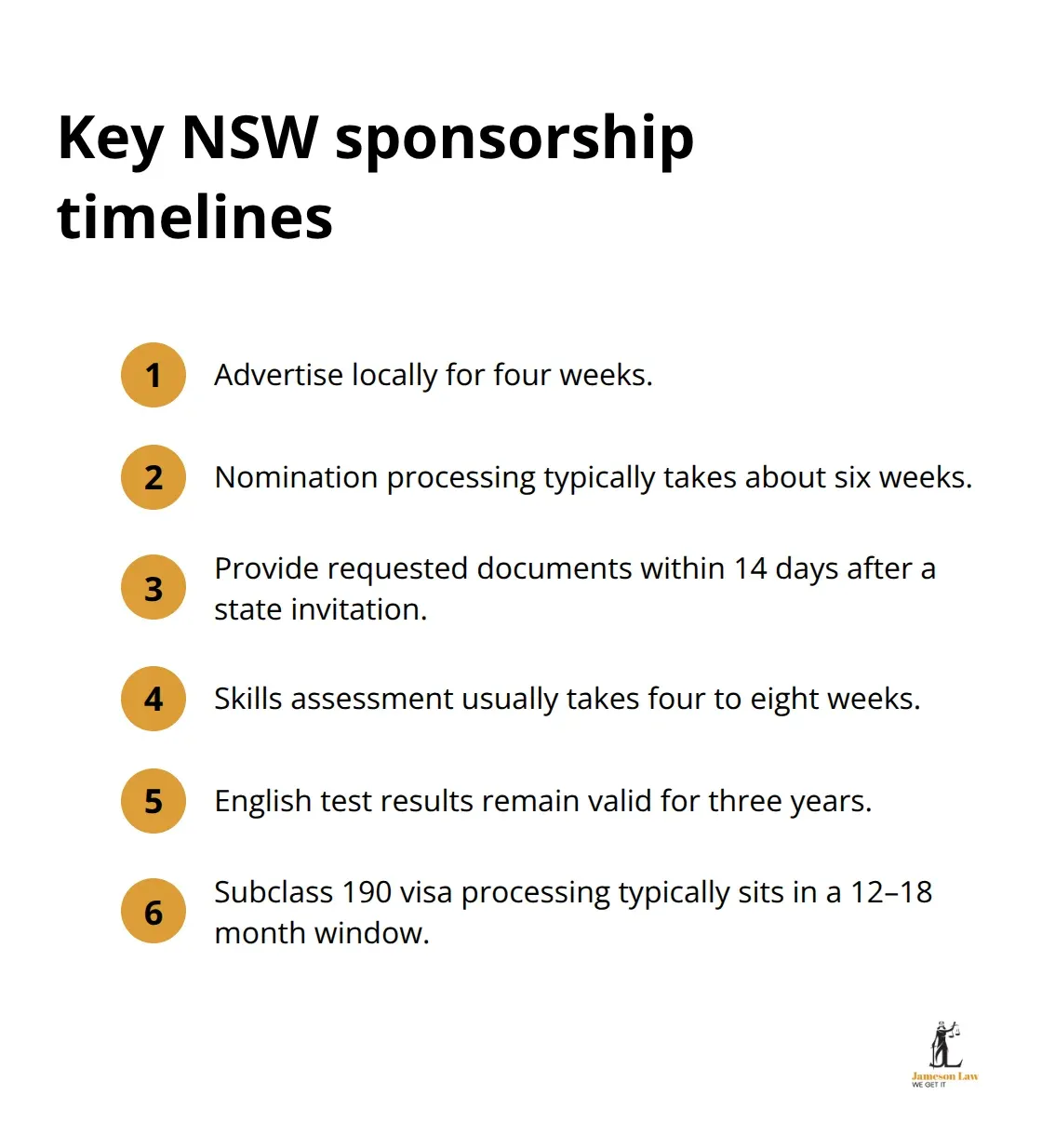
Accuracy and completeness matter most at this stage. Once a state invites you to apply for nomination, you typically have 14 days to provide documents that substantiate every claim in your Expression of Interest. Your employer should compile all documentation methodically before lodging, treating the nomination as a formal legal submission rather than a casual application.
Submitting Your Visa Application
Once the Department approves the nomination stage, you submit your formal visa application directly to the Department of Home Affairs. This application must include your skills assessment, health examination results, character clearance, work experience documentation, English language test results, and passport details. Processing times vary dramatically, with skilled migration visas like Subclass 190 typically sitting in a 12–18 month window for most applicants.
Many applicants assume nomination approval guarantees visa approval, but this assumption creates problems. The Department reassesses your eligibility at the visa application stage, and gaps or inconsistencies between your nomination and visa application can result in refusal. You must align every claim you make in your visa application with the evidence you provide and the information in your nomination. A discrepancy between your work experience claims in your visa application and your employment letters will trigger a request for further evidence or outright refusal.
Why Applications Fail: Common Rejection Reasons
Weak evidence rather than ineligibility itself causes most rejections. Applicants often submit generic employment letters that lack specific detail about their duties and achievements, making it difficult for the Department to verify work experience claims. Your employment letter should specify the proportion of time spent on core tasks, key responsibilities, and measurable outcomes. A generic letter stating you worked as a Chef without describing menu development, kitchen management, or food safety responsibilities carries minimal weight.
Applicants sometimes claim work experience that falls outside the ten-year window or fails to meet the six-month minimum, yet provide insufficient evidence of earlier experience to strengthen their application. The Department also refuses applications where character or health issues emerge during assessment that you did not disclose in the original submission. You must declare any criminal history, visa refusals from other countries, or medical conditions upfront, because concealment creates far more serious problems than honest disclosure.
Health and Character Issues That Trigger Refusal
Health examination results showing communicable diseases or serious medical conditions requiring ongoing treatment sometimes trigger refusal unless you demonstrate the condition poses no risk to Australian public health or public safety. English language proficiency failures occur when applicants delay testing until after nomination or attempt to use expired test results. Your English test results must remain valid throughout your visa application, so schedule testing with sufficient time to retake the examination if your first attempt falls short of required standards.
Building Momentum Before Nomination
Applicants who secure their English results, skills assessment, and character clearance before their employer submits the nomination create momentum and reduce pressure during the critical visa application phase. This preparation strategy allows you to address any gaps or concerns early, rather than discovering problems after nomination approval when time pressure intensifies and options narrow.
Final Thoughts
Employer sponsorship visa NSW pathways demand rigorous preparation from both businesses and skilled workers, but the effort yields substantial rewards for organisations facing genuine talent shortages and professionals seeking permanent residency in Australia. For businesses, the foundation rests on approved sponsor registration, demonstrated financial capacity, and honest labour market testing. These requirements exist because the Department of Home Affairs treats sponsorship as a shared responsibility between employers and government. Your compliance protects your organisation’s reputation and ensures visa holders remain productive contributors to your workforce.
For applicants, success hinges on securing a valid skills assessment, passing health and character requirements, and documenting work experience with precision. The Department cross-references every claim you make across your Expression of Interest, nomination, and visa application, so consistency and comprehensive evidence matter more than perfection. Applicants who prepare English language testing, skills assessment, and character clearance before nomination approval create momentum and reduce pressure during the critical visa application phase.
NSW received 25,680 primary skilled visa grants in the year to 30 June 2025, up 30.9% year on year, reflecting strong demand across health, hospitality, ICT, and construction sectors. This growth demonstrates the pathway’s importance to NSW’s economy and the genuine opportunities available for both employers and workers.
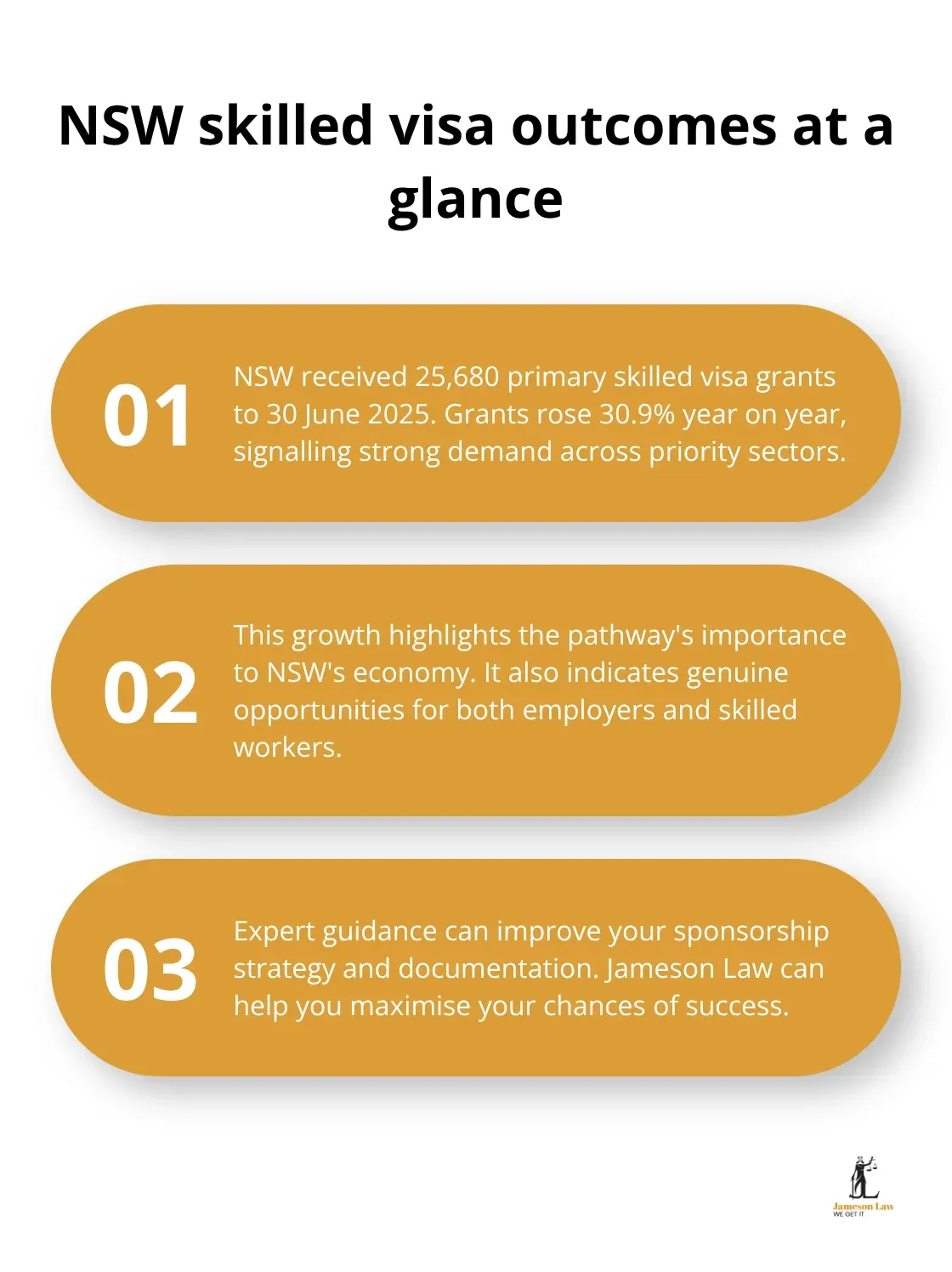
If you are navigating this process, professional guidance makes a measurable difference-contact Jameson Law to discuss your sponsorship strategy and maximise your chances of success.