Most Australians put off estate planning because they think it’s complicated or only for the wealthy. The reality is that without a proper plan, your family could face unnecessary stress, delays, and significant tax bills when you’re gone.
We at Jameson Law have helped hundreds of families implement estate planning strategies in Australia that protect their assets and provide peace of mind. This guide walks you through the common mistakes to avoid, the essential documents you need, and the practical strategies that actually work.
Common Mistakes That Derail Estate Plans
Failing to Update Your Will After Major Life Events
Most people write a will, file it away, and never touch it again. Life doesn’t work that way. Marriage, divorce, children, grandchildren, business sales, inheritance, relocation, and significant asset changes all shift the ground beneath your estate plan. University of Queensland research found that nearly 50 per cent of do-it-yourself wills are invalid or ineffective, often because people failed to update them to reflect changed circumstances.

You see this pattern constantly: a client updates their superannuation beneficiary after a divorce but forgets to update their will, or they acquire investment property yet their estate plan still reflects only their family home. A will written in 2015 that doesn’t account for your 2024 marriage or business acquisition creates confusion, conflict, and tax inefficiency for your family. Review your estate plan every three to five years, and immediately after any major life event. This isn’t optional-it’s the foundation of effective planning.
Naming Beneficiaries Unclearly or Not at All
About 45 per cent of Australians don’t have a valid will at all, but many who do fail to name beneficiaries clearly or leave multiple interpretations of who gets what. Vague language creates disputes among heirs and complicates administration. Write specific amounts or percentages, not vague phrases like “my children” or “my loved ones.”
Blended families face particular risk here. If you have children from previous relationships, testamentary trusts clarify distributions and protect assets for those children even if your surviving spouse remarries. Without this structure, your wishes may not survive a second marriage, and your children from the first relationship could lose their inheritance entirely.
Ignoring Tax Obligations and Capital Gains Implications
Most people underestimate executor duties and the capital gains tax implications that hit when assets transfer. Your executor must notify the Australian Taxation Office, lodge the final return for the deceased, handle any prior-year unfiled returns, and manage trust tax returns if the estate operates as a trust.
Superannuation creates a specific trap. If your superannuation has no binding death nomination in place, the trustee may distribute benefits to dependents rather than the estate, deferring tax but potentially bypassing your wishes. Capital gains tax rules apply to CGT assets transferred from the deceased estate, and without proper records of cost bases and rollovers, your beneficiaries face unexpected tax bills. These mistakes compound after death, when your family has no opportunity to correct them.
Getting the Structure Right From the Start
Work with professionals who understand both the legal structure and the tax mechanics. The cost of fixing these mistakes after death always exceeds the cost of getting them right beforehand. A properly structured estate plan-one that coordinates your will, superannuation nominations, powers of attorney, and tax strategy-protects your family from preventable stress and expense.
The next step involves understanding which documents actually form the backbone of an effective estate plan, and how each one serves a specific purpose in protecting your family’s future.
Documents That Form Your Estate Plan’s Foundation
A strong estate plan rests on multiple documents working together, not a single will sitting in a drawer. Your will handles assets in your personal name, but it controls nothing held in superannuation, trusts, or investment bonds.
Testamentary Trusts: Protection for Blended Families and Vulnerable Beneficiaries
Testamentary trusts created within your will offer significant advantages, particularly for blended families or beneficiaries who cannot manage money themselves. A testamentary trust lets the trustee distribute income and capital according to beneficiaries’ circumstances and tax positions rather than handing over a lump sum. This structure protects assets if a beneficiary faces divorce, bankruptcy, or poor financial decisions.
The trustee must lodge annual tax returns and maintain complete records including trust resolutions and financial statements. The administrative effort pays off through tax flexibility and asset protection that a simple will cannot provide.
Powers of Attorney: Planning for Loss of Capacity
Powers of attorney operate separately from your will and address what happens if you lose capacity while alive. An enduring power of attorney for financial matters lets your appointed attorney make decisions about bank accounts, investments, and property if you cannot. An enduring power of attorney for healthcare and lifestyle decisions covers medical treatment preferences and personal care choices.
These documents take effect immediately upon signing and continue if you lose capacity, whereas your will only operates after death. Without these in place, your family faces court applications and significant delays if you suffer a stroke or develop dementia.

Superannuation and Life Insurance: Beneficiary Nominations That Bypass Your Will
Superannuation death benefit nominations deserve obsessive attention because they bypass your will entirely. A binding death benefit nomination directs the trustee to pay benefits to named beneficiaries tax-free if they are dependents. Without a binding nomination, the trustee has discretion to distribute to dependents, potentially deferring tax but ignoring your wishes.
Life insurance proceeds paid to a named beneficiary also avoid probate and provide immediate tax-free funds for funeral costs, debts, or maintaining family lifestyle. Review all beneficiary designations every three to five years because life insurance and superannuation rules change, and your circumstances evolve.
Coordinating Your Documents to Prevent Conflicts
The University of Queensland research mentioned earlier showed nearly 50 per cent of do-it-yourself wills fail because people overlook coordination points between documents. Coordinate these three layers-will, powers of attorney, and superannuation/insurance nominations-with tax and family law advice to prevent one document contradicting another or leaving assets without clear direction.
This coordination becomes even more complex when you own a business or hold assets across multiple states. The next section explores the specific strategies that protect your family’s wealth across these different asset types and circumstances.
Protecting Your Wealth Through Trusts and Strategic Gifting
How Discretionary Trusts Control Asset Distribution
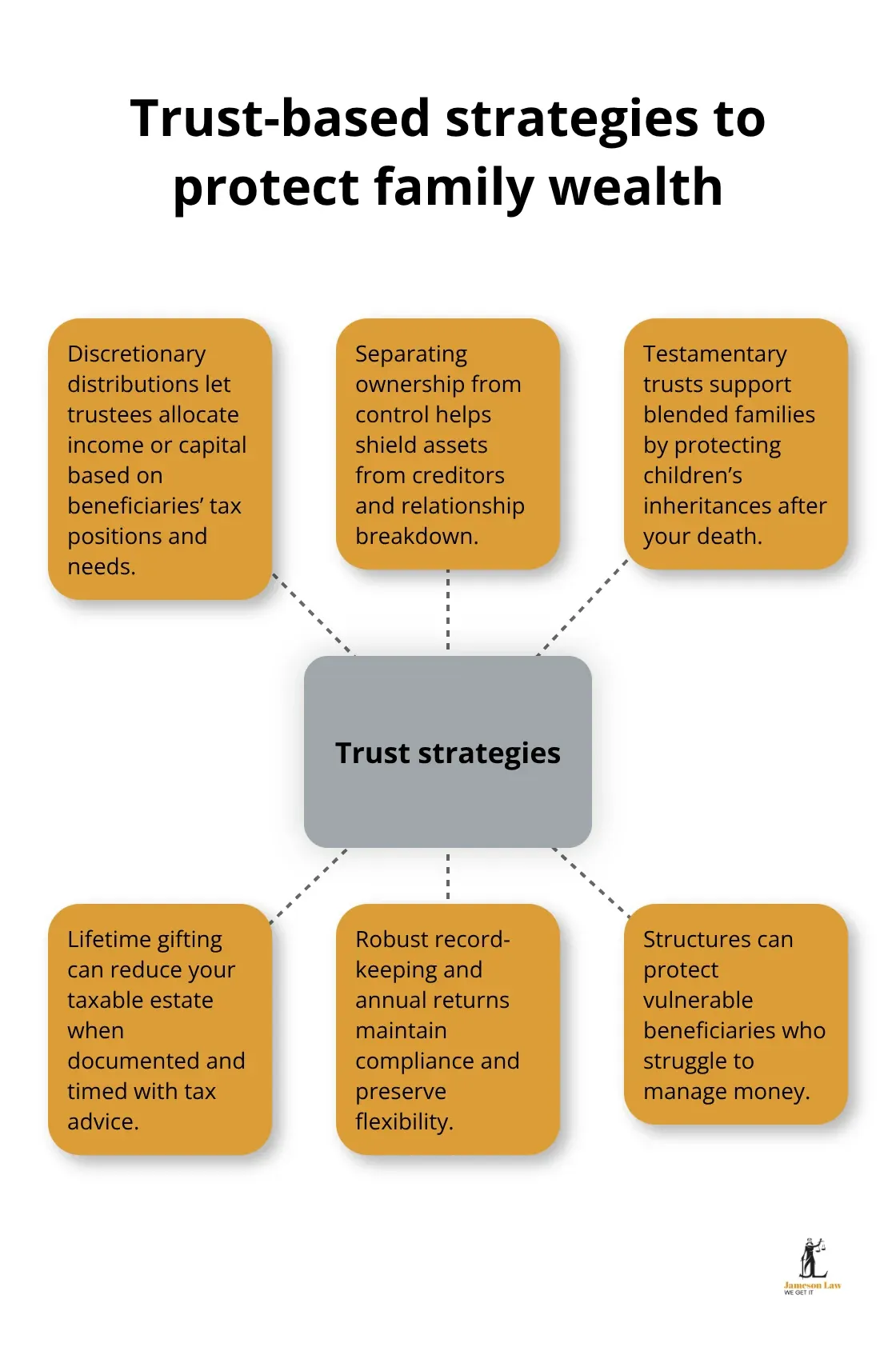
Trusts sit at the centre of serious wealth protection in Australia, yet most people treat them as optional add-ons rather than essential tools. Discretionary trusts give you control over how and when beneficiaries receive income and capital, which matters enormously when beneficiaries have different tax positions, face relationship breakdown, or struggle with financial management. The trustee can distribute capital to a low-income beneficiary tax-free or retain earnings in the trust itself, depending on circumstances. This flexibility beats a straightforward will by miles because it adapts to changing situations without requiring court intervention or new legal documents.
Separating Ownership From Control Through Trust Structures
When you own investment property, shares, or business assets, holding them through a trust separates legal ownership from beneficial ownership, shielding those assets if a beneficiary faces creditor claims or divorce proceedings. A testamentary trust created within your will operates the same way but only after death, making it invaluable for blended families where you want your children protected even if your surviving spouse remarries. The trustee maintains complete records including trust resolutions and financial statements, and this administrative effort pays off through tax flexibility and asset protection that a simple will cannot provide.
Lifetime Gifting Reduces Your Taxable Estate
Gifting assets to adult beneficiaries during your lifetime reduces your taxable estate and can avoid capital gains tax. In Australia, gifts are generally not considered income and do not attract income tax. The key is documenting each gift formally and understanding that gifts to minors must flow through a trust or be held in trust until they reach adulthood. Work with a tax adviser to coordinate gifting with your overall wealth strategy because timing matters, and poor execution can trigger unintended tax consequences.
Protecting Children in Blended Families Through Proactive Planning
Blended families especially benefit from proactive gifting strategies because you can transfer assets directly to your children from a previous relationship during your lifetime rather than relying on your will, which your surviving spouse might challenge or which could be reshaped through subsequent family law claims. Without clear structures, your children from a previous relationship might receive nothing if your current spouse outlives you or if your estate faces unexpected claims. Testamentary trusts and lifetime gifting combined give you certainty that your wishes survive family change, and the risks of inaction outweigh the complexity significantly.
Final Thoughts
Your estate plan is not something you create once and forget. It’s a living document that protects your family through life’s changes, and it requires attention and professional guidance to work properly. The mistakes we’ve outlined-failing to update after major events, leaving beneficiaries unclear, and underestimating tax implications-are entirely preventable with the right approach.
Start by gathering your documents and listing your assets, then identify your beneficiaries and review your current will, superannuation nominations, and powers of attorney. If you don’t have these documents, that’s your first priority, and if you do have them, check when you last updated them. If more than three to five years have passed, or if your life has changed significantly, they need revision.
Estate planning strategies in Australia involve tax rules that change, family law that evolves, and circumstances that shift-which means you shouldn’t navigate this alone. We at Jameson Law can help you implement an estate plan that actually protects your wealth and reflects your wishes, and our team understands the coordination required between your will, superannuation, trusts, and tax strategy to prevent costly mistakes. Contact Jameson Law to discuss your specific situation, because a professional review costs far less than fixing problems after you’re gone.