Family law orders aren’t set in stone. Life changes, and sometimes those changes require legal adjustments to existing arrangements.
We at Jameson Law see families facing this challenge regularly. A family law review can modify custody, support, or property arrangements when circumstances shift significantly.
The process involves specific legal steps and deadlines that many people find overwhelming without proper guidance.
What Triggers a Family Law Review
A family law review becomes necessary when significant changes affect your original court orders. The Federal Circuit and Family Court of Australia recognises that life circumstances shift, making previous arrangements unsuitable or unworkable.
Major Life Changes That Warrant Review
Income changes often trigger property settlement reviews, particularly when spousal maintenance is involved. Job loss, promotion, or career changes can substantially alter your financial capacity. Relocation for work or family reasons frequently necessitates custody arrangement modifications.
Health issues that affect either parent or children create compelling grounds for review. New relationships or re-marriage can impact both financial obligations and parenting arrangements. Separated parents frequently seek order modifications due to changed circumstances.
Court Orders Subject to Review
Parenting orders that cover custody, visitation, and decision-making authority can be reviewed when children’s needs change or safety concerns arise. Property settlement orders may require modification if hidden assets surface or valuations were incorrect.
Spousal maintenance orders often need adjustment when income levels shift significantly. Child support arrangements (while typically handled through Services Australia) may require court intervention for complex cases that involve high incomes or special circumstances.
Filing Requirements and Deadlines
Applications for review must be filed within 21 days of the original order through the court registry via email. Service on all parties must occur within 7 days after filing. The application doesn’t automatically suspend existing orders – you need a separate stay application for that purpose.

Filing fees vary by case complexity, ranging from $365 for simple applications to $1,195 for complex property matters. Missing these deadlines can result in your application being dismissed, so immediate legal action is necessary when circumstances change.
Understanding these triggers and requirements sets the foundation for your review application. The next step involves gathering the right documentation and evidence to support your case.
How Do You Build a Strong Case for Review?
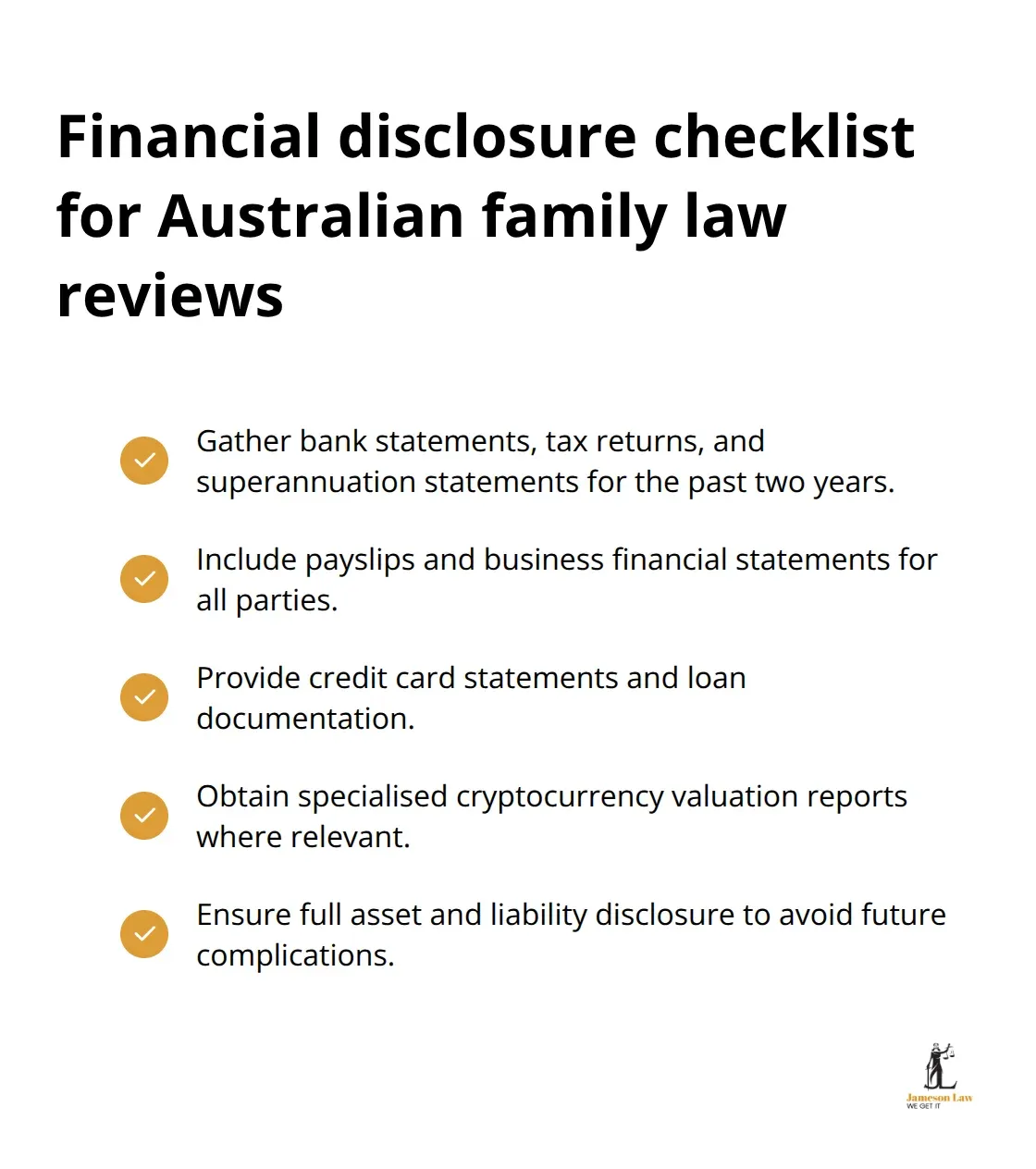
Success in your family law review depends entirely on the quality of your documentation and evidence preparation. The Federal Circuit and Family Court of Australia requires comprehensive financial disclosure, and incomplete submissions routinely result in delayed proceedings or unfavourable outcomes. Start to gather bank statements, tax returns, and superannuation statements from the past two years immediately after you file your application. Property valuations must be current – appraisals older than six months carry little weight in court proceedings.
Financial Records That Courts Demand
Your financial disclosure must include every asset, liability, and income source without exception. All parties to a family law dispute must provide to each other party all information relevant to an issue in the case. Collect payslips, business financial statements, credit card statements, and loan documentation for all parties involved. Cryptocurrency holdings require specialised valuation reports from qualified digital asset assessors. Hidden assets discovered after settlement can trigger fresh proceedings, which makes thorough initial disclosure your strongest protection against future complications.
Documentation Strategy for Complex Cases
High-net-worth separations demand forensic accounting reports to trace asset movements and identify potential concealment strategies. Engage qualified family law barristers early in complex property matters – their expertise often reduces overall legal costs through efficient case management. Document all communication with your former partner about children or finances through written channels only. Social media posts become admissible evidence, so suspend all posts about your separation immediately. Professional counselling records may support your parental capacity claims, but medical confidentiality requires careful legal navigation.
Legal Representation Requirements
Self-representation in family law reviews typically results in poor outcomes due to complex procedural requirements and evidence rules. Experienced family lawyers understand judicial preferences and can anticipate opposing counsel strategies effectively. Family lawyers in Australia charge between $300 and $750 per hour depending on experience, location, and case complexity, but proper legal representation often recovers these expenses through improved settlement outcomes.
Even with strong documentation and legal support, you’ll face specific challenges that can derail your review application if not properly addressed.
What Obstacles Will Derail Your Review?
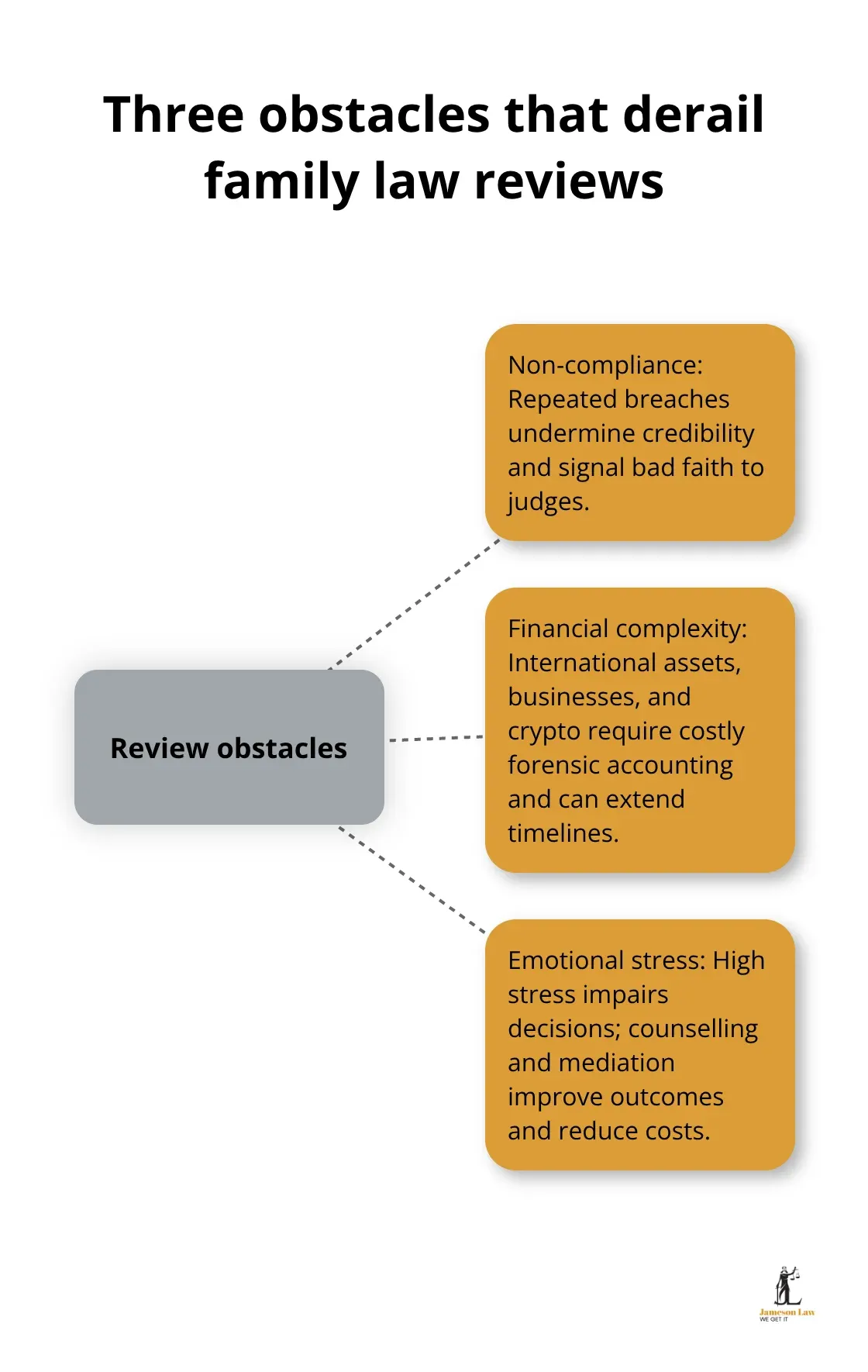
Family law reviews face three critical obstacles that destroy most applications before they reach court. Non-compliance with court orders creates immediate credibility problems with judges, who view repeated violations as evidence of bad faith. The Federal Circuit and Family Court of Australia reports that failed review applications often stem from applicants who previously breached orders.
Non-Compliance Documentation Strategy
Document every instance of non-compliance through dated photographs, screenshots, and witness statements. Courts impose penalties from fines to imprisonment for serious breaches. Your compliance documentation becomes your strongest weapon in review proceedings. Judges scrutinise past behaviour patterns when evaluating credibility for future arrangements.
Financial Complexity Demands Expert Analysis
Complex financial arrangements demand forensic accounting expertise that most general family lawyers lack. Cryptocurrency divisions, international assets, and business valuations require specialised knowledge that costs between $15,000 and $50,000 for comprehensive reports. Trust structures and offshore assets create additional complexity that extends proceedings six to twelve months without expert guidance.
The Australian Securities and Investments Commission requires specific disclosure procedures for corporate assets that most self-represented litigants mishandle completely. Professional accountants familiar with family law proceedings can navigate these requirements effectively.
Emotional Stress Management
Research shows that separated parents experience significant stress during court proceedings. Professional counselling reduces legal costs through improved decision-making capacity and better negotiation outcomes. Meditation and stress management techniques help maintain focus during lengthy proceedings (which average 18 months for complex reviews).
Courts respond negatively to emotional outbursts, which can damage your credibility permanently and affect custody determinations. Mental health support becomes essential for successful case management throughout the review process.
Final Thoughts
Your family law review success depends on three fundamental elements: thorough preparation, professional guidance, and realistic expectations. The court requires you to file within the 21-day deadline, which represents just the beginning of a complex legal process that typically spans 12 to 18 months for contested matters. Professional legal assistance becomes essential when you deal with property settlements exceeding $500,000, complex parenting arrangements, or cases where domestic violence concerns exist.
We at Jameson Law help clients navigate family law review procedures and evidence requirements effectively. Self-representation in these matters frequently results in unfavourable outcomes due to technical complexities that general legal knowledge cannot address. Courts impose strict procedural requirements that experienced family lawyers understand and can manage properly.
You must accept the court’s decision and implement new arrangements immediately after your family law review concludes. Non-compliance with revised orders triggers contempt proceedings that can result in fines or imprisonment (up to 15 years for serious breaches). The emotional toll of family law proceedings often extends beyond the legal resolution, which makes ongoing counselling support valuable for long-term adjustment and successful co-parenting relationships.