Migration agents play a vital role in helping Australians navigate complex visa applications and immigration pathways. Understanding migration agent requirements in Australia is essential if you’re considering hiring one or pursuing this profession yourself.
At Jameson Law, we’ve seen firsthand how qualified migration agents make a real difference in immigration outcomes. This guide covers the licensing standards, qualifications, and responsibilities that define professional migration agents in Australia.
How to Get Registered as a Migration Agent in Australia
The Mandatory Registration Process
To legally provide immigration assistance in Australia, you must register with the Office of the Migration Agents Registration Authority, commonly known as OMARA. This isn’t optional-the Migration Act 1958 makes registration mandatory. Without it, offering immigration advice or lodging visa applications on behalf of clients is unlawful. OMARA maintains the official register of migration agents and oversees the entire registration framework.
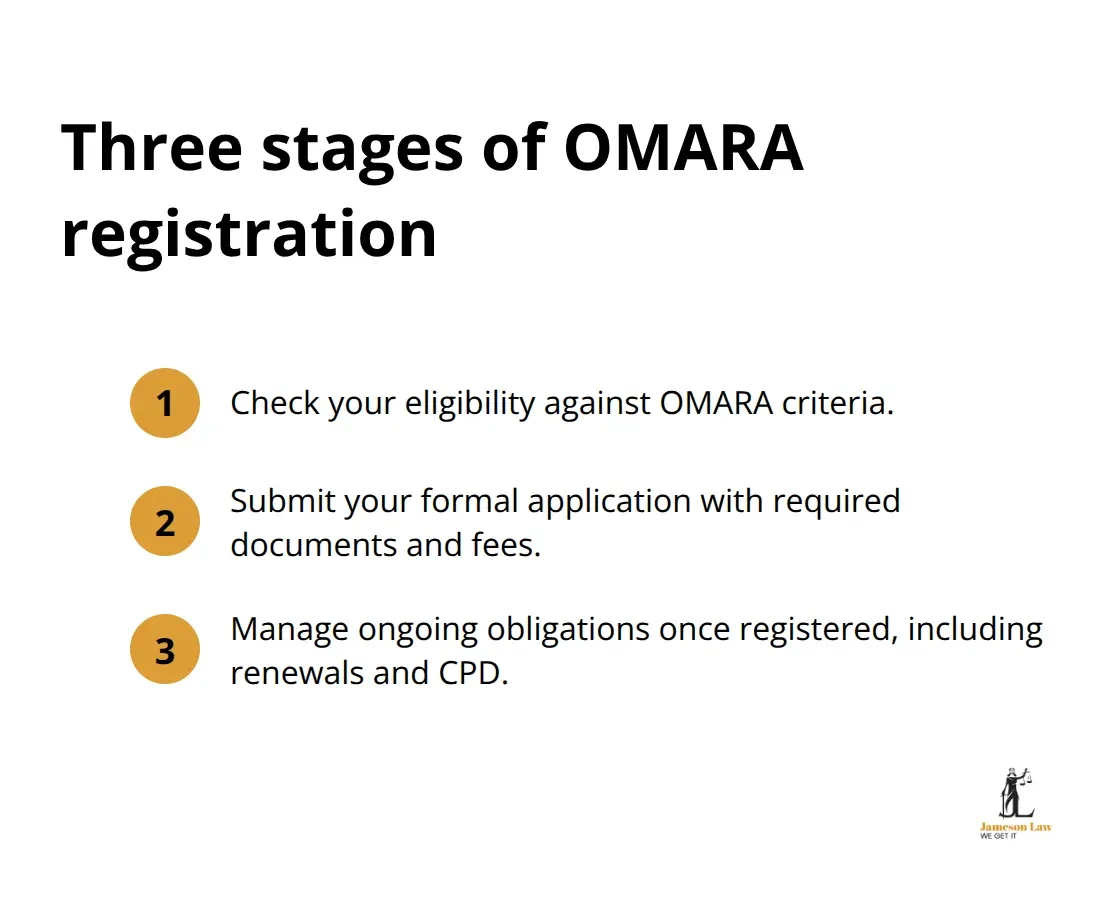
The registration process involves three distinct stages: checking your eligibility before applying, submitting your formal application, and then managing ongoing obligations once registered. Most people underestimate how rigorous this process is.
Educational and Professional Requirements
You’ll need to complete a Graduate Diploma in Australian Migration Law and Practice from an approved university and achieve English language proficiency equivalent to IELTS 7.0. After finishing your studies, you must pass the Capstone Assessment. Professional Indemnity Insurance with minimum coverage of AUD 250,000 is mandatory, and you must pay the annual OMARA registration fee of AUD 1,900.
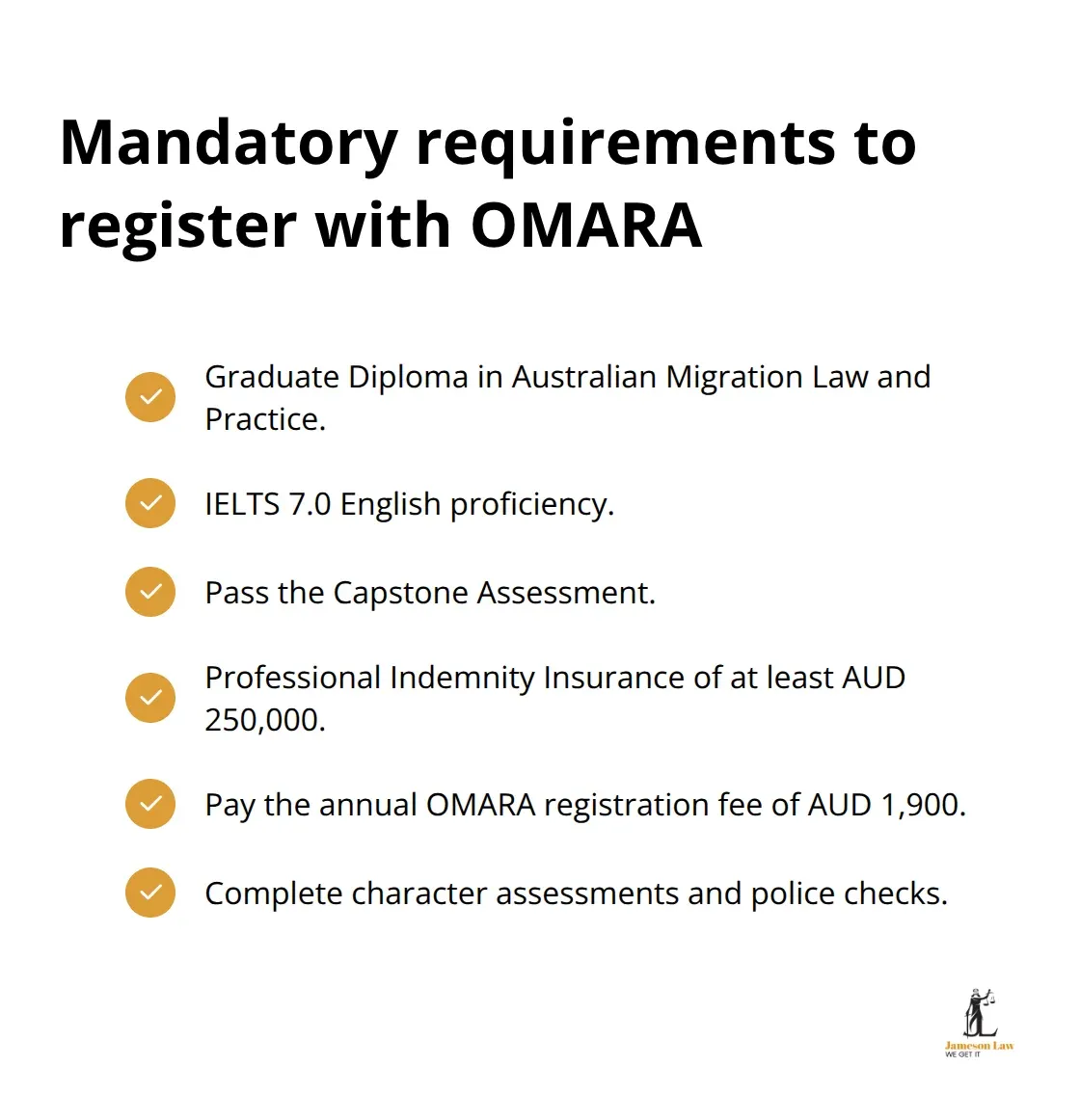
Character assessments require national police checks and clearances from any countries you’ve lived in. These aren’t bureaucratic hurdles-they exist because clients depend on agents to handle sensitive personal information and make decisions that affect their migration outcomes.
Ongoing Compliance and Audit Requirements
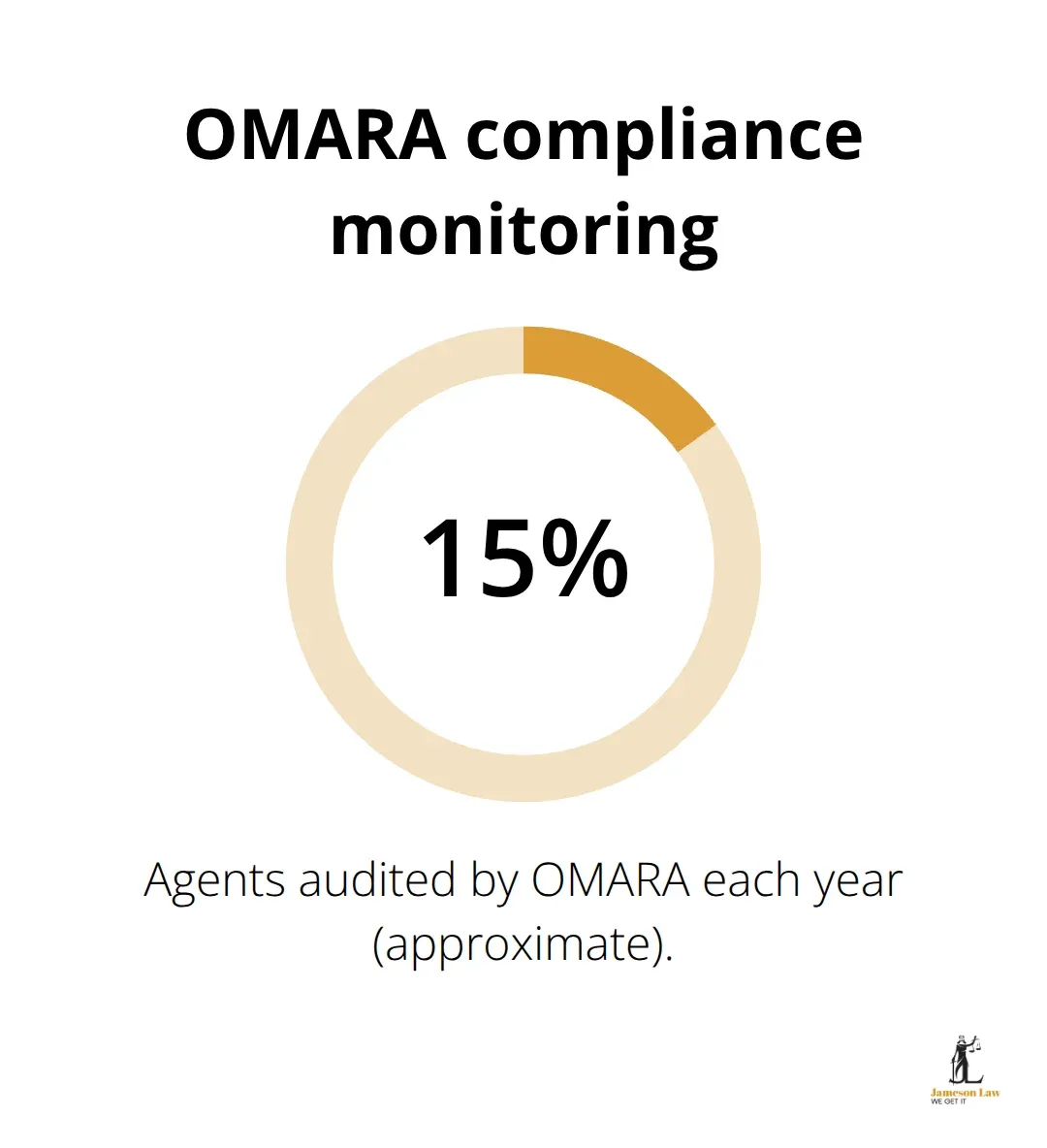
Once registered, the obligations don’t end. OMARA audits approximately 15 per cent of agents annually and requests documentation during these audits. You must respond to OMARA requests within 14 days, and missing this deadline is a common reason agents lose their registration.
Continuing Professional Development is mandatory, requiring 10 CPD points per year. Annual renewal is due by December 31, and failing to renew on time automatically removes you from the register.
You must maintain comprehensive client files that capture every piece of advice given, the risks identified, and the outcomes reached. Written fee agreements must clearly outline costs, timelines, and services provided.
Public Accountability and Conduct Standards
OMARA publishes activity reports every six months detailing registered agents, complaint outcomes, and sanctions imposed. These reports are public, meaning your conduct history may be scrutinised by potential clients. Common reasons agents lose registration include missing documentation, poor client communication, and failing to stay current with policy changes.
Migration law is dynamic-policy changes happen frequently, and staying current through CPD isn’t just a box-ticking exercise. The regulatory framework exists to protect clients and maintain professional standards across the industry. Understanding these requirements is the first step, but knowing how to implement compliant systems and stay ahead of policy changes requires ongoing attention and expertise.
Building Your Qualifications as a Migration Agent
The Non-Negotiable Diploma Requirement
The pathway to becoming a migration agent in Australia is structured and demanding. You cannot skip steps or take shortcuts. The Graduate Diploma in Australian Migration Law and Practice from an approved university is non-negotiable. This isn’t a short course or online certification-it’s a formal tertiary qualification that teaches you the substantive law, case law, and practical application of migration legislation. Universities across Australia offer this diploma after OMARA approval. The curriculum covers visa categories, application procedures, client representation, and the legal framework governing migration assistance. Most graduates complete this over 12 months of full-time study, though part-time options extend the timeline.
Passing the Capstone Assessment
After you complete the diploma, you must pass the Capstone Assessment within 12 months of finishing your studies. This assessment isn’t theoretical-it examines whether you can actually advise clients and lodge applications correctly. The test focuses on practical knowledge and real-world application of migration law. Failing the Capstone means you cannot proceed to registration, so thorough preparation is essential. Many candidates treat this assessment as seriously as they would a professional licensing exam, and that approach is warranted.
English Language and Insurance Requirements
English language proficiency equivalent to IELTS 7.0 is mandatory, and this requirement exists because migration advice involves precise communication with clients and government agencies. A score below 7.0 means you cannot register, regardless of your other qualifications. You must also secure Professional Indemnity Insurance with AUD 250,000 minimum coverage before you submit your application to OMARA. This insurance protects both you and your clients against potential claims arising from your professional work.
Character Assessment and Application Submission
The character assessment requires national police checks and clearances from every country where you’ve lived for more than three months. This process typically takes weeks to complete. Once you’ve gathered all documentation (your diploma, Capstone results, English language proof, insurance certificate, and character clearances), you submit your formal application to OMARA along with payment of the AUD 1,900 annual registration fee. OMARA then reviews your application, which can take several months.
Timeline and Planning Considerations
The entire process from starting your diploma to holding active registration often takes 18 to 24 months, so aspiring agents should plan accordingly and understand that this timeline isn’t unusual. The regulatory framework demands this level of scrutiny because clients depend on agents to handle sensitive personal information and make decisions that affect their migration outcomes. Once you hold registration, your obligations shift from qualification to compliance-maintaining your Professional Indemnity Insurance, responding to OMARA requests within 14 days, and accumulating the required Continuing Professional Development points each year.
What Migration Agents and Cannot Do
The Legal Scope of Migration Agent Work
Migration agents operate within a tightly defined legal framework established by the Migration Act 1958 and overseen by OMARA. Only registered migration agents, legal practitioners, and exempt persons can lawfully provide immigration assistance in Australia. This means if you hire someone without checking their registration status on the OMARA register, you risk dealing with someone operating illegally. The consequences for unlawful immigration assistance are serious, including criminal penalties and civil liability. When you engage a registered agent, you’re protected by their Professional Indemnity Insurance covering minimum AUD 250,000, which means you have recourse if something goes wrong.
What Agents Can Do for Your Application
Agents can represent you before government departments, prepare and lodge visa applications, appear at tribunal hearings, and liaise with legal professionals regarding judicial review matters. They advise you on visa pathways, assess your eligibility, and identify potential obstacles to your application. What they cannot do is provide general legal advice outside migration law or guarantee specific visa outcomes. The OMARA Code of Conduct requires agents to communicate honestly about the strengths and weaknesses of your application and identify risks clearly. Many complaints arise because agents overpromise or fail to communicate risks upfront.
Protecting Yourself Through Written Agreements
Insist on written fee agreements before engaging any agent-this should clearly outline what services are included, what costs apply, and what timeline is realistic. Request references from recent clients and ask about an agent’s specialisation in specific visa streams such as Partner Visas or Employer Sponsored Visas. Agents who specialise in particular pathways stay current with policy changes affecting those areas. You can verify an agent’s conduct history by checking the OMARA activity reports (published every six months), which show registered agents, complaint outcomes, and sanctions imposed. Verify their current registration status directly on the OMARA register before you commit to working with them.
Confidentiality, Documentation, and Your Rights
Your confidentiality and privacy are protected under the Code of Conduct, but agents must disclose information if required by law or court order. Client files must remain secure and confidential unless disclosure is compelled. Agents must maintain comprehensive documentation that captures every piece of advice given, risks identified, and decisions reached-this protects you if a dispute arises later. When complaints are lodged against agents, OMARA investigates and can impose sanctions ranging from warnings to deregistration. Common grounds for complaints include failing to provide timely updates, poor communication, charging excessive fees without justification, or providing incorrect legal advice.
Compliance Monitoring and Agent Accountability
OMARA audits approximately 15 per cent of agents annually, which means compliance isn’t theoretical-it’s actively monitored. Agents who miss OMARA deadlines or fail to respond to requests within 14 days face automatic deregistration. This is why working with established agents who have robust compliance systems matters significantly. Migration law is dynamic and policy changes happen frequently-your agent’s knowledge must be current, not outdated. The regulatory framework exists to protect clients and maintain professional standards across the industry.
Final Thoughts
Understanding migration agent requirements Australia protects you whether you hire an agent or pursue this career yourself. The regulatory framework OMARA established exists to ensure clients receive competent, ethical advice from qualified professionals. Registration demands a Graduate Diploma in Australian Migration Law and Practice, English language proficiency at IELTS 7.0, Professional Indemnity Insurance of at least AUD 250,000, and character clearances-these requirements aren’t negotiable, and agents who maintain compliance build sustainable practices that withstand scrutiny.
When you select a migration agent, verify their current registration directly on the OMARA register before engaging them. Check the semiannual OMARA activity reports to review complaint outcomes and any sanctions imposed, and request written fee agreements that clearly outline costs, timelines, and services. Ask about their specialisation in specific visa streams, as agents who focus on particular pathways stay current with policy changes affecting those areas.
Migration law changes frequently, and the regulatory environment continues to evolve. If you need guidance navigating complex migration law or building compliant practice systems, Jameson Law’s immigration team provides practical legal advice tailored to your situation.