Buying property in NSW involves more than just finding the right home. The conveyancing process protects your investment and clarifies your legal rights before you hand over your money.
We at Jameson Law have guided hundreds of buyers through NSW conveyancing. This guide walks you through each stage, from offer to settlement, so you know exactly what to expect and what costs to budget for.
How NSW Conveyancing Works From Offer to Settlement
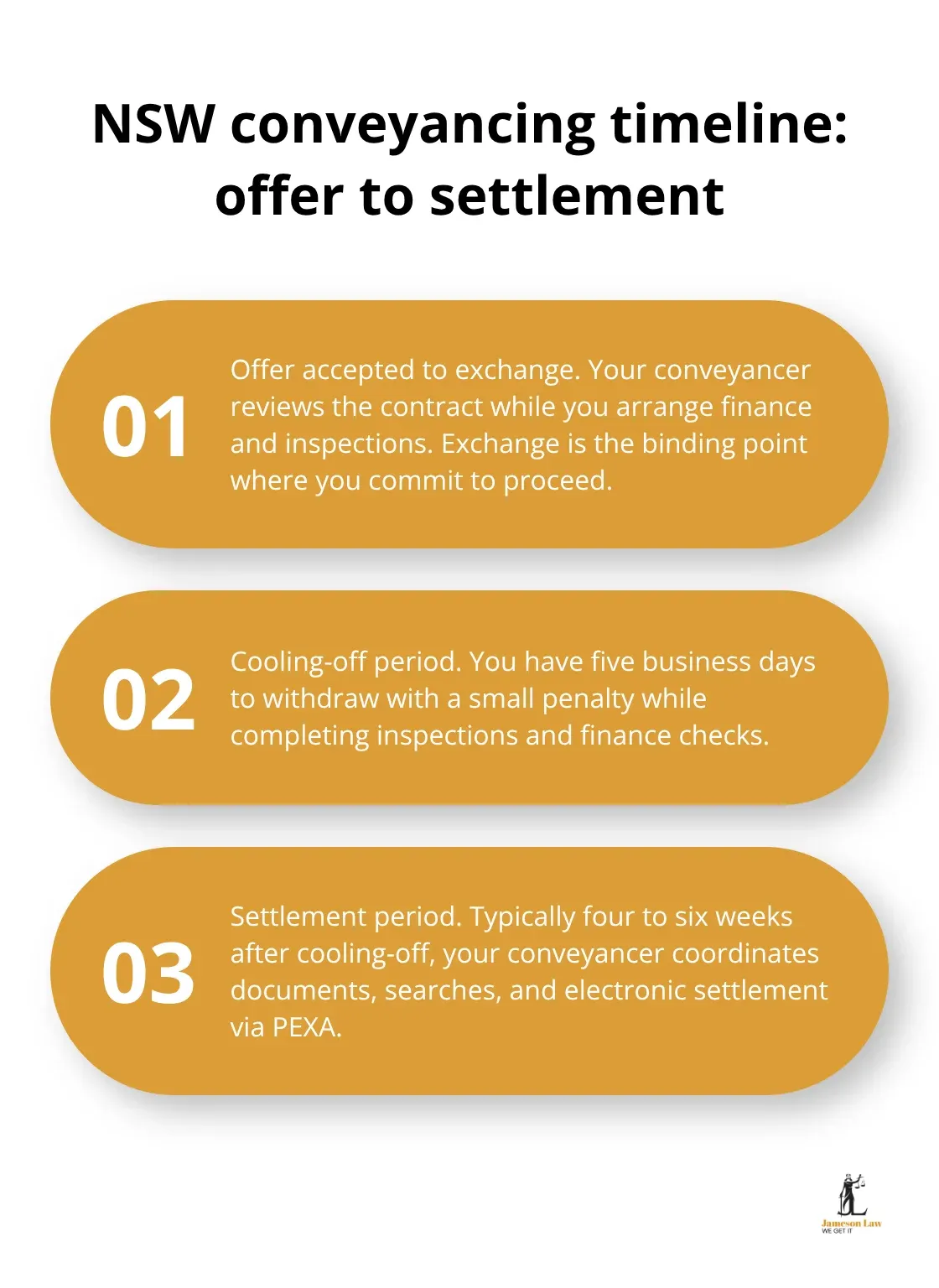
Conveyancing in NSW moves through three distinct phases, and understanding the timeline matters because delays cost money and stress. Once you’ve made an offer and it’s accepted, your conveyancer takes control of the legal side while you handle finances and inspections. The contract exchange is the binding moment-this is when you commit to the purchase, pay your deposit, and trigger the five-business-day cooling-off period that NSW law provides. Most buyers don’t realise they can still walk away during this window, though a small penalty applies if they do. After cooling-off expires, you’re locked in, and settlement typically happens four to six weeks later. Your conveyancer coordinates everything during this gap: they chase the title search, arrange the local council certificate, confirm your finance is solid, and flag any problems on the title before you’re legally bound.

What Your Conveyancer Actually Does
Your conveyancer isn’t just a paperwork processor-they’re your risk manager. They examine the contract before you sign it, identify clauses that could hurt you, and negotiate amendments if needed. They liaise with the seller’s conveyancer, your lender, and the agent to keep everything moving. They hold your deposit in trust, coordinate building and pest inspections, and calculate rate and tax adjustments at settlement. They conduct title searches through NSW Land Registry Services to confirm ownership and uncover easements, covenants, or caveats that could restrict how you use the property. If the title shows government interests or planned developments from council, Sydney Water, or Transport for NSW, they flag these early so you can decide if the property still suits you. Licensed conveyancers handle standard transactions well, but if complications arise (such as unregistered interests, caveats, or complex ownership structures), a solicitor provides broader legal oversight and protects you from costly mistakes that a conveyancer might miss.
The Timeline That Matters
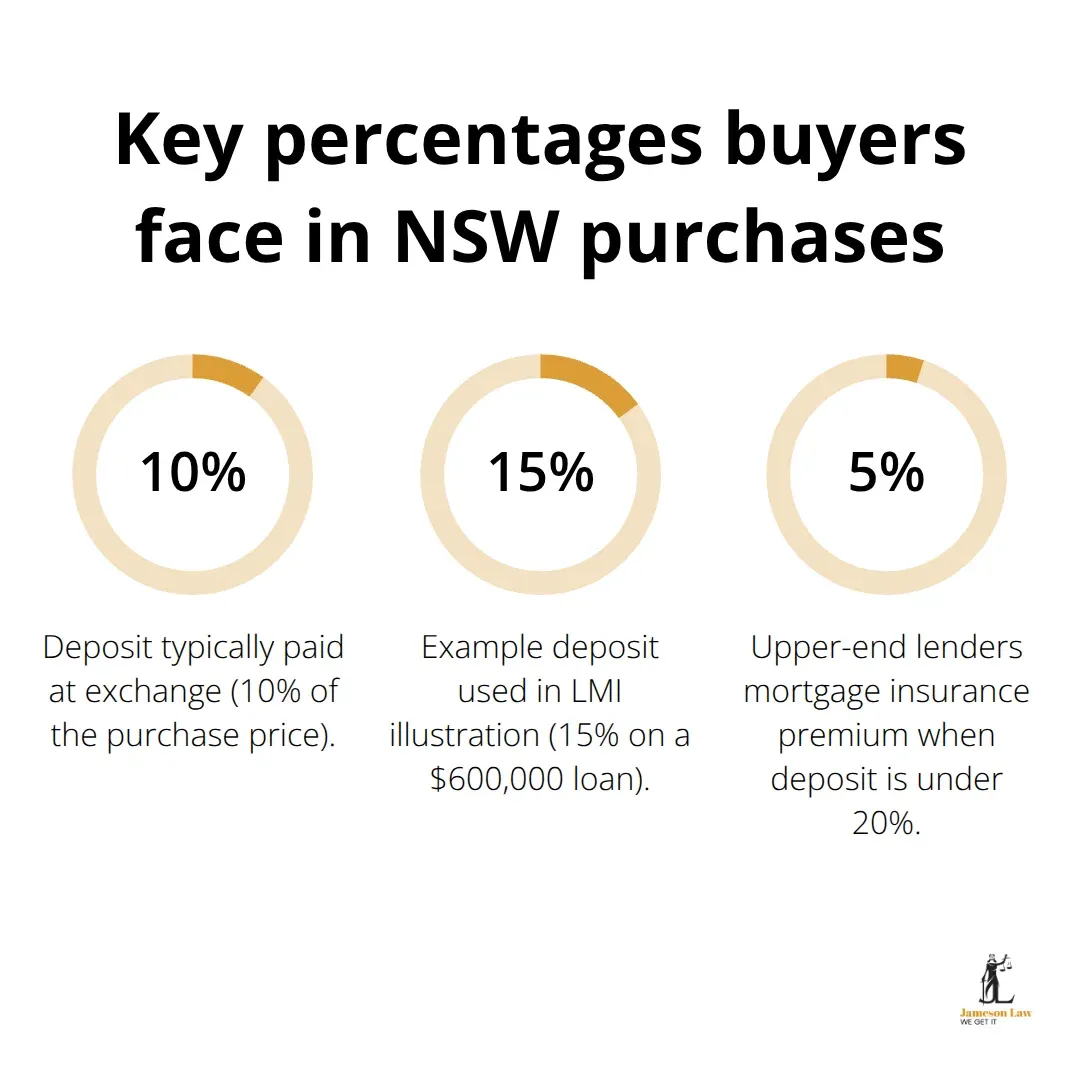
The NSW conveyancing timeline has hard deadlines. From offer to exchange typically takes one to three weeks depending on how quickly you arrange building and pest inspections and how fast your lender approves the loan conditionally. Exchange locks in the contract; you pay the deposit (usually 10% of the purchase price) and the cooling-off period begins immediately. Five business days later, cooling-off expires and you’re committed. Settlement then runs four to six weeks out, though this varies by season and how quickly the seller’s side moves. Your conveyancer must have all documents ready-transfer form, discharge paperwork from the seller’s lender, your mortgage documents, and final settlement statement-before settlement day. On settlement day itself, electronic completion through PEXA means funds transfer electronically, the seller’s mortgage discharges, and your title transfers to NSW Land Registry Services. Late document delivery or missing disclosures push settlement back and cost you in rate adjustments and extra holding costs, so your conveyancer must chase every document aggressively from day one.
Why Property Searches Matter Before You Commit
Before settlement, your conveyancer runs several searches that reveal hidden problems. Title searches confirm ownership and expose easements, covenants, or caveats that restrict property use. Local council certificates show whether the council has approved the building and whether any compliance issues exist. Environmental searches identify flood risks, contamination, or other hazards that affect value and insurability. These searches take time, so your conveyancer starts them immediately after exchange to avoid delays at settlement. If a search uncovers a problem (such as an easement that limits future development), you’ve already committed to the purchase, so you need to understand what you’re accepting before exchange happens.
Essential Searches and Inspections Before Purchase
Title Searches Reveal What You’re Actually Buying
Title searches are non-negotiable, and they start immediately after exchange because delays here push settlement back. The NSW Land Registry Services holds the Torrens register, which records ownership, mortgages, and any restrictions on the property. Your conveyancer pulls this search to confirm the seller actually owns what they’re selling and to identify easements, covenants, or caveats that could affect how you use the land. An easement might give Sydney Water the right to access pipes under your backyard, or it might allow a neighbour a right of way across your property. Covenants restrict what you can do-some prevent commercial use or require approval before building. Caveats flag competing claims to ownership that haven’t been registered yet. These aren’t deal-breakers, but you need to know about them before settlement locks you in.
Council Certificates and Planning Checks
Local council certificates reveal whether the building complies with council approvals and whether any orders exist against the property. A Section 10.7 Planning Certificate shows the zoning of the property, its relevant state, regional and local planning controls and whether any development applications are pending nearby that could affect your quiet enjoyment. If council has issued a notice of non-compliance for an unapproved structure or unpermitted renovation, this appears here, and you’ll need to factor remediation costs into your offer. Environmental searches identify flood zones, contamination history, and bushfire risk. The NSW flood data is publicly available through councils, but a professional search interprets whether your specific property sits in a flood-prone area and what insurance implications that carries. Contaminated land registers flag industrial sites or service stations that may have left chemical residues. These searches cost roughly $270 to $350 combined but prevent you from inheriting expensive problems.
Building and Pest Inspections: Don’t Skip These
Building and pest inspections are where buyers often cut corners, and that’s a false economy. A building inspector examines structural integrity, roof condition, electrical systems, and plumbing-typically charging $400 to $600 for a residential property. They produce a written report that identifies defects ranging from minor (worn weatherboards) to major (rising damp, structural cracking, asbestos). A pest inspection costs another $150 to $250 and checks for termites, borers, and other wood-destroying insects that can cost thousands to treat. Many buyers order these inspections only after exchange, but that’s too late-you’re already committed. Order them during the cooling-off period or even before exchange if the seller permits, so you have time to negotiate a price reduction or walk away if serious defects emerge.
Request Existing Reports and Read Them Yourself
Request copies of any existing reports from the seller; don’t rely on their verbal assurances. For strata properties, obtain a strata search report that shows the scheme’s financial health, whether special levies are planned, and any disputes between unit owners and the body corporate. A poorly managed scheme can cost you thousands in unexpected levies. Your conveyancer coordinates these inspections and interprets the results, but you must read the reports yourself and ask questions. If an inspector flags rising damp or structural movement, get a second opinion before proceeding. The cost of an extra inspection ($400) is trivial compared to the cost of remediating structural damage ($10,000+). These searches and inspections form your due diligence foundation-they answer the critical question of whether the property you’ve found is worth what you’re about to pay for it, and they inform every financial decision that follows.
What Conveyancing Actually Costs in NSW
Breaking Down the Three Cost Buckets
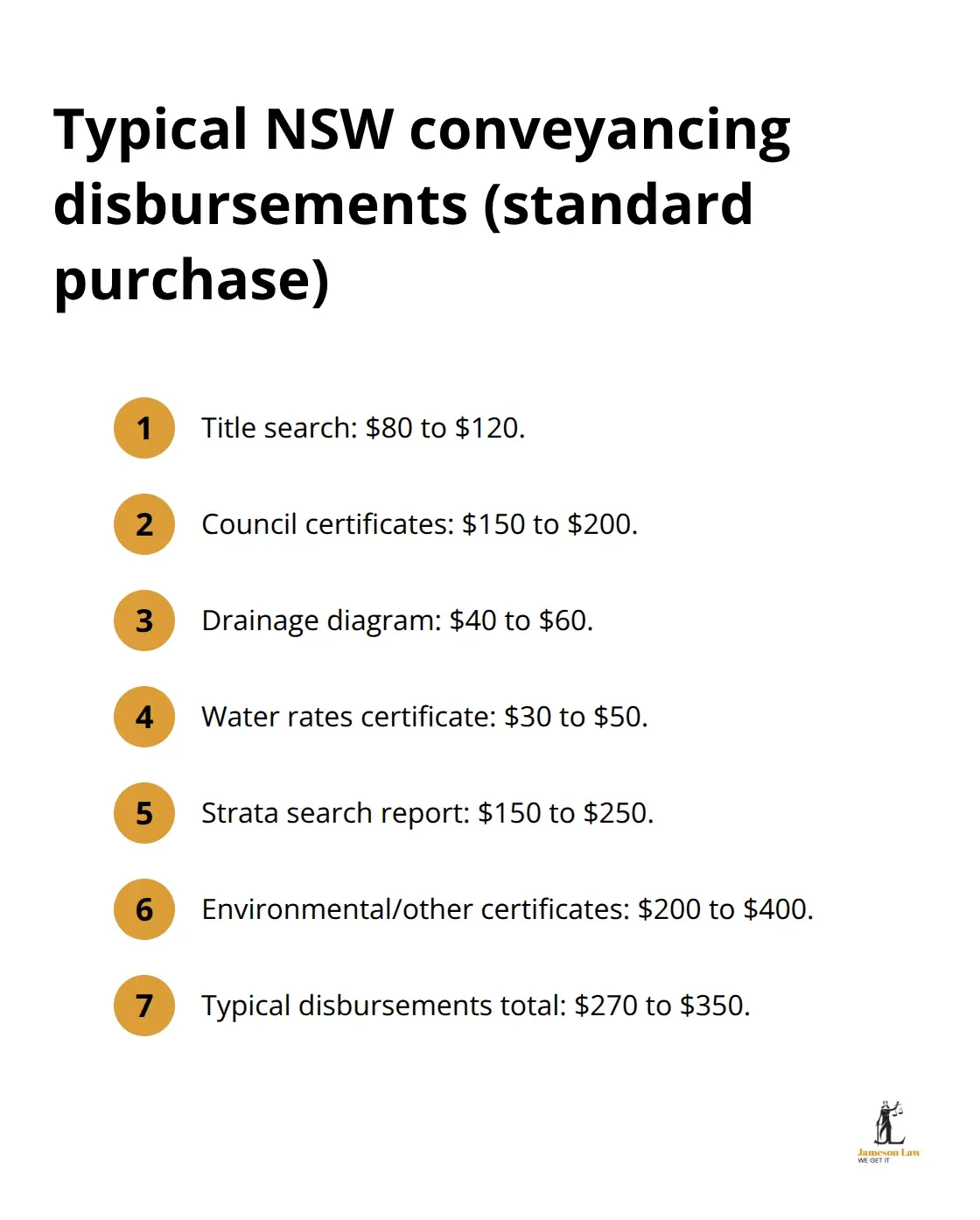
Conveyancing fees in NSW range from around $1,650 on average, though this varies significantly based on property complexity and the professional you choose. Your total conveyancing cost splits into three distinct buckets: professional fees (what the conveyancer or solicitor charges), disbursements (third-party costs you reimburse), and government charges like stamp duty. Professional fees typically sit between $1,200 and $1,800 for a straightforward residential purchase, but if the property has complications-unregistered interests, caveats, or complex ownership structures-fees climb toward $2,200 or higher. Disbursements are where hidden costs surprise buyers. Title searches cost roughly $80 to $120, local council certificates run $150 to $200, drainage diagrams cost $40 to $60, and water rates certificates add another $30 to $50. Strata search reports for apartment purchases cost $150 to $250 depending on the scheme. Land tax clearance certificates, environmental searches, and other regulatory certificates collectively add $200 to $400. Most buyers underestimate disbursements, which typically total $270 to $350 for a standard purchase.

Stamp Duty: The Largest Shock for Most Buyers
Stamp duty is the largest shock for most NSW buyers. On a $750,000 property purchase, you’ll pay around $40,800 in stamp duty alone. The rate is progressive: it’s 1.25% up to $14,500 of the property value, then 1.5% up to $31,000, then 1.75% up to $55,250, and climbs to 4.75% on amounts above that threshold. First home buyer stamp duty exemption NSW provides a full exemption on properties valued up to $800,000. Check your eligibility before making an offer, because this exemption can save you tens of thousands. Land transfer duty, mortgage registration fees, and council rates adjustments add another $500 to $800 at settlement.
Additional Costs Beyond Conveyancing Fees
Building and pest inspections, which you should never skip, cost $400 to $600 combined and occur outside conveyancing fees. Lender valuation fees run $400 to $600, and if your deposit is less than 20%, lenders charge mortgage insurance premiums ranging from 2% to 5% of the loan amount-on a $600,000 loan with 15% deposit, expect around $18,000 in mortgage insurance alone.

Payment Timing and Upfront Costs
Payment timing matters because you’ll fund costs across multiple stages. Your conveyancer requests an upfront retainer (typically $500 to $1,000) to start searches and prepare documents. After exchange, you pay the deposit-usually 10% of the purchase price-into your conveyancer’s trust account. At settlement, you transfer the balance of the purchase price plus all remaining conveyancing costs, stamp duty, and adjustments. Most lenders fund the mortgage electronically on settlement day, so coordinate timing carefully with your conveyancer to avoid delays.
Choosing the Right Professional for Your Situation
Request an itemised cost estimate before you engage a conveyancer; this should list professional fees, each disbursement separately, and an estimate of stamp duty and government charges. Don’t choose a conveyancer solely on price-the cheapest option often means less experienced staff handling your transaction or cutting corners on searches. Complex properties, older titles, or strata schemes justify paying more for a solicitor rather than a licensed conveyancer, because solicitors handle legal disputes, unregistered interests, and tax implications that conveyancers cannot address. Professional indemnity insurance protects you if your conveyancer makes a mistake-this is standard and essential. If you’re buying off-the-plan, add another $500 to $1,200 in conveyancing fees because these transactions involve developer documentation, building contracts, and settlement complexities beyond standard residential purchases.
Final Thoughts
NSW conveyancing for buyers succeeds when you stay organised, ask questions, and engage professionals early. The process moves fast once exchange happens, so having your conveyancer in place before you make an offer means they can guide you through contract terms, flag title issues, and coordinate searches without delay. Read every document yourself, not just the summaries your conveyancer provides, because building and pest inspection reports, council certificates, and title searches contain details that affect your decision.
Common mistakes happen when buyers rush. Exchanging without ordering building and pest inspections locks you into a property with hidden defects you cannot walk away from, and underestimating stamp duty and mortgage insurance means you arrive at settlement short of funds. Choosing a conveyancer based purely on price often results in inexperienced staff who miss easements, caveats, or planning issues that should have been negotiated before exchange, while ignoring strata search reports for apartment purchases means you inherit unexpected special levies or disputes between owners and the body corporate.
After settlement completes and your title registers with NSW Land Registry Services, your conveyancer provides a final settlement statement showing exactly where your money went. Keep all documents for your records, including the transfer form, discharge paperwork, and settlement statement, and update your home and contents insurance to reflect your new ownership. We at Jameson Law have guided hundreds of buyers through this process and understand where complications arise-engage experienced professionals, budget for all costs upfront, and stay involved throughout.