Buying property in NSW involves multiple stages, each with specific legal requirements and decisions that affect your investment. We at Jameson Law help clients navigate these NSW property conveyancing steps with confidence, from signing the contract through to settlement day.
This guide walks you through each phase so you understand what happens at every stage and what to expect financially and legally.
Understanding Your Contract of Sale
The contract of sale is the legal document that binds you to the purchase. An Australian legal practitioner or licensed conveyancer prepares it, not the real estate agent. NSW Fair Trading advises that you request a copy early so your conveyancer can review it before you commit. The contract outlines the sale terms, property details, land information, zoning certificate, drainage diagram, deposit amount and due date, settlement date and method, title documents, special conditions such as whether the property will be vacant or tenanted at settlement, and all inclusions and fixtures like floor coverings and appliances.
Many buyers skim the contract thinking it’s standard, but this is where disputes start. The real estate agent cannot alter any part of the contract themselves, so don’t waste time asking them to change terms. If you spot issues, your conveyancer makes amendments on your behalf and confirms changes with the vendor’s legal representative. What matters most is that you understand what you’re actually agreeing to before exchange happens-once contracts are exchanged, the agreement becomes legally binding and backing out costs you 0.25% of the purchase price according to NSW Fair Trading.
Settlement Conditions and Your Financing Timeline
Settlement conditions must align with your financing and readiness. If your loan isn’t approved by settlement day, you could lose your deposit. Verify that any conditions precedent are clear and achievable within the timeframe. Your conveyancer checks whether the contract allows the vendor to make alterations before settlement, as this affects whether the property condition you inspected remains the same at handover.
The deposit amount and due date specified in the contract must be realistic for your cash position. From 1 October 2025, all first home buyers can purchase with just a 5% deposit under the expanded Home Guarantee Scheme with no income caps and unlimited places. Title documents included in the contract should confirm the land use matches your intentions.
The number 0% seems to be not appropriate for this chart. Please use a different chart type. If you plan renovations or a business use, zoning restrictions could prevent this and warrant investigation now, not after settlement.
Vacant Possession and Property Condition
Special conditions around vacant possession are critical. If the vendor remains in the property or a tenant occupies it, this affects your settlement costs and your ability to occupy the home immediately. Many buyers also overlook whether chattels like curtains, blinds, or outdoor furniture are included or excluded, leading to disputes when they’re missing at handover.
The Cost of Missing Contract Details
Reviewing the contract yourself carries risk of personal liability if you miss something that costs you thousands later. A licensed conveyancer specialising in property sales interprets clauses, identifies obligations, and flags red flags that a layperson would miss. They understand the interplay between conditions precedent and how delays in one area cascade into settlement problems.
The conveyancer also verifies that your deposit is properly secured and that settlement details don’t conflict with your mortgage approval timeline. Engaging professional help early isn’t an expense; it’s insurance against costly mistakes that compound during the conveyancing process. Once you’ve confirmed the contract terms and your conveyancer has reviewed every clause, the next critical phase involves investigating the property itself through inspections and legal searches.
Investigating the Property Before You Commit
After contract exchange, you have roughly six weeks until settlement. This window is your opportunity to uncover problems that could cost you thousands or derail the purchase entirely. The most expensive mistakes in NSW property conveyancing occur when buyers skip due diligence or rush through inspections.
Building and Pest Inspections
A building and pest inspections is non-negotiable. These reports identify structural defects, termite damage, asbestos, rising damp, and roof condition that affect both safety and resale value. Many buyers assume an older property in good cosmetic condition is sound, only to discover $50,000 in undisclosed repairs after settlement. NSW Fair Trading emphasises that you should arrange these inspections early, not in the final week before settlement when you have no time to negotiate repairs or renegotiate price.
Title Searches and Legal Checks
Title searches and legal checks reveal the property’s ownership details, restrictions, easements, covenants, and any potential legal issues that may impact your use of the property or its value. For example, an easement allowing a neighbour access across your land, or a covenant preventing certain business uses, will bind you permanently after settlement.
If the property is in a strata scheme, obtain and review the strata inspection report as part of your due diligence; this covers common property condition, outstanding levies, and whether special levies are planned for major works. Local council zoning checks confirm whether your intended use-renovations, home business, rental-complies with regulations. Non-compliance discovered after settlement cannot be remedied retroactively, and you may face fines or orders to cease use.
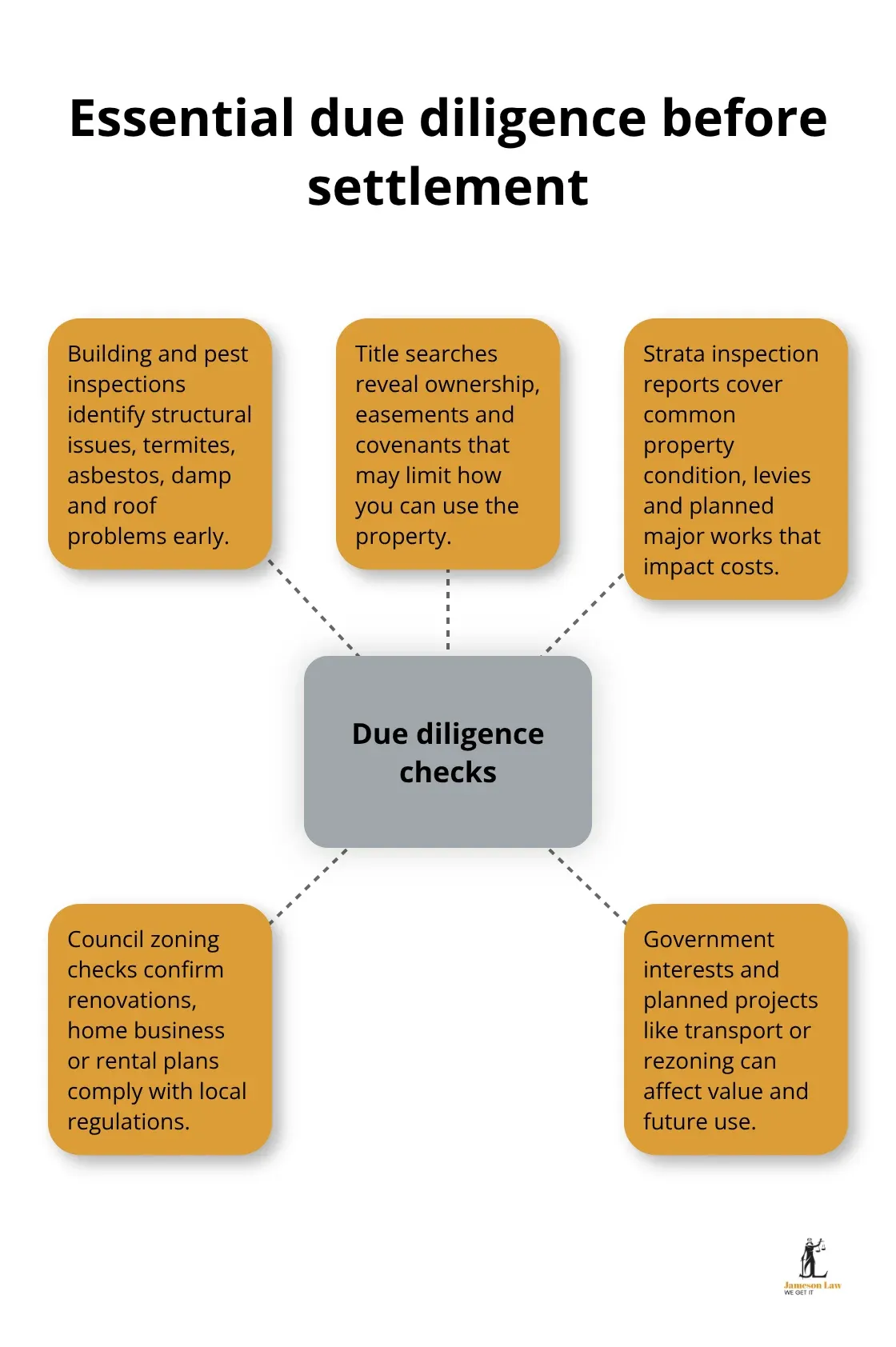
NSW Fair Trading advises checking whether any government authority has a vested interest in the land or if planned development could affect the property, such as planned transport infrastructure or rezoning. Your conveyancer handles these searches, but you must request them explicitly and review the results carefully rather than assuming everything is clear.
Mortgage Pre-Approval and Loan Conditions
Mortgage pre-approval before you make an offer strengthens your position and prevents the catastrophe of exchanging contracts only to have your loan rejected. Lenders assess your income, employment history, credit score, and existing debts to determine how much you can borrow. Pre-approval indicates the bank is willing to lend based on your income and credit, but formal approval comes only after the property valuation.
Once your loan is approved, maintain regular contact with your lender and conveyancer to confirm that settlement conditions remain on track and that no new information affects your borrowing capacity. This coordination between your financial and legal representatives ensures that all pieces align before settlement day arrives.
Getting Ready for Settlement Day
Final Property Inspection Before Settlement
Your final walkthrough happens 24 to 48 hours before settlement, and this inspection determines whether the property matches the condition you agreed to purchase. During this final property inspection, you verify that the property has not been damaged since the contract was signed and all inclusions listed in the contract are present. Check that all items listed in the contract remain on the property, that everything works properly, and that no damage exists beyond normal use.
Look for excessive rubbish left on the property that could prevent vacant possession, and confirm that vendors or tenants have vacated completely. This is not a casual stroll through the house; it’s a legal checkpoint that protects your investment. If you find missing items or unexpected damage, your conveyancer can halt settlement and renegotiate with the vendor before funds change hands. Disputes over property condition at handover rank among the most common post-settlement complaints. Spend 30 to 45 minutes doing a thorough walkthrough with a checklist in hand, photograph any issues, and notify your conveyancer immediately if something is wrong.
Utilities and Insurance Arrangements
Contact your electricity, gas, and water providers at least two weeks before settlement to arrange connection or transfer of accounts into your name. For purchasers, your conveyancer notifies the relevant authorities on your behalf, so you don’t need to contact Council, Sydney Water, or strata managers directly. Home and contents insurance must be in place before settlement completes; your lender requires proof of building insurance, and gaps in coverage leave you exposed if damage occurs between settlement and when you move in.
Shop for insurance quotes early because premiums vary significantly based on property age, location, and construction type. A property built before 1980 in a bushfire-prone area will cost substantially more to insure than a modern suburban home, so budget accordingly.
Understanding Settlement Costs and Adjustments
Settlement costs include professional conveyancing fees, title search certificates, authority fees, stamp duty on the purchase price, and mortgage registration fees. NSW Fair Trading advises that you also budget for council and water rates adjustments at settlement, as these are calculated on a daily basis and apportioned between buyer and seller. If the vendor has paid rates in advance or owes arrears, these amounts are adjusted at settlement so you don’t inherit their obligations.
Underestimating these costs is a common pitfall. Your conveyancer provides a detailed settlement statement at least three days before settlement showing the exact amount you must transfer, so there are no surprises on the day.
Final Coordination Before Settlement Completes
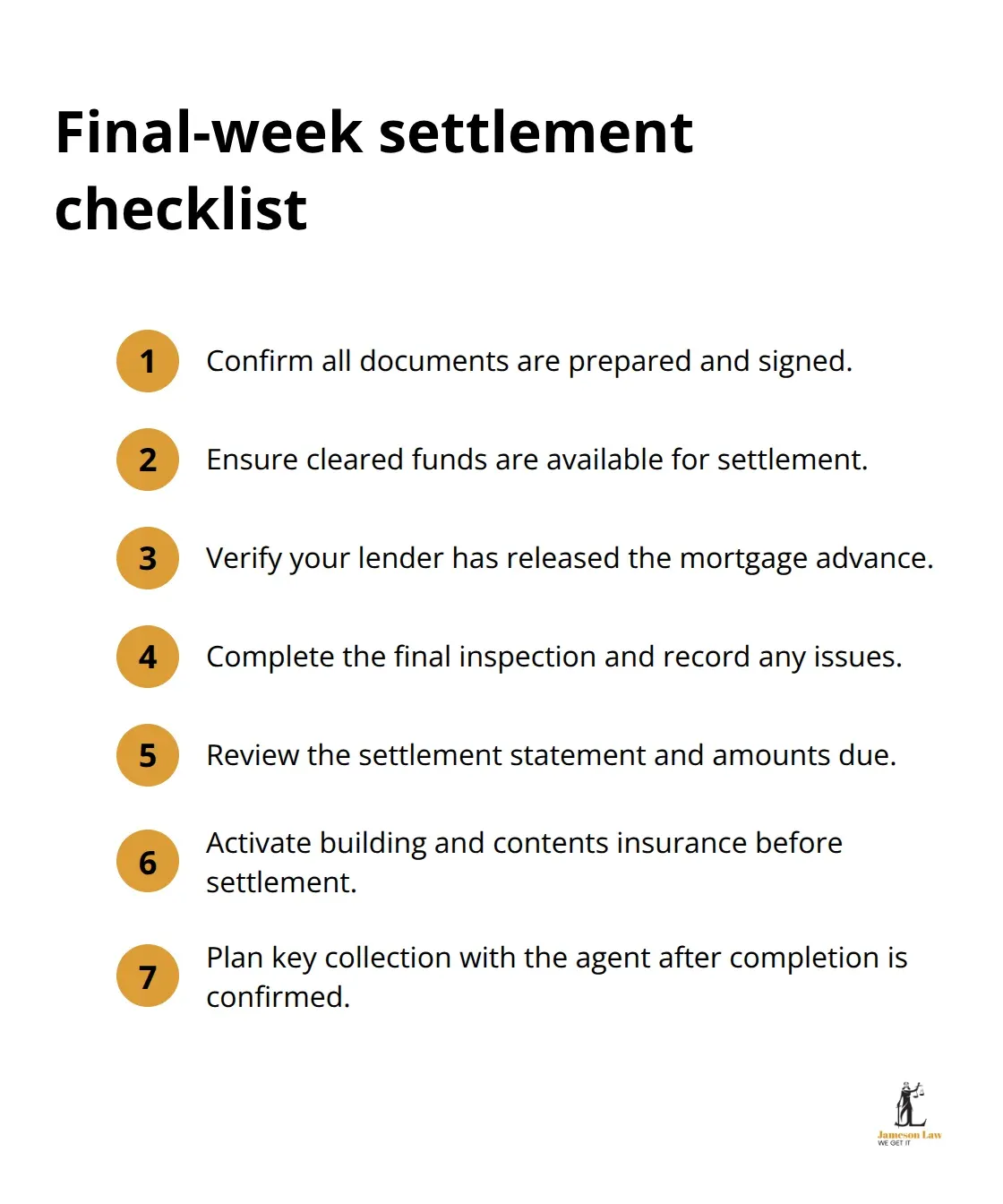
Maintain regular contact with your conveyancer during the final week before settlement to confirm that all documents are ready, funds are cleared, and your lender has released the mortgage advance. Settlement notifications arrive by phone to confirm completion has taken place, and you can collect keys from the agent’s office once your conveyancer confirms that the electronic settlement has been processed successfully by NSW Land Registry Services.
Conclusion
NSW property conveyancing steps protect your investment through multiple legal and financial checkpoints, each designed to prevent costly mistakes. From contract review through settlement, the process demands attention to detail and coordination between your lender, conveyancer, and the vendor’s legal team. A licensed conveyancer interprets clauses you might overlook, identifies title issues that affect your property use, and coordinates settlement timing so your loan approval aligns with the settlement date.
After settlement completes and you collect the keys, your ownership responsibilities begin immediately. Budget for council and water rate adjustments, arrange home and contents insurance before settlement, and plan for ongoing maintenance and council compliance. If you discover defects after settlement that should have been apparent before, document them and seek legal advice promptly, as your remedies are limited once settlement is final.
We at Jameson Law specialise in NSW conveyancing and understand the local regulations, timelines, and common pitfalls that affect buyers. Contact Jameson Law to discuss your conveyancing needs and get expert guidance tailored to your NSW property purchase.