A criminal charge in Sydney can turn your life upside down fast. The NSW legal system is complex, and one wrong move during your case can cost you dearly.
At Jameson Law, we’ve seen how the right Sydney criminal lawyer makes the difference between a conviction and a dismissal. This guide walks you through what you need to know to protect yourself.
Why You Need a Criminal Defence Lawyer in Sydney
NSW criminal law divides charges into Summary and Indictable offences handled in Local Court and District or Supreme Court respectively, with the distinction mattering enormously because an Indictable matter involves a Committal Process where the prosecution must prove sufficient evidence through a Brief of Evidence and Charge Certification by the ODPP before your case proceeds to trial. Without legal representation at this stage, you risk missing procedural deadlines, failing to identify weaknesses in the prosecution’s case, or accepting unfavourable bail conditions that restrict your freedom for months. A Sydney criminal lawyer who understands local court procedures knows exactly which magistrates and prosecutors handle specific offence types, how they typically respond to representations, and which strategic moves work in venues like Downing Centre, Parramatta, or Bankstown.
What happens without legal representation
Going to court without a lawyer means you negotiate against experienced prosecutors, cross-examine witnesses without training in evidence procedure, and make critical decisions about your plea without understanding the full consequences. Police statements in your case file contain language designed to support their version of events, and without proper cross-examination, those statements stand unchallenged. If you plead guilty without legal advice, you forfeit the chance to explore whether the prosecution can actually prove their case beyond reasonable doubt, or whether defences like Mistaken Identity, Consent, or Lack of Intent apply to your circumstances.
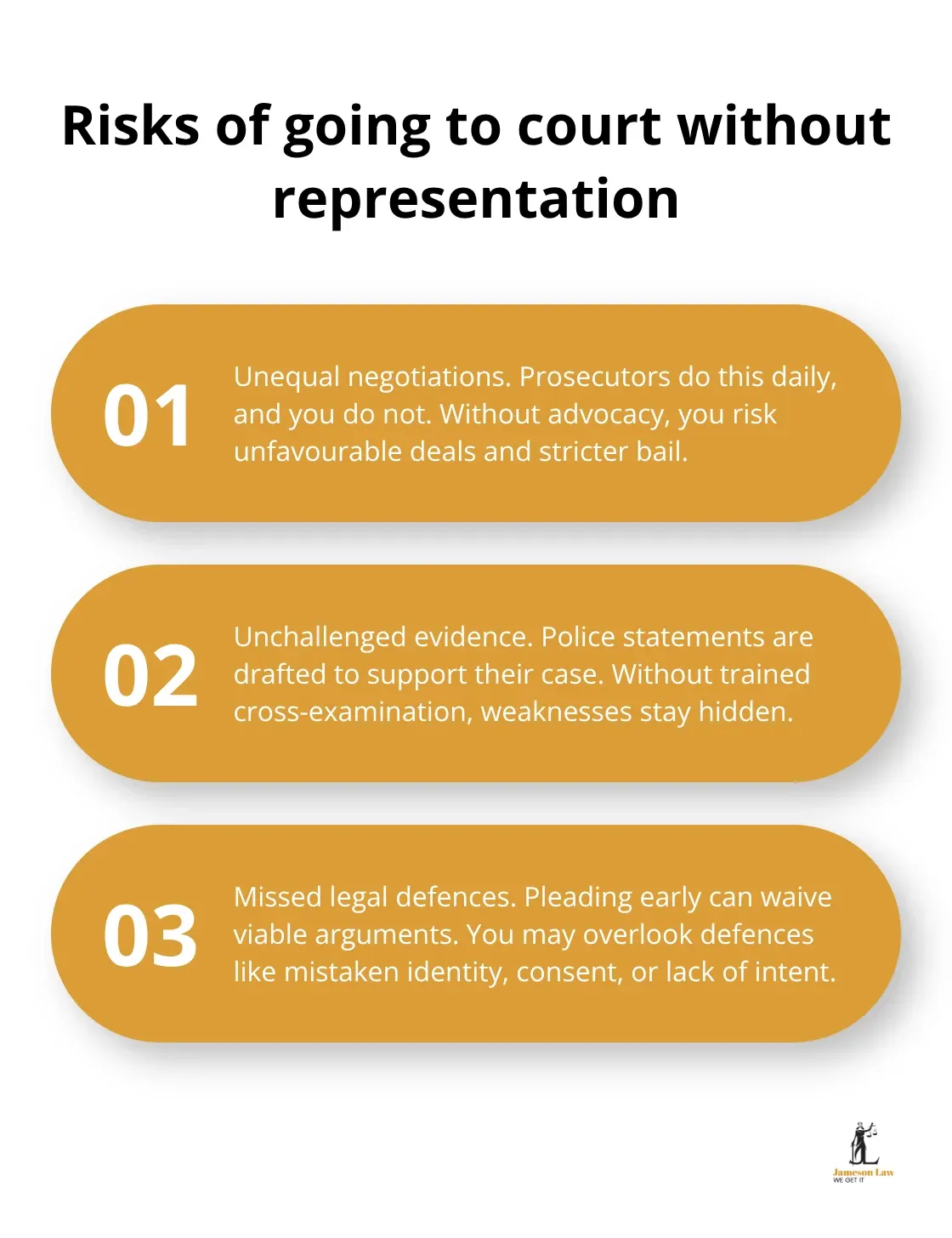
The cost compounds when you face sentencing without mitigation evidence properly presented-a lawyer experienced in securing Section 10 non-conviction orders knows exactly what information courts need to hear to avoid recording a criminal conviction. Many people discover too late that early legal engagement could have prevented conviction through negotiation or diversion options they never knew existed.
Local expertise changes outcomes
A Sydney criminal lawyer brings knowledge of how the NSW legal system actually works in practice, not just in theory. You access someone who regularly appears in the courts where your matter will be heard, understands the expectations of local prosecutors, and knows which representations are likely to succeed. The Crimes Act 1900 and Criminal Procedure Act 1986 provide the legal framework, but winning cases depends on understanding local court culture, knowing which magistrates favour certain sentencing approaches, and timing representations strategically. When you face a serious charge, that local knowledge means the difference between a conviction that follows you for life and a dismissal that leaves no criminal record.
Why the first few days matter most
The hours and days after a charge arrives determine much of what follows. Police statements, witness accounts, and evidence collection all happen quickly, and your response shapes what your lawyer can later challenge. Early legal engagement allows your representative to review police procedures, identify procedural breaches, and spot weaknesses in the prosecution’s case before evidence hardens. A lawyer who acts fast can also negotiate with prosecutors before they commit fully to their case, making representations for charge withdrawal or downgrade far more effective. Waiting weeks or months to seek advice means missing opportunities that never return.
What a Sydney Criminal Lawyer Actually Does for You
Fast action in the critical first days
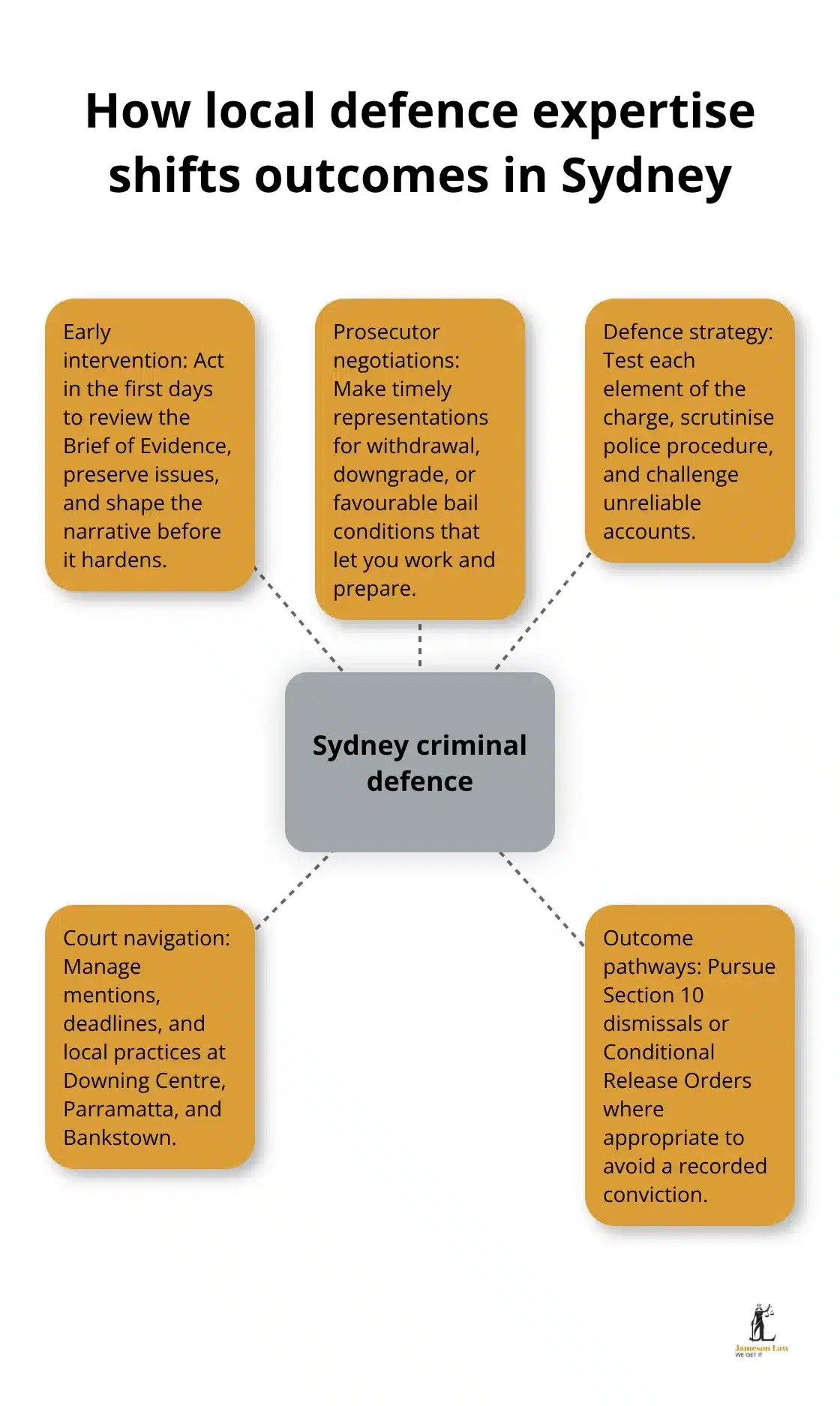
A Sydney criminal lawyer moves fast once you’re charged. Within days, we review the Brief of Evidence, police statements, witness accounts, and procedural steps taken by investigators. This early review identifies weaknesses the prosecution may not have spotted and procedural errors that can derail their case before trial. Prosecutors make early decisions about case strength within the first two weeks after charging, and a lawyer who engages then can shift that assessment before they commit to trial.
Negotiating with prosecutors for real results
We negotiate with prosecutors at the ODPP and local police prosecutors who handle your charge type regularly. We know which ones respond to solid representations for charge withdrawal or downgrade. When bail is set, we argue for conditions that let you work, see family, and prepare your defence instead of sitting in custody. We attend every court mention, handle procedural requirements that courts enforce strictly, and ensure deadlines pass without default.
Building a defence strategy that works
Building your defence strategy means understanding what the prosecution actually has to prove. If you’re charged with assault, they must establish unlawful force and intent; if you’re facing a break and enter charge, they need breaking, entering, and intent to commit an offence inside. A lawyer examines whether evidence supports each element and identifies defences that apply to your specific facts. We cross-examine police witnesses about how they collected evidence, whether procedures under the Crimes Act 1900 were followed correctly, and whether their accounts hold up under questioning.
Exploring outcomes that prevent conviction
We explore whether outcomes like Section 10 dismissals or Conditional Release Orders apply to your circumstances-outcomes that many defendants never discover because they lack representation. Court appearances become straightforward when your lawyer handles the procedural steps, makes representations to magistrates or judges, and presents mitigation evidence that actually moves sentencing outcomes. The difference between a conviction and a dismissal often comes down to whether someone with local court experience prepared your case properly from day one.
What separates good representation from the rest
Local court experience matters enormously. A lawyer who regularly appears in the courts where your matter will be heard understands the expectations of local prosecutors and knows which representations are likely to succeed. You access someone who knows which magistrates favour certain sentencing approaches and how to time representations strategically. This local knowledge transforms how your case unfolds-from the first negotiation with prosecutors through to final sentencing.
Choosing the right lawyer to handle your defence requires more than just finding someone with a law degree. The next section walks you through exactly what qualifications, experience, and track record you should look for when selecting your criminal defence representative.
How to Choose the Right Criminal Lawyer in Sydney
Verify qualifications and specialisation
Start by checking the Law Society of NSW directory to verify the lawyer holds a current practising certificate and maintains professional indemnity insurance. This single step eliminates lawyers who aren’t properly registered or covered. Then look specifically for criminal law accreditation or specialisation. The Law Society of NSW awards accreditation to specialists who meet strict requirements around experience, ongoing education, and demonstrated expertise in criminal law. A lawyer with this credential has proven they focus on criminal defence rather than dabbling across multiple practice areas.
Assess real experience with cases like yours
Ask directly how many cases similar to yours they have handled in the past two years and what outcomes they achieved. If they hesitate or give vague answers, move on. A lawyer worth hiring can tell you exactly how many bail applications they’ve won, how many not guilty verdicts they’ve secured, and what percentage of their clients avoid conviction through Section 10 dismissals or Conditional Release Orders. Experience matters most in criminal defence because each court system, each prosecutor, and each magistrate has patterns and preferences that only come from regular appearance. A lawyer who appears in Downing Centre, Parramatta, or Bankstown regularly understands local court culture in ways that a generalist never will.
Understand fees before you commit
Track record means nothing without transparency about fees. Many firms advertise fixed fees for criminal cases, but these often exclude critical work like bail applications, negotiations with prosecutors, or court mentions. Ask any lawyer to break down their fees into specific services. If they resist or offer only a ballpark figure, that’s a warning sign.
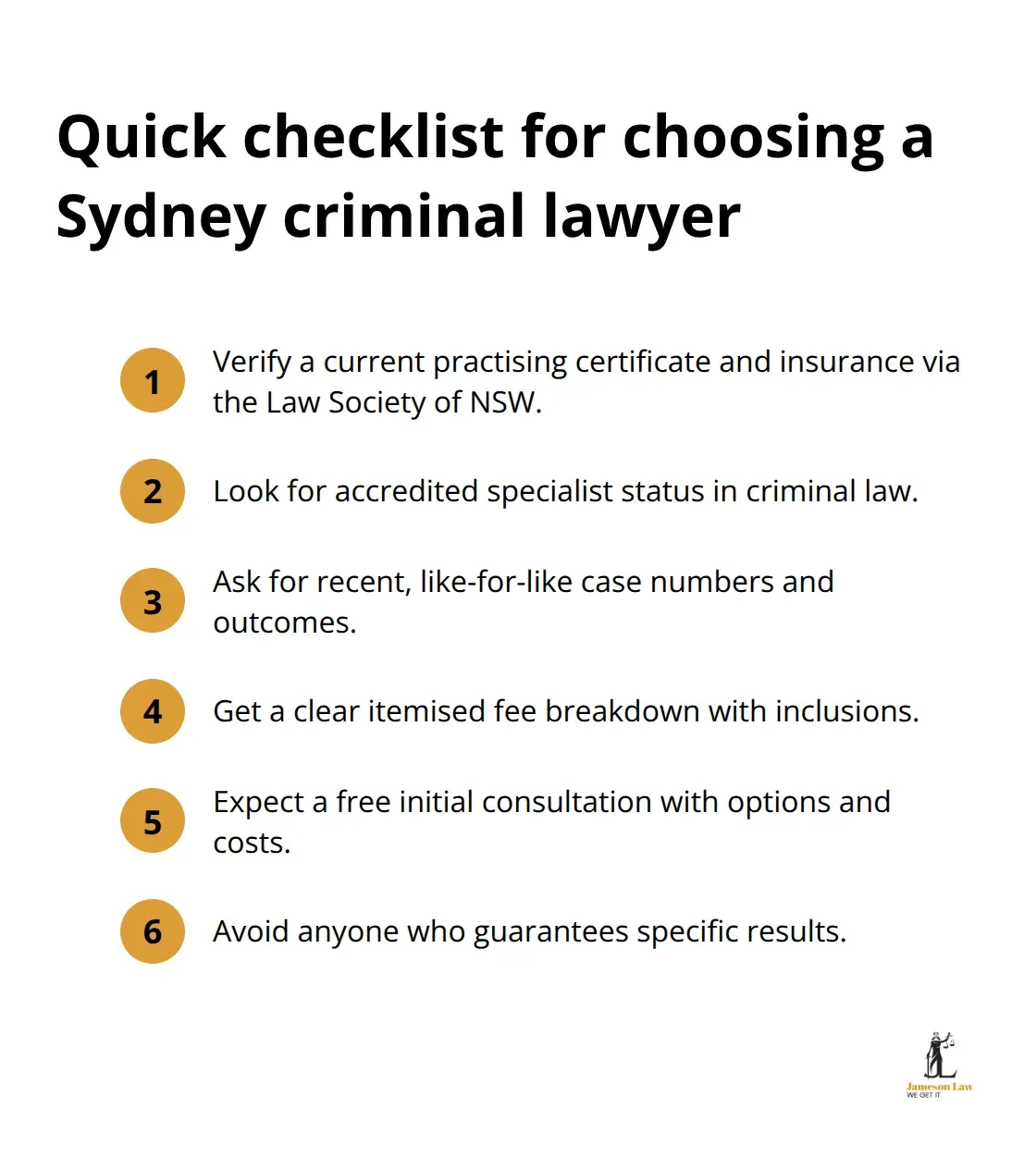
The best criminal lawyers offer a free initial consultation where they assess your case, discuss available options, and outline costs before you commit to representation.
Prepare for your first consultation
During your initial consultation, bring every document you have: court attendance notices, bail paperwork, witness statements, text messages, and photos. A lawyer who takes time to review these materials and ask detailed questions is someone investing in understanding your case properly. This consultation should give you a realistic assessment of case strength, plain explanations of the risks and opportunities, and a commitment to exploring every strategic option available under NSW law. Avoid lawyers who promise specific outcomes or guarantee acquittals. No honest lawyer can guarantee results because courts make decisions, not lawyers.
Final Thoughts
A criminal charge demands immediate action, and the difference between conviction and dismissal often comes down to who represents you in those critical early days. We at Jameson Law have seen countless cases where early legal engagement shifted outcomes dramatically-from securing bail conditions that let clients work and prepare their defence, to identifying prosecution weaknesses that led to charge withdrawal or Section 10 dismissals. A Sydney criminal lawyer with local court experience understands the magistrates, prosecutors, and procedural nuances that generalist lawyers miss entirely.
Every day you delay seeking representation, the prosecution hardens their case, witness memories fade, and opportunities for negotiation slip away. The first consultation should be free and confidential, giving you a clear picture of your situation without financial pressure. During that meeting, you learn whether your case has genuine weaknesses the prosecution must address, what outcomes are realistic under NSW law, and exactly what representation will cost.
Contact a criminal defence lawyer who specialises in cases like yours and verify their qualifications with the Law Society of NSW. If you’re in Sydney, we at Jameson Law offer a free initial consultation to review your case and map out your best options. The hours you invest now in getting proper legal advice will determine whether you face a conviction or walk away with your record clear.