A traffic offence in NSW can result in hefty fines, demerit points, and even licence suspension. Understanding traffic offence penalties NSW is essential if you’ve received a penalty notice or are facing court proceedings.
At Jameson Law, we help clients navigate these penalties and explore their options. Whether you’re considering paying a fine or challenging the offence, knowing your rights makes all the difference.
How Traffic Offences Are Classified in NSW
Fixed Penalty Notices for Minor Offences
Traffic offences in NSW fall into distinct categories, and the category determines how your case is handled and what penalties apply. The most straightforward offences are dealt with through fixed penalty notices, which allow you to pay a fine without going to court. These cover speeding, parking violations, seatbelt breaches, and mobile phone use while driving. Fixed penalties are quick and convenient, but paying means accepting the offence and the demerit points attached to it.
Transport for NSW data shows that speeding offences carry demerit points ranging from one point for exceeding the limit by up to 10 km/h through to six points for exceeding by more than 45 km/h. School zone speeding attracts double demerit points, so a minor speed breach in a school zone costs you two points instead of one. School zones operate on all school days, and during holiday periods, double demerit points apply to speeding, seatbelt, motorcycle helmet, and mobile phone offences.
Your Choices When You Receive a Fixed Penalty
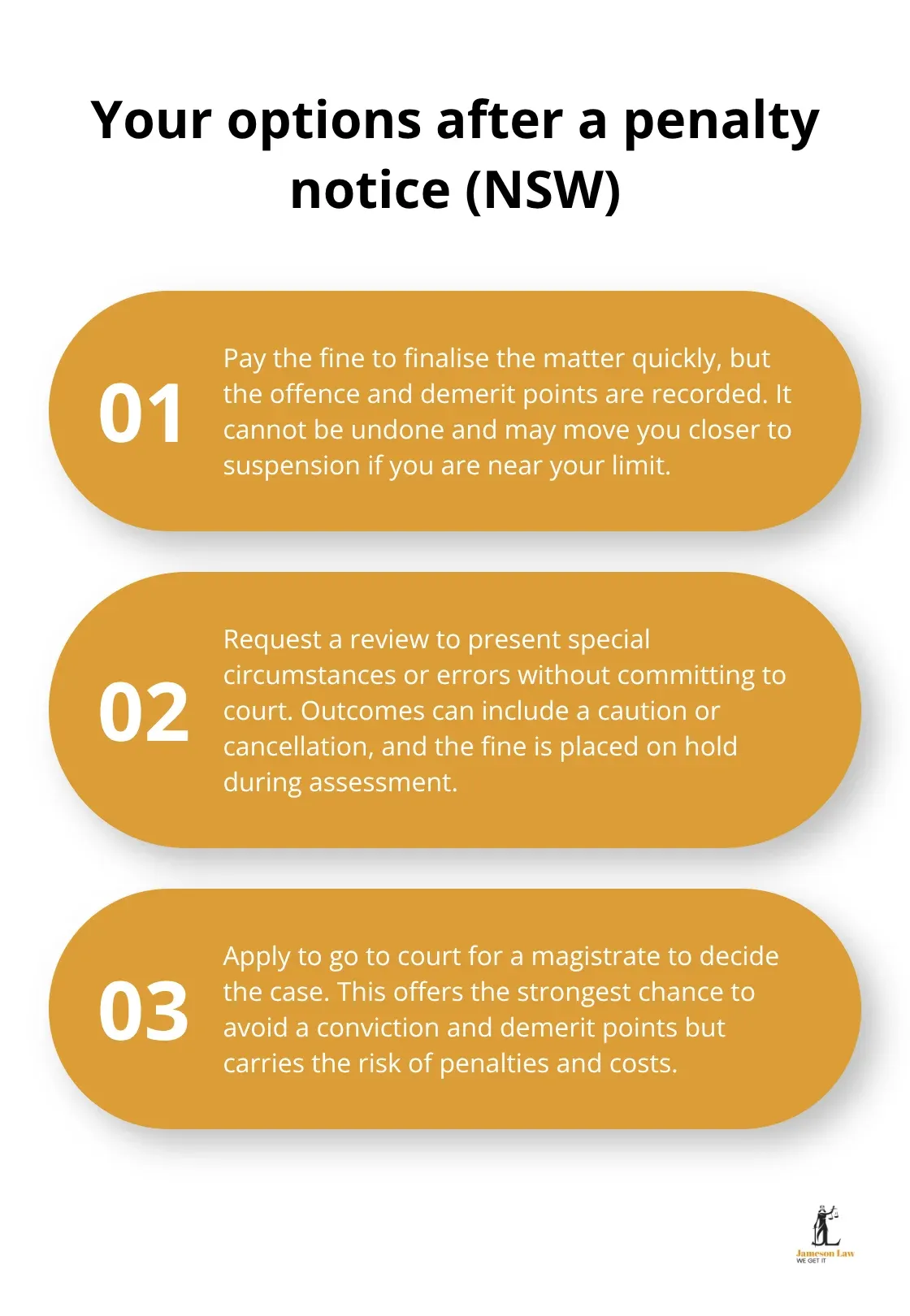
When you receive a fixed penalty notice, you have three options. You can pay the fine, which locks in the demerit points and the fine amount permanently. You can request a review if you believe there are special circumstances or an error in the notice. You can also apply to go to court to contest the offence entirely. Most drivers pay without questioning, but this decision removes your opportunity to challenge the matter later.
Court-Handled Offences
More serious offences bypass the fixed penalty system entirely and go straight to court. These include dangerous driving, drink or drug driving, and driving with a suspended licence. Court-handled offences mean you receive a Court Attendance Notice rather than a simple penalty notice, and a magistrate will determine the outcome.
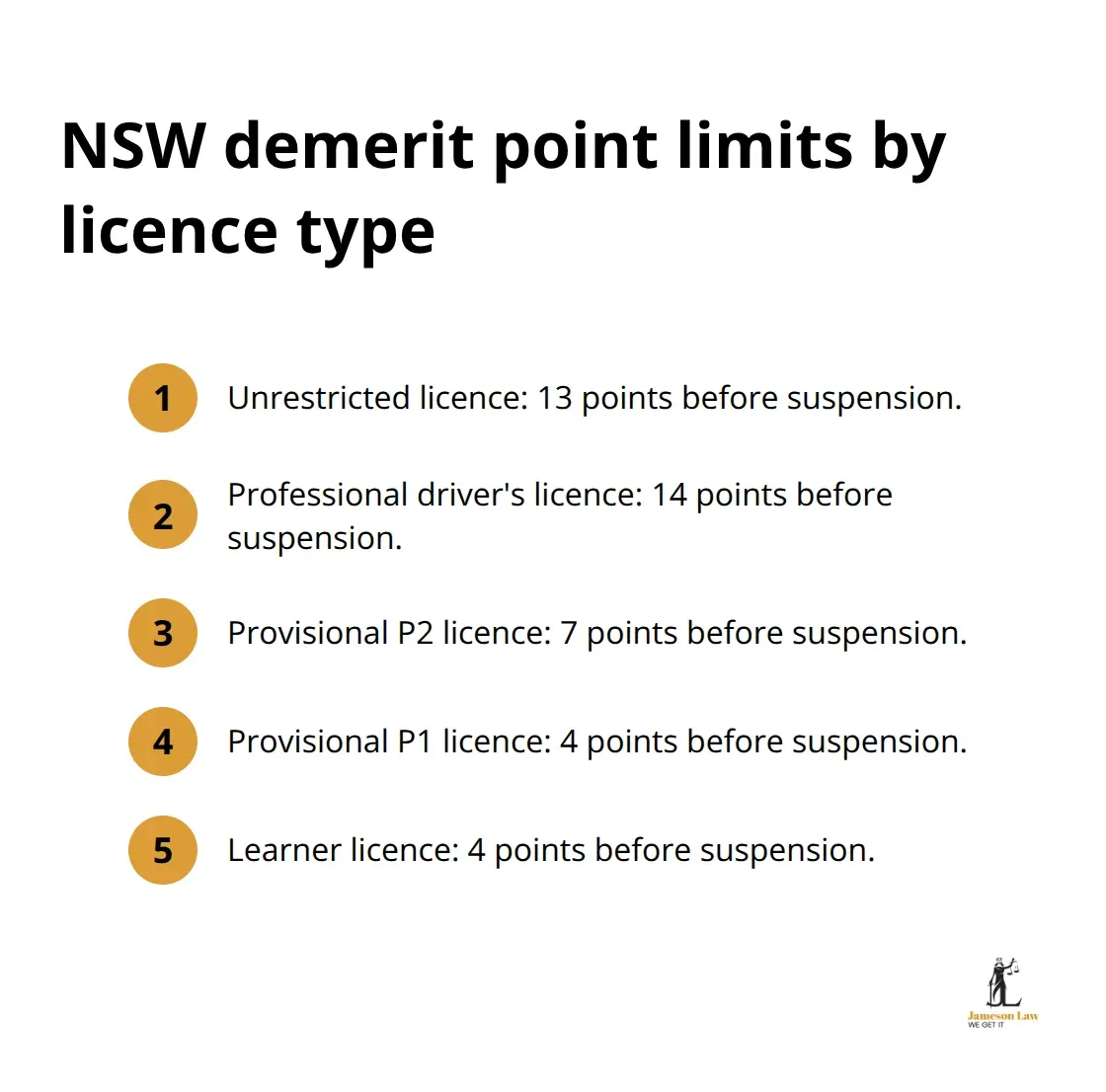
Drink-driving carries mandatory minimum penalties and enrolment in the Sober Driver Program. If convicted, you face substantial fines, licence disqualification periods, and potentially a criminal conviction that affects employment, travel, and professional registration. The demerit point limits by licence type show how serious accumulation becomes: unrestricted licences allow 13 points before suspension, but provisional P1 licences allow only 4 points.
Infringement Notices: The Middle Ground
Between fixed penalties and court offences sits a middle ground: infringement notices for breaches that warrant formal action but not immediate court involvement. These are issued for more serious matters than minor speeding but less serious than drink-driving. Infringement notices require a more formal response than fixed penalties, and the consequences carry greater weight than simple fines.
Exceeding your demerit point limit within three years triggers a suspension notice from Transport for NSW. The category your offence falls into determines your next move and the urgency of your response, which is why understanding these distinctions matters before you decide how to proceed.
How Demerit Points Work and When Your Licence Gets Suspended
Points Accumulate Quickly Across Your Driving History
Every driving offence in NSW adds demerit points to your licence, and these points stay on your record indefinitely. Transport for NSW records points the moment a fine is paid, enforced, or you receive a court conviction, so accumulation happens rapidly if you are caught multiple times. You start with zero points, and each offence adds a specific number depending on what you did. A minor speeding breach costs one point, but exceeding the limit by more than 45 km/h costs six points. Seatbelt violations, mobile phone use, and helmet breaches each cost three points. Drink or drug driving carries far heavier penalties, ranging from 10 to 13 points depending on your blood alcohol level or the substance involved.
Most drivers miss a critical detail: points accumulate across your entire driving history, not just recent months. Transport for NSW applies a three-year period for suspension purposes. This means an old offence can still affect you if you accumulate more points within that window.
Licence Type Determines Your Suspension Threshold
Your licence type determines how many points you can accumulate before suspension kicks in, and these limits vary significantly. An unrestricted licence allows 13 points before suspension, but a professional driver’s licence allows 14 points. Provisional P2 drivers receive 7 points, provisional P1 drivers receive only 4 points, and learner drivers also receive 4 points.

Once you exceed your limit within three years, Transport for NSW issues a Notice of Suspension with a start date, and your driving privileges stop immediately. The suspension is not a warning or a review opportunity; it is automatic and binding.
Reinstating Your Licence After Suspension
If you exceed your demerit limit twice within five years on a provisional or unrestricted licence, you must pass the Driver Knowledge Test before you can drive again. Unrestricted licence holders must also complete a driver education course and present the completion certificate to a service centre to reinstate your licence. This second suspension is substantially harder to recover from because the education requirement adds cost and time to the reinstatement process.
The Safe Driver Relief Program Offers Real Benefits
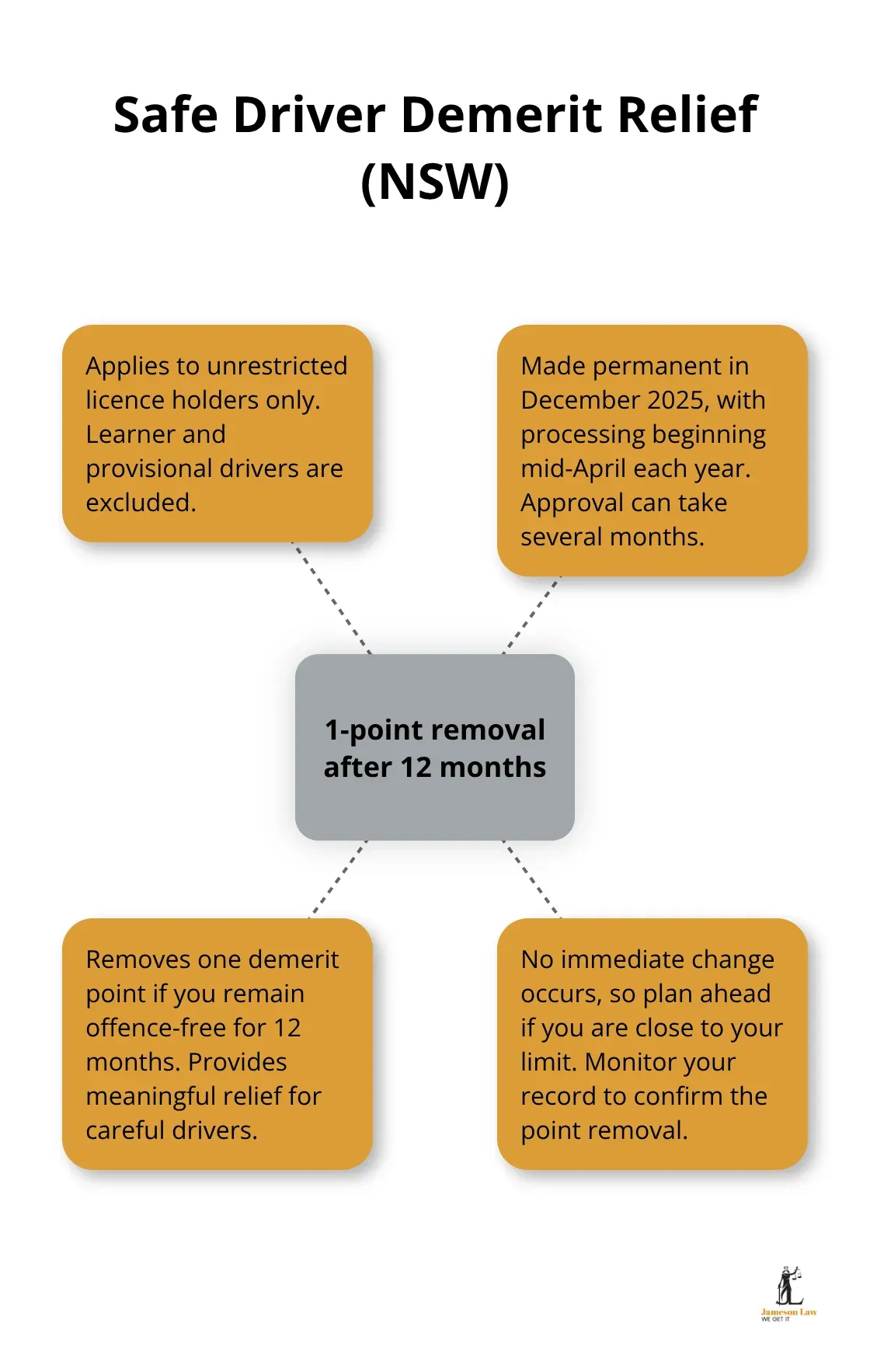
The safe driver demerit relief program, made permanent in December 2025, offers one genuine advantage: if you remain offence-free for 12 months on an unrestricted licence, you can remove one demerit point from your record. Processing begins mid-April each year and takes several months, so the benefit is not immediate, but it provides real relief for drivers who stay clean. Learner and provisional licence holders are excluded from this program, which means young drivers have no pathway to reduce points and face suspension much faster than experienced drivers.

Understanding Your Options After Accumulating Points
The points you accumulate determine whether you face licence suspension and what steps you must take to reinstate your licence. If you are approaching your demerit limit, you have options available before suspension occurs. You can request a review of recent fines if you believe special circumstances apply, or you can apply to go to court to contest offences and potentially avoid the demerit points altogether. These decisions require careful consideration of your specific situation and the offences involved, which is why understanding your rights and available pathways matters before Transport for NSW issues a suspension notice.
What Happens When You Receive a Penalty Notice
Three Paths Forward After a Penalty Notice Arrives
When Transport for NSW issues a penalty notice, you face a critical decision point that most drivers handle poorly. You have three paths forward: pay the fine and accept the offence, request a review to challenge the decision, or apply to go to court through Revenue NSW. Each option carries different consequences for your driving record, licence, and finances. Paying immediately seems straightforward, but it locks in the demerit points permanently and removes your opportunity to contest the matter. If you pay a speeding fine for exceeding the limit by 15 km/h, those two demerit points attach to your record indefinitely, moving you closer to suspension. The majority of drivers pay without considering alternatives, but this approach abandons legitimate options available to you.

Requesting a Review: The Middle Ground Option
A review offers a middle ground where you present special circumstances or errors without committing to court proceedings. The process requires submitting evidence online through myPenalty or by post, including your driver licence details, the fine notice number, and supporting documentation. Revenue NSW considers personal circumstances during the review, and possible outcomes include the fine remaining unchanged, a caution being issued, or the fine being cancelled entirely. Drivers with more than 10 years of licensed driving and a clear record may qualify for an automatic caution on some offences, meaning the fine disappears without demerit points. The review is processed with a hold placed on your fine, preventing additional costs or enforcement action while the assessment proceeds. Processing typically takes several weeks, and you can track progress online. If the review fails, you retain the right to apply for court proceedings.
Going to Court: The Strongest Defence Option
Applying to go to court is the most serious option but offers the strongest chance of avoiding demerit points entirely. Once you elect to go to court through Revenue NSW, you cannot withdraw the application, and a NSW Local Court magistrate will determine the outcome. The magistrate may find you guilty with penalties and demerit points, guilty with no conviction recorded (which avoids demerit points but may include costs), or not guilty (resulting in no fine, costs, or demerit points). You must attend the mention date and plead guilty or not guilty; if you cannot attend, submit a Written Notice of Pleading. If you plead guilty, the case typically concludes the same day with the magistrate hearing your circumstances before deciding penalties. If you plead not guilty, a hearing date is scheduled and you must present your case with witnesses or sworn statements.
The Value of Legal Representation in Court
Court representation strengthens your position significantly. Some offences are defensible-for example, if you can demonstrate a speed camera was poorly maintained or weather conditions made a sign illegible-while others offer little prospect of success. The court process does not handle demerit points, so contact Transport for NSW separately if you need clarification on your driving record. If found guilty, you must pay the penalty plus court costs, and demerit points are added to your record. Some offences carry the risk of criminal conviction, which affects employment prospects, travel, and professional registration.
Making Your Decision: Review First, Then Court
Before electing to go to court, request a review first; if unsuccessful, you then proceed to court with no disadvantage from the earlier review attempt. At Jameson Law, we assist clients in determining whether court is worth pursuing based on the specific offence, your driving record, and the strength of any defence. The decision to challenge a penalty notice requires careful analysis of your circumstances and the evidence available to you.
Final Thoughts
Traffic offence penalties NSW vary significantly based on the offence type, your driving history, and your licence category. A minor speeding breach costs one demerit point and a fine, while drink-driving carries 10 to 13 points, mandatory programs, and potential criminal conviction. Licence suspension occurs automatically when you exceed your threshold within three years, and reinstating your licence requires passing tests and completing education courses.
Your rights extend far beyond simply paying the fine when you receive a penalty notice. You can request a review at no cost, and this action may result in the fine being cancelled or reduced, particularly if you have a clean driving record or special circumstances apply. Applying to go to court offers the strongest defence if you believe the offence was issued in error or if you have a legitimate defence available to you.
The decision to challenge a penalty notice requires careful consideration of your specific circumstances, the strength of any available defence, and the potential impact on your driving record. We at Jameson Law help clients navigate traffic offences and determine whether requesting a review or applying to court is the right path forward. If you have received a penalty notice or are facing court proceedings, contact us early to protect your licence and understand your options before Transport for NSW takes action.