Buying property in New South Wales involves more than just finding the right house. You need to know what conveyancing searches are and why they matter before you commit to a purchase.
At Jameson Law, we’ve seen endless buyers skip this step and regret it later. These searches reveal hidden problems that could cost you thousands or derail your entire transaction.
What Conveyancing Searches Actually Reveal
Conveyancing searches are legal checks that authorities and third parties conduct to uncover information about a property before you complete your purchase. They verify ownership, identify financial obligations tied to the land, and expose restrictions or conditions that could affect how you use the property. Think of them as the detailed background check on a property-they answer questions like whether the seller actually owns what they claim to sell, whether rates or taxes are outstanding, and whether something about the land could limit your plans to renovate or develop.
How the NSW Conveyancing Process Works
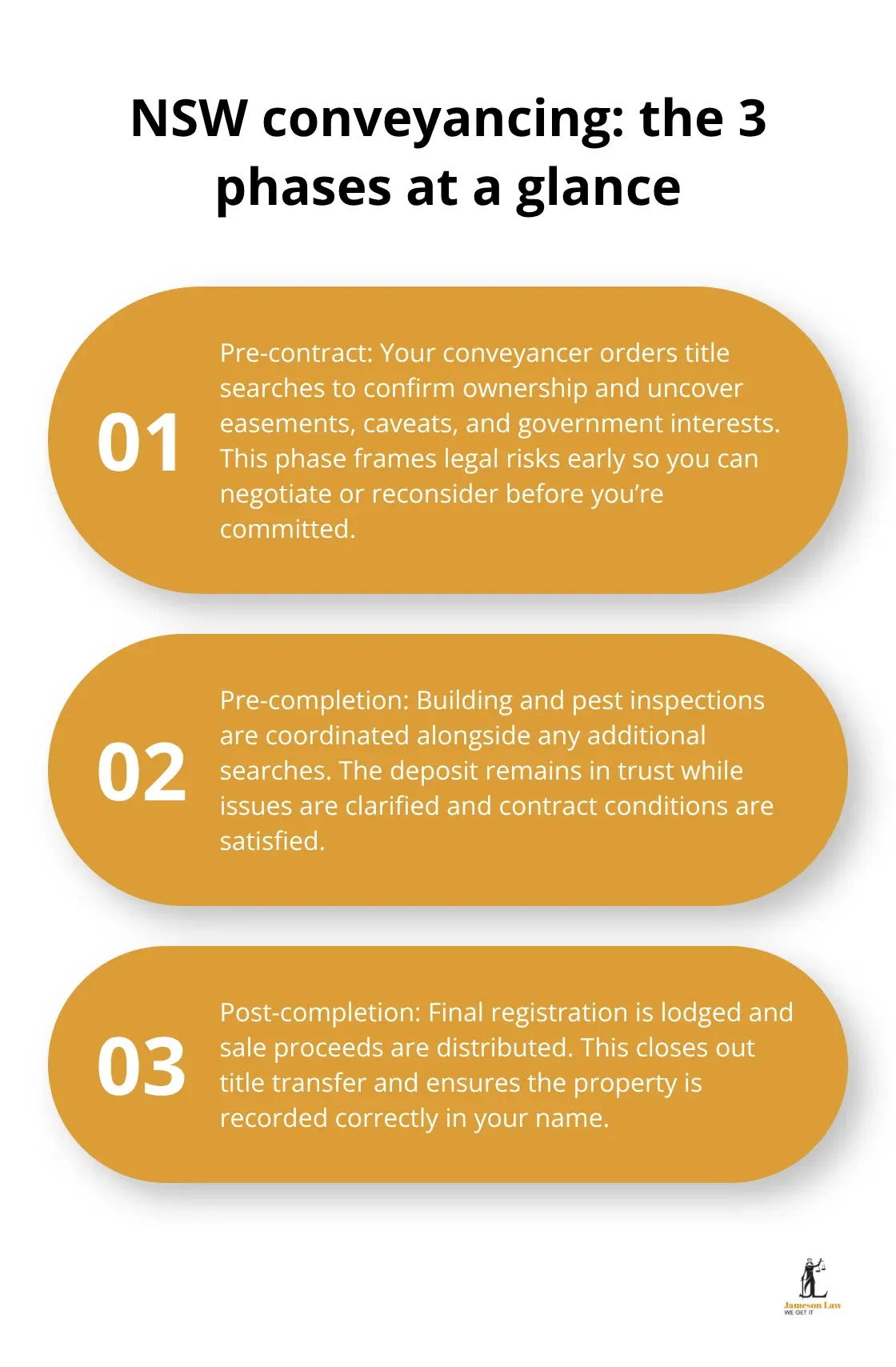
In New South Wales, the conveyancing process unfolds across three distinct phases: pre-contract, pre-completion, and post-completion. During pre-contract, title searches are ordered to uncover easements, unapproved works, or government interests that could affect the sale. Pre-completion involves coordinating building and pest inspections alongside additional searches, while the deposit sits in trust with your conveyancer. Post-completion handles the final registration and distribution of sale proceeds. The Australian Institute of Conveyancers identifies this structured approach as essential because each phase carries different legal risks and obligations.
Why NSW Requires These Searches
New South Wales requires vendor disclosure attached to the contract, which means the seller must disclose known issues upfront. However, disclosure alone provides insufficient protection-many problems remain hidden or unknown even to the seller. A title search reveals whether the property has been mortgaged multiple times or whether third parties hold rights over the land. Council searches typically take five to ten business days and disclose outstanding rates, arrears, zoning restrictions, and any notices affecting the property. Land tax searches confirm no overdue taxes will transfer to you at settlement. Water and sewerage searches identify any outstanding charges and unregistered easements that could affect drainage or future upgrades.
What Happens When You Skip These Searches
Skipping these searches exposes you to surprises like outstanding infrastructure charges or nearby developments that could alter the property’s value or your ability to use it as intended. State-based average conveyancing costs in NSW sit around $1,650 according to OpenAgent data, with searches and certificates typically accounting for $300 to $600 of that total. That investment prevents far costlier problems-unpaid rates accumulating over years, undisclosed environmental contamination requiring remediation, or structural defects discovered after settlement when you own the liability.
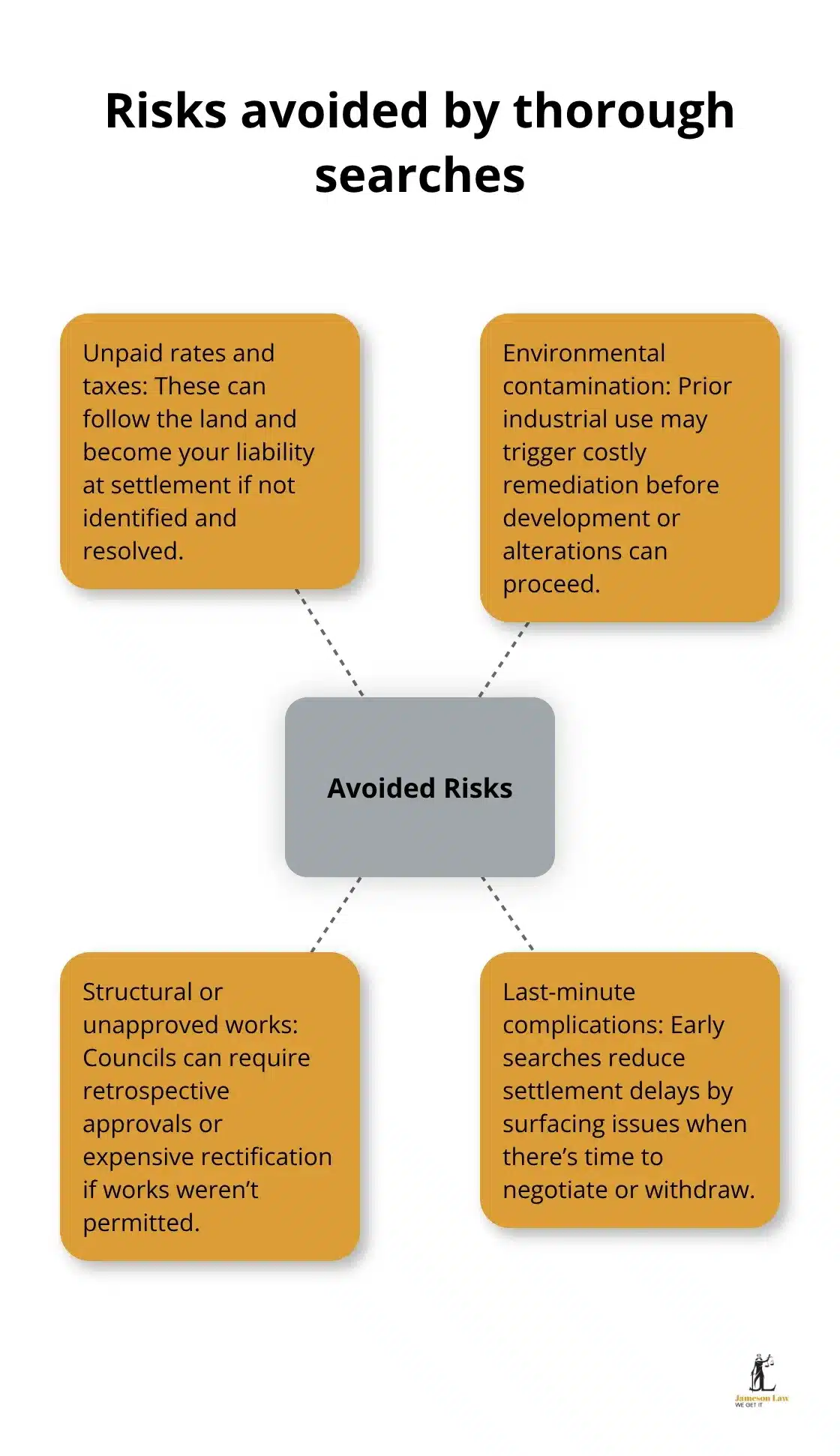
The Australian Institute of Conveyancers notes that thorough searches help identify issues early, protect both parties, and keep settlement on schedule by reducing the risk of last-minute complications.
Getting Professional Guidance on Your Searches
A conveyancer with NSW property law expertise will advise which searches apply to your specific situation, interpret results accurately, and flag anything that requires negotiation or professional assessment. This is where professional guidance becomes invaluable, as interpreting a council search or understanding what a caveat on the title means requires legal knowledge that most buyers lack. Order standard searches immediately after an offer is accepted, well before settlement, to ensure information remains current and any issues surface early enough to renegotiate terms or walk away. Understanding what each search reveals sets the foundation for the next critical step-knowing which specific searches apply to your property type and location.
Which Searches Matter Most for Your Property
Title Searches Form Your Foundation
Title searches form the foundation of conveyancing protection in NSW, and they’re non-negotiable. A title search costs between $20 and $100 and typically completes within one to three business days. This search confirms the seller actually owns the property and reveals mortgages, caveats, liens, or easements that could restrict your rights. For example, a council easement might prevent you from building a pool or extending your home without permission. If the title shows multiple mortgages, this signals potential complications with settlement or indicates the seller has refinanced repeatedly, which sometimes reflects financial stress. The search also exposes restrictive covenants-conditions imposed decades ago that still bind the land. One covenant might prohibit running a business from the property, another might restrict the type of fencing allowed. These restrictions survive ownership transfers and become your problem once you settle.
Council Searches Reveal Local Government Plans
Council searches deserve your immediate attention because they reveal what the local government knows about your property and what it plans to do nearby. These searches typically cost $250 to $350 and take five to ten business days, according to the Australian Institute of Conveyancers. A council search discloses outstanding rates, arrears, zoning classifications, approved building permits issued in the last ten years, and any current notices or orders affecting the property. This is where you discover whether the previous owner obtained proper approvals before adding that granny flat or whether an illegal structure sits on the land. Transport and Main Roads searches, often included as part of council checks, reveal planned road infrastructure projects that could affect property value or access. A future motorway expansion or railway line nearby might not show on current plans but could materialise within five years.
Water, Environmental, and Tax Searches Complete the Picture
Water and sewerage searches identify outstanding charges and easements, typically costing $50 to $150 and taking five to ten business days. These searches reveal whether water metres are registered and whether drainage easements crossing neighbouring land could complicate future renovations.
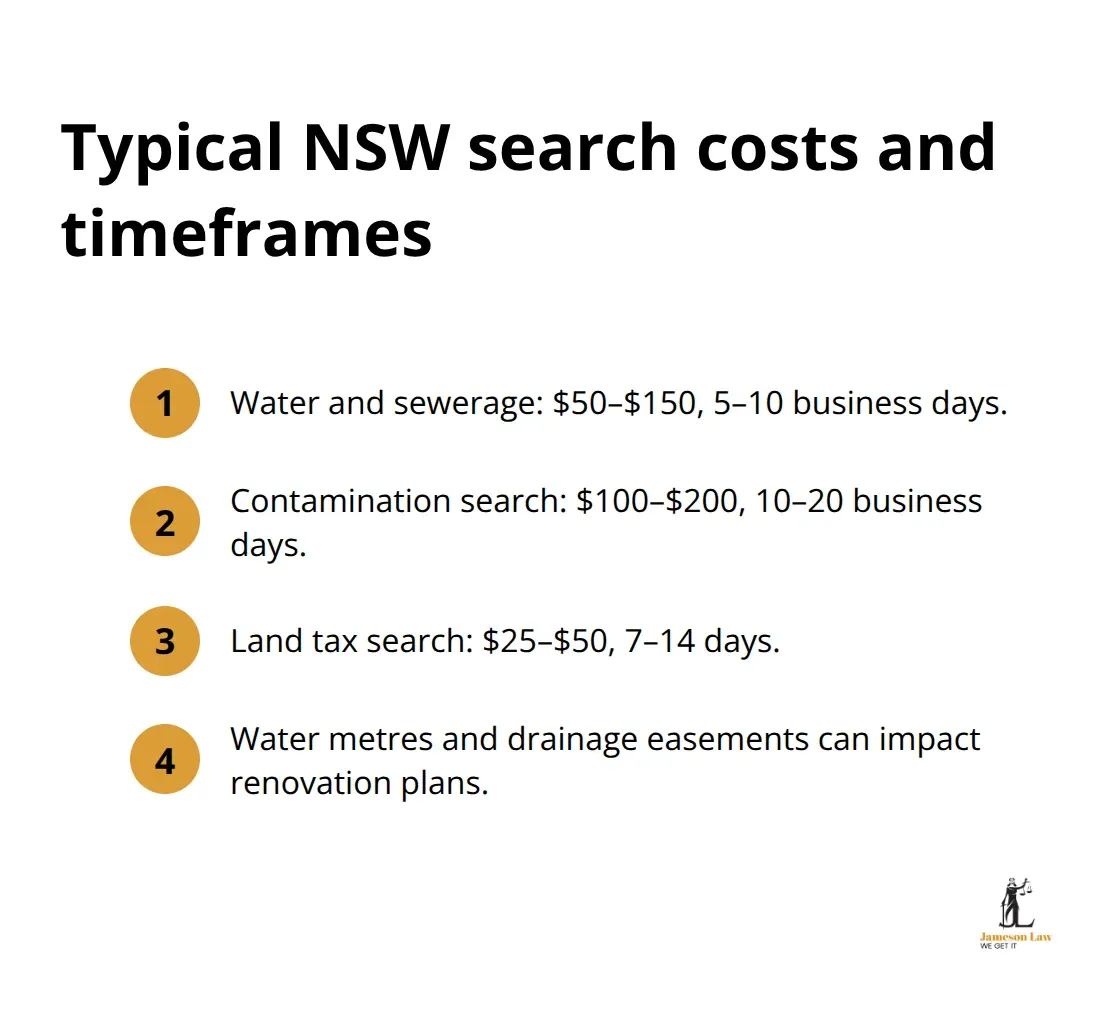
Environmental and heritage searches uncover contaminated land register entries and heritage listings that restrict development or require conservation work. A property listed on the Heritage Register might prohibit external modifications or require expensive restoration if damage occurs. Contamination searches cost $100 to $200 and take ten to twenty business days, flagging previous industrial uses that could impose remediation costs on you. Land tax searches confirm no overdue taxes will transfer to you at settlement, costing $25 to $50 and completing within seven to fourteen days.
Timing Your Search Orders Matters
Order all standard searches immediately after your offer is accepted-waiting until the last week before settlement creates pressure and reduces time to address problems. Each search provides specific information that protects different aspects of your investment, and skipping any of them leaves gaps that could prove expensive. Once you understand which searches apply to your property, the next step involves interpreting what those results actually mean for your purchase and negotiating any issues that surface.
What Conveyancing Searches Actually Uncover About Your Property
Zoning and Land Use Restrictions
Conveyancing searches reveal problems that cost tens of thousands of dollars or prevent you from using your property as planned. Zoning restrictions frequently surface during council searches, and they limit property use far more than most buyers expect. A property zoned residential might prohibit running any business from home, even a small consulting operation. Heritage listings impose mandatory conservation obligations that restrict external modifications and trigger expensive restoration costs if damage occurs. Council searches typically disclose zoning classifications and any current notices affecting the property, according to the Australian Institute of Conveyancers.
Outstanding Rates, Taxes, and Financial Liabilities
Outstanding rates and taxes represent real financial liabilities that transfer to you at settlement unless addressed beforehand. Water and sewerage searches reveal unpaid charges that become your responsibility once you own the land. Land tax searches confirm whether overdue taxes exist, which matters particularly in New South Wales where land tax accumulates significantly over years of non-payment. Council records show outstanding rates, arrears, and any current notices affecting the property. These financial obligations don’t disappear when ownership changes-they follow the property to the new owner.
Environmental Contamination and Structural Concerns
Environmental contamination and structural concerns demand serious attention because remediation costs can exceed property value in extreme cases. A contamination search flagging previous industrial use might indicate soil contamination that requires expensive remediation before you can develop the land or modify existing structures. Building code violations and unapproved structures discovered through council searches represent compliance issues that councils can force you to rectify at your expense. Council records showing that a granny flat, deck, or pool was constructed without proper approvals mean you’ll need to obtain retrospective approval (which often requires expensive modifications to meet current standards) or remove the structure entirely.
Why Timing and Completeness Matter
Each search type addresses specific risks, and skipping any of them leaves you vulnerable. A property might pass the title search and council search but fail an environmental check, or it might have perfect environmental credentials but carry restrictive covenants that prevent your intended use. Order all standard searches immediately after your offer is accepted, not days before settlement. This timing gives you sufficient opportunity to negotiate price reductions, request the seller remedy issues, or withdraw from the purchase if problems are severe.
Taking Action When Searches Reveal Problems
If searches reveal zoning restrictions, contact your local council to confirm what activities are genuinely prohibited versus what might be approved through development applications. If environmental contamination appears, obtain a detailed contamination audit from a qualified environmental consultant to understand remediation costs and timelines. If building code violations surface, get quotes from builders on remediation costs and factor this into renegotiations with the seller. Outstanding rates and taxes require confirmation directly with the relevant councils and the Land and Property Information office to ensure search results are current and accurate. Don’t assume the seller will cover these costs at settlement-many contracts place responsibility on the buyer unless explicitly negotiated otherwise. When you’re uncertain about next steps, asking the right questions of your conveyancer can clarify your options and protect your interests.
Final Thoughts
Conveyancing searches protect your investment by exposing problems before you commit to the purchase. Without them, you risk inheriting outstanding debts, discovering unapproved structures, or learning too late that restrictions prevent your intended use of the property. The $300 to $600 you spend on searches now prevents far costlier surprises after settlement, when the liability becomes yours alone.
A conveyancer interprets search results accurately, flags issues requiring negotiation, and advises which searches apply to your specific property and location. They understand what a caveat on the title means, how to read a council search, and when environmental contamination warrants specialist assessment. This expertise matters because search documents contain technical language and cross-references that confuse most buyers attempting to navigate them independently. At Jameson Law, we’ve guided endless NSW property buyers through conveyancing, and we know that early action prevents settlement delays and protects your interests.
Contact a conveyancer with NSW property law expertise to discuss which searches apply to your purchase and when to order them. Ask about their experience, their fee structure, and how they’ll keep you informed throughout the process. If you need guidance on what are conveyancing searches or understanding what search results mean for your specific situation, Jameson Law offers expert conveyancing support tailored to your needs.