


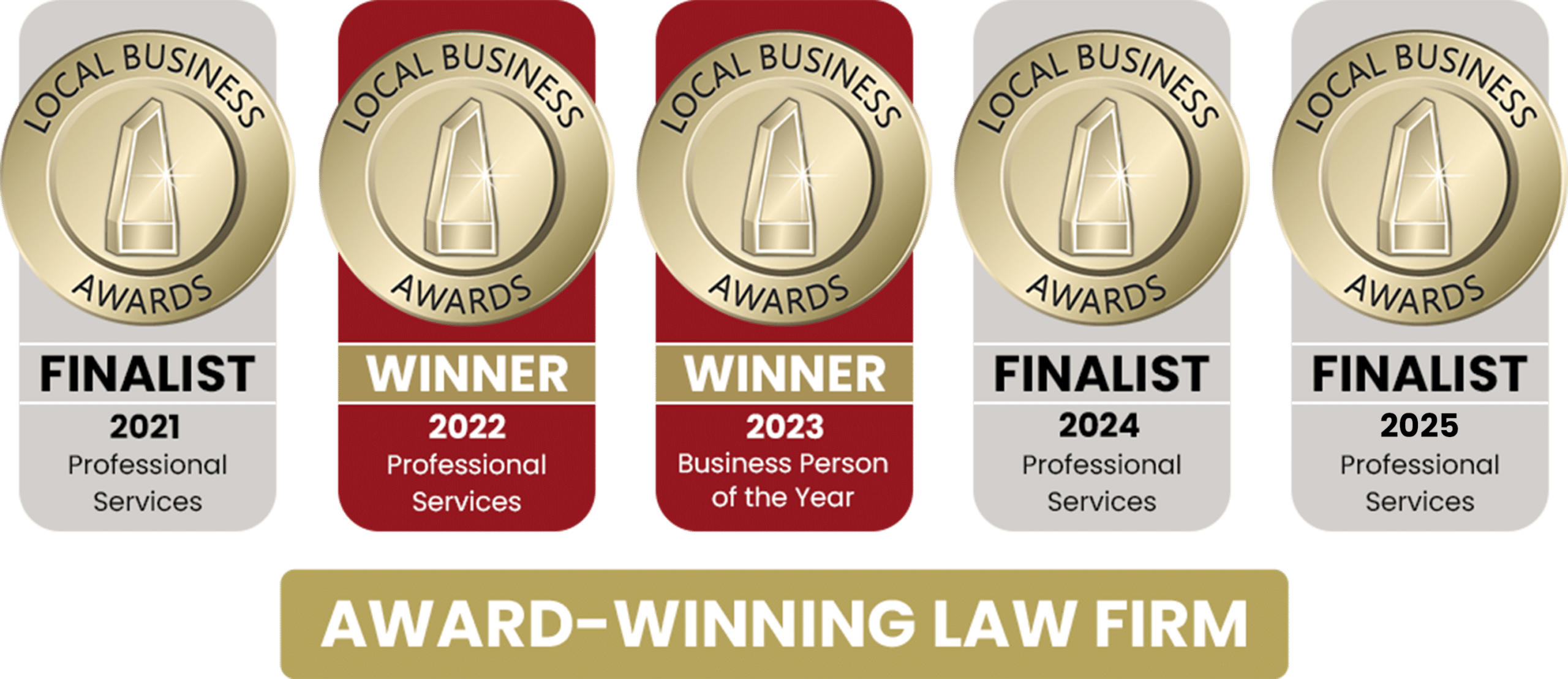



Back-to-back winners of the most prestigious Local Business Awards and multiple legal excellence awards in the personal injury category.
When purchasing a product or a product-related service in Australia, consumers operate under the legal assumption that the goods are safe for their intended use and are accompanied by adequate safety warnings if potential risks exist. To ensure robust consumer protection, several legal frameworks are available to survivors of injury caused by defective goods:
 Australian Consumer Law (ACL): A Federal statute that provides a uniform consumer protection framework across all Australian States and Territories.
- Common Law Tort of Negligence: A State-based protection option governed by the Civil Liability Act 2002 (NSW).
- Breach of Contract: Legal recourse available under the Contracts Review Act 1980 (NSW).
In New South Wales, while general product liability is governed by these broader acts, specific specialized tribunals handle certain injury types. For example, asbestos-related injuries are strictly managed through the Dust Diseases Tribunal. Similarly, injuries resulting from motor vehicle accidents are typically overseen by the State Insurance Regulatory Authority (SIRA), unless the injury was caused by a specific manufacturing defect, such as the widely documented Takata airbag recalls.
Product Liability Actions under the Australian Consumer Law (ACL)
The ACL mandates strict compliance with Australian Safety Standards and operates on a principle of strict liability. This means that a consumer may be entitled to compensation without needing to prove negligence on the part of the manufacturer, provided a safety defect and resulting injury can be established. The Australian Government, through the ACCC, sets mandatory safety standards that all goods manufactured in or imported to Australia must satisfy.
Safety standards are essential requirements designed to mitigate the risk of injury. These standards encompass:
- Manufacturing Integrity: Requirements for the performance, composition, design, construction, and packaging of consumer goods.
- Rigorous Testing: Protocols for testing consumer goods both during and after the manufacturing or processing stages.
- Warning Compliance: Strict rules regarding the form and content of markings, warnings, or detailed instructions that must accompany consumer goods.
Helpful Legal Resources:
- Product Safety Australia – Mandatory Standards
- NSW Legislation Official Portal
- How we handle Medical Negligence & Defective Devices
- Expert advice on Public Liability Rights
- Contact our Product Liability Team

Statutory Consumer Guarantees
In addition to safety standards, the Australian Consumer Law (ACL) provides automatic statutory guarantees on all products and services. These rights are non-negotiable and apply regardless of any manufacturer’s warranty.
Products must:
- Be safe, durable, and free from defects.
- Have an acceptable appearance and finish.
- Be fit for their common and intended purpose.
- Match descriptions and demonstration models.
- Have spare parts and repairs available for a reasonable period.
Services must:
- Be provided with acceptable care and skill.
- Be fit for the purpose agreed upon with the client.
- Be delivered within a reasonable timeframe.
Enforcement: Bans and Safety Standard Failures
Failure to adhere to Australian Safety Standards is a serious breach of federal law, which can trigger interim bans, permanent bans, and recalls. These measures protect the public from goods where a “reasonably foreseeable use (or misuse)” could result in personal injury.
Interim and Permanent Bans
An Interim Ban can be imposed by State or Federal Ministers for up to 60 days (extendable) if a product appears likely to cause injury. A Federal ban applies nationwide, while a State ban is limited to that jurisdiction. If the danger persists, the Minister may impose a Permanent Ban. Any supplier who provides products in contravention of these bans is strictly liable for resulting personal injury or economic loss.
Product Recalls: Compulsory vs. Voluntary
Product recalls are critical tools for managing consumer risk. Suppliers have a legal obligation to manage defective goods effectively:
- Compulsory Recall: Issued by the Minister when a supplier has not taken satisfactory action. The supplier must repair or replace the product at their own cost, ensuring the replacement meets all current safety standards.
- Voluntary Recall: Initiated by the supplier upon discovering a potential safety defect. By law, the Federal Minister must be notified within 2 days of a voluntary recall being issued.
Strict Manufacturer Liability
Under the ACL, a manufacturer is strictly liable for loss or damage if they supply goods in trade or commerce that have a safety defect, resulting in:
- Personal Injury: Direct physical or psychological harm caused by the defect.
- Property Damage: Destruction of other goods typically acquired for personal or household use (e.g., a defective battery destroying a home).
Legal Authority & Support:
Defences to Defective Goods
A defence to a defective goods action is established if:
The safety defect alleged to have caused the loss or damage did not exist
At the time the goods were supplied by the actual manufacturer (in the case of electricity – at the time it was generated (before it was transmitted or distributed); or
The goods have a safety defect only because of a mandatory standard
The state of scientific or technical knowledge at the time the good were supplied by the manufacturer was not such as to enable the safety defect to be discovered
If the goods that had the safety defect were comprised of other goods – that safety defect is attributable only to:
The design of the other goods; or
The markings on or accompanying the other goods; or
The instructions or warnings were given by the manufacturer of the other goods
The ACL applies regardless of any contract that may be in force between retailer and consumer or retailer and supplier/manufacturer. This is known as privity of contract.
If the economic loss or personal injury is the result of a workplace accident, product liability claim does not apply. It becomes a workers compensation matter.
Common Law Tort of Negligence Actions
Under the common law, manufacturers owe a duty of care to the purchaser and user of their products.
A retailer, importer or distributor only owes a duty where they know a product is faulty or has a safety standard or ban in force that is being breached.
The common law tort of negligence may be available where a contract exists between two parties but a person not party to the contract receives a personal injury or economic loss as a result of the breach by one party. This is known as privity of contract.
It needs to be proven that:
A duty of care was owed
The duty of care was breached
The breach caused damage (personal injury or economic loss)
Damages (compensation) are due as a result
Breach of Contract
A contractual relationship exists between:
The retailer and the consumer; and
The retailer and the supplier/manufacturer
In the event of product defect, action for breach of contract may be available against a retailer for the sale of a faulty product. Where such actions occur, the retailer may then be able to take action against its supplier or the manufacturer for breach of contract.
Limitation Periods
Limitation periods are time limits set by the ACL or Limitation Act 1969 (NSW) for legal proceeding to be commenced for product liability claims, negligence actions and breach of contract.
Under the ACL, action by an individual for defective goods has 3 years from they notice the defect or ought reasonably to have noticed
The loss/damage;
Safety defect; and
The identity of the manufacturer.
Where 2 or more people are responsible for the loss/damage, they are both equally responsible.
If you intend to make a claim for breach of contract, a party must bring a cause of action within 6 six years from when the breach first occurred.
If you intend to make a claim under the common law tort of negligence, you must bring action within 3 years from the date the negligence took place.

This form submission is encrypted and secured to ensure your information remains confidential.
This form submission is encrypted and secured to ensure your information remains confidential.

Parramatta CBD - Head Office
Sydney CBD - Practice Office
Blacktown CBD - Practice Office

Liverpool CBD - Practice Office

Bankstown CBD - Practice Office

