Getting an Australian work visa involves navigating multiple pathways, each with distinct requirements for Australian work visas. The process demands careful attention to documentation, health checks, and character assessments.
At Jameson Law, we’ve guided hundreds of applicants through this journey. This guide breaks down the visa types, application steps, and critical considerations you need to know.
Your Visa Pathway: Which One Fits Your Situation
The Skilled Independent Visa Route
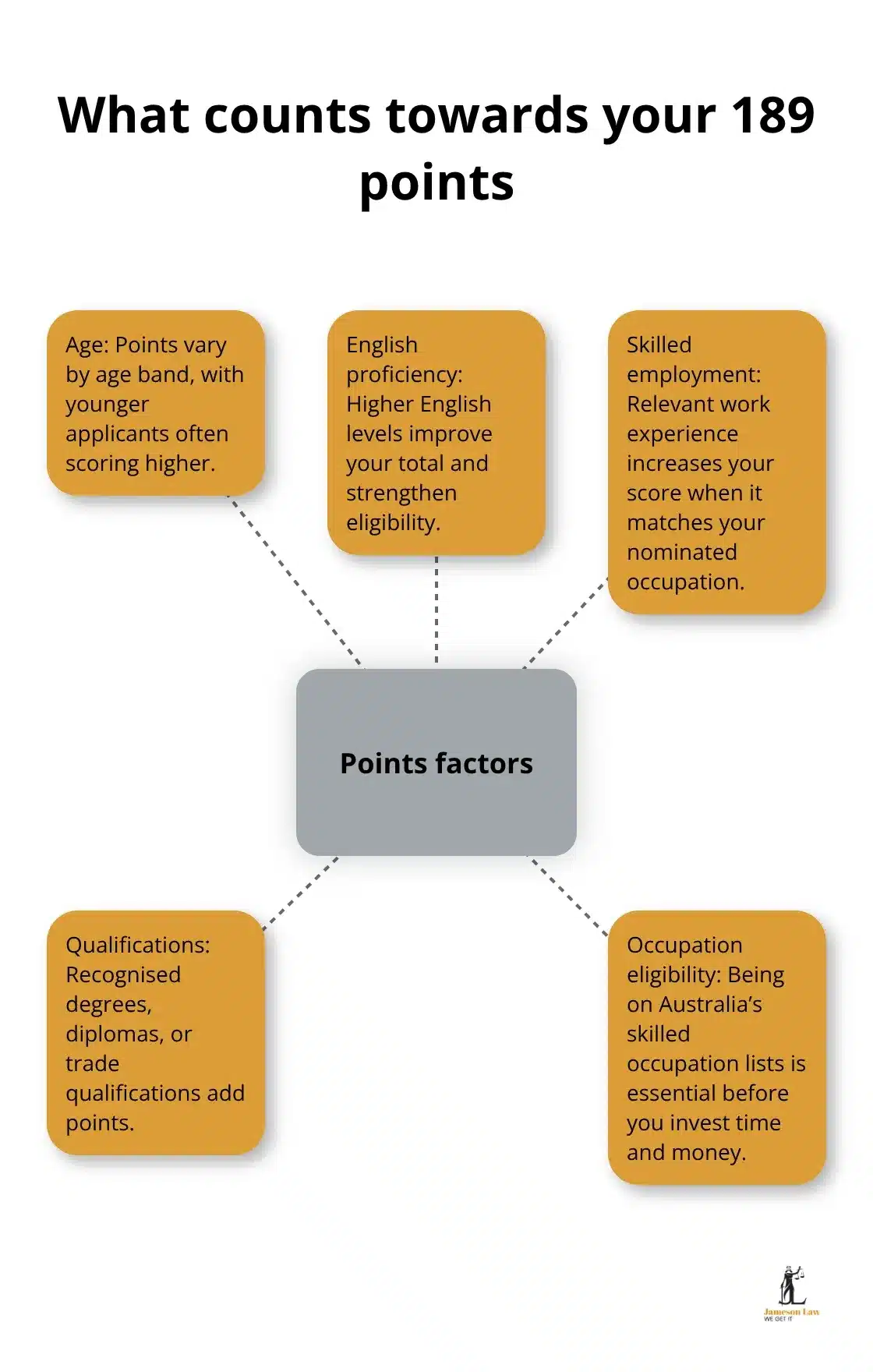
Australia offers three primary work visa pathways, and your choice depends entirely on your skills, qualifications, and employment circumstances. The Skilled Independent visa (subclass 189) suits professionals who can meet points-based criteria without needing employer sponsorship. According to the Australian Department of Home Affairs, this visa uses a Points table as the primary tool to determine whether you qualify for an invitation to apply. Your points come from factors like age, English proficiency, work experience, and qualifications.
Most applicants need at least 65 points to receive an invitation, though the Department of Home Affairs regularly adjusts occupational lists and points requirements. The independent visa demands strong English skills and relevant work experience in occupations currently on Australia’s skilled occupation lists. You must first verify that your occupation qualifies and that you can accumulate sufficient points before investing time and money into the application.

Employer-Sponsored and Labour Agreement Visas
Employer-sponsored visas and labour agreement visas operate differently because your employer takes on the sponsorship responsibility. These pathways suit skilled workers whose employers actively recruit them or workers in industries facing labour shortages. Your employment situation becomes central to your eligibility rather than points alone. Each pathway carries distinct obligations regarding health assessments, character requirements, and English language proficiency.
Temporary Skilled Migration Visas
Temporary Skilled Migration visas allow you to work in Australia for a defined period while meeting specific employer and occupation requirements. The critical difference between these pathways and the independent visa is that your employment circumstances drive your eligibility. You don’t rely solely on points-instead, your role and employer sponsorship form the foundation of your application.
English Language Requirements Across All Pathways
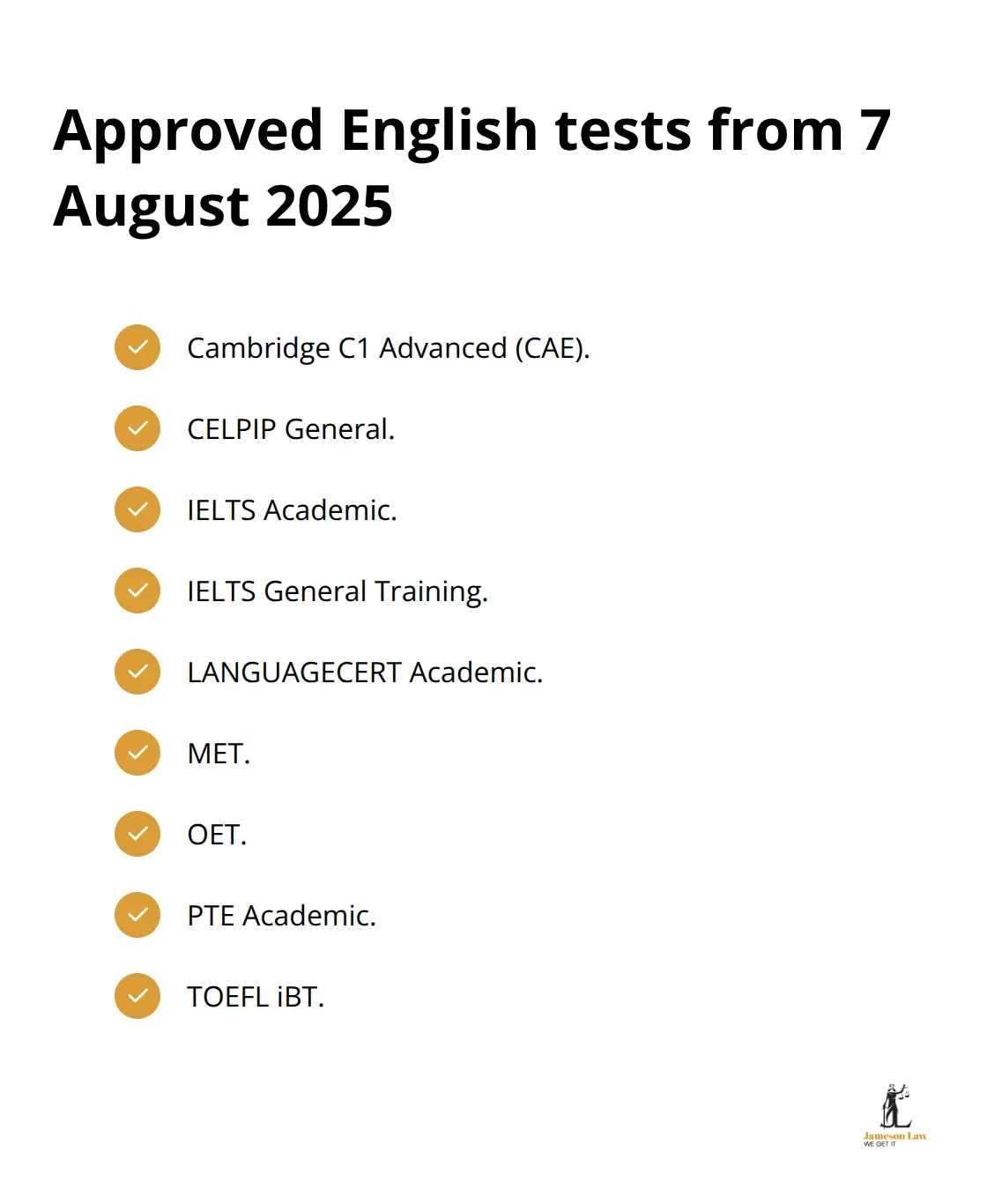
The Department of Home Affairs requires evidence of English proficiency for most work visas. Accepted tests include Cambridge English (CAE), CELPIP General, IELTS Academic, IELTS General Training, LANGUAGECERT Academic, MET, OET, PTE Academic, and TOEFL iBT. Your English level requirement varies by visa subclass, ranging from Functional English to Superior English, so you must check your specific visa’s requirements before sitting any test.
Matching Your Circumstances to the Right Pathway
Understanding which pathway matches your situation prevents wasted applications and unnecessary costs. Each visa type carries different obligations, timelines, and documentation requirements. Your next step involves assessing your qualifications against the specific criteria for each pathway, then gathering the evidence that demonstrates your eligibility. The documentation and application process forms the foundation of a successful visa outcome, which we’ll examine in detail next.
Building Your Application
Documentation Quality Determines Your Outcome
Successful Australian work visa applications stand or fall on documentation quality. The Department of Home Affairs receives tens of thousands of applications annually, and incomplete or poorly organised files create delays that stretch timelines from months into years. Applicants who invest time upfront in gathering correct evidence move through assessment faster and face fewer requests for additional information. Your documentation strategy must be deliberate and thorough.
Character Assessment and Police Certificates
Start by obtaining a police certificate from every country where you’ve lived for more than 12 months in the past ten years. The Department treats criminal history seriously-any undeclared convictions or charges will result in visa refusal, and the department may cancel visas at any time if character requirements are no longer met under section 501 of the Migration Act 1958. Complete Form 80 (Personal particulars for character assessment) or Form 1563 (Statement of Character) if the department requests these documents. Military certificates or Form 1399 apply if you have military service history. Obtain employer references, educational transcripts, and work history documentation and organise them chronologically with cross-references.
English Proficiency and Health Assessment Evidence
English proficiency tests from secure testing centres only-the department rejects online tests completely, including CELPIP Online, IELTS Online, and TOEFL iBT Home Edition. Tests taken on or after 7 August 2025 must use approved providers like IELTS, Cambridge C1 Advanced, PTE Academic, OET, CELPIP General, TOEFL iBT, LANGUAGECERT Academic, or MET. Obtain officially certified copies from test providers, not screenshots or informal documents. Health assessments require examination by panel doctors authorised by the department-you cannot use your GP. Panel doctors send results directly to the department.
Costs and Processing Timelines
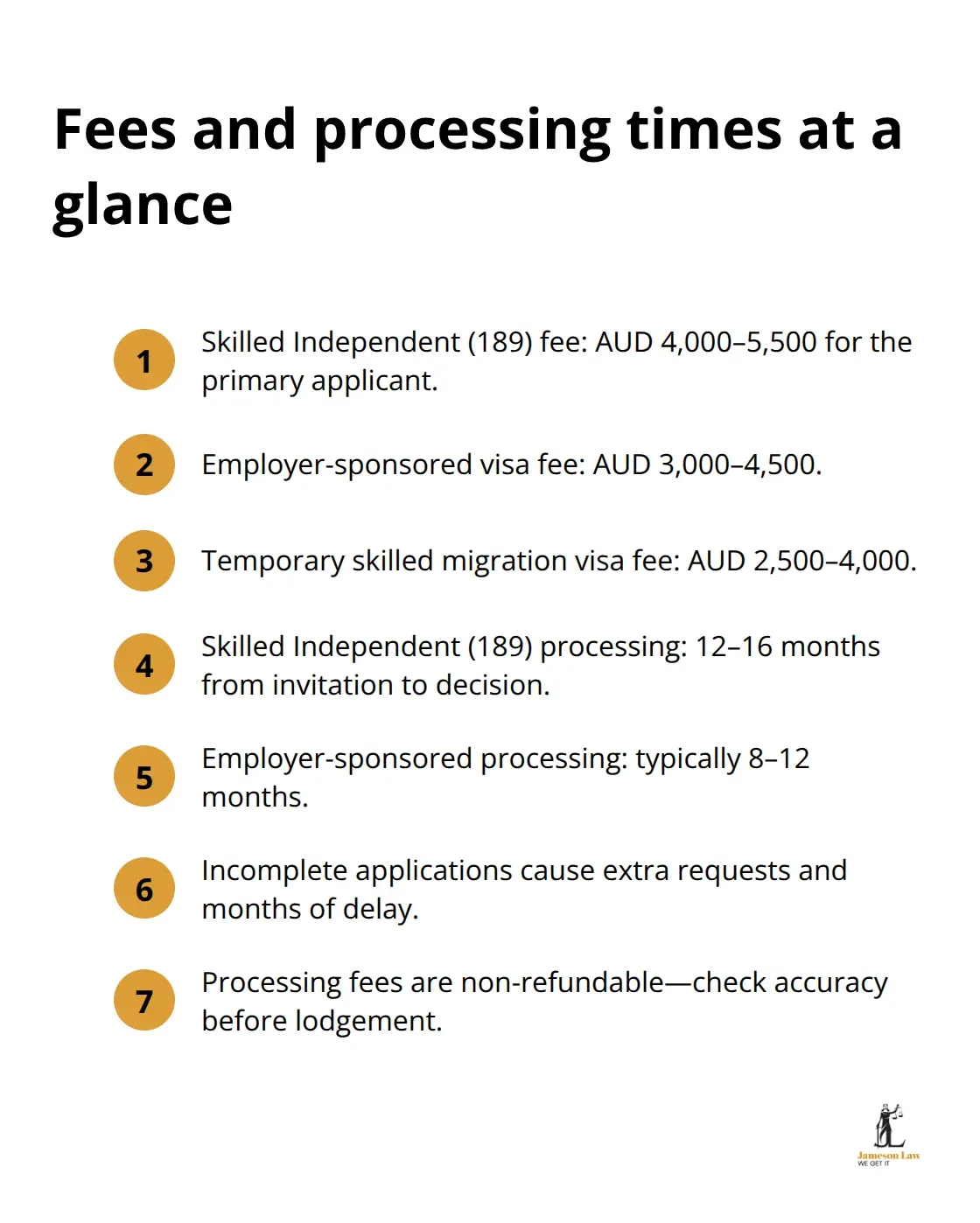
Processing fees are non-refundable regardless of outcome, making accuracy essential before lodgement. Skilled independent visas typically cost AUD 4,000 to 5,500 for primary applicants, employer-sponsored visas cost AUD 3,000 to 4,500, and temporary skilled migration visas cost AUD 2,500 to 4,000. Processing times have lengthened considerably; skilled independent visas now average 12–16 months from invitation to decision, while employer-sponsored applications typically take 8–12 months. Applicants who lodge incomplete applications face additional delays as the department requests missing documents, sometimes extending timelines by several months.

Planning Your Preparation Timeline
Many applicants underestimate how long document collection takes-obtaining police certificates from multiple countries can require 4–8 weeks alone, and health assessments add another 2–4 weeks. Plan for a total preparation period of 8–12 weeks before you’re ready to lodge. The Department of Home Affairs website provides specific guidance on required documents for each visa subclass, and you must verify your exact requirements before submitting anything. Once you’ve gathered your documentation and completed your assessments, your application moves into the formal lodgement phase, where understanding visa conditions and restrictions becomes your next priority.
Securing Your Visa Through English Proficiency and Conditions
English Language Tests: Requirements and Timing
English language requirements form a hard boundary in Australian work visa applications, and weak test results will halt your progress regardless of other strengths in your file. The Department of Home Affairs changed approved English tests on 7 August 2025, and this matters directly to your timeline and test choice. If you took a test before that date, results remain valid for up to three years depending on your visa subclass, but tests completed on or after 7 August 2025 must use Cambridge C1 Advanced, CELPIP General, IELTS Academic, IELTS General Training, LANGUAGECERT Academic, MET, OET, PTE Academic, or TOEFL iBT.

The critical error most applicants make is sitting a test without first checking their specific visa subclass’s required English level, which ranges from Functional English through to Superior English. You must verify this requirement before you book any test because failing to meet the specified level means automatic refusal, and you cannot re-take tests immediately without additional cost and delay.
Choosing the Right Test Provider
Secure testing centres only accept in-person tests, so you should reject any provider offering online options like CELPIP Online, IELTS Online, or TOEFL iBT Home Edition because the department will not recognise these results. IELTS and MET offer re-take options for single skills or sections, which can save money if you narrowly miss your target score rather than repeating the entire test. You must obtain officially certified copies from test providers, not screenshots or informal documents, to satisfy department requirements.
State Sponsorship: A Secondary Pathway
State sponsorship adds a secondary pathway for skilled workers willing to commit to working in specific Australian states or territories, and this option dramatically improves your chances if your occupation appears on a state sponsorship skilled occupation list rather than the national list. State sponsors prioritise occupations facing regional labour shortages, meaning your points threshold may drop significantly and you avoid competing nationally. However, state sponsorship creates binding obligations: most visas require you to work in your nominated state for a minimum period, typically two to three years, and breaching this condition invokes visa cancellation under section 501 of the Migration Act 1958.
Visa Conditions: Non-Negotiable Legal Requirements
Visa conditions are non-negotiable legal requirements, not guidelines, and the department monitors compliance through employer reports and tax records. Your visa grant notice specifies every condition attached to your visa, and you must read these conditions thoroughly before you accept your visa because ignorance provides no defence against cancellation. Common conditions include restrictions on work type, requirements to maintain health insurance, prohibitions on certain activities, and obligations to notify the department of address changes within 28 days.
Protecting Your Visa Status Through Honesty
Failure to declare a criminal charge or conviction during your application triggers visa cancellation regardless of how long you have held the visa, so complete honesty on your application forms protects your future in Australia. The department treats undeclared convictions with extreme seriousness, and visa cancellation can occur years after you receive your initial grant if authorities discover omitted information. You must declare all criminal conduct you have been charged with that awaits legal action in any country, and you must declare all criminal conduct you have been convicted of in any country (whether in Australia or overseas).
Final Thoughts
Australian work visa applications succeed when you match your circumstances to the right pathway among the three primary options available. Skilled Independent visas suit professionals who accumulate 65 points without employer sponsorship, employer-sponsored and labour agreement visas work for skilled workers whose employers actively recruit them, and Temporary Skilled Migration visas provide defined-period work arrangements where employment circumstances drive eligibility. Each pathway carries distinct documentation requirements, processing timelines, and visa conditions that demand careful attention before you apply.
The most common mistakes we observe stem from incomplete documentation, failure to verify English language requirements before sitting tests, and underestimating preparation timelines. Many applicants lodge applications with missing police certificates, outdated health assessments, or English test results that fail to meet their visa subclass’s specified level, while others overlook character requirements entirely and fail to declare criminal charges or convictions (resulting in visa refusal or cancellation years after their initial grant). Planning for 8–12 weeks of preparation before lodgement prevents these costly errors and strengthens your application significantly.
Understanding the requirements for Australian work visa applications also means recognising that visa conditions are legally binding obligations, not suggestions, and that honesty throughout your application protects your future in Australia. If you’re navigating the visa application process and need expert guidance tailored to your specific circumstances, contact Jameson Law to discuss your options with our immigration specialists.