PUBLICATION

How to Be a Migration Agent in Australia

"Become a migration agent in Australia with our complete guide covering qualifications, registration, and career steps to start your practice today."
How to Be a Migration Agent in Australia

Australia’s migration industry is growing fast, with skilled agents in high demand. At Jameson Law, we’ve seen firsthand how becoming a migration agent opens real career opportunities for those willing to meet strict professional standards.

The path to becoming a migration agent in Australia requires specific qualifications, registration, and ongoing commitment to ethical practice. This guide walks you through each step.

Getting Your Qualifications and OMARA Registration

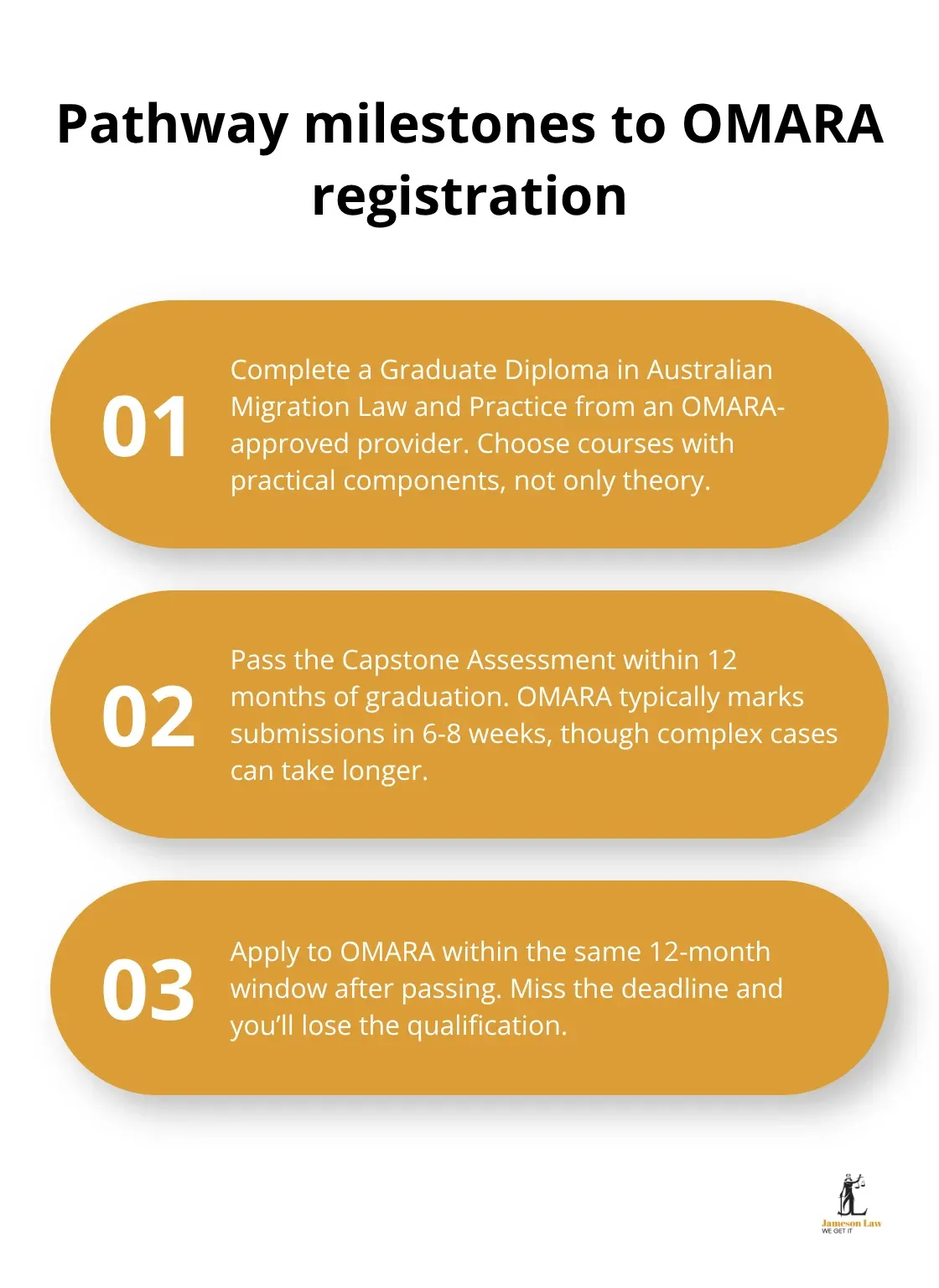
Education in migration law is non-negotiable, and the pathway is well-defined. You must complete a Graduate Diploma in Australian Migration Law and Practice from an OMARA-approved provider such as Griffith University, Australian National University, or Victoria University. These courses typically cost between AUD 8,000 and 15,000 and take 12 months to complete. Choose a provider that includes practical components like mock tribunal hearings and real case studies, not just theory. After graduation, you have 12 months to pass the Capstone Assessment, which tests whether you meet the professional standard required to practise.

Three key milestones to become a registered migration agent in Australia

OMARA marks Capstone submissions within 6 to 8 weeks, though complex cases take longer. This assessment is your gateway to registration, so treat it seriously and allow adequate preparation time. Once you pass, you must apply to OMARA within that 12-month window or you’ll lose the qualification.

Understanding the True Cost of Registration

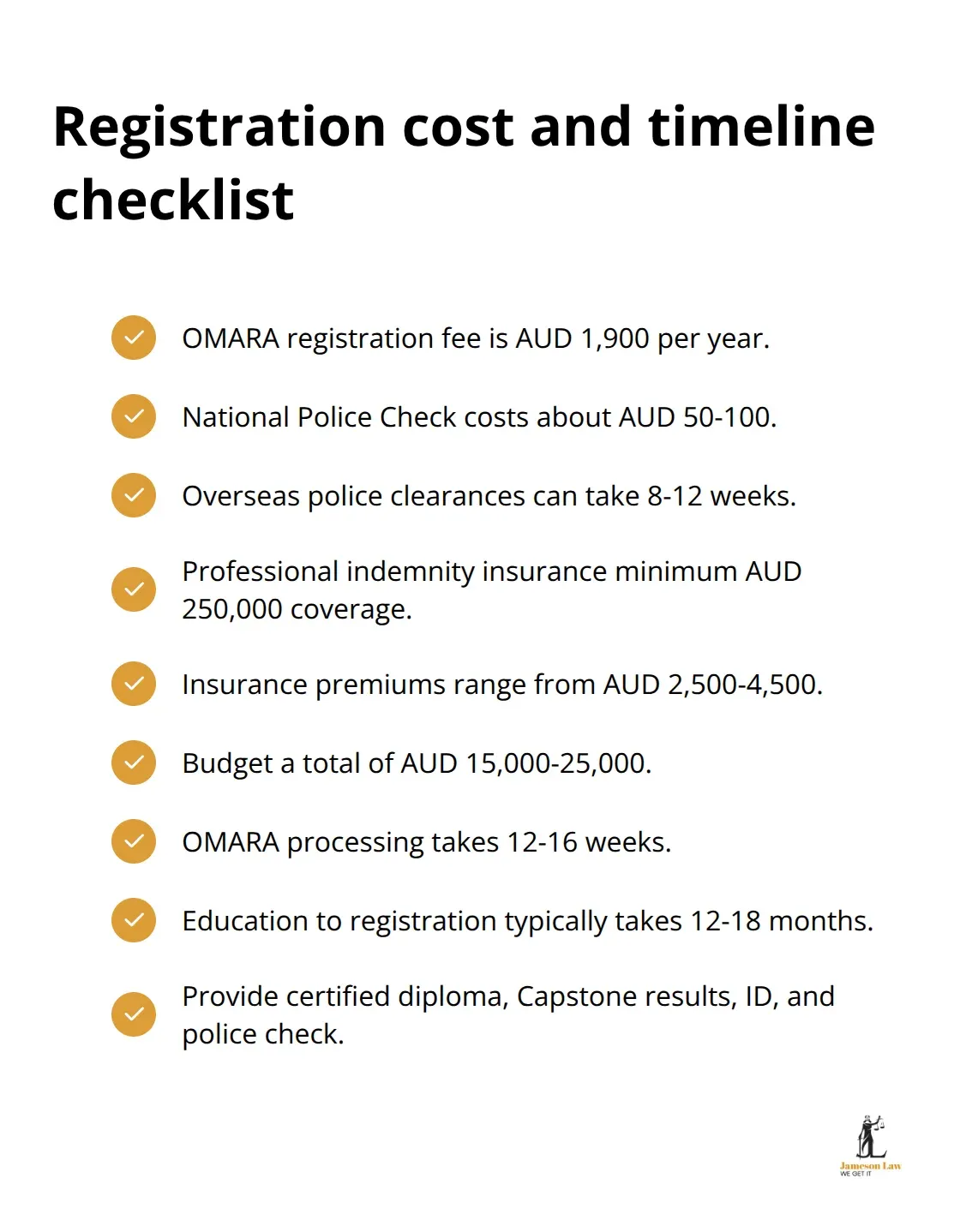
The OMARA registration fee is AUD 1,900 per year, but that’s only part of the financial picture. You’ll need a National Police Check, which costs around AUD 50 to 100. If you’ve lived overseas, you’ll also need police clearances from those countries, which can take 8 to 12 weeks to obtain, so start early.

Checklist of key costs, documents, and timeframes for OMARA registration in Australia - how to be a migration agent in australia

Professional indemnity insurance is mandatory before OMARA approves your registration, with a minimum coverage of AUD 250,000 and annual premiums ranging from AUD 2,500 to 4,500. Try to budget a total of AUD 15,000 to 25,000 from education through to final registration. The entire process typically takes 12 to 18 months. When you apply to OMARA, you’ll provide certified copies of your diploma, Capstone results, your passport or birth certificate, and your police check. OMARA’s processing takes 12 to 16 weeks, with possible requests for additional information extending that timeline.

Compliance Obligations After Registration

Registration is not a finish line; it’s an entry point to ongoing compliance. You must undertake continuing professional development points each year to keep your knowledge current. The Migration Institute of Australia offers CPD programmes and webinars that count toward this requirement. You’re also required to maintain a professional library at your place of business containing current acts, regulations, and policies. Immigration law changes rapidly, and falling behind costs clients money and damages your reputation. The sector has approximately 7,000 registered agents in Australia, and competition is real.

Specialisation Drives Higher Earnings

Those who specialise in one or two visa streams earn higher fees and build stronger client relationships than generalists. Sydney agents see strong demand for family and skilled visas, Melbourne leans toward business visas, and regional areas need expertise in employer sponsorship and regional migration schemes. Focus your CPD hours on your chosen niche rather than spreading yourself thin across all visa categories. This strategic approach positions you to command premium rates and attract repeat clients who value deep expertise in their specific visa pathway.

What Ethical Standards Actually Mean in Migration Practice

Ethics in migration law isn’t about abstract principles-it’s about protecting your clients’ futures and your own registration. OMARA enforces professional standards rigorously through its complaint and enforcement processes, and agents who cut corners on confidentiality or transparency face complaints that derail their careers. The Migration Act 1958 requires registered migration agents to maintain strict professional standards, and the consequences of breaching them are real.

Protecting Client Confidentiality

Your client files contain sensitive personal information, visa application details, and financial records that must stay locked down. If you discuss a client’s case with another agent over coffee or share details via unsecured email, you’ve breached confidentiality-and that’s a complaint waiting to happen. Use encrypted file storage, password-protected systems, and secure communication channels for all client contact. Never store passwords on sticky notes or share access credentials with staff members who don’t need them. Treat every piece of client information as if it were your own, because your clients trust you with their migration futures.

Documenting Your Advice in Writing

You must document every piece of advice you give clients in writing, with dates and specifics about what you recommended and why. This protects both the client and you if a dispute arises later. When you provide written records, you create a clear trail that shows exactly what you told clients and when you told them. This approach eliminates misunderstandings and gives you solid evidence if a client later claims you promised something you didn’t.

Being Honest About Visa Prospects

Clients often want to hear what they want to hear, not what the law allows, so you’ll face pressure to promise outcomes you can’t guarantee. The temptation to say yes to everything erodes your credibility fast. Be explicit about visa approval odds, processing times, and what documentation strengthens their case. If a client’s circumstances make their visa unlikely, tell them straight-they’ll respect honesty far more than false hope, and you’ll avoid complaints when their application fails. Clients who understand the real situation from the start become your strongest advocates when outcomes are positive.

Managing Conflicts of Interest

Conflicts of interest crop up constantly in migration practice. If a friend asks you to help with their visa while you’re representing their ex-partner in a family matter, that’s a conflict. If you handle visa applications for two people competing for the same job or sponsorship, that’s a conflict too. Write down every potential conflict, disclose it to clients in writing, and obtain their signed consent before proceeding. If you can’t resolve the conflict fairly, refer the client elsewhere. Your reputation for ethical practice attracts better clients and repeat referrals, which compounds your earnings over time. This foundation of trust becomes essential as you move into building and scaling your migration practice.

Building Your Migration Practice on Specialisation and Client Systems

The migration sector has approximately 5,337 registered migration agents across Australia, and the ones earning above average income focus on one or two visa streams rather than spreading themselves thin across every category. Agents who become genuinely expert in specific areas charge premium fees, attract repeat clients, and build sustainable practices. Sydney shows strong demand for family and skilled migration, Melbourne leans heavily toward business visas and investor migration, and regional areas desperately need agents who understand employer sponsorship and regional migration schemes. Your first strategic decision after registration should be which market segment you will dominate. Invest your continuing professional development hours into deepening expertise in your chosen niche rather than chasing every opportunity. This approach compounds over time because clients in that space recognise your name, refer others with similar needs, and trust you to navigate edge cases that generalists would mishandle. SEEK data shows migration agent roles cluster around major cities, meaning location matters-if you operate in Melbourne, building business migration expertise aligns with actual market demand rather than competing with Sydney’s family visa specialists.

Client Systems Beat Charisma Every Time

Your ability to process applications consistently and communicate timelines clearly matters far more than your personality. Build documented processes for every stage: initial client intake, document collection, application lodging, communication checkpoints, and post-approval follow-up. Track every client interaction in writing with dates and specifics about what you discussed and what you advised. This protects you if disputes arise later, but more importantly, it ensures you never drop the ball on a client file. OMARA data shows systemic failures in record-keeping and compliance, so treat documentation like compliance insurance. Set calendar reminders for critical dates-Department of Home Affairs processing windows, document expiry dates, follow-up contact points-because missing a deadline costs your client their visa and your reputation. Establish a written fee disclosure sent to every client before work starts, outlining what you will do, what it costs, and what the client must provide. This eliminates misunderstandings about money, which are the source of most complaints. When applications succeed, follow up with clients about six months after they settle and ask about their experience. Referrals exceed 40 per cent of new business in the migration sector, and that only happens when clients remember you positively long after their visa arrived.

Share of new migration clients coming from referrals - how to be a migration agent in australia

Staying Current Means Targeted Learning, Not Everything

Immigration law changes constantly, and the agents who stay profitable track changes in their specific niche rather than trying to know everything. Subscribe to Department of Home Affairs alerts and Migration Institute of Australia updates that cover your chosen visa category. Attend webinars and CPD programmes focused on your specialisation-if you work in family migration, take CPD on partner visa policy changes, not investor visa updates. Your 10 annual CPD points go further when you concentrate them on what your clients actually need. Many agents waste CPD hours on broad topics that do not affect their practice. Set aside two hours each month to review policy changes, tribunal decisions in your area, and processing time updates from Home Affairs. This keeps you ahead of clients who research online and find outdated information. When policy changes, you contact existing clients proactively, explain what changed, and identify whether they should adjust their strategy. That proactive service transforms you from a transactional agent into an advisor clients value deeply, and that is where higher fees and repeat work come from.

Final Thoughts

The pathway to becoming a migration agent in Australia demands commitment, but the steps remain clear and achievable. You need a Graduate Diploma in Australian Migration Law and Practice from an OMARA-approved provider, you must pass the Capstone Assessment within 12 months, and you must register with OMARA while maintaining professional indemnity insurance. Budget between AUD 15,000 and 25,000 and allow 12 to 18 months for the entire process, because OMARA enforces standards rigorously and agents who skip steps face complaints that end careers.

Professional standards protect your clients and your registration in equal measure. You must document every piece of advice in writing, maintain strict client confidentiality, tell clients the truth about visa prospects even when they want false hope, and disclose conflicts of interest before they become problems. These practices eliminate misunderstandings, reduce complaints, and build the reputation that attracts repeat clients and referrals, since OMARA data shows that record-keeping failures and communication lapses drive enforcement action.

The migration sector offers real earning potential for agents who specialise rather than generalise, and the approximately 7,000 registered agents across Australia show there is room for practitioners who combine technical knowledge with ethical practice. Focus on one or two visa streams, invest your continuing professional development hours into your chosen niche, and build documented client systems that process applications consistently-referrals exceed 40 per cent of new business in the sector when clients remember you positively long after their visa arrives. If you are ready to commit to the qualifications, compliance obligations, and ongoing learning that the profession demands, we at Jameson Law can support your immigration law journey with expert guidance tailored to your circumstances.

Speak to an Expert Lawyer today

Laywers-Jameson-Law-The-best-law-firm-in-Sydney- Sydney Lawyers - Sydney
BOOK NOW

WE'RE IN IT TO WIN IT

Book your consultation

Book Now
Book Now Mobile 06 02 2025

This form submission is encrypted and secured to ensure your information remains confidential.

What our Clients

Related Publications:

What our clients say

.

Jameson Law - Voted the Best Law firm in Sydney Award

Legal Answers ... In Short

We're here to help

Our mission is to ensure our client matters are resolved successfully every time. Success to us does not simply involve winning, but moreover ensuring we take the most feasible, economic and stress-free path to help our clients achieve their goals. We fight hard for our clients, and always go by the motto: we’re in it to win it.

Jameson Law - Best Law Firm in Sydney

WE'RE IN IT TO WIN IT

Book your consultation

Call us now on (02) 8806 0866 or fill out the form below

Book Now Mobile

This form submission is encrypted and secured to ensure your information remains confidential.

WE'RE IN IT TO WIN IT

Book your consultation

Book Now Mobile 06 02 2025
lock

This form submission is encrypted and secured to ensure your information remains confidential.

Our Sydney Offices

Offices Parramatta and Sydney Jameson Law
Parramatta CBD - Head Office
jameson Law - Blacktown
jameson Law - Liverpool Office
Jameson Law - Bankstown
Court Houses We Frequent Jameson Law

Court Houses We Frequent

Balmain Local Court

Registry: Monday to Friday, 9:00am to 4:30pm

Bankstown Local Court

Court Operating Hours: 9:30am-4:30pm

Blacktown Local Court

Registry Hours: 9:00 – 4:30
Telephone Hours: 8:30 -4:30
Days open: Mon-Fri

Burwood Local Court

Registry Hours: 9:00 – 4:30
Telephone Hours: 8:30 – 4:30
Days open: Mon – Fri

Campbell Local Court

Registry Hours: 9:00 – 4:30
Telephone Hours: 8:30 – 4:30
Days open: Mon – Fri

Central Local Court

Registry Hours: 9:00 – 1:00 and 2:00 – 4:30
Telephone Hours: 8:30 – 4:30

Downing Local Court

Registry Hours: 9:00 – 1:00 and 2:00 – 4:30
Telephone Hours: 8:30 – 4:30

Wollongong Local Court

Registry Hours: 9:00 – 1:00 and 2:00 – 4:30
Telephone Hours: 8:30 – 4:30

Fairfield Local Court

Registry Hours: 9:00 – 1:00 and 2:00 – 4:30
Telephone Hours: 8:30 – 4:30

Hornsby Local Court

Registry Hours: 9:00 – 1:00 and 2:00 – 4:30
Telephone Hours: 8:30 – 4:30

Liverpool Local Court

Registry Hours: 9:00 – 1:00 and 2:00 – 4:30
Telephone Hours: 8:30 – 4:30

Manly Local Court

Registry Hours: 9:00 – 1:00 and 2:00 – 4:30
Telephone Hours: 8:30 – 4:30

Newtown Local Court

Registry Hours: 9:00 – 1:00 and 2:00 – 4:30
Telephone Hours: 8:30 – 4:30

Parramatta Local Court

Registry Hours: 9:00 – 1:00 and 2:00 – 4:30
Telephone Hours: 8:30 – 4:30

Penrith Local Court

Registry Hours: 9:00 – 1:00 and 2:00 – 4:30
Telephone Hours: 8:30 – 4:30

Sutherland Local Court

Registry Hours: 9:00 – 1:00 and 2:00 – 4:30
Telephone Hours: 8:30 – 4:30

Waverley Local Court

Registry Hours: 9:00 – 1:00 and 2:00 – 4:30
Telephone Hours: 8:30 – 4:30

Windsor Local Court

Registry Hours: 9:00 – 1:00 and 2:00 – 4:30
Telephone Hours: 8:30 – 4:30

Wollongong Local Court

Registry Hours: 9:00 – 1:00 and 2:00 – 4:30
Telephone Hours: 8:30 – 4:30

Downing Centre District Court

Registry Hours: 9:00 – 4:30
Telephone Hours: 8:30 – 4:30
Days open: Mon – Fri

Parramatta District Court

Registry Hours: 9:00 – 4:30
Days open: Mon-Fri

Penrith District Court

Registry Hours: 9:00 – 4:30
Days open: Mon-Fri

Campbelltown District Court

Registry Hours: 9:00 – 4:30
Days open: Mon – Fri

Liverpool District Court

Registry Hours: 9:00 – 4:30
Days open: Mon – Fri

Wollongong District Court

Registry Hours: 9:00 – 1:00 and 2:00 – 4:30
Telephone Hours: 8:30 – 4:30

Supreme Court New South Wales

Registry Hours: 9:00 AM – 4:30 PM
Telephone Hours: 8:30 AM – 4:30 PM
Days Open: Monday to Friday

Federal Circuit and Family Court of Australia

Registry Hours: 9:00 AM – 4:30 PM
Telephone Hours: 8:30 AM – 5:00 PM
Days Open: Monday to Friday

Federal Court

Monday to Friday, 8:30 AM – 4:30 PM

High Court

Monday to Friday, 8:30 AM – 5:00 PM

Children’s Court of New South Wales

Registry Hours: 9:00 AM – 4:30 PM
Telephone Hours: 8:30 AM – 4:30 PM
Days Open: Monday to Friday

Coroner’s Court New South Wales

Registry Hours: 9:00 AM – 4:30 PM
Telephone Hours: 8:30 AM – 4:30 PM
Days Open: Monday to Friday

Industrial Relations Commission of New South Wales

Registry Hours: 9:00 AM – 4:30 PM
Telephone Hours: 8:30 AM – 4:30 PM
Days Open: Monday to Friday

Land and Environment Court of New South Wales

Registry Hours: 9:00 AM – 4:30 PM
Telephone Hours: 8:30 AM – 4:30 PM
Days Open: Monday to Friday

WE'RE IN IT TO WIN IT

Book your consultation

Book Now
Book Now Mobile 06 02 2025
lock

This form submission is encrypted and secured to ensure your information remains confidential.